

Your toes are the part nobody warns you about. You buy a pair of heels for the shape, wear them to one dinner, and spend the walk home working out which toe is going numb. By the time you get in, the answer is usually the little one.
Square heels for women exist mostly because of that walk home. A squared toe box gives your toes somewhere to sit that isn’t a wedge, and a squared heel gives your ankle a base wide enough to correct against. Put both together and you get a shoe that looks sharper than a round toe and behaves better than a stiletto.
There are trade-offs, and I’ll get to them. But if your current heels live by the door and never leave it, this shape is worth ten minutes of your attention.
What a square heel actually is, because the label tells you nothing
Two different shoes get sold under the same name. One has a square toe and a slim heel, which is a silhouette choice and nothing more. The other has a square toe and a block or squared-off heel, and that one changes how you walk.
Look at the heel from behind. If the base is a rectangle roughly 25mm to 40mm across, you’ve got the second type. If it tapers to a point smaller than your little fingernail, you’ve got the first, whatever the marketing says.
The difference shows up on pavement within about twenty minutes. A slim heel puts all your weight through a patch the size of a pencil eraser. A squared base spreads it over something closer to a thumbprint, which is why square heels for women over 50 tend to get recommended by podiatrists and physios rather than stylists.
One more thing the label won’t tell you: heel height and toe shape are independent. You can find a 90mm square-toe stiletto and a 30mm square-toe block. They’ll look related in the photo and feel nothing alike.
Square toe boxes fit real feet better, and the reason is millimetres
The front of a human foot is not pointed. The widest part sits across the ball, and the toes fan out slightly from there. A pointed shoe compresses that fan by somewhere between 8mm and 15mm depending on how aggressive the taper is. A square toe usually takes off 2mm to 5mm.
That gap is the difference between “snug” and “why is my foot asleep”. It matters most if you have a wide forefoot, a bunion, or a second toe longer than your big toe. The clinical description of hallux valgus on Wikipedia is blunt about it: narrow toe boxes push the joint out of line over time, and the damage doesn’t reverse.
So a square toe isn’t a trend detail. It’s the shape that asks your foot to change least.
The catch is that a wide toe box with a stiff leather can look boxy on a narrow foot. If your feet are slim, look for a square toe with a slight taper at the front edge rather than a full rectangle, and check the side profile. A shallow vamp makes the shoe read lighter.
45mm is the number most people land on
After enough pairs, the range narrows. Thirty millimetres reads flat in photos and does nothing for a hem. Sixty is a dinner shoe. Forty-five is the one that survives a full working day, a train, and an unplanned walk to the far end of a car park.
Why 45 specifically? It’s high enough to change your posture and the line of your leg, low enough that your calf isn’t held in a permanent contraction. Above about 55mm, the ankle can’t reach neutral at heel strike, so your knee takes the load instead. That’s the ache you feel behind the kneecap the day after a wedding.
There’s nothing magic about the number. It’s just where comfort stops falling off a cliff.
If you want the geometry in more detail, the high-heeled shoe article on Wikipedia covers how pitch is measured and why two shoes at the same height can feel completely different.
Where a square heel wins: pavement, stairs, standing
Three situations where the shape pays for itself.
Uneven paving. A slim heel finds every crack and every drain cover. A squared base bridges them. If you walk through a city centre with old stone paving, this is the single biggest upgrade you can make, and it costs nothing extra.
Stairs. Coming down stairs in a stiletto means landing on the edge of the heel and hoping. A block base lands flat. Anyone who has taken a staircase in a office building at 6pm knows exactly what I mean.
Standing still. Receptions, gallery openings, school concerts, the bit before dinner when everyone stands around holding a glass. A wide heel lets you stand with your weight centred instead of constantly shifting from foot to foot.
There’s a fourth, less obvious one: getting out of a car. A slim heel goes through the gap between the door and the kerb. A block heel doesn’t. Small thing, but it’s the kind of small thing that makes you reach for the same pair every morning.
Where it loses, and I’m not going to pretend otherwise
Square heels for women are not the most elegant option in the cupboard. That’s the honest trade. A squared toe with a block heel adds visual weight at the bottom of the silhouette, and with a very long, very fluid dress it can look like the wrong answer.
They also photograph heavier than they look in person. If you’re buying for a specific photo, the slim option usually wins.
And there’s a fitting issue nobody mentions: square toe boxes are less forgiving of half sizes. A pointed shoe can stretch forward a couple of millimetres. A square one can’t, because the front edge is structural. If you’re between sizes, go up, not down.
Sizing, straps, and the sock problem
Most square heels for women are cut true to size in length and slightly narrow in the heel counter. Try your usual size first, then check two things: whether your heel lifts more than 5mm when you walk, and whether your toes touch the front edge when you stand still with weight on both feet.
Heel lift means the counter is too wide for you. Toes touching means the shoe is too short. Those are different problems and they have different fixes.
A strap across the instep fixes heel lift in a slip-on. It does nothing for a short shoe. Don’t buy short and hope.
The sock question comes up every November. A square toe with a fine wool sock works surprisingly well in a 45mm block, and it’s the easiest way to wear this shape through winter without tights. Skip thick hiking socks, though. The toe box has no room for both.
A ten-minute fitting routine that saves a return
Do this once and you’ll stop buying shoes you can’t wear. It works in any shop and needs nothing you don’t already carry.
Minutes one to two. Put both shoes on with the socks or tights you’ll actually wear. Not bare feet, not the shop’s paper sock. Half of all bad fits are a sock problem.
Then stand up and press your thumb across the top of the toe box. There should be a couple of millimetres of give. Then wiggle your toes. If they can’t move, the shoe is too shallow, and shallow is worse than short because it doesn’t show up until hour three.
Now walk the length of the shop eight times on the hard floor. Count how many times your heel slips. More than once per lap means the counter is wrong for your ankle.
Balance next: one foot for ten seconds, then the other. Square heels for women with a decent base pass this easily. If you’re wobbling at four seconds, the base is too narrow or the shoe is too big.
Last minute, crouch down and stand back up. This is the test nobody runs, and it’s the one that predicts whether the shoe will survive a real day, because it loads the toe box from an angle you never use standing still.
If a pair fails two of those five, leave it. There are enough shoes in the world.
What to wear them with
Tailoring is the easy pairing. A straight-leg wool trouser that breaks just above the shoe looks deliberate with a square toe, because the shape repeats the line of the hem. Same trouser with a pointed shoe looks slightly sharper and considerably less comfortable by 5pm.
Wide-leg trousers are the other safe bet, provided the hem clears the top of the shoe. Anything that drags is a trip hazard with a block heel, since the base catches fabric.
Midi skirts work if the hem lands mid-calf. Short skirts work if you want the shoe to be the loud part. What doesn’t work is a full, gathered midi in a stiff fabric, where the shoe looks like a footnote.
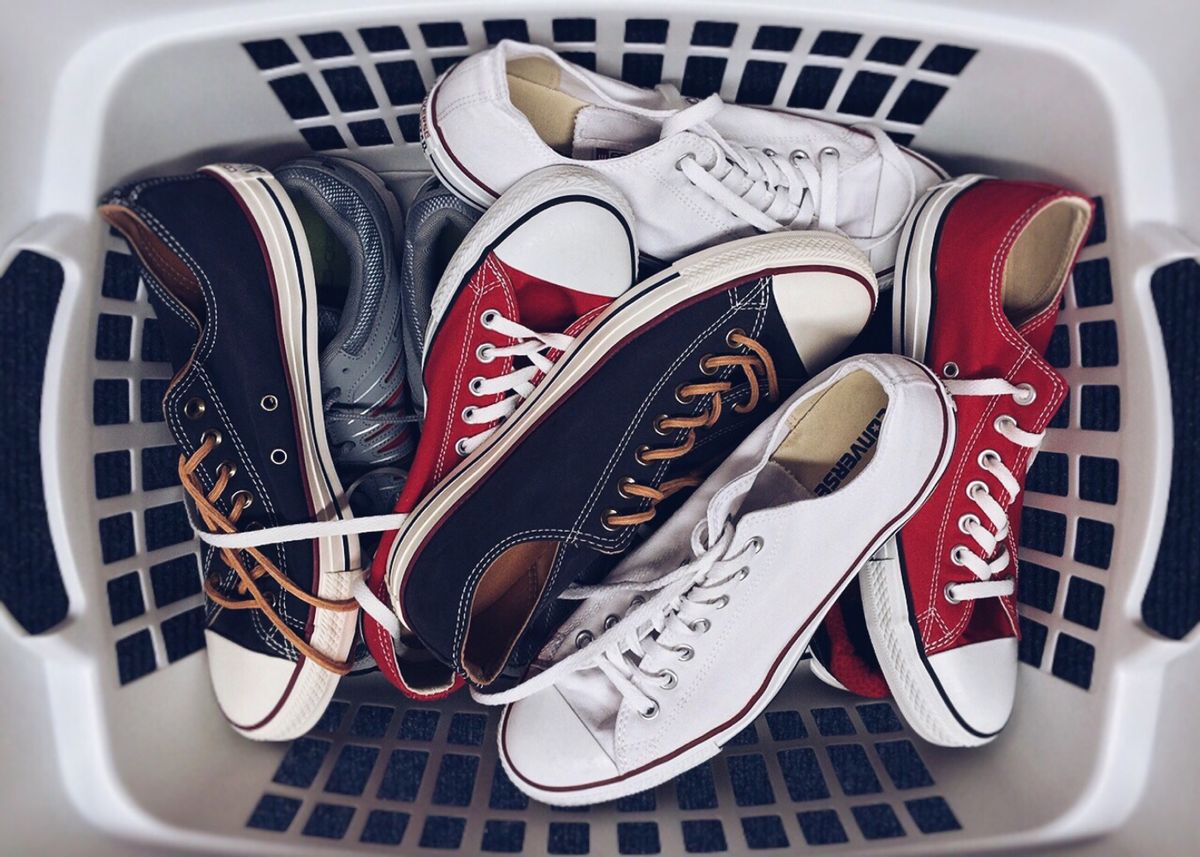
For colour, a mid-tone suede is the most useful thing you can buy in this shape, and suede retro pairs in muted colours cover more outfits than black does. Most square heels for women end up worn with the same three outfits on rotation, so pick the colour that matches those three and ignore everything else on the shelf. If you want the shape in something dressier for evenings, square-toe heels with a rhinestone finish give you the toe box without the visual weight of a block.
Two articles worth reading alongside this one: how to pick a beige shade before you pick a heel height, and what suede slip-ons survive in a wet week. Both apply directly if you’re buying in this shape for autumn.
Care: square toes scuff at the corners
The front corners of a square toe take more contact than any other part of the shoe, because there’s an actual corner there to catch. Within a month of city walking you’ll see two bright spots, one on each outer corner.
Deal with them early. A cream polish in the right colour, applied with a cloth and buffed after ten minutes, stops the scuff turning into a worn patch. Leave it and the finish lifts, and once the finish lifts on corrected-grain leather there’s no fixing it.
Heel tips are the other wear point, and they wear faster on a block because more surface contacts the ground per step. Check them every couple of months. A worn-through tip costs about €15 to replace. A worn-through heel means the block has to be rebuilt, which is four times the price.
Store them with the toe shape supported. Crumpled newspaper works. Leaving a square toe empty in a cupboard for six months is how it slowly rounds off at the corners, and you won’t notice until you put them on and the shape looks soft.
What I’d skip
A square toe with a 90mm slim heel. You get the wide toe box and none of the stability, so it’s the least comfortable version of both ideas.
Patent square toes in a stiff cut. Patent doesn’t stretch, and a square toe has no give at the front edge anyway. If it’s tight in the shop, it will be tight in March.
And anything with a moulded plastic sole bolted to a leather upper. The join fails first, usually in rain, usually at the toe corner. If you can see a visible lip where the upper meets the sole, keep walking.
What to look for instead: a stitched or cemented sole with a real rubber top piece, 40mm to 50mm of heel, a toe box you can wiggle your toes in while standing, and a heel counter that holds without pinching. That’s the whole specification. Everything else is taste.
Start from the full shoes section if you want to compare shapes in one place, or narrow to the women’s shoes catalogue and filter by heel type. Bring a tape measure and check the heel base width before you check the price. Your toes will thank you on the walk home.
