

Memory foam feels incredible for the first month. Then it stops being foam
You know the feeling. You slide your foot into a new pair in a warm shop, the insole gives under your heel, and your whole body relaxes about two percent. Three months later the same shoes feel flat, and you’re googling whether your feet changed.
They didn’t. The foam did. Memory foam is a viscoelastic polyurethane: it deforms under heat and pressure, then recovers slowly. That slow recovery is why it feels like a hand cradling your arch. It’s also why it wears out in a way that regular foam doesn’t, and why some women get 18 months out of a pair while others are shopping again by September.
Below is what actually happens, how to tell good memory foam from the cheap version, and the specific situations where you should walk away from it entirely.
What memory foam is doing under your heel

Standard walking-shoe foam is mostly EVA, which is springy and bounces back fast. Memory foam is slower and softer. It softens further as it warms toward body temperature, which is around 30 to 33°C inside a shoe after ten minutes of walking.
That temperature response is the whole trick. Viscoelastic polyurethane foam was developed for pressure distribution, not for energy return, and it does the first job well. It spreads load across a wider area, which is genuinely useful if you have a tender spot under the ball of your foot or a heel that complains on hard floors.
What it does not do is give anything back. Every step, your foot sinks and the foam absorbs. On a 20-minute walk to the station that’s lovely. On a 12,000-step day at a trade fair, that absorption adds up to legs that feel heavier by 6pm.
Here’s the practical version:
- Memory foam = comfort and pressure relief, low rebound.
- EVA = lighter, bouncier, less contouring.
- TPU or supercritical foams = the springy end, pricier.
The 300-kilometre question nobody asks at checkout
Foam has a lifespan measured in compression cycles, and a walking shoe takes roughly 1,200 to 1,500 steps per kilometre. That’s a lot of squeezes on one heel pad. This is also why the lower back pain conversation keeps coming back to heel condition rather than arch height.
What fails first is height, not softness. The foam compresses and never fully returns. You won’t see a hole. You’ll notice that the shoe suddenly feels roomier at the back, your heel starts lifting slightly, and after a long day the outside of your ankle aches for no obvious reason. That’s a worn heel pad, not an ankle problem.
Squash test, at home: press your thumb hard into the insole under where your heel sits. Then do the same at the forefoot, which gets less load. If the heel area feels noticeably thinner and harder than the forefoot, the pad is gone. A new insole costs a fraction of new shoes, and it’s the single best-value repair in footwear.
Cheap memory foam dies fast because it’s low density. You can feel the difference in the shop. Press for three seconds, release, and count. Quality viscoelastic takes about two to three seconds to come back. The bargain version springs back almost instantly because there’s more air than polymer in it, and it’ll be flat by spring.
One more thing: heat is the enemy. Leaving shoes in a car boot through a July afternoon accelerates the breakdown, and so does radiators in winter. I keep mine in a hallway cupboard for exactly this reason, which sounds fussy until you’ve thrown out a pair after one summer.
Cold mornings are where memory foam embarrasses itself
Take a pair out of a 4°C hallway in February and the foam is stiff. Genuinely stiff, like a yoga mat left in a garage. It takes five to ten minutes of walking before it warms up and starts contouring again.
For most people that’s a minor annoyance. For anyone with plantar fascia pain, those ten minutes are the worst ten minutes of the day, because a hard insole under a cold, tight arch is precisely what you don’t need at 7:20am. Mayo Clinic’s notes on plantar fasciitis make the point that first-step pain is the classic sign, and a stiff shoe makes first steps worse.
Two workarounds that cost nothing. Store the shoes somewhere warm overnight, near a radiator but not on it. And warm up before you put them on, thirty seconds of rolling your arch over a tennis ball while the kettle boils.
If you live somewhere genuinely cold for four months a year, EVA with a decent sock beats memory foam for the commute. Save the viscoelastic pair for spring.
When memory foam makes your ankle worse, not better
This is the part the product copy skips. Memory foam is soft, and soft foam lets your foot find whatever angle it wants inside the shoe. If your heel is on the narrow side, or the shoe runs half a size big, a deep memory foam bed gives your foot somewhere to slide.
That’s how you end up with a shoe that feels like a cloud and rolls your ankle on a dropped kerb. The cushioning and the instability come from the same property.
Two fixes. First, size properly. A memory foam shoe should feel snug at the heel on day one, not roomy “for thick socks later”. Second, if you’re already stuck with a loose pair, add a thin flat insole under the memory foam one to take up volume instead of adding more squish on top.
Who should skip memory foam entirely: anyone with an unstable ankle, anyone who walks more than 15,000 steps a day on mixed ground, and anyone whose feet run hot. Viscoelastic foam traps heat. In August, a sealed memory foam footbed turns into a small sauna, and sweaty feet slide.
There’s a quieter version of this problem that shows up around hour four. The foam slowly takes the shape of your foot, which sounds like a feature until you realise it’s now holding yesterday’s position rather than supporting today’s. If you spend a morning on your feet and then drive for an hour, your foot settles into a slightly different place when you get out, and the shoe no longer matches it. Most people describe that as the shoes feeling tired. They’re not wrong.
What a good memory foam walking shoe looks like in the hand
Ignore the word “memory” on the box and check four things instead. These are the ones that separate a pair that lasts two years from one that lasts one season.
- Insole thickness at the heel: 8 to 12mm is useful. 4mm is decoration.
- Removability: if the insole lifts out, you can replace it when it flattens. Glued-in foam means the whole shoe retires early.
- Foam density under thumb pressure: firm before soft, not marshmallow from the first touch.
- Upper breathability: mesh panels at the midfoot and a padded but not sealed tongue.
The mesh casual walking pair gets this combination right for everyday use, mainly because the insole comes out and the upper actually breathes. If you want the cushioned feel with a bit more structure underfoot, the shock-absorbing lightweight pair uses a firmer base layer, so you get the soft top without the wobble.
For a wider, more relaxed fit that still holds the heel, the soft mesh walking style is the one I’d hand to someone who walks to work in all weather. It’s not the plushest. It’s the one that’s still holding its shape at month eight.
If you’ve already bought the wrong pair
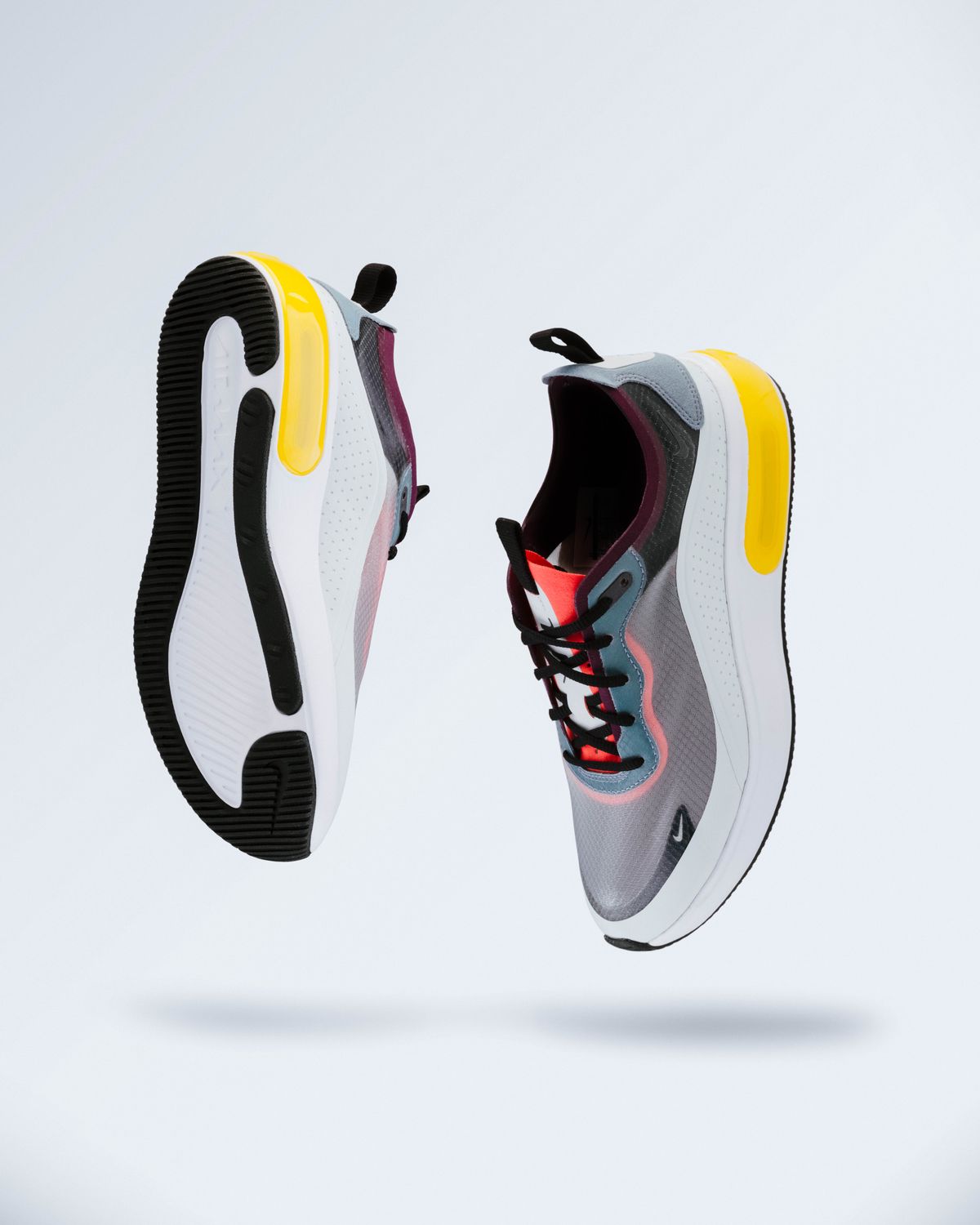
Don’t throw them out yet. Three cheap interventions, in order of how much difference they make.
Replace the insole first, with a flat 5mm EVA or a firmer orthotic-style insert. This restores the heel height you lost and stops the sinking feeling. Roughly the price of two coffees, and it usually buys another six months.
Second, add a heel grip if the back feels loose. Felt or silicone, either works. It fills the gap that opened when the foam compressed.
Third, rotate. Two pairs worn on alternate days each get 24 hours to recover, and foam recovers better with rest than with continuous load. In practice a rotating pair lasts about twice as long as a daily pair, so the second pair is closer to free than it looks.
And if the shoes are only four months old and already flat, that’s a density problem, not a you problem. Worth a complaint to the shop. Foam that collapses inside a season isn’t normal wear.
How long the pair should last, by how you use it
Manufacturers quote distances. Your life is measured in errands. Here’s a rough map, assuming average weight and dry weather.
- 2,000 to 3,000 steps a day (school run, office, supermarket): 18 to 24 months of useful life.
- 5,000 to 8,000 steps a day (commuter, no car): 12 to 15 months.
- 10,000+ steps a day (hospital shifts, retail, dog plus commute): 8 to 10 months.
- Any of the above plus 90kg body weight: knock a third off.
Those numbers are for the foam. The upper often outlives the midsole by a year, which is why people keep wearing shoes that look fine and feel awful. If you’re doing 10,000 steps a day on a concrete shop floor, treat walking shoes as an annual purchase and budget accordingly. The alternative, in my experience, is a physio bill.
Weight matters more than most people expect. Heavier walkers compress foam faster, and the same shoe that lasts two years on a 55kg frame can be done in eight months on a 95kg frame. That’s not a reason to buy the most expensive option. It’s a reason to buy the one with a removable insole.
Surface matters too. Concrete is unforgiving, treadmill belts are gentle, and gravel chews the outsole edges before the foam gives up. If your routine is 80 percent treadmill, you’ll replace insoles twice before the shoes.
Replacement insoles beat replacement shoes almost every time
A 10mm flat insole with a firm heel cup costs very little and restores most of what the original foam lost. What it won’t do is add cushioning at the forefoot, so if that’s your problem, look for a thin gel or EVA layer under the ball instead.
Three things to get right. Match the thickness of the insole you’re replacing, or the shoe gets tight across the instep. Check that it doesn’t have a hard plastic shell if you have sensitive arches. And give it a week, because a firmer insole always feels strange for the first three walks.
Don’t buy the thickest option on the shelf. I did that once, jammed a 6mm gel pad into an already snug pair, and spent a fortnight with numb toes before admitting the obvious. If the shoe was comfortable before the foam died, replace like with like and nothing more.
The honest summary for your next pair
Memory foam is a comfort feature with a shelf life, and it works best in one specific role: everyday walking on hard, flat surfaces, in mild weather, for someone with stable ankles. If you want to compare it against the other families of walking shoe before you commit, the sneaker listings here group the softer and firmer options side by side.
Outside that role, it’s a compromise. Cold weather makes it stiff, long days make it feel dead, and loose sizing makes it dangerous. None of that is a reason to avoid it. It’s a reason to buy it deliberately, check whether the insole comes out, and plan on replacing that insole once before you replace the shoes.
Next time you’re in a shop, press the heel with your thumb and count to three. If the foam is back before you finish counting, put the shoe down and try the next one.
