

Your commute is 12 minutes on foot, the office floor is polished concrete, and by 6pm your little toes are filing a complaint. That’s usually the moment people start searching for women’s leather walking shoes, not because they want something fancy, but because the sneakers they own look wrong with a wool coat and the flats they own feel like cardboard after mile two.
Here’s the short version: buy a pair with a full-grain or nubuck upper, a 6-10mm heel-to-toe drop, a toe box wide enough for your forefoot to spread, and a rubber outsole with a flex point that lines up with the ball of your foot. Everything else is decoration. The long version is the rest of this page, because those four things are harder to spot in a product photo than you’d think.
I’ve walked through leather pairs in wet Novembers, on marble lobby floors, and up a 400-step hill in Lisbon that wrecked a cheap glued sole in nine days. Some of what follows comes from that. Some comes from what podiatrists and leather tanners actually publish about the material. None of it is about logos.
Look at the leather first, the brand second
Turn the shoe over in your hand and look at the cut edge near the collar. If you can see fibers, it’s a solid hide. If you see a smooth plastic-looking slice with a fabric backing, it’s bonded leather, which is ground leather scraps glued to a mesh core. Bonded uppers feel soft in the shop and start flaking at the flex crease within a season. That single check eliminates most of the $45 pairs.
The Wikipedia entry on leather lays out the grades plainly: full grain keeps the outer surface intact, top grain gets sanded slightly, corrected grain gets sanded and stamped, and bonded leather is a composite. For walking, you want the first two. Full grain takes a scuff and turns it into patina. Corrected grain looks perfect for six weeks and then shows every crease as a lighter line.
Nubuck is the exception worth knowing. It’s full grain buffed on the outside, so it has a velvety nap, and it handles scuffs better than smooth leather because there’s no shine to break. The trade-off is that it drinks water. A light waterproofing spray every three weeks keeps it wearable in drizzle, but a full rainy-season shoe it is not.
What about the lining? Cheap pairs use a synthetic lining that doesn’t breathe, and your foot spends the day in a warm plastic bag. Press your thumb into the inside of the heel cup. Leather lining gives slightly and warms up fast. Fabric lining that feels clammy at room temperature will feel much worse at 3pm.
One more thing worth checking, especially if you have sensitive skin or you buy a lot of leather: the OEKO-TEX Leather Standard sets limits on the chemicals left in finished leather, including some azo dyes and formaldehyde. A tag with that certification or an equivalent one is a real signal, not marketing filler.

The 4mm that decides whether your toes go numb
Most women buy leather walkers a half size too small without knowing it. Not because they pick the wrong number, but because the last, which is the foot-shaped mold the shoe is built on, is narrower than their actual forefoot. You feel it at hour three, when the outside of your big toe starts buzzing.
Measure this at home before you shop. Stand on a sheet of paper, trace both feet, and measure across the widest part of the ball. Now compare that number to the shoe’s published width. If the difference is under 4mm, size up or find a wider last. Four millimeters sounds like nothing. It’s the difference between walking 8,000 steps and limping the last 2,000.
Heel-to-toe drop matters just as much and gets far less attention. A drop of 0mm, meaning a flat shoe, puts more load on your calf and Achilles. A 10-12mm drop feels stable on pavement but shortens your stride. For most people walking city miles in leather, 6-10mm is the comfortable middle: enough cushioning under the heel without pitching you forward.
Check the flex point while you’re at it. Hold the shoe by the heel and the toe, then bend it. It should fold right where your foot bends, at the ball. If it folds in the middle of the arch, the shoe will fight your foot all day and your arch will feel it by evening. If it doesn’t fold at all, it’s a brick, and bricks are for hiking boots with rock plates, not for a Tuesday.
A lot of women’s leather walking shoes get built on a fashion last because the maker wants a slim profile. You can spot it in photos: the toe tapers to a soft point rather than rounding off. A gently rounded or slightly squared toe gives your toes room to spread on push-off, and it hardly changes how the shoe looks with trousers.
How much sole you actually need for a 6,000-step day
Stack height is the total thickness under your foot, and it’s the number nobody prints on the box. Under 15mm, you feel every pebble and your heel takes the impact. Over 30mm, you get a soft ride but a wobbly ankle on uneven pavement, which is exactly what cobblestones are. Between 18 and 26mm is the workable band for daily walking.
The midsole material matters more than the number. EVA foam is light and cushioned and packs down after roughly 500km of walking. Polyurethane is heavier and holds its shape about twice as long, which is why some leather walkers feel the same in year two as month one. Rubberized EVA sits in between and is what most mid-priced pairs use now.
Outsole pattern is where cheap shoes confess. Look for:
- A heel strike zone with a slightly harder rubber compound, because that’s where you land first
- Flex grooves cut across the forefoot, not just decorative lines molded into the surface
- A rubber thickness of at least 3mm at the heel, since that’s the first place to wear through
- Stitching that goes through the outsole edge, not just glue holding the whole thing together
Glued soles fail in a predictable way. Water gets into the seam, the adhesive lets go from the toe or the outer edge, and you get that flap that catches on every step. Stitched or stitched-and-glued construction costs more and lasts two or three resoles longer. If you walk more than 40km a week, that’s the version to buy.
Weight is the last number to check and the easiest to feel. A women’s walking shoe in the 280-340g range per shoe (EU 38) disappears on your foot. Above 400g, you notice it at the end of a long day, and you start leaving the pair in the cupboard. Light isn’t automatically better, but heavy leather walkers need a very good reason to exist, and most don’t have one.
Break-in: three days tells you everything
Ignore the “no break-in needed” claim on the box. Full-grain leather always takes a few wears to mold to your heel and instep. What you’re testing is whether it molds or fights.
Wear them indoors for 90 minutes on day one, with the socks you’d actually wear. Then check three spots: the top of your instep, the back of your heel, and the outside edge of your little toe. Pink marks are fine. Red marks or a hot spot means the last is wrong for your foot, and no amount of breaking in will fix it.
Day two, take a 25-minute walk outside. Day three, do your normal commute. If you’re reaching for a plaster by day three, return them. That’s the whole test, and it’s more reliable than any review you’ll read, including this one.
Two tricks help if the fit is right but the leather is stiff. Wear them for twenty minutes with a slightly damp (not wet) thin sock, which softens the fibers where they crease. And use shoe trees between wears, cedar if you can, because they pull moisture out of the lining overnight and keep the toe box from collapsing.
Don’t soak them. I’ve seen the internet advice about filling shoes with water and walking them dry, and it works about as well as you’d expect: the leather stretches unevenly, the insole glues let go, and the shape is gone. If a pair needs a full soak to feel okay, it’s the wrong pair. There’s a reason woven leather shoes fit differently from solid hides, and patience beats water every time.
Rain, salt and the two-week scuff test
Leather is skin, and skin that dries out cracks. That’s the entire care philosophy. Wipe salt off in winter within a day, because road salt draws moisture out and leaves a white bloom that turns into a permanent stain if you ignore it for a week. A damp cloth and ten seconds is enough.
Condition every four to six weeks in dry weather, less in summer humidity. A pea-sized amount per shoe, worked in with fingers, left for twenty minutes, then buffed. Over-conditioning is a real problem: the leather goes limp, the toe box sags, and the shoe starts looking like a slipper. If the surface feels tacky the next morning, you used too much.
Waterproofing is separate. A fluorocarbon-free spray every three to four weeks keeps light rain out and doesn’t change the finish. It won’t make a leather shoe waterproof, and any product claiming that is selling you a rubber boot with a leather look.
Scuffs on smooth leather come out with a fingertip of conditioner and a circular rub, most of the time. Scuffs on corrected grain often reveal a lighter core, which is why that finish looks worse with age. Nubuck needs a suede brush and a bit of patience, and it will never look new again, which is part of the charm if you’re into that.
Store them with air around them. A closed box in a humid hallway is how you get mold along the welt, and mold smells like a basement and doesn’t fully leave. Rotate two pairs if you walk daily, since leather needs about 24 hours to dry out from the inside. That single habit adds years, and it costs nothing.
Three traps I’d skip, even on sale
First, the “leather-look” pair with a PVC upper. It doesn’t breathe, it creases in sharp white lines, and it smells like a beach toy. If the listing says “PU leather” or “vegan leather,” understand you’re buying plastic. Some modern plant-based uppers are genuinely good, but they cost as much as real leather and they still don’t breathe the same way.
Second, the extra-light pair with a 12mm stack and no shank. It feels amazing for a week. Then the midsole compresses, the arch drops, and your knee starts talking to you. Lightweight is fine when there’s structure underneath. Without it, you’re walking on a sponge.
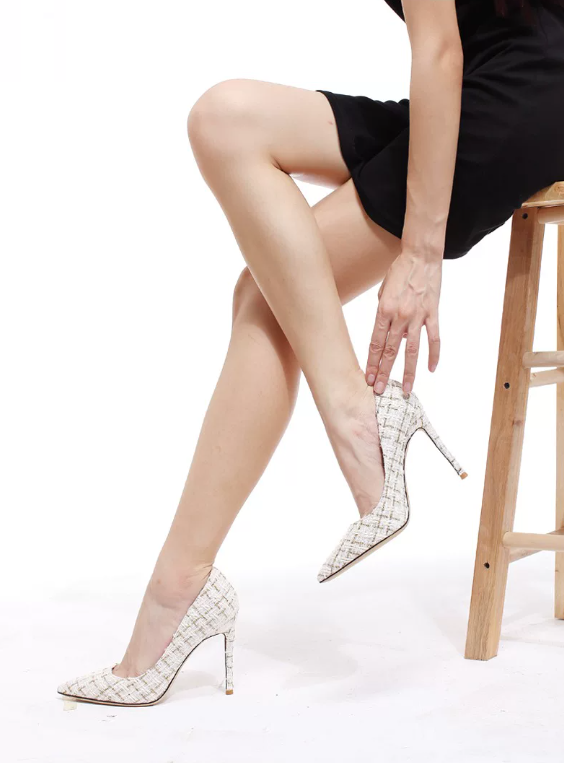
Third, the pointed-toe leather walker. It photographs beautifully and it will crush your toes on every push-off. If you want a sleeker profile for the office, get a slightly squared or almond toe and keep the width. There are office-appropriate options in the wider shoes catalog that don’t sacrifice the toe box.
Honestly, the biggest trap is buying for the outfit you have in your head rather than the week you actually live. I’ve done it. Bought a beautiful tan pair for autumn, wore them four times, and went back to the beat-up grey sneakers because the tan ones pinched at the instep on hills. The shoes you reach for are the ones that fit, not the ones that match the coat.
What to wear them with, and what actually works
Leather walkers sit in a useful gap. They’re dressier than mesh trainers, so they work with tailored trousers and a knit midi skirt. They’re softer than loafers, so a 40-minute commute doesn’t leave you with blisters. The trick is keeping the proportions clean: a slim outsole reads smarter, a chunky one reads casual.
For a work week, try a dark brown or black pair with straight-leg wool trousers and a fine-gauge sweater. The leather holds the shape of the trouser hem better than a fabric sneaker does. For weekends, an off-white or tan pair with wide jeans and a striped tee looks intentional rather than “I gave up.” Avoid pairing a shiny corrected-grain shoe with athletic socks; the contrast is what makes it look off.
Colour is simpler than people think. Brown goes with navy, olive, denim, and most creams. Black handles grey and charcoal and looks sharper in rain. Off-white is the one that needs commitment, because it shows every scuff and needs cleaning weekly if you care. If you want a second pair, a low-profile leather sneaker in cream covers the casual end, and there’s a decent starting point in this soft leather sneaker with a broken-in feel.
Socks change the fit more than most people expect. A thin cotton sock versus a cushioned wool sock can eat 3mm of toe room. Try your walkers with the socks you’ll actually wear, and if you’re between sizes, size for the thicker sock. Buying for bare feet in summer and then wearing wool in November is how a good pair becomes a cupboard ornament.
If your week includes long stretches of standing rather than walking, a slightly thicker sole helps more than extra cushioning in the heel. And if you want a pair that handles warm weather without turning into a sauna, a breathable mesh walking pair is the summer counterpart to a leather one. Neither replaces the other; most people end up wanting both.
How to buy a pair in twenty minutes
Go in the afternoon, because feet swell by up to half a size over a day. Wear the socks you’ll wear most. Try on both shoes, not just one, since plenty of people have a foot that’s 3-5mm longer than the other and never notice until mile four.
Then do this, in order:
- Press the toe box: you want a thumb’s width, about 10mm, ahead of your longest toe
- Walk on a hard floor for two minutes, listening for heel slip; a little is fine, a lot means the heel is too wide
- Bend the shoe at the ball and check that the crease matches where your foot bends
- Stand on one leg for ten seconds; if you wobble badly, the sole is too soft or too tall
Price isn’t a perfect guide, but the range where stitched construction and real leather usually appear is $110 to $190. Below $70, you’re mostly paying for glue and marketing. Above $220, you’re paying for a name unless the pair is resoleable, in which case the math changes over five years.
For women’s leather walking shoes, the boring answer wins: full-grain upper, 6-10mm drop, 18-26mm stack, stitched sole, and a toe box you can actually spread your toes in. Buy that, wear them for three days, and you’ll know by Thursday whether you got it right. If your little toe is still happy at 6pm, keep them and stop shopping.
One last thing. Don’t buy two pairs at once to “save a trip.” Wear the first pair for a month, find out what annoys you, then buy the second with that knowledge. Your feet will tell you more in 30 days than any size chart will. If you’d rather start with something softer while you decide, a thick-soled pair that adds a bit of height is an easy transition, and it pairs well with the same trousers. For the office half of your wardrobe, these business casual shoes that survive past 5pm are worth a look too.
