

Sizing Booties Heels Right the First Time
Most booties get returned for one reason, and it isn’t the heel height or the colour. It’s the size. People buy their trainer size, take them home, wear them twice, and then spend three months telling everyone the brand runs small. Half the time the brand is fine and the fit was never checked properly.
Here’s what I do now, after buying six pairs and getting two of them wrong.
How the bootie actually sits on your foot
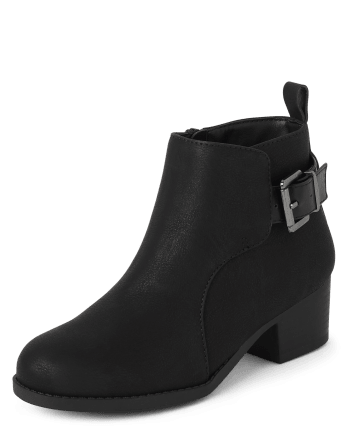
A bootie is a short boot with a heel, and the parts you need to think about are all below the ankle. The heel counter at the back holds your heel down. The shaft wraps the ankle and stops the foot sliding forward. The vamp, the top surface over your toes, is where tightness shows up first.
That combination is why a bootie feels more stable than a pump at the same height. Your ankle is supported, so the shoe doesn’t have to grip your foot with friction alone. It also means the fit has to be right in two directions at once: length and shaft. A pair that’s correct in length but loose at the ankle will rub your heel raw by the second mile, and no insole fixes that.
Heel height feeds into the size question too, which surprises people. A 90mm boot pushes your foot forward, so you need half a size more length than the same boot at 60mm. The steeper the angle, the more room your toes need at the front, and that’s before you’ve walked anywhere.
Spring: the half-size mistake everyone makes
Spring is when sizing errors get made, because you’re trying boots on with bare feet in a warm shop and everything feels roomy. Then you get them home, wear them with a thin sock on a cold morning, and your toes are against the front by the time you reach the office.
Try them on with the sock you’ll actually wear. In my case that’s a 3-denier liner in April and a wool blend in November, and the difference between those two is a full size. If you can only own one pair, size for the thicker sock and add a gel insole for the barefoot months.

Summer: leather stretches, suede doesn’t
This is the single most useful thing I’ve learned about fit, and it decides what you buy in June. Unlined leather gives. Half a size over three weeks of wearing, sometimes more, especially across the vamp. Suede doesn’t. Nubuck doesn’t. Patent is the worst of all, because it’s stiff and it stays stiff.
So if you’re between sizes, go down in unlined leather and up in patent. Suede is the one where you buy the size that feels right on day one, no adjustments, because there won’t be any.
Summer cut-outs and open toes complicate it further, since there’s less material to hold the shape. My woven pair has stretched enough that I now wear them with an insole in July, which I didn’t plan for.
Autumn: watch the calf, not the foot
Autumn is when you tuck things into the shaft, and that’s where a boot that fits your foot perfectly can still be wrong. If the shaft opening is narrower than the widest part of your calf, skinny jeans will bunch at the top and the boot will pull down with every step.
Measure the opening flat across the top. Mine is 12cm on the good pair and 10.5cm on the pair I regret, and that 1.5cm is the difference between tucking jeans in comfortably and giving up by October.
Then there’s the ankle gap. A shaft that sits loose around your ankle lets in cold air and lets water run down inside, and it also makes the boot feel like it’s falling off even when the length is right. An elastic panel at the back fits more people than a rigid shaft, and it forgives being half a size off.

Cost per wear beats the price tag
Do the arithmetic before you decide a pair is expensive. A $140 leather bootie worn twice a week from September to March works out at around $1.30 a wear in the first year, and less every year after that. The $45 pair I bought in a hurry split at the welt after four months and cost me $45 for roughly twenty wears.
The checks that predict whether a bootie will survive that long are not complicated. Look at the stitching density along the welt, because a short, widely spaced stitch is the first thing to fail. Press the heel with your thumb; a hollow knock means a plastic heel block, which will crack. And check that the insole is stitched or glued down properly at the edges, since a loose insole slides forward and takes your toes with it.
Sizing also affects longevity. A boot that’s too small creases at the vamp and splits there within a season. One that’s slightly too large gets worn with an insole and lasts years.
Winter: size for the sock, then waterproof
Winter sizing is a different exercise. Thick socks, tights, and sometimes both, which means going up half a size from your autumn fit. Try the pair on with the actual sock, at the end of the day, when your feet are at their largest.
Then treat the leather before the first wet week, not after. A wax or a spray on a dry boot will keep the water out for a couple of months. Applied to a boot that’s already damp, it traps the moisture and the leather goes hard at the flex point. I learned that on a pair of tan boots that now crease like cardboard.
Check the sole in October, too. A leather sole with a small rubber insert at the heel looks smart in the shop and behaves badly on a wet pavement, and a cobbler will fit a rubber half-sole for about $20. Do it before the first cold snap rather than after the first slip.
One pair, three outfits
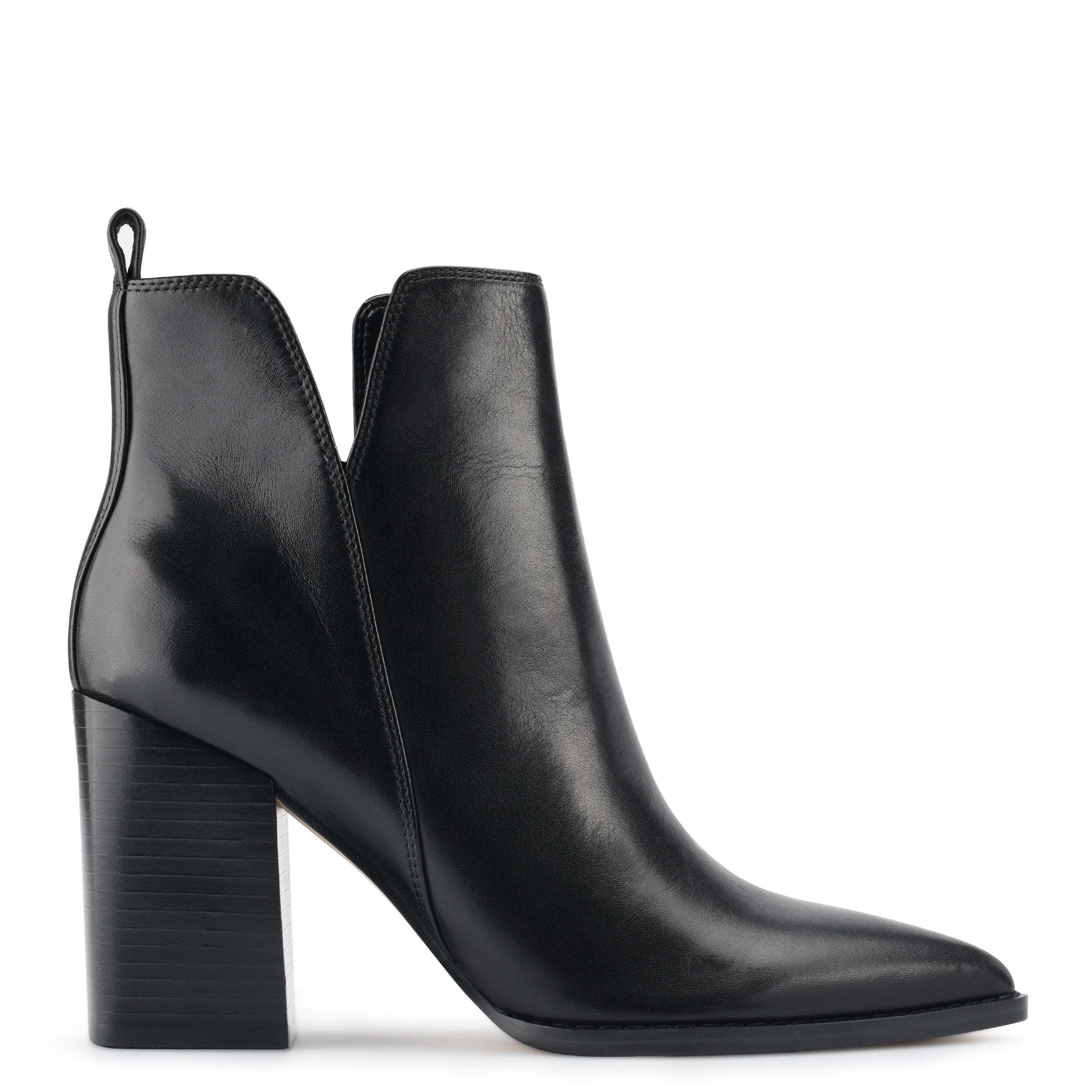
The reason to get sizing right is that a well-fitted black bootie will do the work of three shoes. With tailored trousers and a blazer it reads as office wear. With jeans and a knit it’s a weekend shoe. With a midi dress and opaque tights it’s what you wear to dinner when you can’t face heels.
None of that happens if the boot slips at the heel or pinches at the toe, because you’ll leave it in the cupboard and buy another pair to solve a problem you created at the till. Get the size right and one pair covers more of your week than four pairs that fit badly.
So: measure at the end of the day, try on with your real sock, go down in unlined leather, up in patent, and check the shaft opening against your calf before you commit. Ten minutes in the shop saves a return and a month of blisters.
