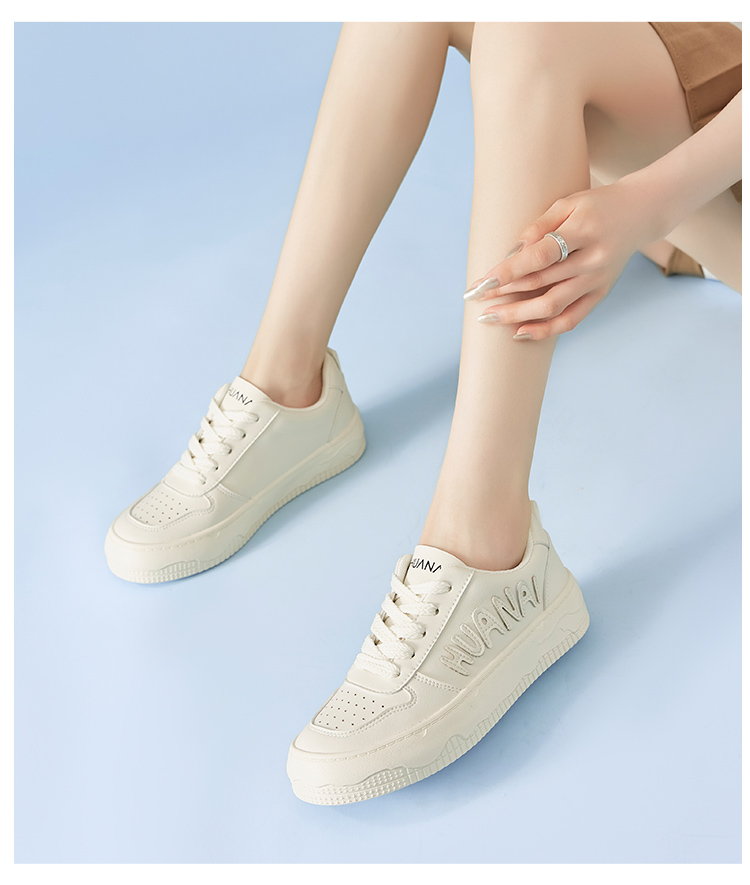
Two pairs of comfy shoes for work, both black, both low, both sold as all-day wearable. One costs about 55 dollars, one about 140. On a shelf they look like cousins. On your feet at 6 pm, they behave like different categories of object.
Before you decide which side of that gap you belong on, there are three things to check, and the order matters. What the upper does after 30 wears. What sits between your foot and the ground. How the sizing runs compared with what you already own. Get those three right and the price question mostly answers itself.
Most buyers get the second one wrong, because the insole is covered up and nobody lifts it in the shop. We’ll get there. First, the fair comparison.
The two pairs, set up honestly
Take a 55 dollar pair from a fast-fashion wall and a 140 dollar pair from a brand that sells walking and work shoes. Both claim comfort. Both have a cushioned footbed, a knit or mesh upper, and a rubber outsole. Neither is a medical shoe.
What differs sits in four places: the foam density of the midsole, the lining material, whether there’s a shank under the arch, and the amount of structure in the heel counter. None of those four things is visible from standing height. All four decide whether the pair survives to month eight.
Here’s the ranking I’d use, from most to least important for a 9-hour working day:
- Midsole foam density. Decides hour five through nine.
- Heel counter stiffness. Decides whether your heel stays put.
- Lining material. Decides sweat, and sweat decides blisters.
- Upper. Decides looks, and looks matter less than you think at 4 pm.
Notice that the upper ranks last. It’s the part everyone looks at first, in the shop, under good light, for 90 seconds. It’s also the part that matters least to whether you can stand through a full shift.
Uppers: what the price gap looks like in month two
Cheap mesh and good mesh feel nearly identical on day one. Both are light. Both breathe. The difference shows up after a few weeks, when the cheaper knit starts to relax and lose its shape across the instep.
What you’ll notice: the shoe gets wider in a soft, saggy way rather than a comfortable way, and the heel starts to slide because the upper no longer holds your foot forward. That’s the point where people tighten the laces too much to compensate, which pinches the top of the foot and creates a whole new problem.
Better uppers use a denser knit with structure built in at the sides, or a knit panel bonded to a firmer backing. You can test this in the shop. Pinch the upper at the side of the forefoot and let go. Good material snaps back. Cheap material stays slightly creased where your thumb was.
Leather changes the maths. A full-grain leather upper at 140 dollars will outlast three cheap mesh pairs, and it holds its shape as it moulds. The trade is weight, usually 60 to 90 grams more per shoe, and about two weeks of firmness before it softens. If your day is mostly indoors and dry, leather is the better buy. If you walk to work in the rain, mesh dries faster and you’ll resent leather by November.
Inside the shoe: the three parts nobody lifts up
Pull the insole out. It should come out, and that alone tells you something. Glued-in insoles are cheaper to assemble and impossible to replace, which means the shoe dies when the foam does.
Press the insole with your thumb. If it compresses to half its thickness and stays there for a second, it’s low-density foam and it’ll pack down in roughly six to ten weeks of daily wear. If it springs back fast, it’ll hold for months.
Now run your finger under the arch inside the shoe. You’re feeling for a shank, a stiff plate that stops the middle of the shoe folding. Cheap flats often have nothing there. That’s not automatically bad under 4,000 steps a day, but on a long standing shift your foot becomes the shank, and the plantar fascia pays for it.
Last, look at the lining. Leather lining breathes and ages well. Textile lining is fine in a light shoe. Shiny synthetic lining is the one to avoid if you’ll wear the pair eight hours: it doesn’t move moisture, so your foot sits in a warm film from about hour two. That’s the setup for a blister at the heel or the little toe, and once one forms you’ll change how you walk, which is worse than the blister.
Sizing runs differently, and that’s the real trap
This is where the price gap quietly costs people money. A 55 dollar pair from a fast-fashion chain usually runs narrow and short, because the last is built for a different population. A 140 dollar work shoe often runs true to EU sizing, with a wider toe box.
So the same person can be a 39 in one and a 40 in the other, and if you order online by habit you’ll get one of them wrong. Buy the cheap pair a half size up. Buy the better pair in your measured size and check width instead.
Measuring takes two minutes and beats guessing. Stand on a sheet of paper at the end of the day, heel to the wall, and mark your longest toe. Then measure the widest part of your forefoot. Compare the width number to the shoe’s listed width if it has one, or to the insole if it doesn’t.
Two conditions worth knowing:
- If your forefoot measures wider than about 95 mm in a women’s size 39, most cheap ranges won’t fit regardless of length.
- If one foot is a half size bigger, which is common, fit the bigger foot and use a heel grip in the smaller shoe.
And a warning. Don’t buy a tight pair expecting it to stretch into comfort. Knit stretches in the wrong direction, which is width, not length. Leather stretches a little and then stops. Neither gets longer.
Hours five to nine: where the cheap pair gives up
Almost any shoe feels acceptable for four hours. The differences show up in the back half of the day, which is exactly when you can’t do anything about them.
Look at what fails, in order. The insole foam flattens under the heel first, so the heel sits lower and the shoe starts to feel like it’s tipping you backwards. Then the midsole loses rebound, and walking starts to feel like work rather than momentum. Then the lining gets damp, and the seam at the heel turns into a rough edge against bare skin.
The expensive pair delays all three. It doesn’t prevent them. A 140 dollar shoe is not a magical object, and after 18 months of daily wear it behaves like a cheap shoe too. What you’re buying is time: usually 8 to 14 months before the first of those three problems shows up, versus 2 to 4 months on the cheap pair.
Standing still is the harsher test. Walking loads and unloads your foot, which helps circulation. Standing loads the same spot continuously, so a thin sole with no shank becomes noticeable in about 90 minutes. If your job is a counter, a till, a clinic, or a kitchen pass, weight the midsole and shank checks far above how the pair looks.
Where the extra money goes, line by line
It isn’t a mystery, and it isn’t all markup. On a work shoe, the gap between the cheap pair and the better one usually splits roughly like this: more expensive foam in the midsole, a real lining instead of a coated textile, a stiffer heel counter with actual board in it, and more time at the assembly stage because someone is checking seams instead of counting units.
Brand margin takes a slice too, and so does the shop. But you can feel most of the difference under your foot, which is the useful part. If a pair costs twice as much and the insole feels identical to the cheap one, you’re paying for the logo or the shop floor, and you can walk away without guilt.
The reverse also happens. Plenty of mid-priced shoes are built to the same standard as the expensive ones and priced lower because they skip the marketing. That’s why the shop test beats the price tag. Ninety seconds of twisting and pressing tells you more about a shoe than the number on the box.
One warning about sales. A discounted 140 dollar pair at 70 is usually a better buy than a full-price 70 dollar pair, but only if it’s last season’s colour and not last season’s construction. Check the insole and the counter the same way. Clearance racks are full of shoes that were expensive and badly shaped.
Rotation beats splurging on one pair
Two pairs at 90 dollars wear longer than one pair at 180, and it isn’t close. The reason is moisture. A shoe worn every day never fully dries inside, and damp lining breaks down faster than dry lining by a wide margin. Give each pair 24 hours between wears and both last.
There’s a second reason that has nothing to do with materials. Two pairs means two shapes, so your foot isn’t hitting the same three pressure points every single day. People who alternate often report fewer hot spots than people in one very good pair, which sounds like nonsense until you’ve tried it for a month.
How to run it without spending more: buy the second pair when the first is still wearable, not after it dies. Buy it in a different shape, not the same model in another colour, so the two shoes load your foot differently. And keep them somewhere they can actually air out, which means not jammed into a bag under a desk.
If money is tight, the honest ranking is: one decent pair plus one cheap pair, rotated, beats one expensive pair worn daily. Cheap plus rotation outperforms expensive plus constant wear for most people.
Who each pair is right for
The cheap pair is the correct answer in three situations. You need something for two or three days a week and under 4,000 steps. You’re buying a colour you’ll wear for one season and then pass on. Or your feet are hard to fit and you want to test a shape before spending real money on it.
The better pair earns its price when the shoe is doing structural work: 5 days a week, 7,000 steps or more, standing shifts, or a job where you’re on hard floors all day. That’s when foam density and a heel counter stop being specifications and start being the reason your knees don’t ache on Saturday.
There’s a third option people forget. A mid-priced pair at around 90 dollars with a removable insole is often the smartest buy, because you can put a 15 dollar footbed in it and get most of the comfort of the expensive shoe. It won’t fix a bad heel counter, but it will fix a thin one.
Cost per wear settles most of these arguments. A 55 dollar pair worn 40 times costs about 1.40 per wear. A 140 dollar pair worn 300 times costs 0.47. The expensive shoe is cheaper, which is the least intuitive sentence in footwear.
Weight and stack height: the two numbers worth knowing
Per-shoe weight is the easiest number to check and the one nobody asks for. Under 250 g feels light and quick but usually means less foam and less structure. Between 250 and 320 g is the working range for a day shoe. Over 400 g, you’ll feel it in the last two hours, mostly in the front of the thigh.
Stack height is the thickness from the ground to the inside of the shoe. A 15 mm stack is close to the ground and lets you feel everything, which some people like and most people don’t on concrete. A 25 mm stack absorbs more and looks slightly more athletic. Past 35 mm you’re in platform territory, and there’s a real cost in stability if you spend the day on your feet.
The other number is heel-to-toe drop, the difference between the heel and the forefoot. Zero drop takes load off your knees and puts it on your calves. A 8 to 10 mm drop is the standard for walking shoes and the safest bet if you’re switching from ordinary flats. Change drop slowly, over weeks, not days. People who go from 10 mm to zero overnight usually end up with sore calves and the conclusion that the shoes are bad.
None of this needs to be exact. But if you know your day, you can read three numbers on a spec sheet and rule out half the wall before you try anything on.
The 90-second shop test
You don’t need a lab. You need a hard floor and 90 seconds.
Twist the shoe along its length. It should bend at the ball of the foot and resist through the middle. Press the heel counter with your thumb and see if it holds. Pinch the upper at the side and watch it recover. Lift the insole and press it. Run a finger under the arch for a shank. Then put both shoes on and walk 20 steps on a hard floor, not carpet.
Carpet hides everything. Tile and concrete tell you the truth about impact within 20 steps, which is why shoe shops put carpet down.
If it’s an online order, the equivalent test is the hallway at home for two hours, then a decision before you wear them outside. Keep the box. A 30-day return window is the closest thing you get to a trial, and using it isn’t rude.
A fitting note from experience rather than theory: if a pair needs a shoehorn to get on in the shop, it’ll need one every morning, and after six weeks you’ll stop wearing them out of pure irritation. That’s the most common way a technically fine shoe ends up at the back of the cupboard.
If you’re shopping for a working day rather than a commute, these shock-absorbing ultra-light shoes built for long days sit in the middle of the price band above, and this pair of breathable flatter-soled board shoes works if you’d rather have a firmer ride underfoot. For a leather option that holds shape, look at the spring sports and leisure range.
More pairs sit in the sneakers category if you want to compare shapes side by side. On the sole question specifically, the sole thickness nobody mentions is worth ten minutes before you spend anything. And if you’re leaning toward suede or nubuck, three wet weeks on suede explains what that material does in real weather.
Pick the pair that matches your hours, not your outfit. Then check the insole before you check the mirror. Everything else is decoration.