

Four days, one carry-on, and a 10kg limit, which is the constraint most airline cabin baggage rules are built around. The shoes are the first thing that has to be decided, because they take up more space than anything else in the bag and they can’t be folded.
Most people solve it badly. They pack three pairs, wear one on the plane, and spend the trip rotating between a pair that hurts and a pair that’s wrong for the weather. The better approach is to pick one pair against three specific criteria before anything else goes in the bag.
Here’s the order of decisions that works, starting with the one most people make last.
The three criteria, in priority order
Before you look at a single pair, write down these three numbers. They eliminate about 80% of the options immediately, which is the point.
- Walking distance per day. A city break with a hotel near the centre is usually 8,000 to 12,000 steps. A resort trip is closer to 3,000. Those two numbers point at completely different heels.
- The one event that has a dress code. A wedding, a dinner, a work thing. If there’s one, the shoe has to clear it. If there isn’t, the shoe only has to be clean.
- Weather at the destination, not at home. Rain decides the material. Heat decides the lining. Cold decides whether you need a closed toe at all.
Run those three and the answer is usually obvious. Someone flying to Lisbon in September for a friend’s dinner needs a 50mm closed-toe leather shoe and nothing else. Someone flying to Marrakech in April for a resort week needs a flat sandal, and any heel is dead weight.
The mistake is choosing the shoe first and then justifying it. Do the numbers first, and the shoe is a consequence rather than a gamble.
Trip planning advice from the BBC travel desk tends to say the same thing for a different reason: pack for the trip you’re taking, not the trip you might take. Weight is worth checking as well, because it’s the constraint most people underestimate. A pair of heeled leather shoes typically runs 600 to 900g. A pair of flat sandals runs 300 to 400g. On a 10kg carry-on with a laptop, that difference decides whether you can bring a second jumper. Weigh the pair on a kitchen scale before you pack it, and you’ll usually find the second pair isn’t worth the space it costs.
There’s also a footwear rule that applies to almost every trip: the pair you wear on the plane should be the heaviest and the most structured. Bulky shoes are the hardest thing to fit in a bag and the easiest thing to wear, and airport floors are flat, which is the best surface a good pair will see all week.
What four days actually asks of one pair
Day one is the hardest, and it’s the day nobody plans for. You’ve been sitting for hours, your feet are slightly swollen, and you’re walking further than usual with a bag. A pair that fits perfectly at home can be tight by the time you reach the hotel.
That’s the argument for wearing the bulkiest pair on the plane rather than packing it, and for choosing the pair you already know rather than the new pair you bought for the trip. New shoes on day one of a four-day trip is the single most common packing error I see, and it’s entirely avoidable.
Day two is usually the long walking day, which is where heel height stops being a style question. Above 60mm, eight hours on cobbles is a bad plan regardless of how well the shoe fits. Between 30 and 50mm, most people are fine. Below 30mm, comfort wins and nobody at dinner notices.
The event day, if there is one, lands on day three. This is where a single pair has to do two jobs, and where a slingback or a low block heel earns its place. It reads dressed up with a dress and casual with trousers, which is exactly the flexibility one-pair packing needs.
The return comes on day four, and it’s when your feet are tiredest. Whatever you brought, this is when you’ll be glad it wasn’t a stiletto.
If the trip includes a beach day or a pool day, don’t count that as a shoe problem. Most hotels provide something, and a pair of flat sandals takes up almost no space. The shoe decision is about the other three days.
One more thing about day two: cobbles and wet stone are the two surfaces that turn a 50mm heel into a hazard. If the destination is an old European city, assume both. A block heel or a wedge is the only shape that reliably handles uneven ground, and the difference between a block and a pin on wet stone isn’t style, it’s whether you stay upright.
The sink-wash test, and drying overnight
One pair for four days means the pair gets worn every day, which means it needs to survive a wash and dry overnight. Test this before you travel, not during.
What works: leather uppers with a leather lining, wiped with a damp cloth and left to dry at room temperature. They’ll be wearable by morning. What doesn’t: suede, patent, and anything with a fabric lining that holds water, all of which need 24 hours minimum and will still feel clammy at 8am.
The exception is a shoe with a removable insole. Pull it out, dry it separately, and the shoe dries in half the time. If you’re choosing between two pairs and one has a removable insole, that’s a real tiebreaker for one-pair travel.
Two practical rules for the hotel room. Don’t dry shoes on a radiator or with a hairdryer, because heat shrinks leather and warps the sole. And do stuff them with newspaper or a rolled towel overnight, which pulls moisture out and holds the shape.
If you’re travelling somewhere humid, accept that nothing dries fully and plan for it. A pair of thin no-show socks in the bag solves most of the discomfort, and they weigh nothing.
There’s a related point about smell, which nobody likes discussing but everyone has dealt with on day three of a one-pair trip. It’s almost always moisture, not hygiene. Rotating socks, airing the shoes by an open window overnight, and avoiding wearing them for the airport transfer are enough in most cases. A travel-size shoe spray is a reasonable 50g to spend if you’re prone to it.
The alternative to all of this is a pair that doesn’t need washing, which in practice means leather in a dark colour. Scuffs wipe off, small marks don’t show, and a dark brown or black pair can go four days without looking tired. This is the least glamorous advice in this piece and the most reliable.
What to leave at home
Three things consistently don’t earn their space in a four-day bag.
The second pair of heels is the first thing to cut. It’s the item people pack and never wear, because once the first pair is on your feet and comfortable, the second pair stays in the suitcase. If you’re flying with a carry-on, that’s 800g spent on nothing.
Next, anything that needs a specific outfit to work. A shoe that only goes with one dress is a shoe that goes with nothing on a trip where you’re re-wearing outfits.
Then there’s the new pair bought for the trip. Breaking in shoes requires days you don’t have on holiday, and blisters ruin more trips than bad weather does. If you want new shoes for a trip, buy them three weeks early and wear them around the house for a week first.
There’s a fourth, more subtle one: white shoes. They photograph beautifully and look terrible by day two if there’s any rain at all. Unless the trip is guaranteed dry, white leather is a commitment to cleaning them in a hotel sink at eleven at night.
What to bring instead of the second pair: a pair of flat sandals or foldable ballet flats, which take up less room than a pair of jeans and cover the beach, the breakfast run and the airport. That combination, one proper pair plus one flat, handles more situations than two pairs of heels.
The hard case: a formal event plus a lot of walking
Some trips break the one-pair rule, and it’s worth admitting that rather than pretending a single shoe solves everything. A four-day trip with a wedding and 12,000 steps a day is two jobs, and one pair will be a compromise on one of them.
The workable answer is a two-pair split with a fixed budget: one pair that walks, one pair that photographs, and nothing else. The walking pair goes on the plane and handles days one, two and four. The evening pair stays in the bag and comes out for three hours. That’s roughly 1.2kg of shoes, which is survivable in a carry-on if you cut a jumper and a second pair of trousers.
What doesn’t work is trying to make the evening pair the walking pair. A heel high enough for a wedding is not a heel for 12,000 steps, and buying a compromise at 60mm usually means it’s slightly wrong for both. Two specific pairs beat one universal pair every time, as long as you cap it at two.
If the formal event is a wedding, check the venue floor in advance. Outdoor ceremonies on grass and gravel rule out thin heels entirely, and a block heel or a wedge is the only safe choice. This is the detail that ruins more wedding outfits than the dress does, and it’s a two-minute email to the couple or the venue.
For the walking pair, the criteria from earlier still apply: closed toe, leather, 30 to 50mm, block heel. A slingback is often the most flexible version of that shape, and our notes on slingback heels that work from office to dinner apply just as well to a trip with one formal evening. For the evening pair, the criteria are simpler: it has to match the outfit, and it has to be comfortable enough for three hours of standing and sitting. Nothing else matters, because you’ll only wear it once.
The packing list, and the last call
If you are starting from nothing, the wider shoe catalogue has the flat options that rarely make it onto the front page.
A working four-day packing list for shoes looks like this: one pair worn on the plane, one pair of flats in the bag, and one pair of socks you don’t mind losing. That’s it. Everything else is a decision you’ll regret at the airport.
Bag the shoes before the clothes, not after. Shoes go flat against the back panel of the case, heels facing the hinge, and everything soft gets packed around them. Doing it in that order saves about a third of the space compared with dropping the shoes in last, and it stops the heels from pressing a crease into whatever is underneath them for six hours.
Then the last call, which is the question to ask before you zip the bag. Can this pair walk 90 minutes in the rain and still look acceptable at dinner? If yes, it’s the right pair and you can stop thinking about it.
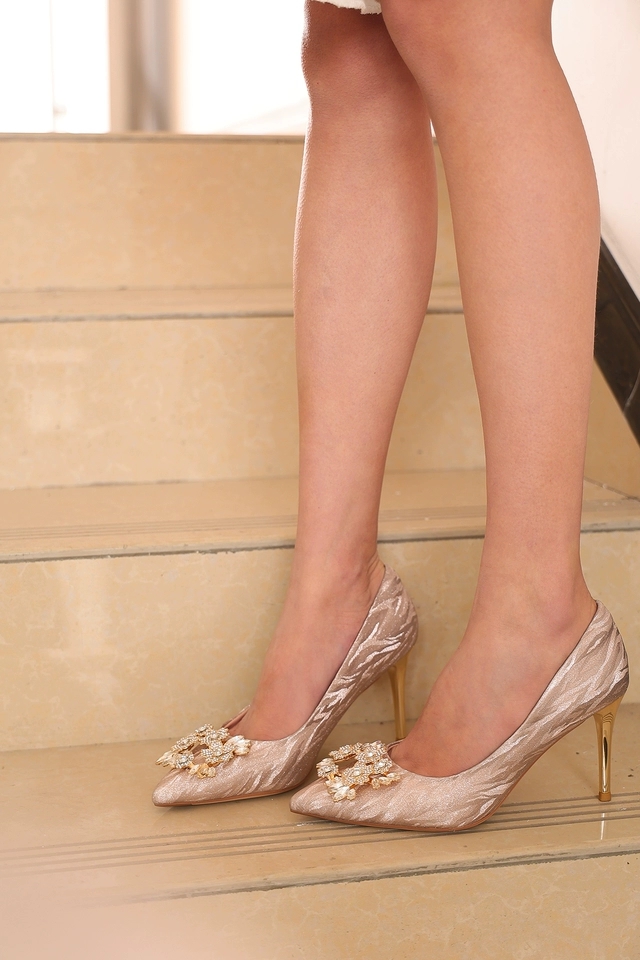
If you want one option that covers the evening end of the trip, a pair of champagne-toned shoes with a soft heel works for a wedding or a formal dinner without being so specific that it can’t be worn with anything else. The colour does most of the work, and champagne forgives a scuff in a way that white never will.
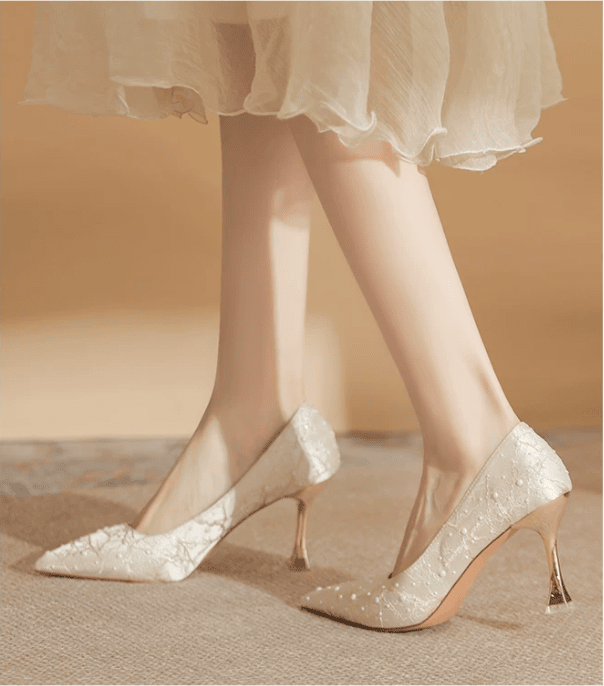
For a trip with a warmer climate and an evening event, a pearl-detailed pair with a low heel is the other sensible choice, since it photographs well and takes up the same space as a plain pair.
The general principle is the one from the start of this piece: decide the walking distance and the dress code first, then buy or pack the shoe that meets both. Everything else is preference.
Holiday shoes for women get chosen in a hurry, usually the night before, usually with the suitcase already half full. Do it the other way round. Pick the pair against those three criteria, wear it on the plane, pack one flat, and leave the rest at home. Four days is not long enough to need a shoe collection. It’s long enough to notice whether the one pair you brought was the right call. And you’ll know by day two.
