

Start with the dress code you actually have
You have a meeting at nine, a lunch that runs long, and a train home at 18:40. Somewhere in that day you’ll walk about 6,000 steps and stand for maybe two hours. That is the real brief for office shoes, and it has almost nothing to do with what a dress code PDF says.
Business casual is the loosest useful category in womenswear and also the most confusing, because it covers everything from a blazer-and-jeans office to a firm where everyone still wears a suit on Tuesdays. Before you buy anything, answer three questions. What do your most senior colleagues wear on a normal Wednesday? How far do you walk between the station and your desk? Is there a single day a month when you need to look more formal than usual?
Your answers set the brief. A woman who drives 12 minutes to a suburban office needs different shoes from one who changes trains twice. The best business casual shoes women own are almost always chosen around a commute, not around a look.
Get this wrong and you end up with beautiful shoes you don’t wear, or sensible shoes you resent. Neither is a bargain at any price.
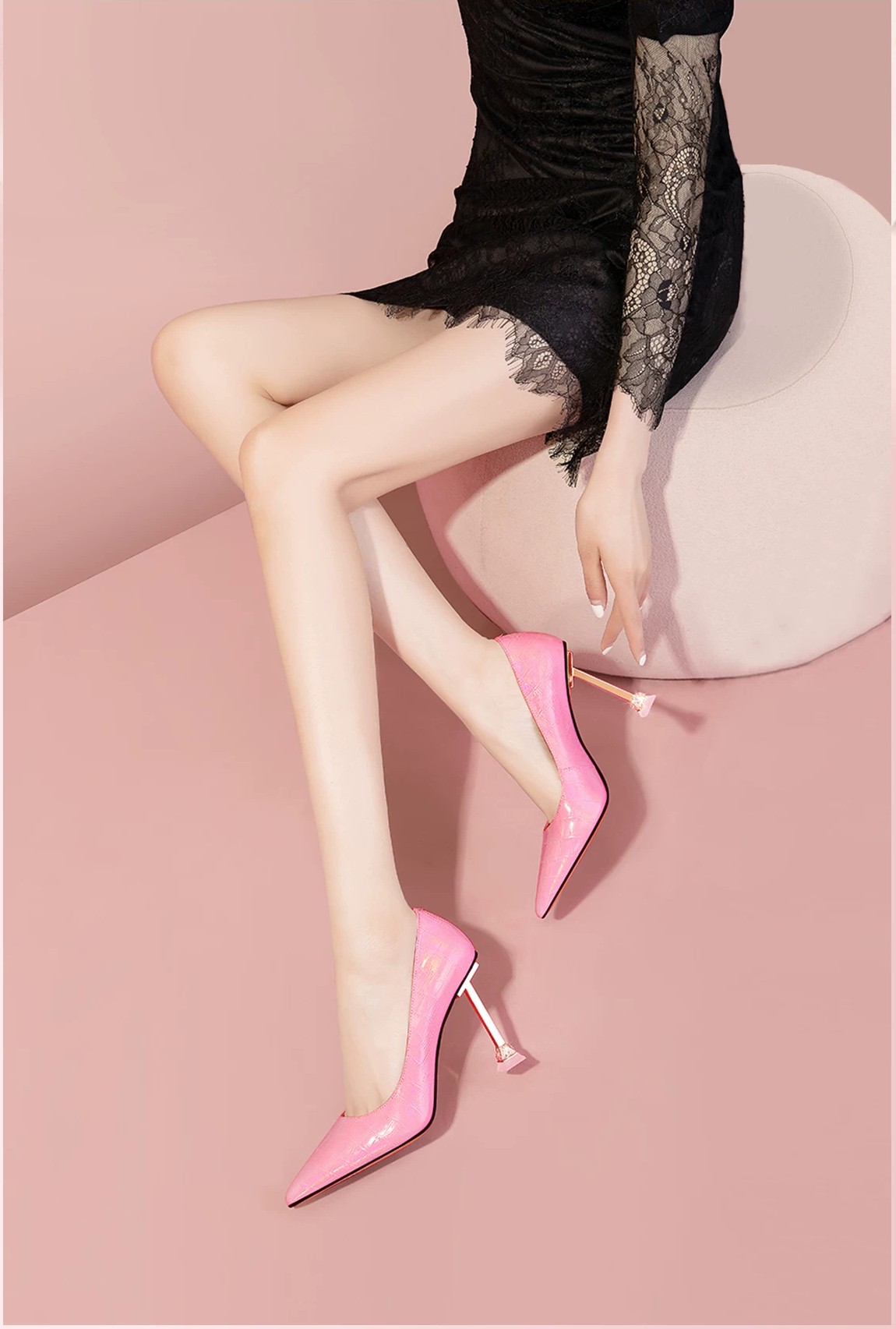
Three sizes, one afternoon: the test most people skip
Fit is the whole game, and the only reliable way to fit a business shoe is to try three sizes in the same style. Not three styles, not three brands. Three sizes, one after another, on the same foot, at the same time of day.
Here’s why. Feet swell by up to half a size by late afternoon, and office shoes get worn in the afternoon. If you try shoes at 11am you’re fitting a smaller foot than the one that will be in them at 4pm. Go after 16:00 if you can, or after a walk.
The three-size method:
- Try your usual size, then one down, then one up. Walk 20 paces in each, on a hard floor, not carpet.
- Pick the size where your heel stays put without you curling your toes, and your longest toe has about 8mm of space.
- Then stand still for two minutes and notice where you feel pressure. Any point of pressure in the shop becomes pain at hour six.
Two of the three will fail on something specific. The smaller one pinches at the widest part of your foot. The larger one lets your heel lift on every step, which is how blisters start at the back of the ankle. The one that stays is your size in that last, and it may not be your size in another brand.
This is the step people rush, and it’s the reason so many pairs sit unworn in cupboards. Twenty minutes here saves you a return and about 300 yuan of regret.
One more thing: try them with the socks or tights you’ll actually wear. A shoe that fits over a thin nylon can be tight over a 40-denier opaques, and winter is long.
If you want to see how much the wrong shade costs in practice, this comparison of beige heels under office light at 9am and again at 6pm is a useful reminder that colour in a fitting room is not colour at your desk.
The heel height that survives a nine-hour day
Thirty to fifty millimetres. That’s the range where most people can work a full day, including a commute, without changing into something else at lunch.
Below 30mm you’re in flat territory, which is comfortable but changes your posture and the line of trousers. Above 60mm, the load moves to the ball of your foot and stays there. At 70mm and up, you’re choosing a look over a day, and that’s a legitimate choice as long as you know you’re making it. Plenty of women happily wear 75mm pairs on office days, and plenty of women who bought the best business casual shoes at 60mm never wear them past lunch. The number on the box is only useful if it matches the day you actually have.
There’s a second number people ignore: the platform under the toe. A 70mm heel with a 15mm front platform puts your foot at an effective 55mm, and that is genuinely wearable for eight hours. A 70mm heel with a flat front is a different shoe entirely, even though the box says the same thing.
Heel width matters as much as height. A block heel of 25mm across spreads the landing and stops the wobble that makes long days tiring. A 9mm stiletto on office carpet is fine; on a station platform in the rain it isn’t.
Practical test: put the shoe on, stand up, and rise onto your toes and back down five times. If your ankle shakes on the way down, the heel is too narrow for your stability, not too high for your taste.
There’s also a body-weight factor nobody mentions. At 50kg a 70mm heel is a different proposition than at 90kg, because the load through the ball of the foot scales with you. This isn’t a reason to avoid heels. It’s a reason to be honest about the height you’ll still be wearing at 17:30.
And a note on the walk home. Whatever you choose, keep a flat pair in your bag for the last 15 minutes. Almost everyone who wears heels to work does this and almost nobody admits it.
Materials that hold up in an office
Leather, suede, or a good synthetic. Ranked by how they behave in a building with heating, air conditioning, and a car park walk in the rain.
Smooth leather is the workhorse. It holds shape, wipes clean, and takes a polish every couple of months. Full-grain leather softens where your foot flexes rather than cracking. Corrected-grain leather is flatter and less forgiving but cheaper, and at office-shoe prices it’s fine.
Suede is softer against the foot and hides scuffs better than people expect, but it needs spraying and it hates salt. If your commute involves a wet pavement, it’s a three-season material at best.
Patent is the one to be careful with. It looks formal in a photograph and behaves badly: it doesn’t breathe, it creases sharply across the toe, and it can’t be stretched. Wear it for a presentation, not for a Tuesday.
Cheap synthetic uppers have one advantage: they don’t stretch out of shape and they wipe clean. The disadvantage is that they don’t breathe, so your feet get hot by mid-afternoon and the lining starts to smell within a few months. The usual definition of business casual says nothing about materials, but the offices that enforce it strictly are usually the ones where leather reads as more senior.
For a first proper pair, buy leather. For a second pair that covers bad weather, buy a water-resistant synthetic and stop apologising for it.
Toe shape decides more than colour
You can wear a black shoe that looks casual and a brown shoe that looks formal. Toe shape does that, not colour.
An almond or soft square toe is the most flexible shape in business casual, because it reads formal enough for a client meeting and relaxed enough for jeans. A pointed toe is sharper and more formal, and it also squeezes the toes, so buy it in your normal size and never a half size down. Round toes look friendlier and slightly dated in a good way, which suits creative offices and looks underdressed in law firms.
Colour is a simpler decision than most guides make it. Black if your wardrobe is mostly dark, dark brown or oxblood if it’s mostly navy, grey and denim. Nude if you want the leg line to continue, which is the only reason it’s popular and a good one.
What to avoid: a very pale toe in a very pointed shape. It photographs well and shows every scuff within a week, and scuffed pale leather can’t be disguised with polish the way dark leather can.
If you only own one pair, choose almond toe in dark brown. It works with a suit and with a knit dress, and it doesn’t fight anything in your wardrobe.
One correction to the usual advice: people say round toes make feet look bigger. In my experience the opposite is true for wide feet, because a pointed toe ends in a narrow point that emphasises the width behind it. If your forefoot is broad, an almond or soft square toe will do more for the line of your leg than any amount of heel height.
What I’d skip, and why
Three things that get sold hard and rarely earn their space in an office rotation.
First, slingbacks with a thin elastic back. They look elegant and they cut into the heel within an hour if the elastic is the only thing holding the shoe on. A slingback with an adjustable buckle is a different shoe, and it’s fine.
Second, shoes with a decorative bow or buckle right where your toes flex. Anything rigid sitting on the flex point will press on the top of your foot every step. It’s a small thing that becomes unbearable by 15:00.
Third, and this is the one that gets arguments: very soft, unstructured flats marketed as comfortable. They feel wonderful for two weeks. Then the lack of a shank means your arch does the work, and by month three your feet ache in a way that feels like it came from nowhere.
None of this is about price. A 400-yuan pair with a proper shank beats a 1,400-yuan pair without one, every time.
The honest limit of all office-shoe advice: nobody can tell you which last suits your foot from a photograph. You can narrow to two or three candidates online, but the decision happens on your feet, in the shop, after 16:00.
Winter, tights, and the half-size problem
Most wardrobe failures happen in the change between October and November, when the same shoes suddenly don’t fit anymore because you’ve added tights.
A 40-denier opaque adds roughly 1mm of thickness all round. That sounds trivial and it isn’t, because the toe box and the instep have no give. Shoes that were comfortable in September pinch across the top of the foot by the first cold week, and by December you’re only wearing two pairs out of six.
The fix is planned, not painful. Buy your autumn pair with tights in mind if you know you’ll wear them. Size for the thicker sock and add a thin insole for the warm weeks. Roughly 20 yuan of insole buys you an extra two months of wear from the same shoe.
Summer is the reverse. Feet swell in heat, more than most people realise, so a shoe that was snug in March is tight by July. If you’re buying in spring for year-round wear, err half a size generous and rely on insoles.
Waterproofing matters here too. Leather office shoes last longer if you treat them before the first wet commute rather than after. A neutral cream polish once a month through winter keeps the leather supple and stops the salt line forming at the welt.
What I’d tell a friend buying her first serious office pair: get the winter fit right first. Winter is when you wear the same shoes five days a week and when a bad fit actually hurts. The best business casual shoes women keep for years are almost always the ones bought in November, tested in the cold, and never replaced.
Three pairs that cover a working week
You don’t need five. Most people with a full-time office job are well served by three, and the third one is the one that buys you time.
Pair one: a closed-toe leather pump or low block heel in a colour that matches your most-worn trousers. This is your default Monday-to-Thursday shoe. Something in the shape of these closed commuting heels with a modest block covers the brief without asking for attention.
Next comes a flat or 20mm loafer in a darker tone, for the days with a long walk or a late finish. This pair does the mileage so the first pair doesn’t wear out at the toe.
The third is slightly dressier, for presentations and client days. A pointed leather heel built for office wear works if the heel height is under 70mm, and it doubles as an evening shoe when you need one pair to do both.
Rotate them. Wearing the same pair four days a week is how leather shoes die young, because they never dry out between wears. Two-day rotation roughly doubles the life of a pair, which is the cheapest upgrade available to you. If you want a single rule to remember, it’s this: the best business casual shoes for women are the ones that get a rest day.
If your office is genuinely casual, drop the third pair and buy a second flat in a different colour instead. Comfort compounds over a week in a way that style doesn’t.
Budget note, since it comes up constantly: two pairs at 600 yuan will outlast one pair at 1,300 yuan for most people, because rotation doubles lifespan. If your budget only stretches to one pair, buy the flat, not the heel. You’ll wear it more days and the cost per wear falls faster.
The 40-minute check before you commit
You’ve got the size, the height, the material and the shape. Now the last gate, and it takes 40 minutes at home.
Wear them indoors, on hard flooring, for 40 minutes. Do the things you actually do: stand at a counter, sit at a desk, go up and down stairs twice, carry something heavy from one room to another. Then take them off and look at your feet.
Red marks that fade within ten minutes are normal. Red marks that are still there after half an hour mean the shoe is pressing in a place that will blister. Pins and needles in your toes mean the toe box is too shallow, and no insole fixes that.
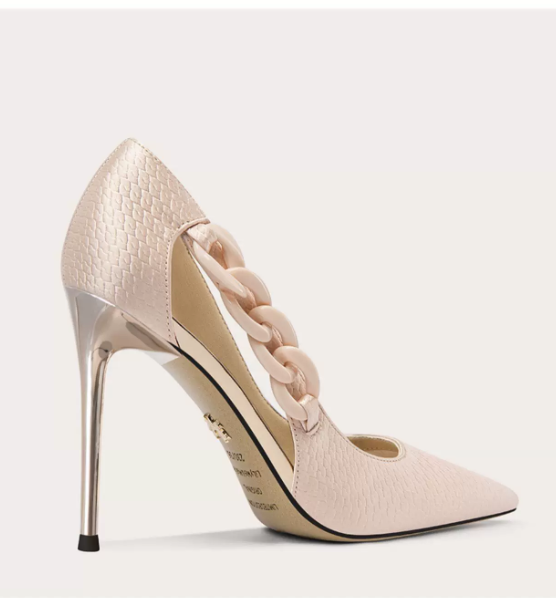
Check the heel counter at the back. If the top edge has already started to dig in during 40 minutes of indoor wear, it will take skin off outdoors. The same goes for the seam across the toe: run a finger along it inside the shoe and feel for a ridge. A ridge becomes a callus on the little toe within a month, and no amount of soft leather rescues it.
Send them back if any of these show up. Returns are free at the point of decision and expensive at the point of regret, because most people keep uncomfortable shoes rather than admit the mistake.
One last thing worth knowing: shoes that are comfortable in the shop are usually comfortable at hour six, and shoes that need “breaking in” for two weeks usually just hurt for two weeks. Leather softens and moulds. It does not stop pressing on a bone. If it presses on a bone, it’s the wrong last for your foot, and the best business casual shoes women keep in rotation are the ones that never needed convincing. Foot specialists put the same point differently: most shoe pain comes from fit, not from the shoe being new, as general foot-care guidance on blisters and pressure points makes clear.
So: try three sizes, walk 20 paces in each, decide after 16:00, then give the winner 40 minutes indoors before you cut the tags. Four steps, one afternoon, and you stop buying office shoes twice a year.
