

I packed for four days in a 40-litre carry-on last October, and the hardest part wasn’t the clothes. It was deciding which two pairs of shoes went in the bag and which pair stayed on my feet at the airport.
Three pairs, four days, one bag. That’s the version I’d read about in packing guides and quietly assumed was for people with smaller feet than mine. It isn’t. It’s mostly about picking shoes that do two jobs each.
Here’s what actually happened, including the pair I left at home and regretted. If you’re shopping for women’s walking shoes for travel right now, the short version is this: buy for the longest day, not the longest flight.
The Rules I Set Before Packing
Every pair had to earn its place with three tests. It had to survive a full day of walking, it had to look acceptable at dinner, and it had to dry overnight if it got wet. Any pair that failed one test stayed home.
I also capped the shoe weight at 2kg total. Cabin allowances vary enough between carriers that the safe figure is lower than the official one, and the rules on what counts as hand luggage change more often than most people expect. The TSA’s security screening guidance doesn’t weigh your bag, but the gate agent might.
Then I weighed everything on the kitchen scale, which felt ridiculous and turned out to be the most useful ten minutes of the whole exercise. My “light” pair was 420g a shoe. My heaviest-looking pair was 310g. Eyes are bad at this.
Numbers are more useful than adjectives, so here’s the tally I ended up with on the kitchen scale before the bag was zipped.
- Slip-on plane trainers: 285g each, 570g total.
- Mesh walking pair: 320g each, 640g total.
- Dark evening trainers: 240g each, 480g total.
- Three pairs of socks: 160g.
That’s 1.85kg of footwear for four days, which left room in the 40-litre bag for clothes, a laptop and a camera. Not luxurious, but workable, and I never once wished I’d brought a fourth pair.
The counterintuitive part is that the heaviest pair did the least work by weight. The mesh pair took about 70% of the steps across the trip. The evening trainers took maybe 15%, and the plane pair took the rest. So the number that matters isn’t total weight, it’s weight per step. Spend your grams on the pair you’ll wear most.
That also means the cheap lightweight pair is a false economy if it’s the one you walk in all day. I’d rather carry 640g of proper walking shoe than 400g of something that leaves my forefoot aching by lunch.
If you’re flying with a strict 7kg cabin limit, this breakdown is the whole argument. Shoes eat 1.9kg of it, clothes another 2.5kg, and the rest goes on the things you actually need. Cut a jumper, not the walking pair.
Pair One: The Plane Shoe
This is the pair you wear through security, sit in for nine hours, and then walk out of arrivals in. It needs to slip on and off without laces, because you’ll do it twice at the airport and once more on the plane if your feet swell.
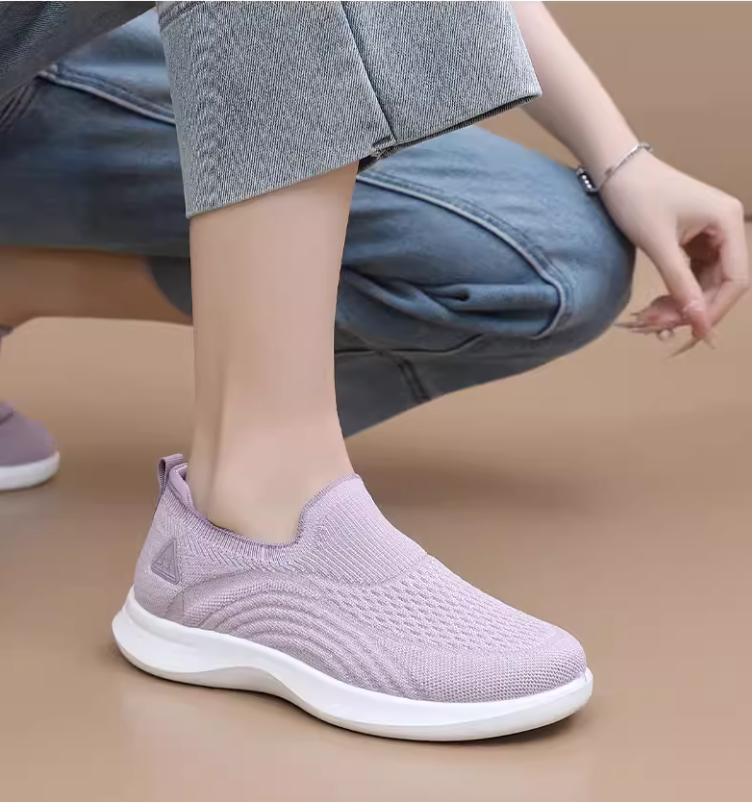
I wore a pair of knit slip-on trainers, 285g each, with a thin rubber outsole and not much structure. On the plane they were perfect. After four hours, my feet had swollen enough that the knit was doing all the work.
The mistake was assuming they’d also handle a walking day. They didn’t. The outsole was too thin for cobblestones, and by the end of day two I could feel every sett through the forefoot. A plane shoe and a walking shoe are different jobs, which is exactly why the bag needs a second pair.
If you fly long-haul often, the piece on what nine hours in a plane seat does to your feet explains the swelling better than I can. Short version: your feet genuinely get bigger, and a tight shoe at the gate becomes a problem at hour six.
Pair Two: The 12km Day
Good walking shoes for travel are the ones you’ve already broken in, and this pair was two weeks and three full days past that point. It justified the whole bag. A mesh walking shoe with a 25mm stack, 320g each, and a tread pattern I could feel with a fingernail. I bought them two weeks before the trip and wore them for three full days at home first, which was the single best decision I made.
They handled 12,000 to 14,000 steps a day on pavement, gravel paths and one very unforgiving stretch of cobbles outside a cathedral. The mesh dried in about 90 minutes after a rain shower. The tread was still sharp at the end.
What they didn’t do well: they looked like gym shoes in every restaurant photo. I stopped caring by day three. I cared a lot on the first night.
These breathable mesh walking shoes with a flexible sole are close to what I wore, and the flexible forefoot is the part that matters on uneven ground. If you want to compare shapes, the full walking shoes collection is the place to start.
What I Left at Home, and Why I Regretted One of Them
I left behind a pair of white leather sneakers because they weighed 380g each and I thought I wouldn’t need them. Wrong call. Two dinners out and one hotel lobby later, I’d have traded my second pair of trousers for them.
I also left behind flat sandals, and that was the right call. They had a smooth sole and the forecast was wet. Smooth sandals on wet stone are a twisted ankle waiting to happen.
The third thing I left behind was a pair of low block heels for a dinner, and I’m still not sure about that one. I didn’t miss them. My feet were tired enough that the idea of a heel at 8pm made me laugh.
So the honest lesson: cut a clothing item, not a shoe. Clothes can be re-worn. A bad shoe decision follows you all day.
The Sink-Wash Test
Every pair I packed had to survive being washed in a hotel sink. Travel guides skip this test, and it’s the one that separates women’s walking shoes for travel from a pair you can only wear near home. Run it before you pack anything.
Mesh uppers passed. They came out clean, dried overnight on a towel rack, and smelled fine the next morning. Leather failed by default: 36 hours to dry and it looked worse for the experience. Knit passed but stretched slightly, which I noticed in the heel by day four.
My method was unglamorous. Cold water, a drop of hand soap, a soft brush on the outsole, then roll the shoe in a dry towel and stand on it to press the water out. That trick cut drying time roughly in half.
It’s also a reason to avoid white mesh on a trip. Mine went grey around the toe after two days and stayed grey. Nobody noticed but me, and I noticed constantly.
The Evening Pair, and Whether It’s Worth 300g
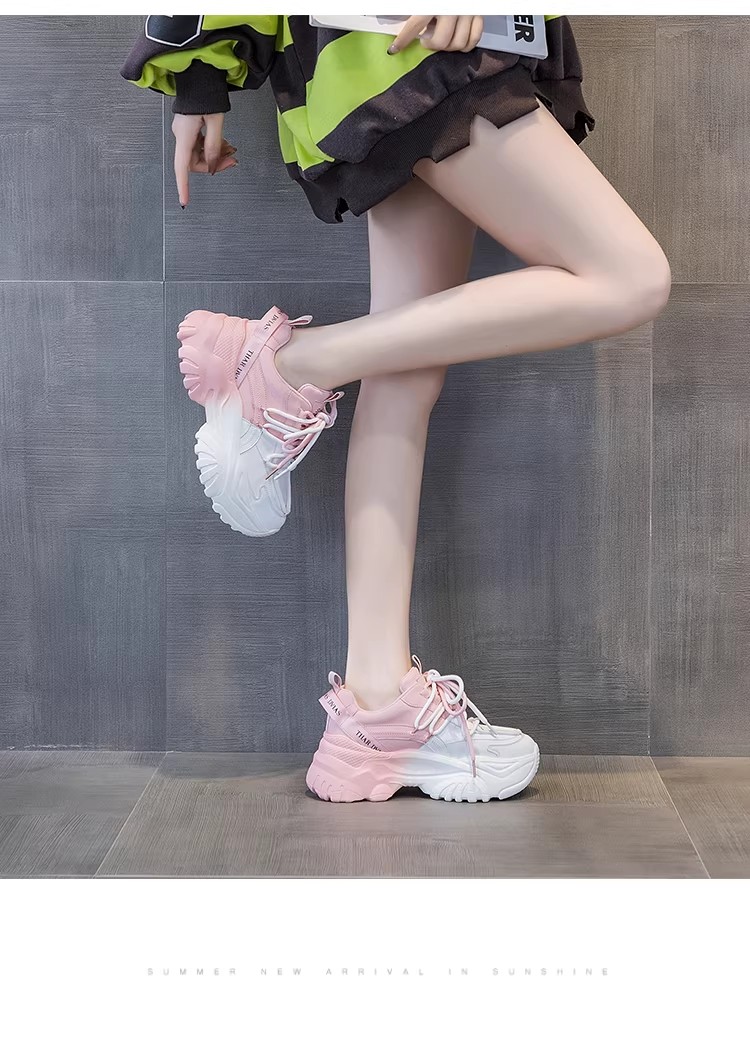
I brought a third pair: a clean low-profile trainer in a dark colour, 240g each, that read as a shoe rather than a sports shoe under trousers. It earned its weight on two evenings and one afternoon when I wanted to look less like a tourist.
Was it necessary? No. Was it worth 480g in a 40-litre bag? Yes, for me, because I’d have skipped dinner otherwise. If you’re going carry-on-only with a tighter bag, this is the pair to cut.
If you do bring an evening pair, make it dark. Light shoes show every scuff from a day of walking, and hotel brushes don’t fix scuffs.
There’s a cheaper version of this idea. Bring one pair of dark, plain trainers and skip the dedicated evening shoe entirely. It won’t pass at a restaurant with a dress code, but it works for 90% of holiday dinners, and it saves you half a kilo and one packing decision every morning.
I tried that on a later trip to Porto and it worked fine. What I missed was the small ritual of changing shoes before dinner, which sounds silly until you’ve spent nine hours in the same pair. Fresh socks solved most of that feeling, and they weigh 60g.
What I’d Pack Differently Next Time
Three changes, all small, all learned the hard way.
- Swap the slip-on plane shoe for a lace-up with a real outsole and wear it on the plane. One pair doing two jobs beats two pairs doing one each.
- Bring the white leather sneakers instead of the dark trainers. They photograph better and the weight difference was 140g total, which I’d happily carry.
- Pack one pair of thick wool socks. They saved my feet on a cold morning and doubled as a drying aid inside wet shoes.
I’d also check the tread before I leave rather than after. My walking pair had about 3mm of lug at the start and maybe 2mm at the end, which is fine for one trip and not fine for a second one without replacing them.
That’s the unglamorous truth about lightweight cushioned shoes for long walking days: the sole wears out before anything else does. Watch that part and you’ll get two trips from a pair instead of one.
One more thing worth knowing if you’re deciding between two pairs: the cheap pair often costs more per wear, and a trip is a bad time to find that out.
How I Tested Before the Trip
Two weeks out, I ran a version of the trip at home. It sounds excessive. It took one Saturday and it caught two problems before they cost me a holiday.
The plan was simple. Wear each pair for a full day of ordinary life, then walk 5km in the evening on the roughest surface nearby. I used a gravel path along a canal, which is about as close as you get to European setts without a flight.
The slip-ons failed at the 3km mark. Not painfully, just noticeably: the thin outsole transmitted every stone, and my forefoot ached for an hour afterwards. That’s the test that made me change the packing plan, and it cost me nothing but an evening.
Mesh passed easily. The dark evening trainers passed with one caveat, which was that the heel counter rubbed slightly on the left foot when I walked uphill. A different lace pattern fixed it in about 90 seconds.
I also timed how long each pair took to dry after a deliberate soaking in the sink. That sounds obsessive. It’s the single most useful piece of data I had when the forecast turned wet on day two.
You don’t need a spreadsheet. You need one long walk and one wet shoe.
That Saturday is also when I stopped reading reviews for walking shoes for travel and started trusting the pavement. A review tells you how a shoe felt on someone else’s foot in someone else’s city. A 5km test on your own street tells you what you’ll actually experience at hour seven on holiday.
Wet shoes overnight are the difference between a good trip and a miserable one, and hotel rooms are not designed to help. There’s no airing cupboard, the towel rail is usually heated for two hours, and the window opens 8cm.
What worked, in order of usefulness:
- Roll each shoe in a dry bath towel and stand on it for 30 seconds. This pulls a surprising amount of water out of the lining.
- Stuff the toe with dry newspaper or a spare sock, then change the stuffing before bed.
- Stand them toe-up against the wall near the door, not flat on the floor. Air moves better and the sole dries from underneath.
What didn’t work: the hairdryer. It heats the upper unevenly, softens the adhesive around the toe, and leaves the inside damp anyway. I tried it once on a leather pair and the toe box went slightly out of shape for the rest of the trip.
A small mesh laundry bag is also worth 20g. It keeps dirty shoes away from clean clothes and doubles as a drying hanger if you clip it to a curtain rail.
Pack the Socks, Not the Gadgets
I brought a shoehorn, a travel brush and a folding tote. I used the tote. The other two stayed in the bag for four days.
The things that actually earned their weight were socks. Two pairs of thin merino, one pair of thick wool, all of them useful. Merino regulates temperature, dries fast overnight and doesn’t hold smell the way cotton does, which matters when you’re washing in a sink.
Thin socks also change the fit. A pair that feels slightly roomy with cotton socks can feel snug with thick wool, and that’s the kind of detail that turns a comfortable shoe into a tight one on day three. Test the combinations at home, not at the hotel.
The one gadget I’d bring next time is a $4 shoe brush with stiff bristles. Mud from a gravel path doesn’t come off mesh with a hotel toothbrush, and a dirty shoe looks worse than a scuffed one.
Packing lists love to include a “just in case” pair. Mine was a pair of foldable ballet flats, 120g each, sold as the answer to evening shoes. They were useless. The sole was 2mm of foam, the elastic top cut into my heel, and I wore them exactly once, indoors, for twenty minutes.
I’d also skip anything with a leather sole, anything white and canvas, and anything I hadn’t worn for at least one full day before leaving. Those three rules would have saved me from every shoe mistake I’ve made on a trip in the last five years.
The exception is a wedding or a formal dinner, where the shoe is part of the event. In that case, bring the pair and plan a taxi. Walking 3km in a heel to save €12 on a cab is a trade nobody enjoys.
The One Thing I’d Tell Anyone Packing Now
Weigh your shoes before you pack them. Not the bag, not the clothes. Just the shoes, on a kitchen scale, one at a time.
You’ll find your assumptions are wrong in both directions, and you’ll make the carry-on decision in five minutes instead of forty. My lightest pair turned out to be the heaviest by feel after six hours, because weight isn’t the same as support.
Then walk 2km in the pair you plan to wear most, on the worst pavement you can find, three days before you fly. If something rubs, there’s still time to fix it with a different sock or a lace change. If nothing rubs, you’ve bought yourself a quiet, boring, blister-free trip.
Boring is the goal. Nobody remembers the shoes on a good trip, and nobody has ever come home wishing their walking shoes for travel had been less comfortable.
And if a blister does show up, the standard blister care advice is worth reading before you start improvising with hotel plasters.
