

A woman walks into a shop in April holding a photo of a tan heel she saw on someone else. She tries on the pair the assistant brings, looks down, and says the same thing every time: this looks orange on me. The shoe is fine. The shade is wrong for her skin and for the light in the room.
Tan is the most returned heel colour in most spring assortments, and it’s almost never because of the size. It’s because tan is a family of shades pretending to be one colour. Sand, caramel, cognac and tan-biscuit behave completely differently against skin, against tights, and under shop lighting that has nothing to do with daylight.
What follows is how the three main tan families actually behave on a leg, which single pair covers the most outfits, and where the shade conversation goes wrong before the size conversation even starts.
Three tan tones, and what each one does to a bare leg
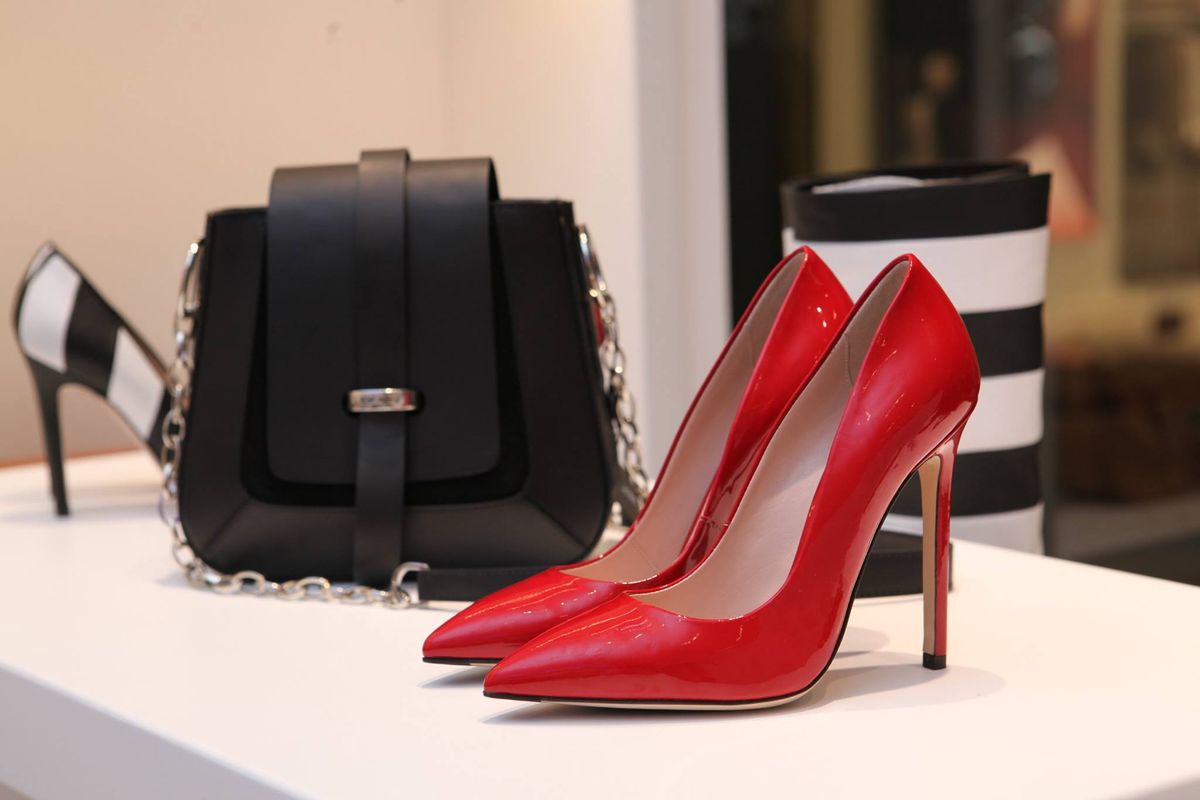
The pale brown we call tan covers a range from cool beige to warm reddish brown, and the difference between them is roughly 15 degrees of warmth. On a leg, that difference decides whether the shoe disappears or reads as a separate object sitting at the end of your ankle.
- Sand and biscuit. Cool, low saturation, close to a light beige. Reads almost invisible on pale skin and creates a hard contrast line on deeper skin. Best with ivory, grey, and washed denim.
- Caramel. Warm but not red, mid-tone. Works on the widest range of skin tones and photographs the most predictably of the three.
- Cognac. Red-brown, saturated, darker than most people expect from a photo. It looks expensive in leather and cheap in patent. Best with navy, cream, and dark denim.
There’s a fourth shade that catches people out: anything marketed as “nude”. In most assortments that word means one specific mid-beige aimed at a narrow band of skin tones, and it’s the largest single source of “it looked different online” returns in the whole category.
The practical test in a shop is to hold the shoe against the inside of your forearm rather than the top of your foot. Forearm skin sits closer in tone to the leg you’ll be showing, and a shade clash is much easier to see there than under a ceiling full of warm bulbs.
Then look at the shoe from two metres away, not from arm’s length. At two metres you see what everyone else sees: a colour block at the bottom of your leg, or no visible break at all. Most tan mistakes are invisible up close and obvious from across a room.
One more variable people forget: the finish. The same caramel in matte leather, in suede, and in patent reads as three different colours. Matte goes darker, suede goes softer and slightly greyer, patent jumps a stop lighter and picks up every reflection in the room. If you’ve only seen a pair on a screen, you’ve seen the finish the photographer chose, not the one in the box.
If you’re buying online and can’t hold the shoe against your arm, do the next best thing. Take a screenshot of the product shot, then photograph your own forearm in daylight on the same phone. Put the two images side by side at the same screen brightness. It sounds fussy, and it catches more shade mismatches than reading the colour name ever will.
The pair that carries a work week: 70mm, closed toe, matte
Across a season, one configuration outsells the rest, and it isn’t the one most people walk in asking for. It’s a 70mm heel, closed toe, matte leather or suede, in caramel. Not 90mm, not a sandal, not patent.
The reasoning is dull, which is exactly why it works. A closed toe clears almost any office dress code without a second thought. Matte finishes hide the scuffs that patent exaggerates. At 70mm the foot’s angle stays mild enough for a nine-hour day, and a sturdy slim heel doesn’t sink into grass at a lunch event the way a stiletto does.
Buyers who come in for a 90mm sandal often leave with something closer to this, once they’ve walked the length of the shop twice. That’s not an assistant talking anyone down. It’s the foot making the decision in the only way it can.
Fit notes matter more than the height here. The vamp should sit about a centimetre behind your toe joints. The heel cup should hold without a gap at either side. A tan pump that gapes at the heel will slip with every step, and tan shows the crease where your heel has been rubbing far more than black does.
Also check the sole under the ball of the foot. A 70mm heel with a 10mm front sole puts nearly all your weight on the forefoot. The same heel with a 20mm front platform spreads that load and changes the whole day. Two pairs, same heel height on the box, completely different shoes by 4pm.
Where this configuration fails: anyone whose wardrobe is mostly midi skirts with a defined waist. A closed 70mm pump under a midi can read heavy from the side, especially in a light tan. A slingback or a shoe with a lower vamp does the same job with less visual weight, and shows a bit of skin at the side of the foot that stops the outfit looking bottom-heavy.
The last thing worth knowing about the work-week pair is how it behaves with trousers. A closed toe in tan under a straight-leg trouser works best when the hem breaks just above the instep. Any longer and the trouser eats the shoe, and all that shade work you did disappears under a fold of fabric.
Distance matters as well. Under 3,000 steps a day, a 70mm heel in tan is comfortable for almost everyone. Between 3,000 and 8,000, the front sole thickness becomes the deciding factor, and a pair with a thin sole will start to feel like standing on a coin by mid-afternoon. Above 8,000 steps, the same shoe becomes a different proposition entirely, and the honest answer is that a lower heel or a thicker sole belongs in the bag as backup.
Nude-adjacent is a leg-length trick, and it works within one shade
The old advice about nude shoes and longer legs is sound, but it’s usually repeated without the condition attached. The trick works when the shoe is within a shade or two of your skin. Outside that range, the shoe draws a horizontal line across the ankle and does the exact opposite of what it promised.
Two variables break the effect. The first is tights. A tan shoe over black opaque tights is a colour block, and no amount of leg-lengthening logic survives it. The second is an ankle strap in a shade that differs from both your skin and the shoe. That strap cuts the leg into three sections at the point you were trying to extend.
On deeper skin tones, the standard nude range in most assortments simply doesn’t exist, which is why the trick gets dismissed as useless by the people it was never designed for. A caramel or warm cognac does the same job, and both are easier to find in leather than the narrow beige most brands label nude.
For tights weather the rule flips. Match the tight, not the skin. A tan heel with 40 denier tan tights extends the line. A tan heel with black tights wants to go darker: chocolate, oxblood, or black itself.
Where the trick fails completely is a cropped trouser. A tan shoe with a hem that stops at the ankle bone shows a horizontal band of skin, the shoe, and the trouser, in that order, and the leg looks shorter than it did in flats. Either drop the hem to the instep or go for a shoe with a lower cut at the sides.
Photographs are worth a mention here, because this is the one area where the camera is harsher than the mirror. Flash at night lifts light tans towards a washed-out cream and turns caramel slightly orange. If you’re buying for a specific event with evening photos, test the pair under a phone flash before the return window closes.
What comes back to the counter: the wrong tan for the season
The returns curve for tan heels has a shape. Most come back in the two weeks after purchase, and the reason given is nearly always a version of “the colour wasn’t what I expected”.
Three specific mismatches account for most of it:
- Warm tan bought in winter light. A shoe chosen under tungsten bulbs looks two shades darker at home in daylight, and buyers read that as a different product.
- Patent tan. The shine lifts the colour by a stop and makes caramel read orange. Patent in tan also creases in a way that looks like damage inside a month.
- Tan suede on a wet-weather purchase. Suede in tan marks with the first splash and dries to a darker patch. Nothing brings it back evenly.
Tan leather, on the other hand, ages better than most people expect. It darkens slightly at the flex points, which on a caramel pump reads as patina and on a pale sand pump reads as dirt. That’s the strongest argument for buying caramel over sand if you only want one pair: it has somewhere to go.
There’s a seasonal trap too. Tan bought in autumn, worn through winter with dark tights, then brought out in April against bare legs, often feels wrong for a week before it feels right again. The shoe didn’t change. The contrast did. Give a pair two or three wears in the new season before deciding it was a mistake.
None of this argues against tan. It argues for treating tan as a shade decision first and a shoe decision second, and for using the return window properly: try them at home, in daylight, with the trousers and tights you’d really wear, before the tags come off.
The one case where the counter sees a genuine fault rather than a taste mismatch is uneven dye across a pair. Hold both shoes side by side in daylight, toe to toe. If one is visibly warmer than the other, that’s a manufacturing issue, and it’s worth returning for a matched pair rather than living with a set that looks like two different shoes in photos.
Online shoppers have one extra check available that shop buyers don’t: the customer photos. Sort reviews by photos rather than by date, and look for images taken indoors under ordinary lamps. Those are the shots that tell you what the tan does in a hallway at 7am, which is where you’ll actually be wearing it.
Nine outfits from three pairs: the actual combinations
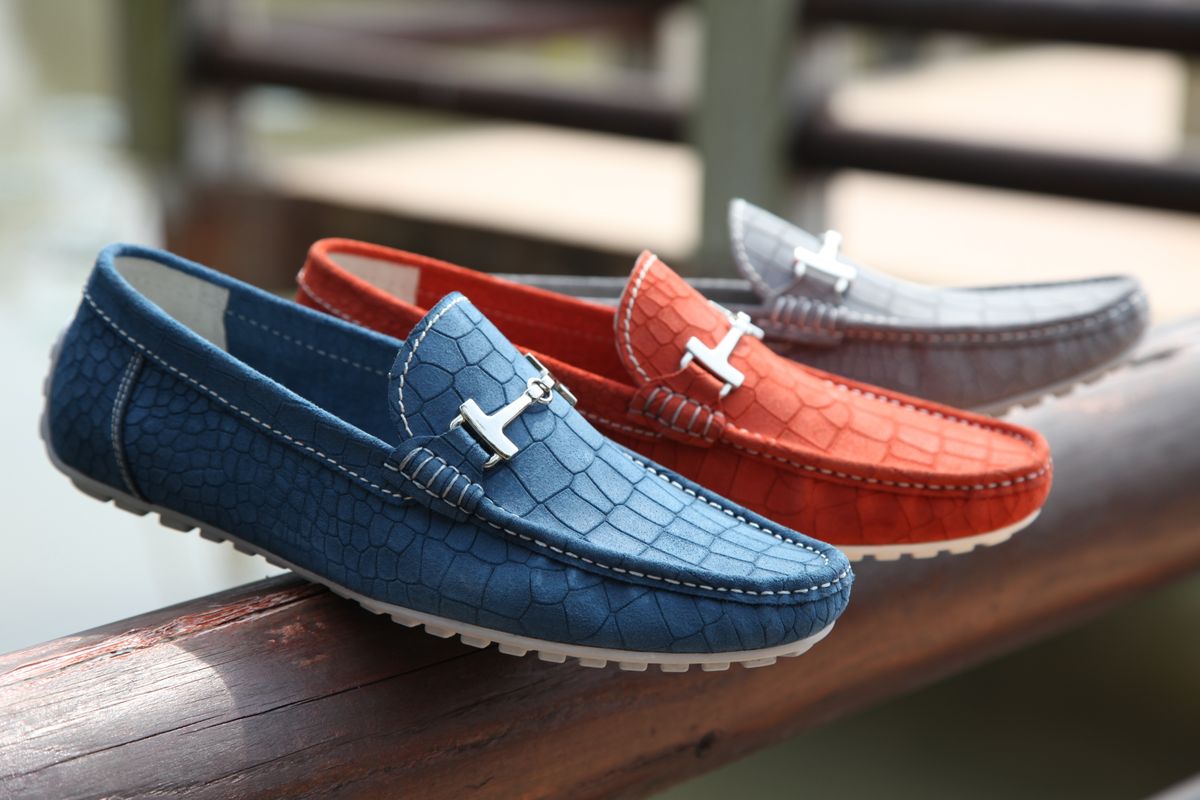
Three pairs in the tan family cover more ground than five pairs in assorted colours, and the reason is that they share a base tone. The rotation below is what a workable capsule looks like: a 70mm closed pump in caramel, a flat or low sandal in sand, and a cognac slingback or mule.
The combinations, in the order most people actually need them:
- Caramel pump + navy trousers + white shirt. Monday.
- Caramel pump + cream midi skirt + brown belt. Client meeting.
- Sandal + wide-leg linen trousers + tan bag. Warm Friday.
- Sandal + pale denim + striped top. Weekend.
- Cognac slingback + dark denim + knit. Dinner.
- Cognac slingback + black dress, as the only warm note in the outfit. Evening.
- Caramel pump + grey suit. Neutral enough that the shoe isn’t the story.
- Sandal + white shirt dress. Holiday, or a very hot office.
- Any of the three + the same camel coat, which is the whole argument for buying within one family instead of across colours.
What the maths buys you is decision speed. When three shoes share a tone, almost everything in a neutral wardrobe works with all three, and the morning question becomes which heel height, not which colour. That’s worth more on a Tuesday than a fourth pair in a trend colour.
The capsule fails at statement pieces. A bright green skirt or a printed dress needs a shoe chosen for it, and none of the three will be ideal. That’s fine. The capsule exists for the 80% of days when you’re not styling an outfit, you’re just getting dressed and leaving.
If you want a second opinion on how one silhouette changes across three occasions, the two-colour approach to a single shape makes the same point from the other direction.
Care, and why tan ages faster than black
Tan leather needs more attention than black, and the difference shows within a season. Black hides scuffs, water marks, and the small creases that form across the vamp. Tan shows all three, and a scuff on a caramel toe cap is the first thing anyone notices when you cross your legs.
Part of that is how finished leather takes dye in the first place. Pigment sits on the surface of a corrected-grain hide and wears off at the flex points, while an aniline or semi-aniline finish takes colour into the fibre and holds it. A caramel pump in a semi-aniline leather will look better in year two than a cheaper pair did in month two, and that difference is invisible in a product photo.
The routine that keeps a tan pair looking new is short. Wipe with a damp cloth after wearing, not before. Condition every four to six weeks with a neutral cream, never a coloured polish unless you’re covering one specific scuff. Store them with the heel resting rather than the toe, and keep them out of direct sun, which fades tan faster than wear does.
Suede in tan is a different job entirely. Brush after each wear with a brass bristle brush in one direction, spray a water repellent before the first wear, and accept that a rainy city will eventually win. A tan suede sandal is a summer shoe in a dry climate. Treat it as anything else and it becomes a nine-month shoe with a permanent mark on the toe.
The one repair worth paying for is re-colouring a scuffed toe. A good cobbler can match caramel and cognac closely enough that the repair is invisible from standing height. On sand or pale beige, matching is harder and the repair often shows as a slightly darker patch, which is one more small argument for the mid-tone.
Heel tips are the other cheap fix. A worn plastic tip, once it reaches the nail, starts chewing the heel stack and turns a ten-pound repair into a thirty-pound one. Check the tips every two months on a pair you wear weekly, and have them replaced before the metal shows. On tan, a damaged heel stack is also very visible from behind, which is the angle most people see you from at a wedding.
If you’re building the rotation now, start with a commuting heel in a warm mid-tan, then add a shallow-mouth leather pair for the smarter end of the week. A look through the women’s shoe range is easier with one question in mind: which shade will still look right against your leg in November, not just in the shop mirror in April.
