

You’re packing for a wedding, and the only shoes that work with the dress are the tan ones. They looked neutral in the shop. Next to your legs in daylight they look slightly orange, and now you can’t unsee it.
That’s the trap with tan. It’s sold as a nude, a safe neutral, a shoe that goes with everything. In reality it’s a colour that has to match your skin, and most pairs don’t.
The good news: once you know your undertone, tan becomes the most useful shoe colour you own. It lengthens your leg, it works with more outfits than black, and it survives summer and winter. Here’s how to pick a pair that actually matches you, and what to avoid.
Tan is a range, not a colour
Two tan shoes side by side can look like different species. One is sandy and greyish. The other is close to caramel with visible red. Put them next to your bare leg and only one disappears into your skin tone.
The trick is to match the shoe to the inside of your forearm, not your face. Forearm skin is closer in tone to your legs, doesn’t get flushed, and you can check it in daylight without finding a mirror.
Hold the shoe next to your inner wrist and squint. If the shoe blends until you can barely see the edge, that’s your shade. If there’s a visible jump in warmth or depth, it’s the wrong tan, no matter how good it looks on the shelf.
Three variables decide it: how light the tan is, how warm it runs, and how much pink or yellow sits in the base. Most people can match two out of three and still get a wearable pair. All three off, and the shoe looks borrowed.
The three tan families
Shops use tan, nude, camel, and beige almost interchangeably. Ignore the labels and sort by these three groups.
- Sandy tan. Light, slightly grey, close to the colour of wet sand. Best for fair skin and cool undertones.
- Camel and honey. Mid-tone with clear yellow warmth. Flatters medium and olive skin, and reads expensive in matte leather.
- Cognac and chestnut tan. Deeper with red in it. Works on darker skin tones and doubles as a brown shoe in winter.
If you can only own one, buy the one closest to your forearm in summer, when your legs are at their most tanned. Winter legs are paler, and a slightly deeper shoe reads better than a pale one that’s now too light.
A matte finish helps every tan. Shiny tan leather pushes the colour toward orange under artificial light, which is why so many nude heels look wrong at evening events.
Why tan lengthens your leg, and when it stops
A shoe close to your skin tone continues the line of your leg instead of interrupting it. That’s the entire mechanism. It’s simple, it works, and it fails the moment the shoe stops matching.
The effect is strongest with a pointed or almond toe at 75 to 90mm, because the toe extends the line forward and the heel lifts the arch. Add a shoe that’s one shade off and you lose most of it.
An ankle strap kills the effect entirely. A strap across the ankle draws a horizontal line at the narrowest part of your leg, cutting it into two shorter sections. This is why stylists recommend nude pumps over nude strappy sandals for short legs. Our notes on T-strap heels cover what that strap does to fit, which is a separate question from what it does to proportion.
Bare legs give you the full effect. With opaque tights, the shoe has to match the tights instead of the skin, and tan almost never matches black tights. In winter, either go sheer or accept that the lengthening trick is over until April.
One number worth knowing: a 75mm heel with a pointed toe adds roughly 4cm of apparent leg length compared with a round-toe flat in the same colour. That’s not a scientific measurement, it’s what most people report in fitting rooms, and it’s consistent enough to plan around.
Heel height: where tan works hardest
Tan heels live in the 70 to 90mm range because that’s where the proportion trick pays off. Below 50mm, the shoe is comfortable and the leg-lengthening effect is minimal. Above 90mm, you get the line but you also get a shoe you can’t walk in.
Seventy-five millimetres is the practical sweet spot for most people. High enough to change your posture, low enough to stand through a ceremony and a receiving line.
If you’re buying your first pair, a 70mm pointed pump in a matte finish will do more work in your wardrobe than any other shoe. It goes with jeans, tailored trousers, midi skirts, and a wedding guest dress, which is a lot of ground for one pair.
The mechanics of a high heel explain why 70 to 90mm is the range that changes posture without breaking your stride. If you already own that, the second pair is a 90mm almond toe for evenings, or a 50mm block for days when you’re on your feet. Our heel styles by height and shape makes that comparison easy.
Skip the platform version. A tan platform loses the skin-matching effect because the sole reads as a separate block of colour. Same reason wedges in tan rarely look as good as they do in the box.
Tan, nude, beige: what the labels hide
Shops use these three words as if they’re the same. They’re not, and the difference costs people money.
Nude is supposed to mean “skin coloured”, which is meaningless without a reference skin. In practice most brands use nude for a light, pinkish tan aimed at fair skin. If your skin is deeper, “nude” is often the worst match in the shop.
Beige sits cooler and greyer than tan. It leans toward stone or oat, and it’s the better choice if warm colours make you look sallow. Beige heels read more modern with grey tailoring and less warm with denim.
Tan itself is the warm middle, closer to leather’s natural colour. That’s why tan heels look right with jeans and wrong with a grey suit, and why they photograph warmer than they look in person.
The label to trust is the one on the inside of the strap, not the one on the box. Check the colour code, and if you’re buying a second pair of a style you already own, bring the old shoe with you. Dye lots change, and tan changes more visibly than black.

Where tan goes wrong
Four failure modes, all common, all avoidable.
Orange cast. The most frequent problem. A tan with too much red in the dye looks fine in the shop’s warm lighting and turns pumpkin on your foot. Check it under daylight before you commit, ideally near a window.
Too pale for your skin. A sand-coloured shoe on medium skin creates a visible pale band at the foot, which is worse than a contrast shoe because it looks like a mistake rather than a choice.
Patent finish. Glossy tan is the least forgiving version of the colour. It highlights every scuff, reflects the room, and reads cheaper than matte at any price point.
Cheap lining. Tan shoes often have pale linings that go grey within weeks from sweat and dye transfer. Check for a leather lining, or at least a lining in a similar tone so the wear doesn’t show as a bright edge.
There’s also a seasonal trap. Tan looks best in spring and summer light. In December, under office fluorescents, a light tan can look dusty. If you want one pair for the whole year, buy a shade deeper than you think you need.
Four outfits where tan does the work
These are the combinations that make tan worth owning. All assume a pointed or almond toe at 75mm.
- Blue jeans, white shirt, tan pump. The shoe warms up a cool outfit without adding a colour. Works in every season.
- Midi skirt in a dark tone. The tan extends the leg below the hem and stops the outfit looking heavy.
- All-cream or all-white. Tan adds the one bit of contrast that keeps a monochrome look from flattening out.
- Tailored trousers, hem at the ankle. The shoe continues the line of the leg, and the gap of skin between hem and shoe keeps it from looking chopped.
What tan doesn’t do: replace black for evening. Under artificial light, a tan shoe next to a black dress reads as a daytime choice. If the event starts after seven, wear black or a metallic.
The other thing to know is that tan shows dirt faster than any other neutral. A scuff on a tan toe is visible at three metres. That’s not a reason to avoid the colour, it’s a reason to keep a cloth by the door.
Material matters more than shade
Tan leather scuffs differently than black. The damage shows as a pale grey line rather than a dark one, and it can’t be hidden with a matching polish because the polish always dries a touch darker.
Matte calf leather is the easiest to maintain. A cream polish one shade darker than the shoe blends scuffs instead of outlining them. Nubuck and suede in tan are beautiful for about six weeks and then need real care, which is a commitment most people don’t keep.
If you want a pair that handles daily wear, look for a matte finish with a stitched sole and a rubber heel tip. Three details, all visible in ten seconds, all reliable indicators of how the shoe will age.
For something with a bit more detail across the vamp, leather pointed-toe heels in warm tan keep the line clean while adding texture. If you prefer a softer upper, satin finishes in a deeper tone work for evenings where matte looks flat.
What tan heels actually cost to keep
Tan is a maintenance colour, and pretending otherwise is how people end up with a pair that lives in the box. The honest version: budget about five minutes a week and one cobbler visit a year.
Weekly, wipe the toe and the heel counter with a barely damp cloth. That removes street dust before it works into the grain. Monthly, a thin layer of cream polish and a buff with a soft cloth. Yearly, replace the heel tips and ask the cobbler to check the sole stitching at the waist, where a pointed toe flexes most.
What you shouldn’t do: use coloured liquid polish on a light tan. It settles into the creases a shade darker and turns the vamp patchy within a month. Cream polish in a neutral or one shade darker is the safer option, and it feeds the leather rather than coating it.
Rain is survivable if you act fast. Blot, stuff with paper, dry away from heat, then polish once fully dry. What kills tan shoes is drying them on a radiator, which pulls the oils out and leaves a pale bloom across the toe that no polish covers.
Sunlight fades tan faster than any other neutral. Store them in a cupboard rather than on an open rack, and don’t leave a pair on a windowsill between wears. Two summers of direct light and the two shoes will no longer match.
Fit, sizing, and the five-minute check
Tan pumps are usually cut on the same last as the brand’s black pumps, so start with your usual size. Pointed toes need half a size up if your second toe is longer than your big toe.
Try them at the end of the day. Feet swell by about half a size, and tan leather shows the resulting bulge across the vamp more than darker colours do.
The five-minute check before you buy:
- Walk ten steps on a hard floor. Your heel should lift less than 5mm.
- Look at the toe box in daylight. Your toes shouldn’t touch the front edge when standing.
- Check the heel tip. Rubber, not bare plastic.
- Bend the shoe at the ball of the foot. It should flex, not fold.
- Compare the shade to your forearm by a window. One squint, one decision.
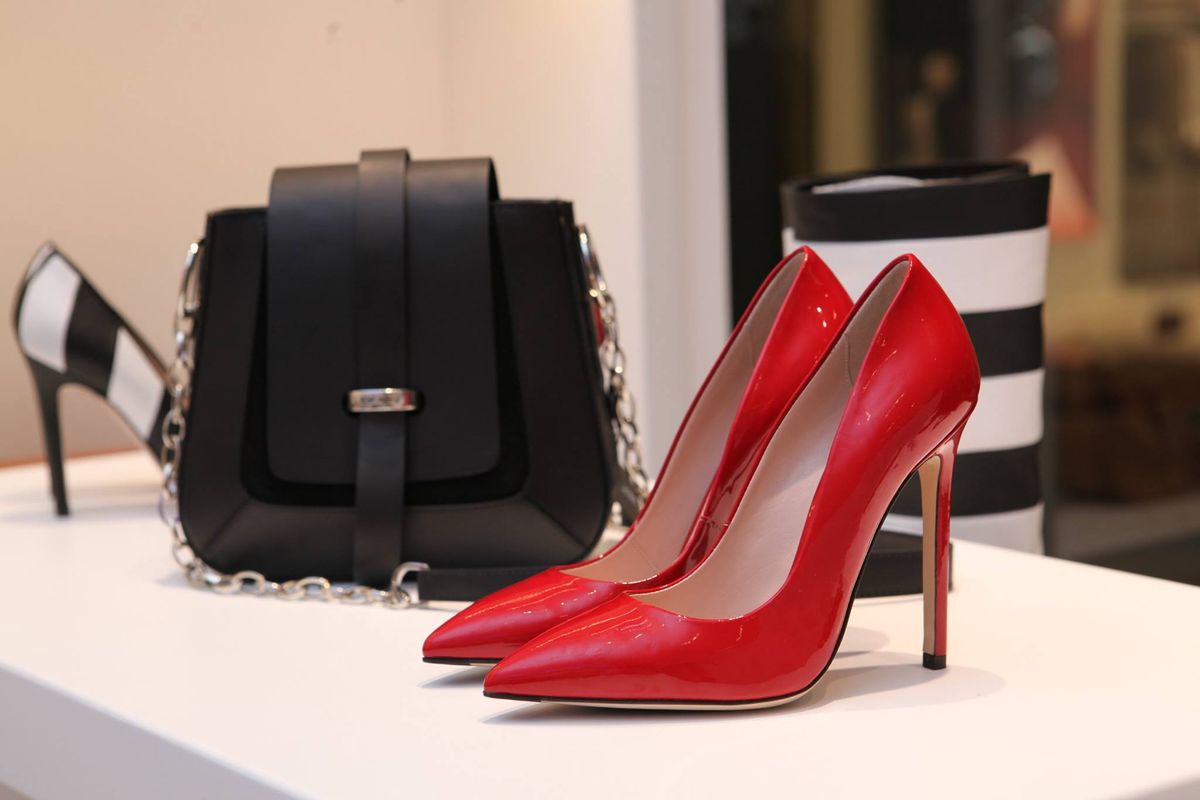
Two care habits keep tan looking new. Wipe with a damp cloth after wear, and use cream polish every few weeks rather than liquid polish, which builds up in the creases. Store them away from sunlight, because tan fades faster than any other neutral.
The range of tones sold as tan explains why two pairs with the same name can look so different, and it’s the reason the forearm test beats any label on the box.
Buy the shade that disappears against your skin, wear it with everything you already own, and keep a cloth by the door. Tan rewards that small amount of attention more than any other colour in the wardrobe.
