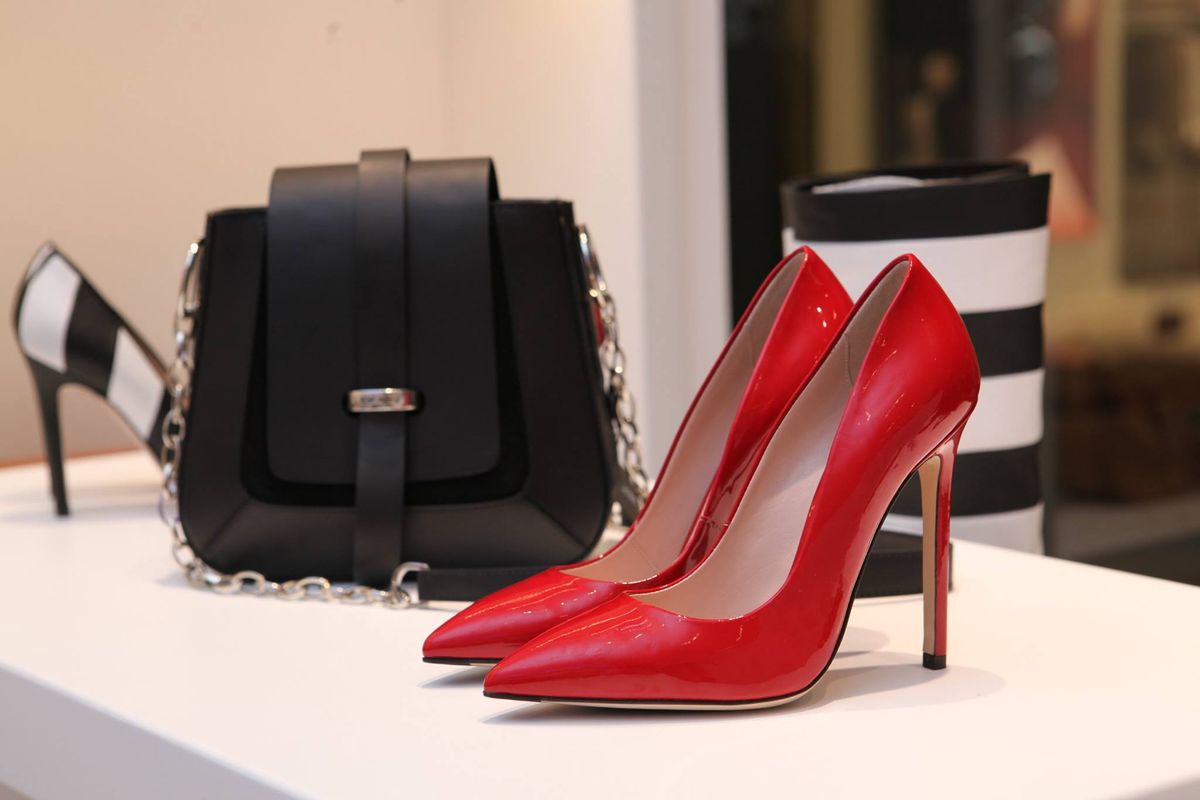
Six weeks before a wedding, you’re standing in a shop with one gold heel on and one black heel on, and the assistant has already told you twice that the gold pair is the last in your size. The gold pair costs $148. You own a gold pair already. You wore it twice last year, both times for about four hours, and one of those times you took it off under a table.
That is the whole problem with gold heels, and it has nothing to do with how they look. They look great. The question is how many times you’ll actually reach for them before the shine stops matching your life. Most people buy on the first look and never run the second number.
So run it now, before you pay. Here’s the method I use with clients who ask whether a pair is worth it. It takes about ten minutes and it has talked more women out of bad purchases than any amount of staring in the mirror.
Ten minutes, one calculator, and a calendar you already have.
Start with an honest wear count, not the price tag
Take out your phone calendar and look at the last twelve months. Count the events where a metallic shoe would have been the right call: weddings, christenings, black-tie dinners, a big birthday, a work gala. Most women I talk to land between three and six. Not twelve. Not twenty. Three to six, and two of those probably fell in the same month.
Now be stricter. Of those events, how many did you attend with a partner, a group, or a reason to stay past 10pm? Gold heels survive the first two hours of any party. They get uncomfortable somewhere around hour four, and they look tired by hour six if the finish is thin. A lunch where you sit for ninety minutes doesn’t count the same way as a reception with a dance floor.
Write the number down. If it’s four, your real cost per wear at $148 is $37. That’s not outrageous, but it’s not the bargain the price tag suggests either. Compare it to the black pumps you wear twice a month. Those cost $9 a wear, and nobody ever calls them expensive. Cost per wear is the only number that tells you whether a pair earns its space in the cupboard.
There’s a second number worth checking, and it’s the one people skip. How many of those four events are in the next twelve months, and how many already happened? If your four events were 2024 weddings and your 2027 calendar is empty apart from one cousin’s engagement party, you’re buying for a life you’ve already lived.
Be honest about the shoes you already own, too. If there’s a gold pair in the cupboard that you’ve forgotten about, the correct purchase this month is a heel grip and a shoe brush, not a new pair. Half the women who tell me they need gold heels have a pair that only needs the tips replaced.
Check that first. It’s free.
One more angle on the count: ask what the shoes have to do on the night. If the answer is stand for a ceremony, sit for dinner and pose for twelve photos, almost any pair will do and the cheap one is fine. If the answer involves stairs, gravel or a dance floor, the wear count barely matters because you’ll only wear them once before they’re wrecked.
The $148 pair and the $60 pair can cost the same per wear
This is where the math gets uncomfortable. A cheap gold heel usually has a coated finish, a synthetic lining and a heel tip that wears flat in about eight wears. The finish scuffs at the toe first. Once the coating lifts, no cobbler can put it back, and the pair is done. You can’t polish a coating back into place, and touch-up pens look worse than the scuff.
Eight wears on a $60 pair is $7.50 a wear. A $148 pair with a leather lining and a proper heel tip lasts thirty wears if you look after it. That’s $4.90 a wear. Cheaper on the day, more expensive over the year, and the expensive pair still looks like a shoe in month three.
There’s a catch, and it’s a big one. The expensive pair only wins if you actually wear it thirty times, and most gold heels don’t get thirty wears. That’s why the wear count has to come first. If your honest number is four, the $60 pair is the clever buy, as long as you accept it’s a one-season shoe and don’t expect it to survive to the next wedding.
Two things tell you which pair you’re looking at. Bend the shoe at the ball of the foot. It should flex about 20 degrees and spring back. A sole that stays rigid will make you walk like you’re in ski boots, and the heel will take the strain instead of your foot. Then look at the heel tip from the side. A metal pin inside a plastic cap is fine. A hollow plastic cap with no pin will split within a month, usually on a night out, usually far from home.
The upper matters less than the lining, which is the part nobody checks. Run a thumb along the inside of the heel counter. If it feels like plastic film, the shoe will rub the moment your foot gets warm. Leather lining costs the maker a few dollars more and saves you a packet of blister plasters over the year.
Also weigh the pair in your hand. Anything over 340g per shoe will feel like double that by hour three, because your calf is lifting it hundreds of times an hour.
What actually limits gold heels to four wears a year
It isn’t comfort, mostly. It’s the outfit math. Gold reads as evening, and most of us don’t have twenty evening outfits. You have the black dress, the navy one and the one you bought for a specific wedding. Gold heels look wrong with two of the three unless you change the bag as well, and once you’re changing the bag, you’re building an outfit rather than getting dressed.
Then there’s the photo problem. Gold picks up whatever light is in the room. Under warm restaurant lighting it goes rich and amber. Under a phone flash it goes flat and slightly green, which is why so many wedding photos make gold shoes look cheaper than they did in the shop. I’ve seen women blame the shoes for that. It was the flash, and the same pair looked fine in the daylight shots from the same day.
Colour is the third limit. True yellow-gold is hard to wear with silver jewellery and cool-toned clothes. It fights navy, it fights grey, and it looks odd with a white shirt unless the rest of the outfit is warm too. Champagne gold sits closer to beige and works with almost everything, which is why it sells out first and why the paler shade is usually the better buy.
Ask yourself one question in the shop: can you name three outfits you’d wear these with, including shoes you already own and bags you already carry? If you can’t name three in ten seconds, you’ll wear them once. That’s not a character flaw. It’s just how occasion shoes work, and it’s cheaper to admit it before the card comes out.
Three outfits. Ten seconds. That’s the test.
There’s a seasonal wrinkle too. Gold looks right in December and slightly off in June, when everyone else is in tan and white. If most of your events cluster in summer, a champagne slingback will get more use than a bright gold pump, even though the gold one looks better under a chandelier.
Resale value belongs in the calculation
Occasion shoes are one of the most resold categories in womenswear, partly because they get worn so rarely. A pair bought at $148 and sold at $60 after four wears has a net cost of $88, or $22 a wear. That’s a very different number from $37, and it changes the decision for anyone who is comfortable listing things online.
Gold does reasonably well on resale if the finish is intact and the size is common. It does badly if the heel tips are worn, because buyers can see it in a photo and assume the rest is tired too. Keep the box. Keep the dust bags. Photograph them in daylight, on a plain background, with one close shot of the toe and one of the heel.
The pairs that hold value share three traits: a leather upper, a heel under 80mm, and a shape that isn’t tied to one season. The strappy barely-there sandal you love in June will look dated in two years, and everyone selling one in January discovers that at the same time. A simple pointed pump in champagne will still sell, because there’s always another wedding.
There’s an honest downside here. Resale takes effort. You have to photograph, list, answer messages and post a box, and a lot of people never get around to it. If you know you’re that person, don’t count the resale value at all. Count the full price and decide whether the wear count still works. A discount you’ll never claim isn’t a discount.
If you do sell, list in April and September. That’s when brides and wedding guests are shopping, and your pair is competing with new stock at full price.
Price them at about 40% of what you paid if they’ve been worn four times, and be ready to accept 30%. That still beats leaving them in a box, and it clears space for the pair you’ll actually wear.
Renting makes sense in exactly one situation
Rental works when the event is formal, the dress is loud, and you’ll never wear the shoes again. A $120 rental for a black-tie wedding beats a $148 purchase you use once, especially if the shoes would sit in a box for two years afterwards. It stops working the moment you need the same shoes for two events in the same month, because the second rental costs another $120 and you’ve now spent more than buying.
Rental shoes also arrive broken in by someone else, which cuts both ways. The heel is softer and the sole is scuffed. Sometimes that’s a mercy on a long night. Sometimes the previous wearer had a different gait and the shoe has already moulded to a foot that isn’t yours, which you’ll feel within twenty minutes.
If you’re between sizes, rental is a gamble, because you can’t try three pairs and keep the one that fits. You get one pair, on the day, and you find out at the venue. That’s fine for a two-hour ceremony and miserable for a wedding with a live band.
My rule: rent if the wear count is one and the event is within six weeks. Buy if the count is three or more and you have somewhere to store them. Anything in between, borrow from a friend with the same size and buy her lunch. Nobody has ever regretted that trade.
Rental also solves a problem buying can’t: you can wear a louder shoe than you’d ever buy. If the dress is already doing the talking, rent the gold and keep your money for the pair you’ll wear in daylight.
Check the rental policy for cleaning fees before you book. Some charge $25 if the shoes come back marked, which is most of the saving gone.
The three details that raise your wear count
Heel height is the first. 70mm is the height most women can walk in for four hours without thinking about their feet. 90mm looks better in photos and gets taken off at dinner. If you want one pair that covers weddings and dinners, stay near 70mm, or pick a block heel that spreads the load across the whole heel rather than a pin point.
Finish is the second. High-shine metallic shows every scuff and fingerprint, and it shows them in the shop before you’ve even paid. A brushed or slightly matte gold hides marks and photographs better under flash. It also reads more expensive, which is the opposite of what most people expect when they reach for the shiniest pair on the shelf.
Strap placement is the third, and the one people ignore. An ankle strap that sits right on the ankle bone will rub by hour two. One that sits just above the bone, or a slingback with an elastic insert, stays put without cutting in. If the strap has no give at all, size up half and add a heel grip rather than hoping it loosens.
- 70mm heel, block or slim: four hours of standing, mostly fine
- 90mm slim heel: two hours, then find a chair
- Coated synthetic finish: eight to twelve wears before it lifts
- Leather lining with a metal-cored heel tip: thirty wears with care
One more detail that quietly adds wears: the toe shape. An almond or slightly square toe works with both bare legs and dark tights, while a sharply pointed toe reads formal and limits you to evening outfits.
Notice that none of these details are about how the shoe looks on the shelf. They’re about hour three, which is when you find out whether you bought a shoe or a photo prop. Ask to walk around the shop for five minutes before you decide. If the assistant won’t let you, that tells you something too.
Where gold heels go wrong in daylight
Most buying happens under shop lighting, which is warm and flattering and lies. Take the shoe to the door and look at it in daylight before you pay. If the colour shifts from gold to orange, it will look orange against a white dress in July, and every photo will show it.
Check the edge of the sole too. A raw, unfinished edge on a metallic shoe looks cheap from three feet away, which is exactly the distance most people see you from. Painted edges cost the factory almost nothing and change how the pair reads. This is the kind of detail that separates a pair that looks expensive from a pair that photographs expensive.
The last check is the toe. Pointed toes in stiff metallic leather pinch within an hour, and metallic finishes don’t stretch the way plain leather does. If the leather doesn’t give when you press the side of the toe box, go half a size up or choose an almond toe instead. You can always add a gel insert. You can’t add width.
One more daylight test that costs nothing: hold the shoe next to your forearm. If the gold makes your skin look grey, it’s the wrong undertone for you, no matter how good it looks on the shelf. Champagne and rose gold flatter warmer skin. Brighter yellow gold flatters deeper, warmer tones. Cool skin usually does better with a paler metallic or straight silver.
Do it by the window, not under the spotlights. And if the shop has a mirror, look at your feet in it from a metre back. That’s the distance other people see, and it’s kinder than looking straight down.
And check the pair together, not one shoe at a time. Factories dye in batches, and a pair from different batches can sit two shades apart. Under shop light you won’t see it. In a photograph, you will.
A twelve-month test before you commit
Before you pay, do one thing that sounds silly and works. Open your photos from the last year and find the three events you’d have worn gold to. Look at what you wore instead. If you wore black every time, you’ll wear black again, and the gold pair will sit in the box with the receipt inside it.
If you wore beige or nude, buy champagne gold rather than yellow gold. If you wore silver, don’t buy gold at all. Buy the metallic you already reach for, because your habits are more reliable than your intentions.
Then set a rule for yourself: if you haven’t worn them by the second event after purchase, sell them. That single rule keeps the shelf honest and stops the fourth pair of gold heels from joining the other three. It also makes you think twice in the shop, which is the entire point.
Rules beat willpower. Every time.
Gold heels can be a good buy. They photograph well, they lift a plain dress, and one good pair covers a decade of weddings if the shape stays simple. Just count the wears first, and let the number decide instead of the mirror.
If you want to see how a champagne pair reads next to a wedding dress, look at champagne crystal wedding heels and the embroidered champagne heels with a softer finish. Both sit closer to beige than to yellow, which is the shade most people can wear four times a year without thinking. For the wider maths on leather and longevity, this piece on real leather shoes and cost per wear goes deeper. You can also browse the wider women’s shoes range if you’re still deciding on a shape.
One more thing worth knowing: the history of the high-heeled shoe shows how often heel height has swung between practical and decorative, and the basic anatomy of a shoe explains why the heel tip matters more than the upper. Neither will tell you how many weddings you have next year. Your calendar will.