

The forecast said nine degrees and cloudy. I believed it, packed a pair of white walking shoes, and then stood at the bus stop at 6:50 on a Tuesday morning in eight degrees with a wind coming off the river. My tights were 80 denier. My jacket was wool. My feet were the only part of me that had clearly been lied to.
I wore that pair for eleven days straight after that, through two cold snaps and one morning of wet sleet, and I learned a few things that no product page mentions. White walking shoes for ladies behave differently in cold weather than dark ones do, and not for the reason you’d guess. It’s not the color. It’s the leather, the lining, and what 80 denier does to the volume inside the shoe.
If you’re about to buy a white pair for autumn or early winter, here’s what actually happened to mine, in the order it happened.
The Morning I Only Packed One Pair
I had a choice that morning and I made the wrong one. The alternative was a pair of dark grey trainers with a thicker sole and a warmer lining. I picked white because the outfit was navy and the white looked better in the mirror at 6:30. That’s the whole reason. Vanity, at an hour when nobody is looking at your feet.
What I didn’t account for was the wind. The bus stop on my route faces east, and the gap between the shelter and the road funnels air straight at your ankles. Standing still for eleven minutes in eight degrees is a different experience from walking in eight degrees, and it took me two mornings to work that out.
Standing is the killer. When you walk, your feet generate heat and your circulation keeps up. When you stand, the blood pools and your toes cool down fast, and a shoe that felt fine at the front door feels thin by the time the bus arrives. If your commute involves more than five minutes of standing outdoors, treat that as the real test, not the walk itself.
By the time I got to the office my toes were numb in a way that took about ten minutes indoors to reverse. Not dangerous, not dramatic. Just unpleasant, and completely avoidable if I’d thought about it for thirty seconds.
So the first lesson cost me nothing but a cold morning: if you’re choosing white walking shoes for ladies as your autumn pair, decide in advance which mornings you’ll wear them and which mornings you’ll reach for something heavier. Half the women I know own a light pair and a dark pair and rotate them by temperature, and it works better than trying to find one shoe that covers both.
My rule now is simple. Above ten degrees, white. Below eight, something with a thicker sole. Between the two, it depends on whether I’ll be standing still outdoors, because standing still is what actually decides whether your feet are cold at nine in the morning.
What White Leather Actually Does Between 6°C and 10°C
Leather stiffens as it cools. That’s basic material behaviour, and it matters most in the places where the shoe needs to flex: across the ball of the foot and around the ankle collar. In warm weather my white pair felt broken in within a day. In the cold it felt like a new shoe again for the first fifteen minutes of every walk.
The visible consequence is creasing. Cold leather that flexes while stiff creases deeper, and it creases in the same place every time. By day nine I had two sharp lines across the toe box that weren’t there in September. They’re not a defect. They’re just what happens when you ask cold material to do a job it does more easily when warm.
The fix is unglamorous. Warm the shoes before you put them on, either by wearing them indoors for ten minutes or by leaving them near a radiator (not on it) overnight. And condition the leather before the cold season starts, not after the creases appear. I did it in the wrong order and I can see the difference on the left shoe, which got treated later than the right.
There’s a second thing white leather does that nobody warns you about: it goes slightly blue in cold, overcast light. Not dramatically, and not in a way anyone else would notice. But side by side with the same shoe indoors, the toe looks cooler and a little grey. If you bought white specifically because it reads crisp, budget for the fact that it only reads crisp in daylight.
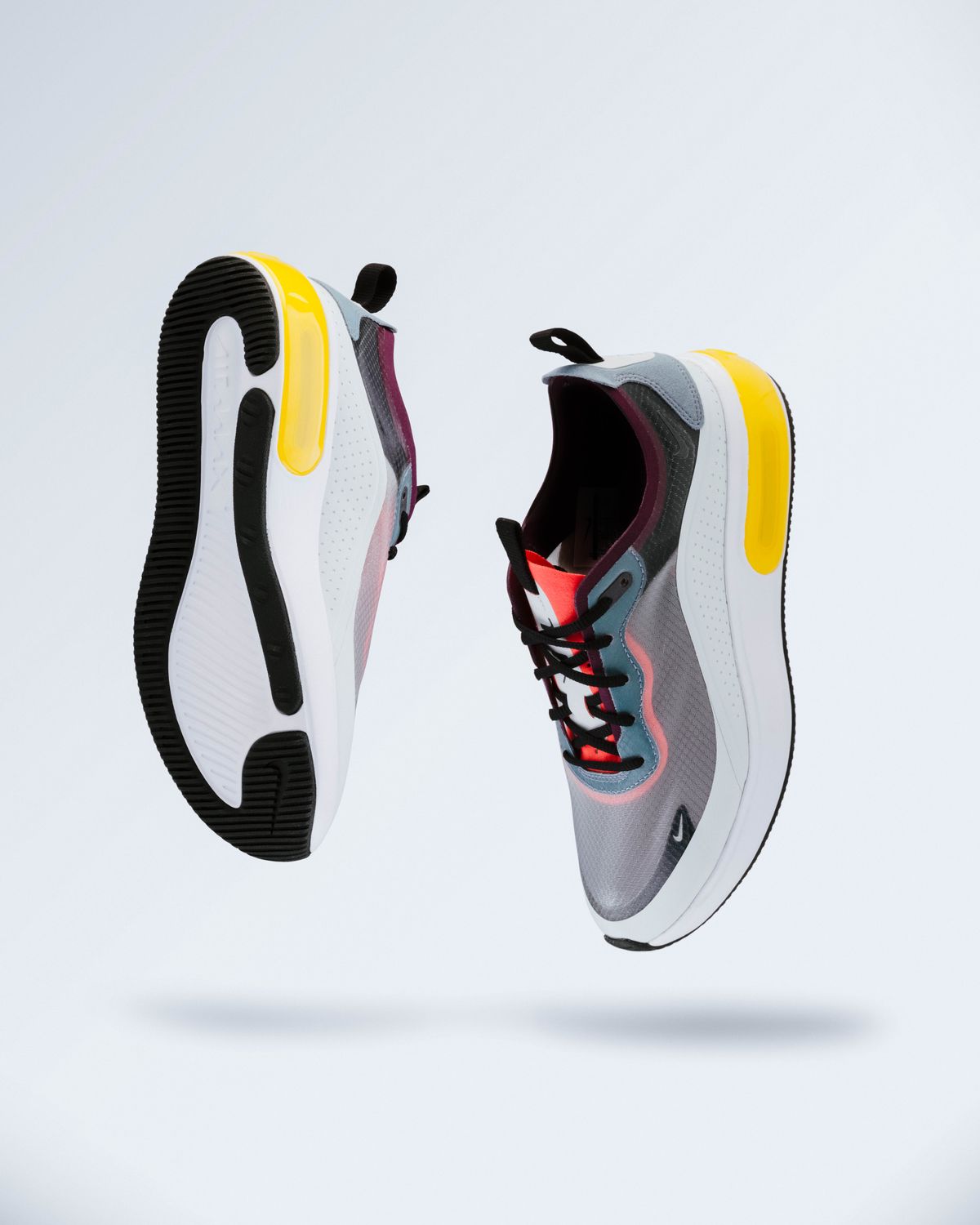
80-Denier Tights Change the Fit, Not Just the Look
This is the part I got wrong first. I assumed the tights were a style decision. They’re a fit decision. Eighty denier is thick enough to change the internal volume of a shoe by roughly a half size, and that’s before you add a sock.
Denier measures the weight of the yarn per 9,000 metres, which is why the number climbs as the fabric gets heavier. If you want the technical version, the textile measurement definitions explain it better than I can. What matters at the shoe rack is simpler: 40 denier is nearly nothing, 80 changes the fit a little, 120 changes it a lot.
My white pair fitted perfectly with bare feet in September. With 80 denier tights they were snug across the instep by mid-morning, and with a thin cotton sock on top of the tights they were too tight to wear for a full day. I ended up wearing them with tights and no socks for the whole eleven days, which is fine for warmth but means the shoe is now doing double duty as a sock.
Two practical consequences. First, if you plan to wear thick tights with white walking shoes for ladies, buy half a size up and accept a slightly loose fit in spring. Second, if the pair already fits perfectly, keep the tights at 40 denier or below and add warmth somewhere else.
Somewhere else means the sock. A thin merino liner sock under the tights is warmer than a thicker cotton sock over them, and it takes up less room. That’s a trick I picked up years ago from a runner and it has never let me down.
Where the Cold Actually Gets In
Not where I expected. I assumed the cold would come through the upper, since white mesh looks thin. It didn’t. My toes were cold while the top of my foot was fine, because the loss happened at three specific places.
- The sole. A thin rubber outsole with no insulating layer pulls heat straight out of the foot. Pavement at 6°C is effectively an infinite heat sink.
- The ankle collar. If it gaps away from your ankle, cold air circulates with every step. Mine gaped on the outside of the left foot only, which is why only one foot was miserable.
- The toe box seam. Perforated panels and decorative stitching both let air through. It looks like a detail. It functions like a vent.
You can fix the first one with an insole. A felt or wool insole costs very little and changes the whole experience of a cold pavement, and it also takes up a bit of the slack when you’re wearing thin tights. Fix the second with a thicker sock or a different lacing pattern. The third one you can’t fix, so look at it before you buy. Hold the shoe up to a light. If you can see the glow through the toe, cold air is coming through there too.
There’s a fourth place, and it’s the one that surprised me most: the gap between the tongue and the lacing panel. On my pair that gap opened up slightly when I walked, and every step pumped a little cold air across the top of my foot. Cinching the laces tighter fixed it and made the instep uncomfortable, so I settled for lacing the middle section snug and leaving the top two eyelets looser than usual. That combination kept the tongue sealed without pressing on the top of my foot.
If you have narrow ankles, expect this problem to be worse. The collar gapes more, the tongue shifts more, and the shoe only feels secure when you over-tighten it, which then squeezes the wrong part of your foot. A heel-lock lace pattern helps here more than a thicker sock does.
The Three-Hour Test and What Got Cold First
I timed it, because I’m that kind of person. Here’s the sequence on a nine-degree day with a twenty-minute outdoor walk at each end and a heated office in between.
The first hour. My toes cooled but stayed comfortable. The leather was stiff and I was aware of the shoe, though not in a painful way. This is the window where most people conclude the shoes are fine.
By hour two, the ball of my foot started to feel the pavement through the sole. Not cold exactly, more like pressure with a temperature attached. This is where a thin insole would have helped and didn’t, because I hadn’t bought one yet.
Hour three. The little toe on my right foot goes properly cold. Everything else is bearable. That one toe stayed cold for the rest of the day and only warmed up after twenty minutes indoors with shoes off.
That pattern is useful, because it tells you what to optimize. If your toes are the problem, you need insulation under the forefoot. If your whole foot is cold, you need a different upper. Mine was a forefoot problem, so an insole plus a slightly thicker sock solved about 80% of it for the rest of the cold snap.
The other thing the test taught me: the walk itself was never the problem. The standing was. Twenty minutes of walking warmed my feet up. Eleven minutes of standing at the bus stop undid it.
That isn’t a knock on white walking shoes for ladies in general. It’s a note about thin soles, and it applies to every light pair I’ve owned, whatever the color.
Salt, Slush, and the One Thing That Saved Them
White shoes and road salt are natural enemies. Salt dries into a grey-white crust along the sole edge and in every seam, and it doesn’t brush off. If you leave it, it pulls moisture into the leather and the edges start to crack by February.
The thing that saved mine was a spray protector applied before the first cold morning, plus a wipe-down with a damp cloth the same evening after any slush. Two minutes, once a day, and the difference between a pair that still looks white in January and a pair that looks like it’s been through a war. Vinegar diluted with water lifts salt lines that have already dried. Don’t scrub hard, just dab and let it sit.
What didn’t work: leather wipes with a high oil content. They clean fine and leave a film that attracts grit. I used them for four days and spent the fifth scrubbing.
The other honest limitation is that white shows every scuff on the toe and heel, and cold weather means more scuffs, because you’re walking faster and looking at the ground. Mine picked up a grey mark on the outer heel within a week. It’s still there. I’ve made peace with it.
One more thing about slush: it doesn’t just stain, it stiffens. Wet leather that dries without being wiped comes back harder than it went out, and after four or five cycles the shoe stops molding to your foot the way it did in week one. Drying them at room temperature with newspaper inside is slower than putting them near a heater, and it’s the difference between leather that stays soft through February and leather that starts to feel like cardboard.

What I’d Do Differently Next Time
Three changes, all small.
First, I’d buy the white pair half a size up and keep them for spring and autumn only, instead of trying to make one pair cover November. Pushing a shoe into weather it wasn’t designed for is how you end up with cold toes and a pair that looks two years older than it is.
Second, I’d buy the insole on day one rather than day nine. The felt insole cost less than two coffees and did more for my comfort than any other single thing I tried.
Third, I’d stop treating white as a summer color. It works in winter, genuinely, with the right trousers and the right tights. It just needs a bit more maintenance and a slightly different fit than the dark pair sitting next to it in the hall.
If you want a pair that handles the cold without the maintenance, the honest answer is that you’re looking at a different shoe. A coated textile or a treated nubuck in a mid-tone will beat white leather on every practical measure from November to February. White wins on how it looks in a photograph, and that’s a real thing to want. Just know which trade you’re making.
There’s a middle path that worked for a friend of mine: she bought white walking shoes for ladies in a smooth coated finish rather than a natural leather, and they wipe clean with a wet cloth in about ten seconds. They don’t crease the same way, they don’t need conditioning, and they look slightly less expensive up close. For a commute shoe that gets rained on twice a week, that’s a fair trade.
Who This Pair Is Actually For
It’s for the person who walks to work for fifteen minutes, sits in a heated office, and wants a shoe that looks deliberate. It’s for mild winters, or for the cold weeks where the pavement is dry and the sky is clear. It’s for anyone whose feet run warm, because those people don’t notice the sole problem at all.
It also suits the woman who changes shoes at her desk. If you have a warmer pair for the walk and a white pair for the building, the cold-weather weaknesses barely matter, and you get the look without the trade-off. That’s probably the most sensible way to own a white pair in a cold city.
Where I’d start looking is the middle of the price range, in the everyday women’s shoe range rather than the technical walking section. The pair that worked for me wasn’t sold as a performance shoe at all, and it held up better than the ones that were.
It’s not for anyone standing outdoors for more than ten minutes at a stretch, anyone commuting on an open platform, or anyone whose toes go numb in normal shoes. Those people need insulation and a warmer upper, and no amount of styling makes up for cold feet at 9am.
One last thing, since it’s the question I get asked most. Do white walking shoes for ladies run small? Mine ran true to size with bare feet and half a size small with 80 denier tights. So the answer depends on how you’ll wear them, which is a boring answer and the correct one. Order the size that fits with the tights you actually own, and if you can’t decide, take the bigger one. Nobody has ever regretted half a size of room in winter.
And if you’re shopping in a shop rather than online, go late in the afternoon with the tights you plan to wear. Feet swell through the day, and a pair that fits at ten in the morning will be tight by six. That’s not a shoe fault. That’s just feet, and the way leather takes up moisture and stretches over a season is part of why the same pair can feel like two different shoes in March and in November.
For the rest of the range, including the low-profile styles that work under trousers, the walking shoes collection is the place to start. The white-cushioned sports and leisure pair is the closest thing I’ve found to what I was actually trying to buy, and the thick-soled flat pair solves the cold-pavement problem by simply having more material under your foot.
If you want the longer version of the buying logic, the trade-offs nobody puts on the box piece covers the same ground for travel pairs.
