

A pair of silver sparkly heels under a shop light looks like the answer to a whole season of evenings. Two hours later, in a photograph taken with a phone flash, the same pair can read as flat grey plastic. Nothing changed except the light, and light is what most buyers never test before paying.
Sparkle is a surface effect. It depends on stone size, on how the stones are set, and on the angle between the light source and whoever is looking. That’s why two pairs at the same price can look identical on a shelf and completely different on a dance floor.
Sparkle is a lighting test before it’s a colour.
Three things get sold as sparkly, and they age differently
Glitter is a plastic film, usually PET, bonded to the upper in a sheet or sprayed on. It’s the cheapest option and the most uniform: from three feet away, a glittered heel reads as a solid block of shine. Up close it has no facets, so it doesn’t throw light back at anyone.
Cheap to make, and it looks it from a metre away.
Rhinestones are glass or acrylic stones glued individually into a pattern. They’re the middle tier. A pair in this bracket usually carries 400 to 900 stones between 2 mm and 3 mm across, and the pattern matters more than the count. A dense field catches light from every angle. A sparse trail only works when the wearer stands still.
Crystal is the top tier, and the difference is cut rather than material. Cut glass has flat faces, so it reflects in flashes: one bright point when the light hits a face, darkness when it doesn’t. That blinking effect is what reads as expensive in photographs and on video.
Acrylic tries to fake it with a foil backing. That works until the backing cloudes, which happens after roughly 20 to 30 wears of contact with skin oils and warm air. Once it clouds, the stone goes milky and the shoe looks tired even if nothing has fallen off.
Stone size is where most of the money goes, and where the visible difference lives. Stones under 2 mm read as texture rather than sparkle; they brighten the surface without ever producing a flash. Stones between 3 and 5 mm produce the individual points of light that people notice across a room, and they cost far more per stone because each one has to be set by hand. A pair covered in 5 mm stones can carry 60 percent fewer of them than a 2 mm pair and still look richer.
What store lighting does to a silver shoe
Retail lighting runs warm, usually somewhere around 3000 K, and it’s aimed. A warm spotlight on a cool silver surface pulls the colour toward champagne, softens the contrast between stone and leather, and makes the whole shoe look more expensive than it is.
Daylight is the opposite test. Northern daylight at around 5500 K turns a warm silver back to grey and exposes every place where the stone colour doesn’t match the base. Stones and upper are almost never the same batch of silver, and daylight is where that shows.
Phone flash is the third test, and the harshest. A direct flash at 50 cm either lights a stone up or passes straight through it. If the stones are set in a cup, they reflect. If they’re flat-backed and glued on top, the flash mostly bounces off the glue line and the stone looks dull.
Anyone buying a sparkly pair can run all three in a shop doorway in about two minutes. Take the shoe to the window, then take one photo with flash on. Whatever the photo shows is what the shoe will look like in every group picture that evening.
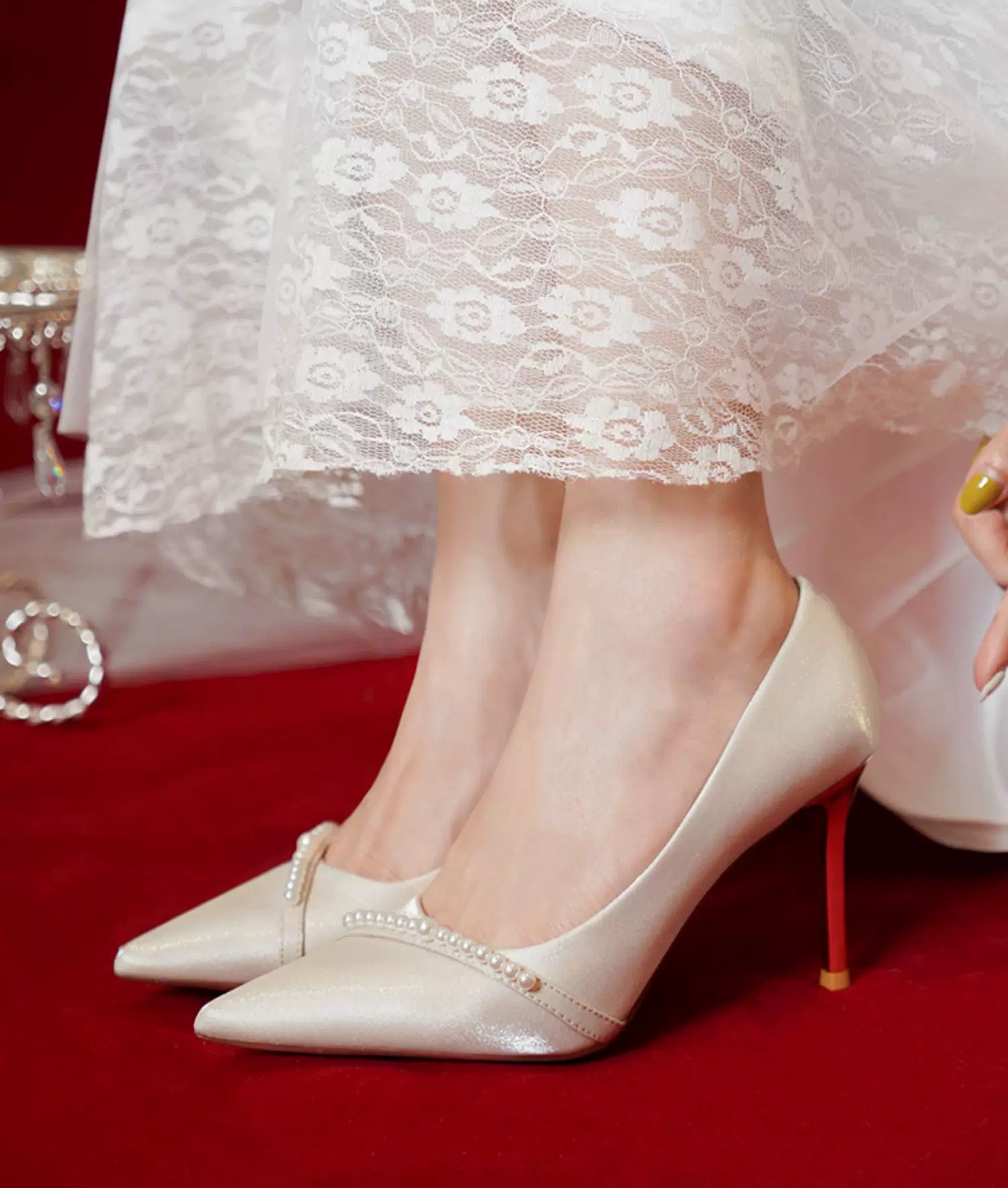
The shade problem: silver is never one colour
Silver spans at least four shades, and mixing two of them in one outfit is the fastest way to make an expensive shoe look cheap. Cool chrome reads blue. Warm silver reads champagne. Gunmetal reads grey-brown. Bright mirror reads almost white in photographs.
The safe pairing is the boring one. Cool chrome with black, charcoal or true white. Warm silver with cream, camel or navy. Gunmetal with denim and most browns. A cool chrome shoe next to a warm gold bag splits the outfit into two lighting temperatures, and cameras exaggerate that split.
Skin tone changes the read too, though less than people claim. A very cool silver can look almost lilac against warm-toned skin in daylight, which some people like and others find jarring. Standing near a window with the shoe against the inside of the wrist settles it faster than any theory.
One practical note: gold heels and how to pick a pair that reads expensive uses the same logic in reverse. The metallic shade does more work than the design, and it’s the part most shoppers decide last.
What falls off first, and how to slow it down
Stones fail in a predictable order. The ones on the toe edge go first, because that’s where the shoe flexes and where it takes contact in a bag or a car footwell. Heel-counter stones go second, from rubbing against the other shoe when legs are crossed. The vamp field, the visible middle, usually holds longest.
Glue is the weak point rather than the stone. Most factory setting uses a hot-melt adhesive that softens around 60°C, which means a car boot in summer or a radiator at home is enough to let stones slide. Storage temperature matters more than most care advice admits.
A clear top coat over a glued pattern helps, and it changes the finish slightly. Two thin coats from 20 cm, left to cure overnight, will hold a glued stone through a wet evening. One thick coat will yellow.
Losing three or four stones from a pattern of 800 is invisible. Losing the one at the tip of the toe is not, because that’s the point everyone looks at when the shoe is on the floor beside a chair. Keep the spares that come in the box. Most pairs ship with five to ten, and they’re matched to the batch.
Fit checks that matter more on a sparkly pair
A stone-covered upper has less give than plain leather. The adhesive layer stiffens the material, so a shoe that would normally soften over two weeks stays close to its shop shape for months. There’s no break-in period to look forward to, which means the first fit is the fit.
- Check the toe box standing up. Aim for 5 to 8 mm of space past the longest toe. It won’t stretch later.
- Walk 20 steps and look for stone lines lifting. A crease that runs through a stone row will pop those stones within a month.
- Feel the inside seam under the arch. Adhesive and backing can leave a rough edge that a plain leather shoe never has.
- Check the heel counter with a finger. If stones are set on the inside of the counter, they’ll rub your heel raw on the first long evening.
Weight is worth a thought as well. A heavily stoned sandal can run 400 to 500 g per shoe, which is a third more than the plain version of the same design. That gap shows up around hour three, when the ankle starts working harder to swing the foot forward.
For a wider view of heel shapes, the full heel styles for women index is a faster comparison than scrolling a search page. Buyers who want the sparkle without the height often end up in a square toe heel with a low rhinestone panel, which keeps the effect at eye level rather than at the toe.
Where the sparkle budget is best spent
There’s a case for putting money into a small area rather than a full stone field. A pair with stones only on the heel counter, or only around the ankle strap, survives longer and reads more deliberate than a fully covered shoe that has lost 40 stones by the second season.
Full coverage has its place: it photographs beautifully and it does the work of jewellery, which means the rest of the outfit can stay plain. For a single event, that’s a reasonable buy. For a pair meant to last three winters, partial coverage wins on almost every measure.
Glitter sits at the bottom of that ladder for a simple reason. Glitter as a material is a dyed plastic film with no facets, so it never sparkles in the way people expect from the word. It glows. Glowing is fine on a festival boot and slightly off on an evening sandal.
The counter-argument is honest. A partly stoned shoe looks like a partly stoned shoe, and some people want the full effect or nothing. If that’s the call, buy the cheapest full-coverage pair that fits properly, wear it hard for one season, and don’t expect it to survive.
Anyone who wants a middle path should look at silver leather heels with a fine heel and no stones. Metallic leather gives most of the shine, none of the adhesive, and a five-year life if the finish is bonded rather than sprayed.
Stone setting has a long manufacturing history, and the difference between glued and set stones is documented well beyond shoes. The history of rhinestones and how they’re mounted explains why a cup-set stone outlasts a glued one by years, and why the price gap between them is smaller than the lifespan gap.
Fifteen minutes at home tells you most of it
Once the box is open, the useful tests are the ones you can run in your own hallway. Do them before you wear the pair anywhere that has a pavement.
Put them on with the tights or the socks you’ll actually wear, not with bare feet. Grip changes completely, and a shoe that holds a bare foot will slide on a sheer tight. Walk to the end of the hallway and back four times. Listen for the heel, and feel where your toes land.
Then look at the pair in daylight by a window. Turn the shoe slowly through 90 degrees and watch when the stones go bright. If there’s only one angle where they flash, you’ll spend the evening looking dull to most of the room.
Take one photo with your phone flash on, from about a metre away, the distance a friend would use at a party. That single image is the most honest preview of the evening you’ll get.
Check your own heel too. A sparkly counter is unforgiving: any rubbing shows on skin within an hour. If you can feel a stone edge against your heel bone while standing, return the pair rather than taping your foot for the event.
None of this takes long. Fifteen minutes at home is cheaper than discovering all of it in a bathroom mirror at 10pm with a pair of borrowed plasters.
The return window is the real test
Most shops allow 28 to 30 days. That’s enough time to do something almost nobody does: wear the pair indoors for two evenings on carpet, then look at them under a window in daylight.
Two hours on carpet tells you whether the fit works without scuffing the sole. Daylight tells you whether the silver reads the way it did in the shop. If both pass, the pair is probably right. If the colour looks wrong at home, it’s not going to look better at the event.
Returns get refused for worn soles, so keep the carpet test indoors and keep the box. A pair still in its box with clean soles is a pair that can go back.
And if the stones start shedding in the first fortnight, that’s a defect rather than wear. Photograph it before the thirtieth day and send it. A pattern losing six stones in two weeks was badly glued, and most retailers know it.
Boots with a bit of shine raise the same questions in a different place, because the shaft matters as much as the finish. This piece on the ankle gap on bootie heels is the parallel read for anyone shopping in winter.
The short version for anyone deciding tonight: pick the shade in daylight, count the stone rows at the toe, and check whether the box came with spares. Twenty minutes of that beats an evening spent wondering why the shoe in the photos doesn’t match the shoe on your foot.
