

Monday, 7:50 train, and the walk from the platform to the office is 600 metres of uneven pavement with two stretches of cobblestone. That’s the part of the commute nobody plans a work shoe around, and it’s the part that decides whether a pair of black heels survives to Friday. Most people buy for the meeting. The pavement is what gets them.
Three things decide whether a black heel works for a full workday: heel height, toe shape, and what’s under the sole. Get those right and the shoe disappears from your day. Get them wrong and you’ll be sitting down more than you mean to. Below is how the three interact, and where a black heel is honestly the wrong tool.
Sixty to seventy millimetres is the working range
The heel height that works for a desk job is lower than the one people buy. Sixty to seventy millimetres, measured at the back of the heel, is the range where the foot stays close to level and the calf doesn’t have to hold a standing pose all day. Above eighty-five, the load moves to the ball of the foot and stays there.
That’s not a moral judgement about high heels. It’s arithmetic. At 90mm, roughly three quarters of your body weight lands on the metatarsal heads when you stand. At 60mm it’s closer to half. Over eight hours, that difference shows up as a hot spot under the second toe by mid-afternoon.
There’s a visual cost, and it’s smaller than people expect. A 65mm black court in a good shape reads more expensive than a 100mm pair that looks like it’s trying. The proportions sit closer to the leg, the toe doesn’t have to be as long to balance the pitch, and the whole shoe looks calmer.
If you already own a 90mm pair you love, the fix isn’t throwing them out. Wear them for the days with one meeting and no site visit, and keep a 60mm pair for the days with both. Most people end up with two pairs anyway, and the second one gets more wear.
Height is the easy part.
The harder part is the drop from heel to toe. Two shoes at the same heel height can feel completely different depending on how much platform sits under the forefoot. A 65mm heel with a 10mm forefoot platform behaves like a 55mm shoe, and your calves will notice the difference by Thursday. Check the inside of the sole with your thumb if the listing doesn’t say.
For a desk job, a pair in that 60 to 70mm range with a modest forefoot platform is the combination that gets worn most. Something like these slim-heel commuting pairs is built for that brief, and the shallow vamp keeps the toe from cutting across the top of the foot when you sit.
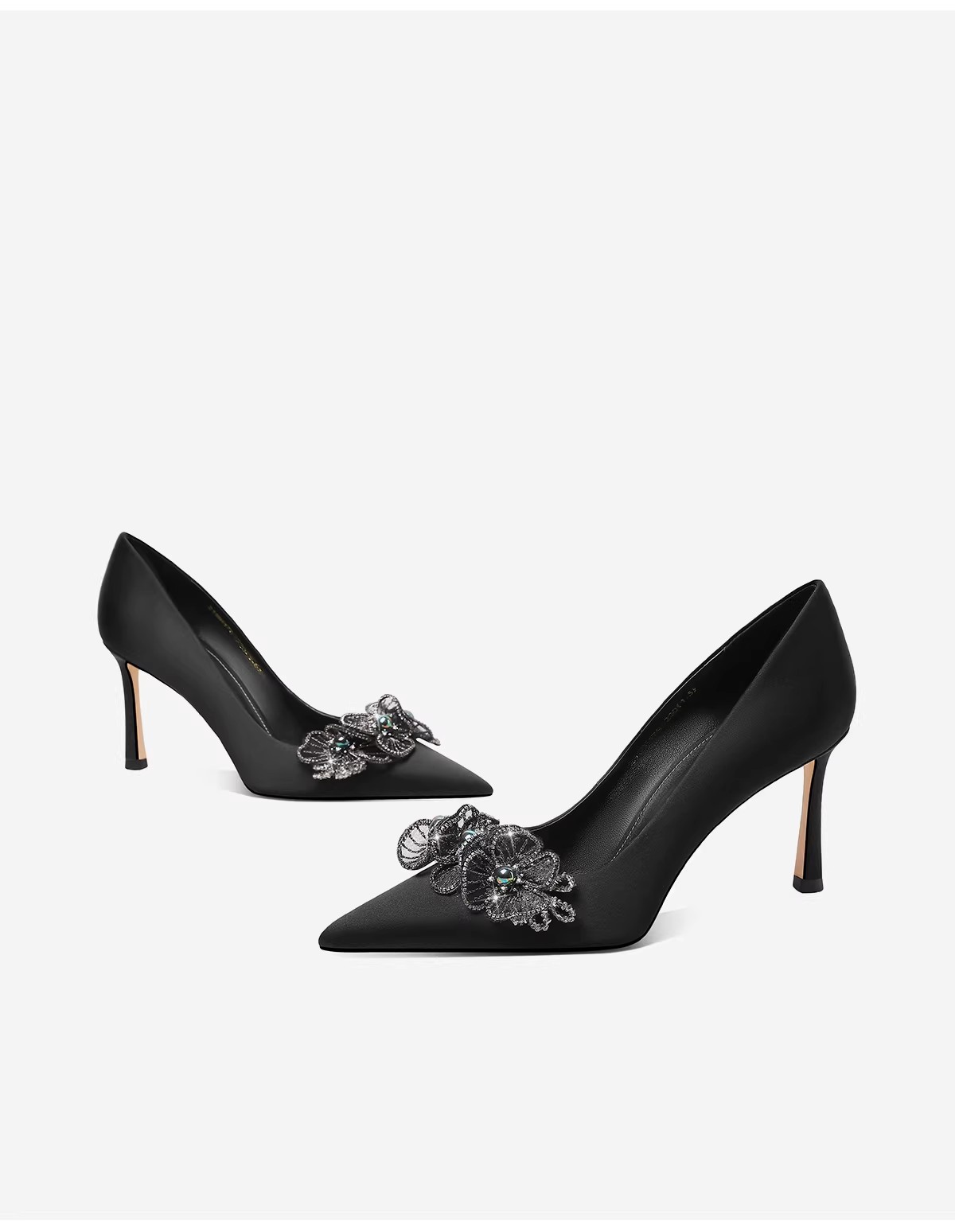
Toe shape changes how the shoe reads in a room
Pointed toes elongate and read formal. They’re the right call for a client presentation and the wrong call for a day when your feet will swell. A pointed toe box has less volume at the front, so by 4pm the little toe is against the leather with nowhere to go.
Almond toes are the compromise most people should start with. There’s enough room to accommodate a small amount of swelling, and the shape still reads sharp under trousers. If you only buy one pair, buy almond in a 65mm.
Square toes are back, and they’re the roomiest option, but they change the outfit. A square toe with a slim trouser looks intentional and modern; with a pencil skirt it can look a half-size too big. Try the silhouette before you commit, because square toes are the one shape that can make a narrow foot look wide.
In this trade you see the same pattern every season. People buy the shape that photographs best, then come back for the shape that fits. The photograph doesn’t walk to the station.
A practical check: stand up in the shop and press your thumb across the widest part of the toe box. You want about 8mm of give before you feel your toe. Less than that and the leather has nowhere to stretch except into your foot.
Toe shape also changes how trousers sit, which is the part nobody mentions. A pointed toe needs a hem that clears the vamp, or the fabric drags on the leather as you walk. An almond or square toe is more forgiving because the top of the shoe is lower and flatter. If you wear wide-leg trousers most days, that difference is worth more than the shape looks in a photo.
The plain black heels that sell fastest in this shape are rarely the sharpest ones on the shelf. They’re the ones with a slightly rounder toe and a lower vamp, and they look unremarkable until you’ve worn them for a week.
The sole grip test to run before you pay
Almost nobody checks the sole. It’s the part that decides whether you can walk on a wet tiled lobby floor without doing a small dance, and it’s visible in ten seconds if you turn the shoe over.
Look for a rubber top piece at the heel, not bare leather. Leather heel tips are slippery on polished stone and get rounded within a month, at which point the shoe starts to skid on the inside edge. A 4mm rubber top piece is the minimum; 6mm lasts noticeably longer and costs a few pounds to replace.
Then run the thumb test. Run your thumb across the forepart of the sole from heel to toe. It should catch slightly. If it glides, the sole is either leather or a hard plastic that behaves like it, and both are a problem in rain.
Friction on wet flooring isn’t a small issue. Slip resistance comes down to the contact between two surfaces and how much water sits between them, which is why NIST’s walkway friction research keeps finding that a hard, smooth sole on a wet tile loses grip fast. You don’t need the physics to shop, but the thumb test is a rough version of the same idea.
One more thing to check while the shoe is upside down: whether the sole is stitched or glued. A stitched sole can be repaired. A glued sole in a cheap shoe will separate at the toe within a season, usually right after the returns window closes.
Replacing heel tips costs very little, usually under the price of a sandwich, and it doubles the life of a work shoe. The mistake is waiting until the tip is worn through to the plastic. By then the heel block itself has started to wear unevenly and the repair costs more than the shoe is worth.
If you sit for most of the day, the sole matters less than the heel tip and the fit. The two-hour sit test covers the part that standing tests miss, and it’s the one that catches a shoe cutting across the instep.
The commute is a different shoe problem
Walking 600 metres on pavement is not the same activity as standing in a meeting room, and the shoe that handles one doesn’t automatically handle the other. A slim 65mm court is fine for the office and punishing on cobblestone, because the heel tip is small and every ridge goes through it.
A block heel of 45 to 55mm is the honest commuter answer. It doesn’t look as sharp under a suit, and it doesn’t need to. Swap into the slim pair at your desk if the day calls for it. Carrying a second pair sounds fussy until you’ve done it twice, at which point it becomes the normal thing you do.
The alternative is a platform. A 30mm platform under a 90mm heel brings the effective pitch down to 60mm while keeping the height look. That works, but the platform changes your gait: you roll through the step later, and stairs need attention. There’s a longer explanation of that in how a platform sole changes your walk.
Weather is the other variable. Wet pavement plus a smooth sole is the worst combination in this whole article, and it happens about forty mornings a year in most cities. If your commute includes a stretch of smooth stone, pick the pair with visible tread on the forepart, not the prettiest pair.
Weight is the number nobody puts on the box. A slim court weighs around 240 grams; a block heel with a rubber sole can hit 380. Over 600 metres that’s fine. Over a day with stairs, escalators and a lunch walk, the heavier pair starts to feel like a decision you made in the morning.
Stairs are worth a sentence of their own. A block heel lands flat on the step and your whole foot trusts it. A slim heel needs you to place the tip, and on a crowded staircase at 9am that’s a small act of faith every time.
Material decides what a wet Tuesday does to them
Smooth calf leather is the most forgiving work material. It takes polish, hides a light scuff, and dries without staining if you wipe it the same evening. It also creases across the vamp in the way leather should, which looks like wear rather than damage.
Suede looks better in the hand and worse after a week of commuting. One rainy morning leaves water marks along the toe, and salt from winter pavements dries into a pale line at the welt. If you want suede for work, spray it before the first wear and accept that it’s a dry-weather shoe.
Patent is the one I’d steer most people away from for daily wear. It shows every scuff at the toe, and there’s no polish that hides them, so a pair that looked sharp in the shop looks tired by week three. Patent is an evening material being sold as office wear.
Linings matter more than most shoppers think. A leather lining manages moisture and stops the shoe from smelling after a summer of bare-leg wear. A synthetic lining traps it, and by August the inside of the shoe has a life of its own. Turn the shoe over and read the lining tag if it’s there. Materials certified for low chemical content, like the ones covered under OEKO-TEX standards, are a reasonable proxy for a brand that thought about the inside as well as the outside.
Suede has one advantage worth naming: it grips a wooden floor and it doesn’t flash under office lighting. A soft-soled suede office pair is the quietest black shoe you can wear to a meeting, provided the forecast is dry.
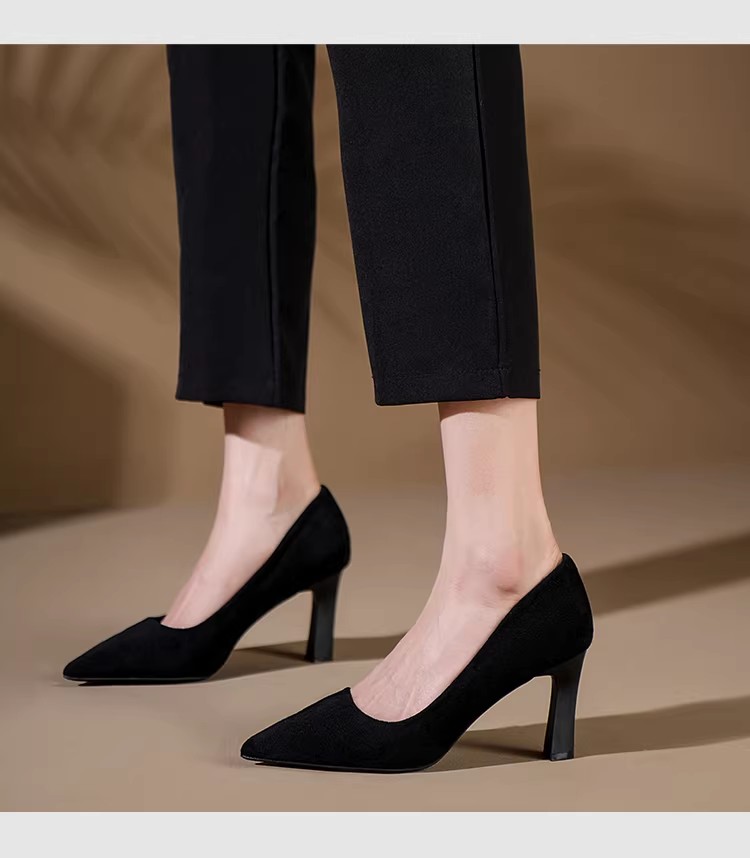
Black dye is the last material issue. Cheap black leather and synthetic uppers can transfer onto pale tights and socks, especially in warm weather. Test with a damp white cloth on an inside seam before the first wear, and if the cloth comes away grey, keep them away from light hosiery.
Buy them in the afternoon, and size for the wider foot
Feet swell through the day, by roughly half a size on a warm afternoon. A pair tried on at 10am can be tight by 4pm, which is exactly when you’re still at your desk and can’t do anything about it. Try work shoes after lunch, ideally after walking for ten minutes.
Size for the larger foot, always. Most people have one foot a few millimetres longer, and buying to the smaller one guarantees a problem on the other side. Stand up in both shoes, not just one, and press the end of the toe box with your thumb while your heel is against the back.
Heel slip is the other test. Walk ten steps on a hard floor. A small amount of lift is normal in a new leather shoe and settles after a few wears. More than about 5mm and the heel is too wide, and no insole will fix it.
If the fit is close but the toe pinches, a shoe stretcher helps with leather and does nothing for patent. That’s worth knowing before you buy the tight pair hoping it’ll give.
Width matters as much as length, and most shoes only come in one width. If you know you’re a wider fit, look for brands that list a D or E fitting, or size up half a size and add a heel grip to take up the extra length. The black heels cut for women’s feet that come in two widths are worth the extra search, because a shoe that’s too narrow at the ball can’t be fixed later.
Try the pair with the socks or tights you’ll actually wear. A shoe that’s snug with bare feet can be impossible over a 40 denier tight, and that’s a mistake people make every autumn when the weather turns.
Where a black heel is the wrong choice
Some workplaces make the decision for you. A lab, a warehouse floor, a hospital ward, a building site: a black heel is a hazard, not a style question, and no amount of seniority changes that. If your day includes ladders or wet floors, wear the flat.
There’s also a social read that’s hard to argue with. In a room where everyone else is in trainers, a 90mm black court makes you the person who dressed for a different meeting. That’s fine if you’re the one running it and less fine if you’re the one presenting to a team who all walked in from the same train.
None of this means a lower heel is a retreat. A 55mm pair with a clean line looks more deliberate than a pair of heels worn badly, and the people who notice shoes for a living read it that way.
Long-station days are the quieter problem. Standing at a counter or a shop floor for six hours is harder on the feet than walking for two, because the same muscles hold the same position. A 65mm heel with a padded footbed can handle it; a 90mm pointed court cannot, and pretending otherwise is how people end up with plantar pain by Friday.
If you’re between sizes, don’t buy the smaller one hoping it’ll stretch. Leather gives maybe 2mm across the width over a month, which is not enough to rescue a shoe that pinched in the shop.
And if the pair you own already hurts, a heel grip and a thin gel insole will buy you an hour, not a day. The honest fix is a lower heel, and it’s cheaper than the podiatry appointment.
One last case: the job where you’re on your feet for ten hours and also expected to look polished. Hospitality, retail management, events. There isn’t a black heel that solves that, and the people who do those jobs well keep a flat in their bag and change at the door. That’s not a compromise, it’s the standard practice.
If you want the longer version of the endurance question, there’s a piece on what survives nine hours at a desk, which tracks the same shoes through a full day rather than a commute.
Take the black pair you wear most and turn it over. If the heel tip is worn round on one side, get it replaced before the plastic underneath starts to go. Then walk the last 200 metres of your commute in them and see where your foot complains. That complaint tells you which of the three things to change next time.
