

You’re at a desk from 9:20 to 18:00, then in a car for 40 minutes, then at a table for two hours. Your shoes are being asked to do almost nothing and still hurt by the end of it. That’s the specific problem dress shoes with arch support are supposed to solve, and most pairs sold under that description don’t.
Before you buy another pair, check three things. The shank. The footbed. The toe width. Most people get the second one wrong, and almost nobody asks about the first.
What follows is the criteria I’d use, in the order that matters, plus the failure modes that show up later.
What arch support actually is inside a dress shoe
Forget the word support for a second. Inside a dress shoe there are three components doing the work: the shank (a stiff strip running from heel to ball under the insole), the insole itself, and the heel counter at the back. Arch support is the result of all three, not a bump in the footbed.
A shoe with a proper shank resists bending in the middle. That stops your arch from collapsing downward when you stand, because the arch is being held up from below by a bridge rather than by muscle. A shoe with no shank, which is common in inexpensive flats and in anything described as flexible, lets the whole middle of the shoe fold. Your foot then does the work the shank should be doing.
Here’s how to test it in ten seconds. Hold the shoe at the heel with one hand and the toe with the other, then try to fold it in half. It should bend at the ball of the foot (about a third from the toe) and refuse to bend behind that point. If it curls like a wrap, there’s no shank worth having.
The second component is the insole. A moulded insole with a raised medial arch gives some support, and it’s the part most marketing refers to. It’s also the weakest of the three, because a 4mm foam arch compresses within months on a person of average weight.
Third is the heel counter. If it’s soft, your heel moves, your arch follows, and the shoe stops doing its job regardless of what’s under your foot.
Worth knowing: the shank is why a good pair of dress shoes with arch support costs what it does. It’s a component you can’t see, can’t replace, and can’t fake with foam. Everything visible in a listing, from stitching to lining to the shape of the toe, is easier and cheaper to get right.
The two-hour sit test, and why sitting changes the fit
Sitting is not neutral for feet. When you sit for two hours, blood pools slightly, feet warm up, and the soft tissue in the arch relaxes. Your foot gets marginally longer and wider, and the top of your instep rises by a couple of millimetres.
That’s why a shoe that felt fine at 9am can feel tight at 16:00, and why a shoe with a rigid, high instep is a bad choice for desk work even if it fits perfectly when you buy it. Dress shoes with arch support for women need to have room above the instep, not just under it.
There’s a second effect that’s less obvious. Sitting for long periods shortens the calf and the plantar fascia. Stand up after two hours and the first twenty steps feel stiff, and the arch takes load it hasn’t taken all afternoon. A shoe with a high heel makes that worse, because the ankle sits in a shortened position the whole time you’re at the desk.
Practical version: if you sit for most of the day, err toward a lower heel than you would for a day of standing. 40mm to 50mm is a reasonable ceiling for desk-heavy work. Above 60mm, the ankle stays flexed for hours, and the first walk to the car becomes the worst part of the day.
The shank question: steel, plastic, or nothing
Steel shanks are the traditional choice, and they’re still the standard in better-made court shoes. They add weight (typically 20g to 30g per shoe) and they don’t fatigue. Plastic and fibreglass shanks are lighter and more common in mid-priced shoes, and they’re fine for two or three years of regular wear.
What you want to avoid is the third category: no shank at all, usually disguised with a thick insole. These shoes feel cushioned in the shop and go flat within a season, and there’s no repair that fixes it.
You can sometimes tell from the weight. A women’s court shoe with a leather upper and a real shank usually weighs 250g to 320g. A comparable shoe at 180g either has a very light sole or no shank.
This is also why cheap dress shoes with arch support are a bad investment specifically for desk workers. The support is in the foam, the foam is the first thing to fail, and the shoe has nothing underneath it when it does.
Heel height and load: 50mm is usually the wrong number
There’s a widespread idea that 50mm is the comfortable middle for a heel. It’s a reasonable compromise for standing, and it’s too high for someone who spends six hours seated and then drives.
The biomechanics of heel height come down to this: every 10mm puts more weight through the ball of the foot and holds the ankle in more plantar flexion. At 50mm on a hard office floor, the ball of the foot carries roughly two-thirds of your body weight when you’re standing, and the ankle sits short all day.
For a desk-heavy week, 30mm to 40mm with a block or a stacked heel covers most of what a dress code asks for, and it keeps the ankle closer to neutral. If you need the look of a higher shoe for meetings, keeping a lower pair under the desk is a more effective strategy than finding a 70mm shoe that doesn’t hurt.
Anyone with a history of plantar pain should treat heel height as a medical decision rather than a styling one. The clinical picture of plantar fascia strain is well documented, and the interaction with footwear is not subtle.
A number worth remembering: at 70mm, the load under the ball of the foot roughly doubles compared with a flat. At 30mm it rises by less than a third. That difference is why a low heel feels like a different shoe by the end of a long day, even when the fit is identical.
Footbeds: removable beats moulded, but only sometimes
Removable footbeds are the most useful feature in this category, and they’re rare in dress shoes because they cost money and add height. If the insole lifts out, you can replace it with something that actually matches your arch, and you can take it out to dry.
Moulded footbeds look supportive and are mostly decoration. A 3mm foam arch with a fabric cover will flatten in about four months of daily wear. It’s not nothing, but it’s not support.
Two rules if you plan to add an insert. First, buy a shoe with room for it, which usually means going up half a size or choosing a wider fitting, and try both together before you commit. Second, don’t stack an insert on top of a moulded footbed. You’ll raise your heel out of the shoe’s heel cup, and the heel will start to slip.
The inserts that work best in dress shoes are thin (under 3mm) and firm, with a distinct medial arch and a heel cup. Soft gel inserts feel good for a week and then do nothing, because your arch needs something to rest against, not something to sink into.
Toe shape, width, and the bunion trade-off
A pointed toe is the most common cause of the problem people blame on arch support. If the toe box narrows before the widest part of your foot, your toes get pushed together, the big toe drifts inward, and the whole load pattern changes. The arch then takes strain it wasn’t designed for.
Check this at the widest point, not at the tip. Put the shoe on a table and look down. The widest part of the shoe should line up with the widest part of your foot, which is at the base of the big toe, not at the ball. If the shoe’s widest point is 10mm further forward, it’s going to squeeze.
An almond toe gives most of the visual effect of a point with 5mm to 8mm more room. A square toe gives more again, at the cost of looking dated in some contexts. A true point is a shoe for a two-hour event, not a nine-hour day.
Where the shoe is genuinely tight across the toes, sizing up is the wrong fix. It adds length in front of the toe, which lets the foot slide forward and puts more pressure on the toes. A wider fitting in your normal size is the correct answer, and it’s the one most shoppers never try.
If you want a structured court shoe with a padded footbed, the block-heel court style with the soft insole is the shape that fits this brief, and the pointed pair with the higher instep works if your dress code leans formal and your feet are narrow.
Driving: the 40 minutes nobody plans for
The car is where dress shoes get quietly destroyed. The right heel rests on the mat, the left foot works the clutch or the brake, and the sole wears in a pattern that no shoe shop will tell you about.
Three practical points for anyone driving in dress shoes:
- A block heel is easier to modulate on a pedal than a stiletto, because the pedal meets a flat surface rather than a point
- Leather soles are slippery on rubber mats when wet, and a rubber top piece solves it for a few pounds
- The heel tip wears fastest on the outer corner, so check it every six months rather than every year
If you drive daily, keep a flat pair in the car and change. It’s less about comfort and more about the clutch pedal, which is genuinely harder to work in a 90mm heel, and about the shoe’s heel tip, which takes load it wasn’t designed for.
The sitting position matters too. If your seat is set so your knees are higher than your hips, your feet sit at an angle for the whole journey, and that’s the position that shortens the calf. Ten minutes of that is fine. Forty minutes a day, five days a week, and you’ll feel it in the arch before you feel it anywhere else.
One small thing that costs nothing: move the seat back a centimetre and check whether your heel actually rests on the floor. Most people drive with the heel hovering or with the foot angled, and both put load through the arch for the whole journey. Flat foot, heel down, and the same shoe stops being a problem.
Straps, slingbacks, and what holds a shoe to your foot
A strap doesn’t add arch support, and it’s often sold as if it does. What a strap does is keep the shoe attached, which matters for a different reason: a shoe that stays put doesn’t need to be gripped by your toes.
That toe-gripping is the hidden cost of a loose shoe. When your heel lifts and the shoe threatens to come off, your toes curl down to hold it. Do that for eight hours and the flexor tendons under the arch are working all day, which is exactly the load you bought arch support to avoid. So an ankle strap can help indirectly, even though it does nothing under your foot.
Slingbacks are the awkward case. The back strap gives a little hold, but the elastic that keeps it in place stretches, and by month six the strap is looser and the heel lifts more. Check whether the elastic is stitched in a way that can be shortened. If it can’t, expect a limited life.
Mules and backless styles are the worst for desk work, and not because they’re unstable. They’re fine sitting down. The problem is the constant small adjustment: sliding your foot back into place every time you stand, which is 15 or 20 times a day in an office and quietly tiring.
If you have a narrow heel and a wide forefoot, which is common, a strap is often the only way to keep a dress shoe on without sizing down and crushing your toes. In that case, choose the strap and accept the slightly more casual look. Fit beats formality every time in a shoe you wear five days a week.
What to spend money on, and what to skip
Spend on the shank and the upper. A leather upper holds its shape, which keeps the heel counter doing its job for longer, and a shoe with a real shank keeps working after the insole has flattened.
Skip the features that don’t survive: gel inserts, memory foam layers, claims about “orthotic-grade” support without a number attached. A shoe described as orthotic-grade should come with a specific arch height or a stated heel-to-toe drop, and if it doesn’t, the phrase means nothing.
Two pairs worn alternately will outlast three pairs worn one at a time, because each gets a day to dry and recover. That’s the cheapest upgrade available in this category, and it costs nothing beyond the second pair.
The last thing to spend on is a cobbler. A rubber top piece fitted to a leather sole costs very little and stops the wear pattern that kills dress shoes in cities. Most people wait until the heel is visibly worn, which is roughly six months too late, and by then the heel block itself needs rebuilding.
If you’re buying dress shoes with arch support for women and only have budget for one pair, buy the lower heel and have the sole protected from day one. That combination covers more days than any other single choice.
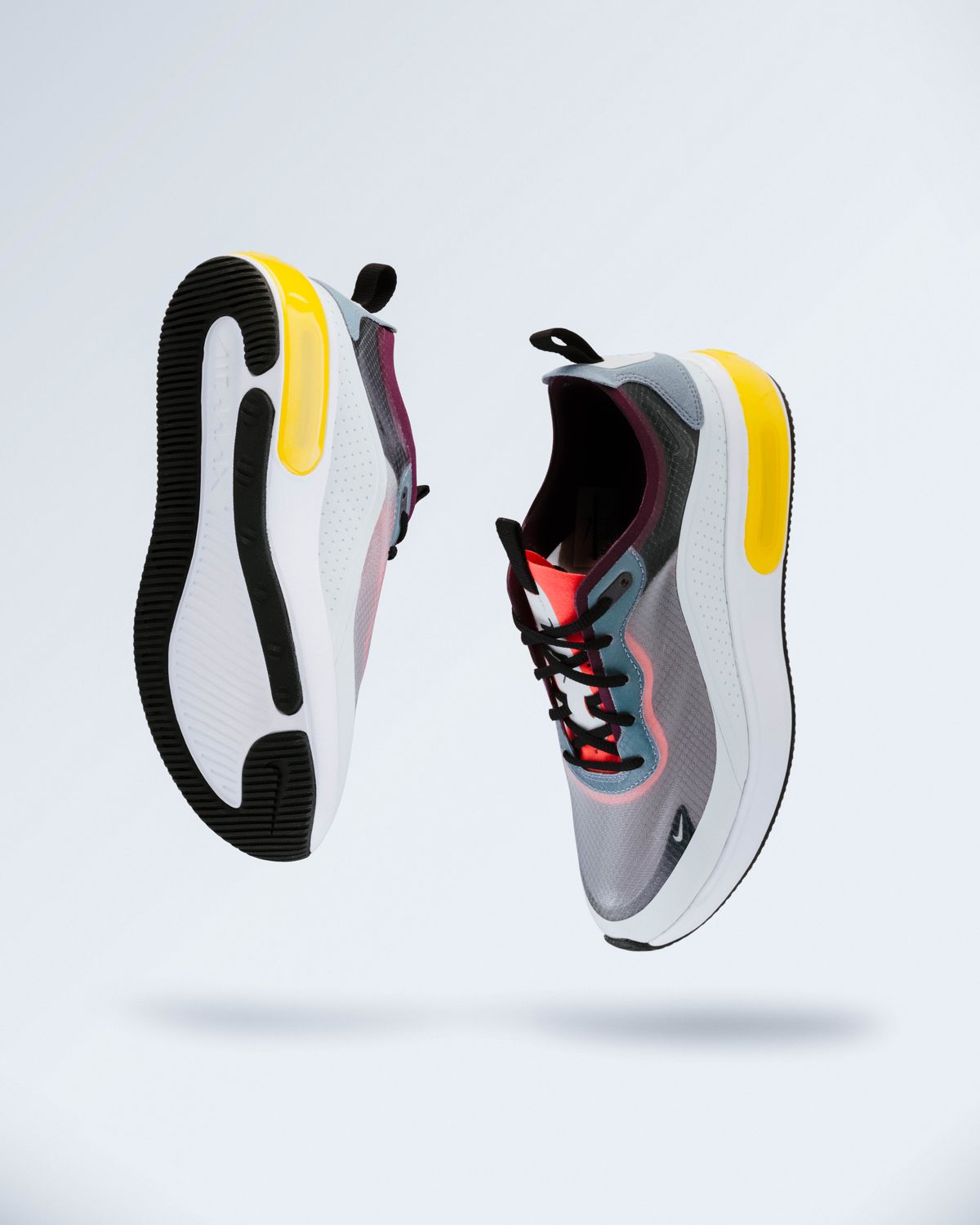
Look at the base width, not the height. A 50mm block and a 50mm stiletto are the same height and completely different shoes to stand in for an afternoon.
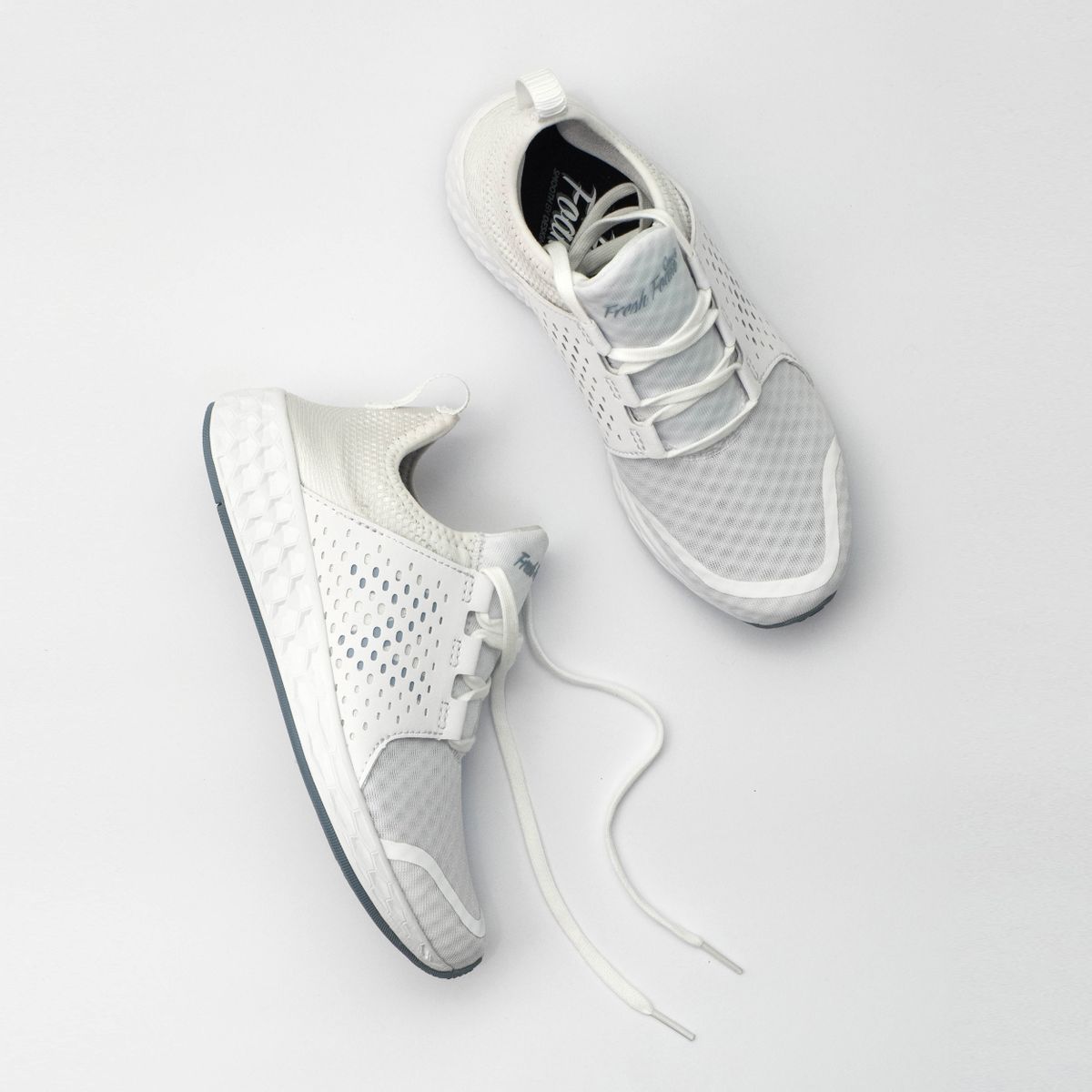
That heel base is what you’re paying for when you buy a shoe that survives a desk day. The colour is a separate decision, and the notes on black and white pairs for transitional weather cover that side of it. Comparing base widths side by side is easier in person than on a screen, so try to see the range on a shop floor if you can.
Buy at 4pm, on a hard floor, with the socks or tights you’ll actually wear, and give the shoe the folding test before you look at the price. If the middle bends, put it back. Everything else is fixable. That isn’t.
And if the pair you already own fails the folding test, don’t throw it away yet. A thin, firm insert with a real arch and a heel cup will carry a soft shoe through a desk day, which is a lot cheaper than replacing it. It won’t fix the shank. It will get you to Friday.
