

You saw them in a window: pale pink, slightly glossy, the exact shade of the inside of a shell. You didn’t buy them, because a small voice said “bridesmaid” and another said “one scuff and they’re finished.”
Both voices are half right. Light pink heels are the most romantic shoe in the shop and the least practical, and that combination is why they sit unworn in so many closets after a single summer.
Here’s how to pick the right pink, keep it looking like pink instead of grey, and wear it somewhere that isn’t a wedding.
Light pink isn’t one color, it’s at least four
Two blush shoes side by side look nearly identical in a shop and completely different on your foot. The difference is temperature, and temperature is what decides whether the pair makes your skin look alive or washed out.
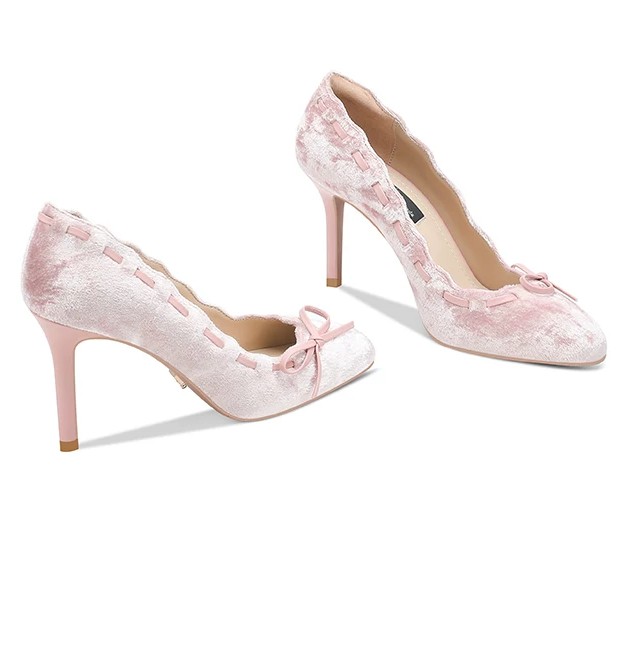
Roughly, the family splits like this:
- Shell pink. Pink with a drop of peach. The warmest and the most flattering on golden and olive skin.
- Blush. Pink with a hint of beige. The most wearable version, because it behaves like a neutral and pairs with cream, camel, and grey.
- Rose. A true cool pink, slightly blue. Beautiful on cool and pink undertones, unforgiving on anyone with a lot of yellow in their skin.
- Baby pink. Pale with a lot of white in it. Reads young, photographs beautifully, and washes out most adults over 30 in flat light.
Test it the same way you’d test a foundation. Take the shoe to daylight and hold it against the inside of your forearm. If the pink makes your skin look grey or slightly green, it’s the wrong temperature, and no outfit will rescue it. If your skin looks warmer next to it, buy that one. Pink as a color family covers a much wider range than the three or four shades most shops stock.
One shortcut: match the pink to your lipstick, not to your dress. Most people already know which pinks suit their face, and the shoe lives right next to the same skin.
The fastest-dirtying shoe you’ll ever own
Nobody warns you properly about this. Pale pink shows everything: road dust, denim transfer, a mark from a taxi door, the grey line where the sole meets the upper. A black shoe absorbs all of it. A pink shoe displays it.
Worse, pink is the hardest color to touch up. Black leather can be polished, brown leather can be waxed, and both come back looking close to new. A scuff on blush satin is a permanent lighter mark, because the dye sits on the surface and there’s nothing underneath it.
What actually helps, in order of usefulness:
- Buy leather or coated fabric, not raw satin, for anything you plan to wear more than twice. Satin is prettier for one evening and hopeless after three.
- Spray before the first wear. Two light coats of protector, twenty minutes apart, fully dry overnight. This buys you time, not immunity.
- Keep a suede eraser and a white cloth in your bag. Most marks lift if you get to them within the hour, and set permanently if you don’t.
- Never wear them with dark denim, especially new denim. Indigo transfer onto pale pink is not removable, and it happens at the back of the heel where you can’t see it until you take them off.
The honest expectation: a light pink pair worn weekly on city streets will look three years old by the end of one summer. That’s not a defect, it’s the color. If you want a pale shoe that survives, buy bone or ivory leather instead and keep the pink pair for indoors and gardens.
Heel height and shape: what blush can carry
Pink is a soft color, and soft colors look best on shapes with a bit of structure. This is why a pale pink stiletto can read cheap while the same shade on a block heel reads expensive. It’s not the height, it’s the balance of soft color against a firm silhouette.
What works, broadly, and the reason heel construction and last shape matter more on a pale shoe than a dark one:
- 60mm to 75mm in a slim block or a stacked heel. The most useful height, because the shoe looks deliberate and you can walk to the venue.
- 40mm to 50mm kitten. Very wearable, slightly retro, and the version that works with jeans on a normal Tuesday.
- 85mm and up, only with a pointed or almond toe. The sharpness of the toe balances the sweetness of the color. A round toe at 90mm in baby pink is a costume.
Shape-wise, pink does well with something graphic: a slingback, a mule with a clean line, a pointed pump, a bow that’s structural rather than floppy. These pink heels with a shaped front work because the design does the work the color can’t.
And one detail that decides whether a pink shoe looks expensive: the sole edge. A pale shoe with a neat, painted sole edge looks finished. A pale shoe where the sole is scuffed raw along the edge looks like a rental. Have a cobbler fit thin sole guards before the first wear, and that edge stays clean for years.
Sizing: pale satin runs tight, and here’s why
Two things make light pink heels fit differently from a black leather pump of the same size.
First, satin and other delicate fabrics don’t stretch the way leather does. Leather gives about 2 to 3mm across the vamp over the first month. Satin gives almost nothing, so a snug satin shoe stays snug forever. Buy satin half a size up if you’re on the edge; buy leather in your normal size.
Second, pale shoes are usually lined in pale material, and pale lining is often synthetic because it’s cheaper to keep clean in production. Synthetic lining doesn’t breathe, so the shoe runs warmer and your foot swells more inside it. That’s the real reason people describe pale satin heels as uncomfortable, and the fix is to look for a leather lining.
The checks that matter:
- Walk twenty steps on hard floor. More than 6mm of heel lift and the shoe is long.
- Press the top of the toe box. You want a few millimetres of clearance, because pink satin with a visible toe outline looks bruised.
- Stand for a full minute with your weight even. This is when a shallow toe box shows itself.
Try them at the end of the day if you can. And if the pale shade turns out to be more maintenance than you want, a round toe in a deeper tone gives you the same softness with half the cleaning. Feet swell by roughly 5% over a working day, and pale shoes have no visual slack to hide a tight fit.
Five places a light pink heel works
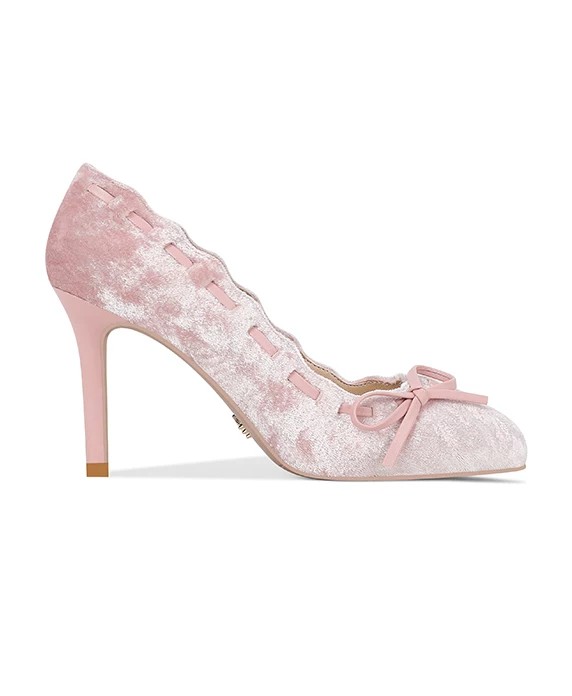
Pink heels have a reputation as event-only shoes. That’s mostly because people buy the wrong shade for their wardrobe and then can’t wear them anywhere.
- With grey. The single best pairing. Pale pink against a grey suit or a grey knit looks expensive and slightly unexpected.
- With denim and a white shirt. The classic. Keep the pink in a matte leather and the whole thing reads like a weekend in the south of France rather than a wedding.
- With cream and camel. Tonal, warm, and the combo that makes blush look like a neutral instead of a statement.
- With all white. Risky and very good when it works. The shoe needs to be a shade deeper than the outfit or it disappears.
- With navy. A soft contrast that photographs better than black, especially indoors.
Where it fails: anything with a strong warm pattern. Florals, plaids, and prints all compete, and the pink ends up looking like a mistake. Same for bright red, which fights pink at the same volume.
If you want the romantic look without the fragility, a pair with a bow does the work through design rather than color, which is easier to build an outfit around. The trick is where the bow actually lands on the foot, and that detail matters more than the shade.
For a deeper, warmer pink that survives more than one summer, these rose-toned pink heels with a shaped back sit on the easier end of the family.
Wedding math: bride, bridesmaid, guest
This is where most light pink shoes get bought, so it’s worth being direct about the etiquette.
As a bride: blush is the safe choice if you want something other than white, and it photographs warmly in daylight. Avoid baby pink, which reads pink in person and white in photos, so you lose the effect you paid for.
As a bridesmaid: check what you’re being asked to wear before you buy. If the dress is blush, the shoes need to be a full shade deeper or lighter, never a near match, because near matches look like a mistake rather than a plan.
Guest: a pale pink heel is fine at a daytime wedding and a bit much at an evening one, where it competes with the flowers and the lighting. The other rule guests forget: if you’re not sure, go a shade deeper. Dusty rose reads adult; baby pink reads like you’re in the bridal party.
Practical wedding advice that applies to all three, and it starts with the rest of the women’s shoes range if you’re shopping for something to wear again: buy the pair six weeks out, wear them around the house for two hours on carpet, and bring plasters. Pale shoes plus a long day equals a blister at the back of the heel, and a blister on pink satin is a mark you can’t hide in the photos.
Buying checks that separate a good pair from a pretty one
Pink is easy to sell and hard to make well, so the checks matter more here than on a black shoe.
Look at the color under three lights. Shop lighting, daylight at the door, and your phone’s camera. If it changes dramatically between them, it will look wrong in half the photos you take.
Check the lining is leather. Pale synthetic lining is the number one reason these shoes get described as hot and sweaty.
Press the toe box. It should hold its shape and spring back. Soft pink leather that collapses will crease permanently within a month, and creases on pale leather look like cracks.
Check the seam where the upper meets the sole. That’s the first place pale shoes start looking shabby, because the glue line discolors before the leather does.
Ask what the dye is. A shop that can’t answer probably has a cheap surface dye that will fade unevenly in sunlight. Good leather is dyed through, and it stays the same color after a scuff.
Then, when you get them home, do the boring things: protector spray, sole guards, and a shoe bag. Total cost is small and it’s the difference between one season and four.
Buy the deeper pink
If you’re choosing between a pale pink you love and a slightly deeper one you like, buy the deeper one. It hides marks, works with more of your wardrobe, and looks the same in a photograph.
Keep the palest pair for gardens, weddings, and days when you’re not crossing a car park. That’s not a compromise, it’s how the color is meant to be worn.
Storage: why pale leather turns yellow by next spring
One last thing that catches people out in May. You put a pale pink pair away in September looking fine, open the box in April, and the leather has a yellow cast along the toe and the back of the heel. That’s not dirt. It’s oxidation of the finish, and it usually starts wherever the shoe has been folded or pressed against something for months.
Three habits prevent it:
- Store them stuffed, not flat. Crumpled paper inside the toe holds the shape and keeps the finish from creasing against itself.
- Keep them out of sunlight and out of plastic. A breathable cotton bag, a dark shelf, and no direct window light.
- Air them for a day before storing. Moisture from a summer of wear trapped in a closed box is what speeds the yellowing up.
If the cast has already started, a leather cleaner will pull some of it back, but the even tone usually doesn’t return. That’s the argument for buying the deeper pink in the first place, and for giving pale leather the good storage while it’s still pale.
