

It rains on the way to work, you step in one puddle at the crossing, and by the time you reach the office your suede shoes have two dark patches and a grey tideline. Nobody warns you that suede fails in a very specific, very visible way.
That’s the trade you make for the texture. Suede looks softer and more expensive than smooth leather, feels like a brushed peach the first week, and then asks you to look after it. Skip the looking after and it goes from elegant to tired in about three wears.
The good news: suede shoes for women don’t need much. A brush, a spray, and knowing which pair to leave at home in February covers almost everything.
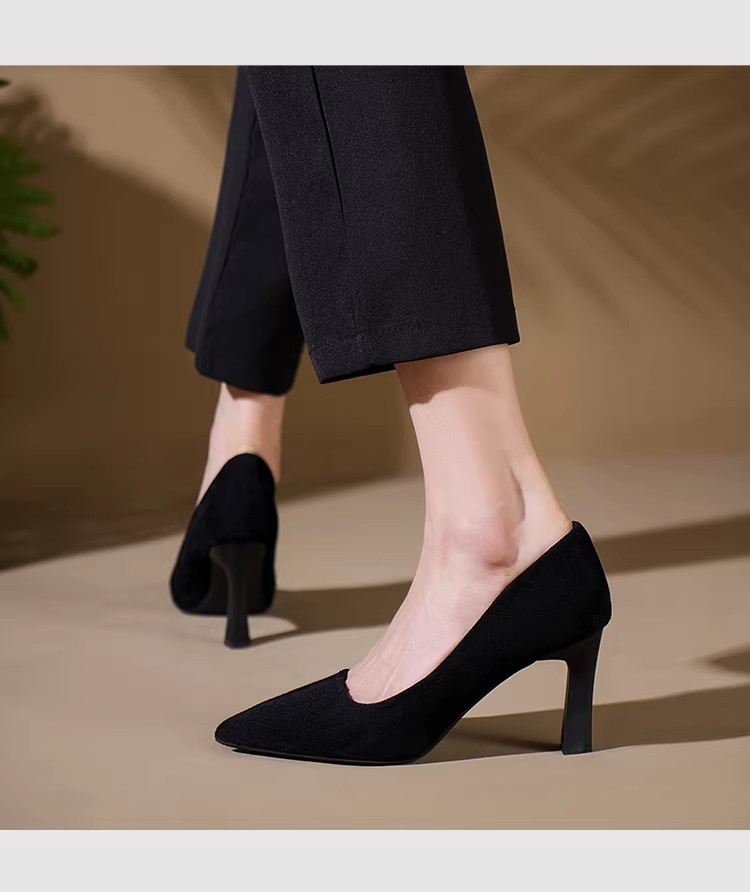
Where suede actually fails
Water is the obvious enemy, but it’s rarely what kills a pair. Rain dries. What destroys suede is what’s dissolved in the water: road salt in winter, grit from a building site, and the soap in a puddle outside a car wash.
Salt is the worst of the three. It dries into a pale ring that sits in the nap, and if you leave it, the leather underneath stiffens. Once a salt stain sets, you can fade it, but you won’t remove it.
Second killer: friction. Suede rubs against itself and against tights, and the nap goes shiny at the heel and along the inside edge of the toe. That shine is flattened fibres, and it doesn’t brush back out. It’s the reason a two-year-old suede shoe looks older than a five-year-old leather one.
Third: dye transfer. Dark suede on a light carpet, or a new pair against pale tights in humid weather. Fresh suede can crock for the first few wears, which is a polite way of saying it will leave colour on whatever touches it.
If you live somewhere with real winters, none of this makes suede a bad choice. It makes suede a two-pair choice: one for dry days, one you don’t mind ruining.
The 30-second nap test
Suede quality is mostly about the nap, meaning the length and density of the fibres. You can judge it in a shop faster than you can try the shoe on.
Rub your thumb across the surface in one direction, then back. On good suede, the colour shifts noticeably and the surface feels like a fine brush. On cheap suede, the surface barely changes because the fibres have been sanded too short or coated with a finish that seals them.
Then press. Good suede gives slightly and springs back. Cheap suede either feels papery or feels like a sponge, and a sponge will bag out at the toe within a season.
Look at the edge, too. Where the upper meets the sole, real suede has a clean cut with visible fibre. If you see a woven backing or a plastic film at the edge, you’re looking at a faux suede, which is a different material with different rules.
None of this is about price. I’ve handled £200 suede that felt like felt and £70 suede that had a beautiful dense nap. Brand tells you less than your thumb does.
Faux suede, by the way, isn’t automatically worse. It handles rain better, cleans with a damp cloth, and costs a third as much. It just doesn’t develop the patina that makes real suede worth the trouble, and it creases in a way that looks plastic under office lighting.
Colours that survive a city
Every suede colour ages differently, and the ones that photograph best are usually the ones that age worst.
Black is the safest. Scuffs read as shadow, salt rings are the only real risk, and it works with everything you already own. Boring answer, correct answer.
Dark brown and chocolate hide dirt even better than black, because the dust that settles on suede is brown too. A pair in dark brown can go a whole autumn without a proper brush.
Grey and taupe look expensive and punish you. One wet commute and the water line is visible from across the room. If grey is the colour you want, buy the spray before you wear them.
Tan and sand are the ones that show every mark, and also the ones most people buy first. They photograph beautifully in September and look rough by December unless you’re careful.
Colour, meaning red, green, navy, dusty pink, is the fun end of the range and the one that dates fastest. A red suede flat is a great third pair. It’s a bad only pair.
Here’s the counterintuitive part: lighter suede often looks better slightly worn. Dark suede looks worse, because the scuffs go pale against the dark surface. So if you want the pair to look good in year three, go dark and brush it weekly.
Stretching, sizing, and what suede does to your foot
Suede has more give than smooth leather, but less than people assume. It softens and moulds. It does not stretch a full size, and a shoe that pinches your little toe on day one will still pinch it in a month.
What it does do is relax across the vamp, the part over the top of your foot. That’s why a suede pump that feels snug at 9am can feel comfortable at noon, and why the same shoe in leather might still be tight a week later.
The heel is where suede bites. A suede heel counter has a grippier surface than leather, so if the shoe is even slightly too long, it grabs your heel and rubs instead of slipping. Blisters from suede are worse than blisters from leather, in my experience, because the friction is higher.
So size for length, not for tightness. If your heel lifts when you walk, go down half a size or add a heel grip. Don’t buy the smaller size hoping it’ll give, and don’t buy the bigger one hoping to grow into it.
For wide feet, suede is actually a helpful material because it has a bit more flex at the widest point. It won’t fix a narrow last, but it’s more forgiving than patent or coated leather, both of which have almost no give at all.
One fit note for heels specifically: suede uppers grip the top of your foot well, which means less sliding forward and less toe crush at the front. That’s a real advantage on a 70mm heel, and it’s why people who hate leather pumps often get on fine with the same shape in suede.
The cleaning routine that actually works
You need three things and about eight minutes a week. A suede brush with brass bristles on one side and rubber on the other, a protector spray, and a pencil eraser for scuffs.
Weekly, brush in one direction with the brass side. That lifts the nap, removes dust, and stops the fibres from matting. Two minutes per shoe, no products involved.
Scuffs come off with the rubber side or a clean pencil eraser. Rub gently along the grain. Most marks on suede are surface dirt, and the eraser lifts it without wetting the leather.
Water stains need action before the shoe dries. Blot, don’t rub. Then stuff the shoe with newspaper and let it dry away from heat, because a radiator will bake the stain in and shrink the leather. Once dry, brush the nap back up.
Salt is the one that needs a liquid. Mix a little white vinegar with water, about one part to four, dab it on with a cloth, and let it dry. It neutralises the salt rather than just diluting it. Then brush.
Spray protector before the first wear and again every six to eight weeks in wet weather. Two light coats, dried between, work better than one heavy coat. The background on how suede is finished explains why: the spray sits on the fibres, and soaking them makes the nap clump.
What not to do: don’t machine wash, don’t use a normal leather cream, and don’t put suede shoes on a radiator. All three are one-way trips.
The inside of the shoe matters as much as the outside. Suede uppers breathe better than coated leather, but a synthetic lining cancels that out, and sweat is what makes a pair smell after six months. Sprinkle a little bicarbonate of soda inside, leave it overnight, and tip it out in the morning. Once a month is enough.
If you’re sensitive to the chemicals used in tanning and finishing, the OEKO-TEX leather safety standard is the label worth checking before you buy anything that sits against bare skin for nine hours.
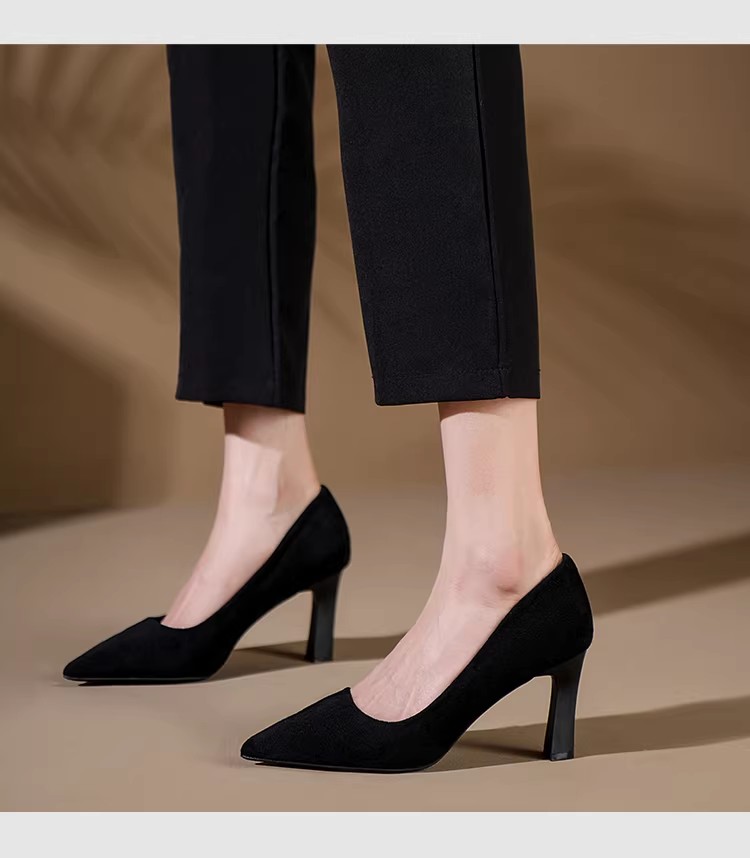
Which suede shoe survives your actual week
Shape matters more than colour here, because each style takes a different amount of punishment.
A suede heel is the most fragile in bad weather and the most useful in a dry autumn. A 45mm to 60mm suede pump handles client meetings and dinners, and the nap keeps it from looking as severe as black leather. This pair of retro suede heels with a softer upper is the shape I’d pick for a first suede buy, because the toe isn’t aggressively pointed.
Flats and loafers do the heavy lifting. They take a commute, they work with trousers, and they age in a way that looks intentional. The weak point is the sole, so check that it’s stitched or at least well cemented, and that there’s actual tread rather than a smooth slab.
Sneakers in suede are the ones people regret, mostly because they buy pale ones and wear them in November. In dark colours they’re excellent. In cream, they’re a two-month shoe. If that’s the pair you want anyway, read the fit notes on how to tell in 40 seconds if a suede slip-on will stay on before you order.
Boots are the best value of the four, because there’s more material between your foot and the ground and the ankle coverage keeps splashback off the upper. They handle salt better if you spray them properly, though nothing handles salt well.
If your job involves a lot of walking between buildings, a black suede soft-soled commuter shoe in suede solves two problems at once: the colour hides marks, and the softer sole keeps the noise down on hard floors.
What I’d skip
Start with suede that has heavy visible stitching near the toe. Every seam is a place where water gets in and dirt collects, and you can’t brush a seam clean.
Pale suede is the next one I’d leave on the shelf if you take public transport in winter. The walk from the station to the door is exactly the distance where splashback happens, and a pale shoe shows all of it.
Skip suede shoes with a synthetic lining and no leather insole. The combination traps moisture, and damp suede plus body heat is how you get a permanent sour smell that no spray fixes. It’s also the tell for a pair that was built to hit a price rather than last three winters.
Also skip the urge to buy two pairs at once. Wear the first pair for a month, and you’ll know whether you brush your shoes on a Sunday or leave them by the door until March. If it’s the second one, buy leather next time and save yourself the guilt.
If you want to see how suede behaves in a heel specifically, this piece on suede heels and what actually protects the nap goes deeper into the heel-counter problem. And if you’re shopping for the lighter end of the range, the wider shoe selection by silhouette is the quickest way to compare a loafer shape against a pump.
Then there’s the question of when to give up. A suede shoe is finished when the nap has gone shiny in two places and the sole is smooth under the ball of your foot. Reheel it once if you love it. After that, you’re paying to keep a shoe that has already told you its story.
Buy the dark pair. Spray it twice before you wear it. Brush it on Sunday while the kettle boils.
