

The box gets opened on a Thursday evening, under a lamp, and the shoes inside are a flat, slightly dusty brown. Nothing like the warm chestnut in the listing. By Saturday morning, in the hallway with a bit of grey sky coming through the window, they look almost taupe.
This is the most common complaint about brown flat shoes for women, and it isn’t a defect. Brown sits at the low end of the visible spectrum, roughly 590 to 620 nanometres, and it reflects warm light far more readily than it absorbs cool light. Change the light source and the colour you see changes with it. Black doesn’t do this. Neither does white. Brown does it more than any other shoe colour on the shelf.
Three light sources decide what people actually see. Shop lighting, which is almost always warm and flattering. Daylight, which is cooler and less forgiving. Evening lamp light, which pushes everything toward red. A pair that reads well in all three is worth keeping. Most pairs don’t.
The same pair, three different browns
Take a mid-brown leather flat and look at it in three places. Under a 3000K shop spot, it reads rich and slightly orange, because the light itself is orange and the leather’s warm pigment amplifies it. That’s why almost everything in a shoe shop looks good, and why the exit door is the moment of truth.
Step outside into overcast daylight at around 5500K and the same shoe loses roughly a fifth of its apparent saturation. The orange goes, the grey comes up, and a brown that looked expensive at 4pm in the shop can look flat and slightly dusty at 9am on a street.
Then there’s the evening lamp, typically 2700K with a strong red bias. Now the shoe swings the other way and reads darker and redder than it is. A chocolate brown becomes almost mahogany. A tan becomes caramel. Neither is what you’ll see tomorrow.
The technical name for this is metamerism, and it’s the reason two browns that match perfectly in one light can clash badly in another. Colour temperature explains the direction of the shift, and the science of colour perception explains why the eye keeps re-balancing and telling you the shoe changed when the light did.
Why shop lighting lies, specifically
Retail lighting is engineered to sell. Warmer bulbs make leather look more supple and richer. High colour rendering makes stitching and grain pop. Neither is dishonest exactly, but both are calibrated to a single viewing condition that exists only inside the shop.
A useful test costs nothing. Carry the shoe to the shop doorway and look at it in the natural light coming in, not under the ceiling spots. If there’s a window, hold it up so daylight falls across the vamp. The colour you see there is closer to the colour your colleagues will see on Monday.
Fluorescent light is the third liar. Older tubes spike in the green part of the spectrum, which pushes brown toward olive. A pair that reads neutral under a decent LED can look faintly greenish in a basement office with 15-year-old tubes. That’s not the shoe’s fault, and there’s nothing to fix. It’s worth knowing before deciding a colour is wrong.
Phone cameras make it worse. Auto white balance corrects for the light source and then corrects again for the background, so two photos of the same shoe taken ten seconds apart can show two different browns. When buying online, the photo tells you about the seller’s lighting more than about the shoe.
There’s a way to read a listing photo properly. Look for a shadow. A shot taken under a single warm spot has a soft, almost invisible shadow because the light wraps around the shoe. A shot taken near a window has a harder edge and a cooler tone in the background. If every photo in a listing has the same flat warmth, the seller shot them in a light tent, which means you’re looking at a product photo rather than a pair. Ask for one taken on a hand, in a room, with no setup. That photo is worth ten studio shots.
What daylight shows that lamp light hides
Daylight is the harshest judge available and the only one worth trusting for a purchase decision. It shows surface variation, it shows the difference between a dyed-through leather and a sprayed finish, and it shows wear.
Hold a brown flat at a low angle to a window and look along the surface rather than at it. Aniline-dyed leather, where the colour goes into the hide, shifts subtly across the surface and keeps its tone at the creases. A sprayed or corrected finish sits on top, reads uniform and flat, and starts to show lighter lines at the flex points as the coating wears. Both are sold as brown leather. Only one still looks brown after a year of walking.
Daylight also exposes the difference between brown and brown-black. Some so-called browns are black leather with a brown topcoat, and under cool daylight the black underneath starts to show at the toe and along the sole edge. If you can see a grey undertone at the toe in natural light, that’s what you’re looking at.
Grain visibility is the other giveaway, and it only appears in raking light. Hold the shoe so the window light runs across the vamp at a shallow angle and look for the pore pattern. Full-grain leather has visible pores that vary in size across the hide and get tighter toward the toe. Corrected grain has an even, printed texture that repeats, sometimes with a faint embossed pattern. Under warm shop light both look like smooth brown leather. In daylight, one of them looks like leather and the other looks like a surface.
Anyone buying brown flat shoes for women without seeing them outdoors is buying a shade rather than a shoe. Ask for a photo taken near a window with no flash, and ask what time of day it was taken. Sellers who do this without being asked usually have nothing to hide.
Evening light and the red shift
Indoor evening light is the condition most people actually live in from October to March, and it’s the one that flatters brown the most. A 2700K lamp adds a red cast that makes tan and chestnut look warmer and more expensive than they are. That’s why brown shoes get worn to dinner and then look disappointing in the office the next morning.
There’s a practical consequence. If most of your wear happens in the evening, at restaurants or in bars, a warmer brown works in your favour and a cool taupe works against you. If most of your wear is a morning commute and a fluorescent office, the reverse is true. The colour isn’t good or bad in the abstract. It’s good or bad in the light you stand in.
One more variable that gets missed: floors. A brown flat photographed against a pale oak floor reads darker than the same shoe on a grey carpet, because the eye judges colour relative to its surroundings. Shops know this, which is why so many display plinths are warm-toned.
Skin tone belongs in the same conversation, and it’s where most colour advice goes wrong. The shade that looks warm and rich against a pale forearm can look muddy next to deeper, olive-toned skin, and the reverse. This isn’t about which shade suits which person in some absolute sense. It’s about contrast: a brown close to your own skin tone reads as an extension of the leg, and a brown several steps away reads as a separate object. Both are legitimate looks. They just do different things to a hemline.
The practical version of that: if you want the shoe to disappear and let the outfit carry the look, choose a brown within two shades of your skin. If you want the shoe to register as a deliberate choice, go darker or lighter than your own tone and stop worrying about matching.
Photographing the true colour before you commit
Three photos, all on the same afternoon, will settle most of the doubt. Put the shoe on a white sheet of paper near a window with indirect light and shoot without flash. Then shoot it under the room’s main lamp. Then shoot it on your own foot next to a pair of jeans or navy trousers, because that’s how it will be seen.
Look at the three images together on the same screen. The version that appears in two of the three is probably accurate. The one that appears only once is the lighting, not the leather.
For an online purchase, reverse the process. Before ordering, look at the product photos and ask which of the three conditions they represent. A listing shot under a warm spot with a dark background is telling you the shop’s version of the colour. That’s the least useful of the three, and it’s the most common.
If you’re between two shades, buy the lighter one. Brown darkens with wear and with conditioner, and it darkens permanently. A tan that looks a shade too light in the box will be a mid-brown by the end of the first winter.
When the shade is wrong, what actually fixes it
Wrong shade is rarely a reason to return a comfortable shoe. It’s usually a styling problem, and it’s solvable.
- Too orange. Pair with navy, grey or white. Orange-brown against cool blue reads as a deliberate contrast rather than an accident.
- Too grey or taupe. Add cream, oatmeal or camel near the hem. Warm neutrals pull a cool brown back toward the middle.
- Too dark. Bare ankle or a light sock. The gap between hem and shoe does more for the read than the shoe itself.
- Too red. Denim fixes it almost every time, especially a mid-wash blue that’s been worn a while.
The one pairing that consistently fails is brown shoes with a black hem in flat daylight. The two colours are close enough in value to look like a mistake and far enough apart in temperature to look unresolved. It works in evening light. It rarely works at 8am.
A cobbler can also darken a brown, and cannot lighten one. If the shade is too light and you want it deeper, a pigmented cream will take it down two shades in one pass. If it’s too dark, there’s nothing to be done except wear it with lighter clothes and wait for the sun to fade it, which takes years and works unevenly.
Socks and tights do more than most people expect. A brown flat with a black tight reads as a dark neutral and loses all its warmth. The same shoe with a sheer nude tight keeps the tone it had in the box. In winter, a wool sock in oatmeal or charcoal changes the read entirely, and charcoal is the one that makes a warm brown look considered rather than accidental. It’s a two-dollar fix for a problem people return shoes over.
The shade that survives all three lights
Mid-brown sits in the safest zone. Somewhere between chestnut and a soft cocoa, with a little red in it but not much, it holds its identity under warm light, cool daylight and lamp light. It shifts, as all brown does, but it stays recognisably the same colour.
There’s a second reason mid-brown is the safe pick, and it’s structural rather than optical. A mid-tone hides scuffs, creases and the faint dust that collects on a leather toe, because there’s no strong contrast between the surface and the marks on it. Very dark browns show every grain of dust in daylight. Very light tans show every scuff and water mark. Anyone who walks a lot and doesn’t want to polish on Sundays should start in the middle.
Espresso and very dark browns fail differently. They read almost black indoors and then reveal their brown in daylight, which surprises people who bought them for a black-adjacent look. That’s not a flaw, but it means they don’t do the job the buyer intended.
Tan and light camel have the opposite problem. Under a warm lamp they glow, and in flat grey daylight they can look washed out and slightly cheap. Tan needs better leather than dark brown to look expensive, because there’s nowhere to hide a poor finish.
Suede shifts more than any smooth leather, because the nap scatters light instead of reflecting it. A brown suede flat can look three different colours in one afternoon, and no amount of conditioner changes that. If consistency matters to you, buy smooth leather. If you like the way suede goes from matte to velvety as you move, it’s the better choice and it’s worth the extra care.
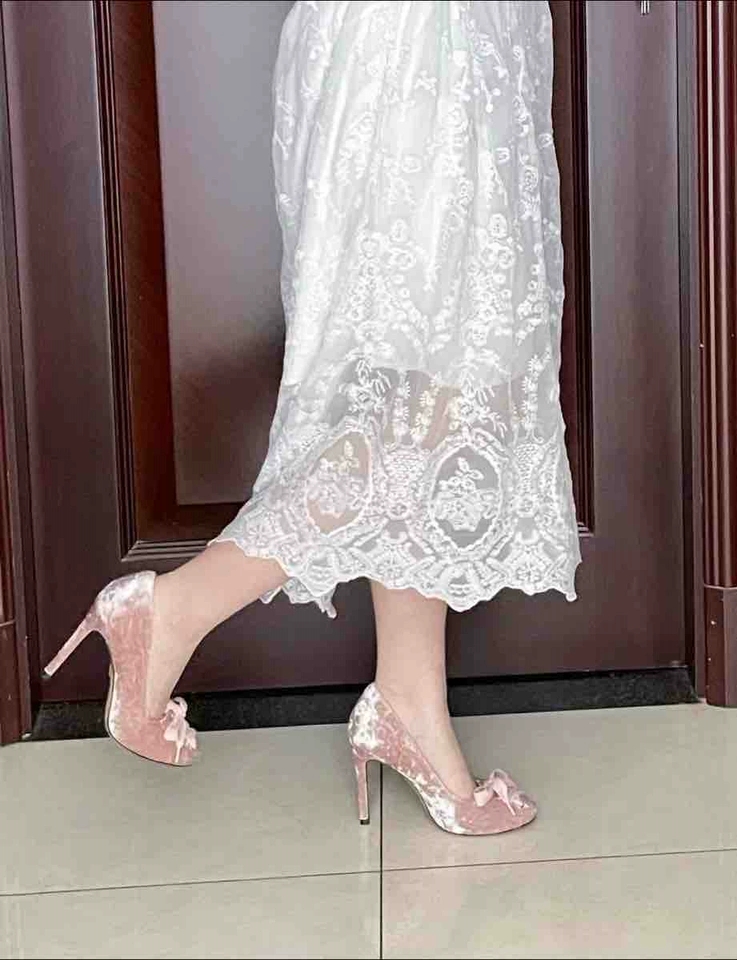
Two pairs worth comparing in person: suede retro single shoes for the shift, and pointed shapes in warm browns for a steadier colour. The rest of the women’s shoes collection sorts by heel height if you want to see how the shade behaves on different silhouettes.
Care changes the colour more than light does
Conditioner darkens brown leather, and the effect is cumulative. Two coats a year for three years and a mid-brown becomes a dark brown, permanently. That’s fine if you like where it lands and frustrating if you bought the lighter shade on purpose.
Neutral cream is the safe option. Pigmented cream is the one that changes things, and it should be used deliberately rather than as a general conditioner. Wax polish adds depth and a slight sheen, which reads darker in daylight than an untreated surface.
Water is the other thing. Brown leather that gets soaked and dries slowly develops a tide line at the edge of the wet patch, and it doesn’t lift. Salt stains from winter streets do the same in white, which is worse. A water-repellent spray applied when the shoe is new prevents most of this and costs less than a single re-dye.
One last thing that nobody warns you about: brown leather absorbs conditioner unevenly at first. The first coat will look blotchy for about half an hour and then settle. Don’t panic and add a second coat to even it out, because that’s how people end up two shades darker than they planned. One coat, wait an hour, buff, done.
Store them stuffed with paper in a cupboard rather than by a window. Sunlight fades brown unevenly, and a pair that sits half in shade for a summer comes out two-toned. It’s the only colour shift described here that you can’t undo.
Two more reads on the same problem: what the tannery decides about brown leather, and three brown pairs worn for a month.
Before the next pair comes home, do one thing: open the box by a window in the morning, not under the lamp at night. Whatever you see there is the shoe you’re keeping, and the version under the lamp is the one you’ll only see on evenings out.
