

You take the cream pair out of the box, put them on, walk to the window, and everything is fine. Then you get to the office, sit down under the fluorescent lights, and look at your own feet. There’s a mark on the toe. You check your hand. No idea where it came from.
That’s the cream problem in one scene. These are the most photogenic shoes in most wardrobes and the least forgiving, because a light surface shows every scuff, every drop of rain, and every bit of dye that transfers off a hem.
None of that means don’t buy them. It means knowing what you’re signing up for before you spend, and knowing which marks are permanent and which wipe off in ten seconds.
What cream shows that black hides
Women’s cream heels are also the pair most likely to be photographed, which raises the stakes. Surface marks read in proportion to contrast. A scuff on a black heel is invisible until you tilt it into the light. The same scuff on women’s cream heels reads at three metres, in daylight, from someone standing across the room.
The materials make it worse or better. Smooth polished leather wipes clean and shows scratches. Grainy leather hides scratches and traps dirt in the grain. Suede in cream is a two-wear shoe in wet weather, and patent in cream shows every fingerprint.
There’s also a colour-shift problem nobody warns you about. Cream isn’t one colour. Under warm indoor light it reads yellow. Under fluorescent light it reads grey. In direct sun it goes almost white, and against a white wall it goes beige. You’ll buy a pair that matches your dress in the shop and find it doesn’t match in the photographs.
If you want to understand why, this is a lighting question rather than a shoe question. The way colour standards define and match a given shade explains why “cream” covers everything from a cool ivory to a warm butter, and why two pairs labelled the same thing can sit at opposite ends of that range.
The practical answer: take the dress, or a photo of it, when you shop. Not a mental image of it.
The three marks you’ll get in the first month
Almost every cream heel picks up the same three marks in the first four weeks, in the same order. Knowing which is which saves a lot of unnecessary scrubbing.
- Dye transfer from dark denim, usually at the inner heel
- Grey scuffs on the toe and the outer edge of the sole
- A faint darker line across the vamp where the foot flexes
Dye transfer is the one that matters. Indigo from jeans bonds to a light leather finish and won’t come off with soap. A leather cleaner takes the surface layer down and leaves a pale patch. Most pairs that die young die of this, and it happens in the first week if you wear them with raw denim.
Scuffs are more forgiving than they look. A grey mark on cream is usually rubber from the sole of another shoe or from a floor, sitting on top of the finish rather than in it. A pencil eraser lifts most of it. Don’t use a magic eraser, because it takes the finish with the mark.
The flex line is the honest one. It’s where the leather creases, and on a light colour it fills with dust and darkens. Cleaning it monthly keeps it from becoming a permanent stripe.
One mark that surprises people: hosiery. Wear the same pair of nude tights three times and the toe of the shoe picks up a faint beige-grey deposit. It wipes off, but only if you do it before it sets.
Hosiery changes the whole picture
Cream heels and nude tights are a combination that looks straightforward and isn’t. The tights change the apparent colour of the shoe, because your eye reads the shoe’s tone against the leg rather than against the floor.
Match the undertone, not the depth. A warm cream against a cool-toned nude tight makes the shoe look yellow. A cool ivory against a warm tan tight makes it look grey and slightly dirty. Neither is a fault in the shoe; it’s the pairing.
The five-second test: hold the tight against your forearm, then hold the shoe next to it. If one makes the other look off, the combination will look off in daylight too. If they sit together quietly, that’s your pair.
Sheer black tights change the read entirely and are the easier answer for most people. A cream shoe with a 15 denier black tight reads deliberate rather than mismatched, and the contrast hides small marks in a way that a nude tight never does.
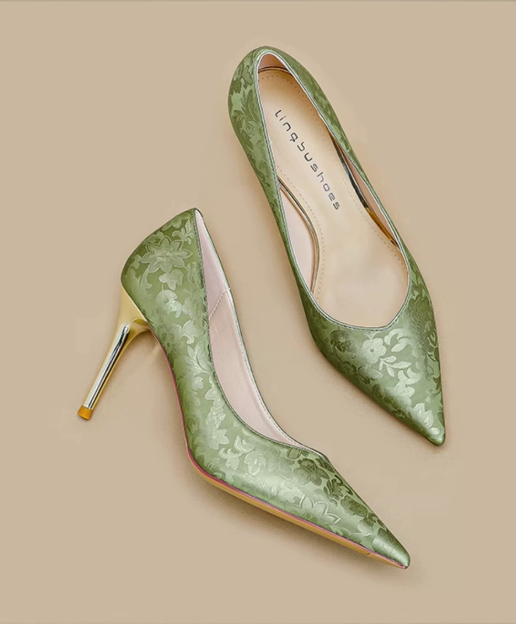
Bare feet remain the best look and the worst for marking, because sweat and body oils darken the lining and the insole edge within a couple of months. A thin no-show sock solves most of it and shows nothing.
Choosing a cream that suits your skin, not the photo
The rule that saves the most returns: pick the cream that matches your skin’s undertone, not the one that matches the dress. A shoe that sits close to your own tone lengthens the leg and forgives small colour differences in the outfit.
Cool undertones, the kind that look better in silver than gold, suit ivory and oyster. Warm undertones suit butter, sand, and true cream. Neutral undertones can wear either, which is the only group that can buy online with reasonable confidence.
There’s a shortcut. Look at the inside of your wrist in daylight. Blue-ish veins point to cool, green-ish to warm, a mix to neutral. It’s not a precise test, but it’s better than guessing, and it costs nothing.
Now the awkward part. Women’s cream heels in a cool ivory are harder to keep clean than a warm sand, because cool tones show grey marks and warm tones hide them. If you want a pair you can wear weekly without babying, go slightly warmer than the shade you’d pick from a photograph.
For a longer treatment of how neutral shoes work against real outfits, this piece on the grey neutral that makes a plain outfit look chosen covers the same logic in a darker shade, and the matching principles transfer directly.
Toe shape changes the read too. A pointed cream shoe looks sharper and more formal. A rounded or almond toe looks softer and reads lighter against the ground. The same shade in two toe shapes looks like two different colours at a distance.
The daylight test before a wedding or a big event
Events are where women’s cream heels earn their keep and where they get ruined. Six hours in a marquee, a walk across gravel for photographs, and a dance floor with a drinks spill: that’s a full season of wear in one afternoon.
Do the daylight test the week before, not the morning of. Put the shoes on, walk outside at 11am, and photograph your feet with a phone. Then look at the photo an hour later. Marks that are invisible in your hallway will show clearly in a picture, and pictures are what you’ll keep from the day.
Check the floor surface at the venue if you can. Gravel scuffs the toe box, grass sinks a slim heel, and old wooden decking catches a stiletto tip between boards. A block heel of 25mm or more handles all three. A slim heel handles none of them.
Colour choice matters more than usual in photographs. Cream, ivory and champagne photograph differently: ivory reads cool and can look grey next to a white dress, champagne reads warm and holds up better under tungsten. The seasonal colour reporting on Vogue’s fashion coverage is a useful reference for which neutrals are actually being worn in a given year, rather than which ones are being sold.
Take a small kit. A pencil eraser, a suede brush if the pair is suede, and a folded tissue are enough for most emergencies. The eraser is the one people never think of and it removes rubber scuffs in seconds.
And plan the sitting. Cream heels mark where they crease, and the crease happens when you sit with your feet tucked. Sitting with feet flat, or crossed at the ankle, keeps the vamp smoother and saves you a cleaning session the next morning.
When cream is the wrong choice
There are days when the answer is a different shoe, and it’s worth saying so plainly rather than pretending cream works everywhere.
Skip cream for anything outdoors in wet weather. Rain leaves water marks that dry as rings, and a light leather shows every one of them. Skip it for festivals and anything involving mud or grass. Skip it for a long day of walking, not because the colour fails but because you’ll spend the day looking down instead of ahead.
Toe shape also decides how much of the shoe is at risk. A pointed toe puts a single surface forward, so scuffs gather in one visible place. A rounded toe spreads contact across a wider curve and reads cleaner for longer. There’s a useful comparison of how each toe shape fits and wears if you’re choosing between two versions of the same cream shoe.
Skip it too if you can’t commit to the maintenance. A pair of women’s cream heels worn twice a month and brushed after each wear will last. The same pair worn weekly and never cleaned will look tired within a season, and there’s no restoring a light finish once the surface has gone.
That leaves a lot of situations where cream is exactly right: indoor events, warm-weather weddings, an office with carpets, a dinner where you’re arriving by car. In those settings a light shoe does something a dark one can’t, which is make an outfit look considered rather than assembled.
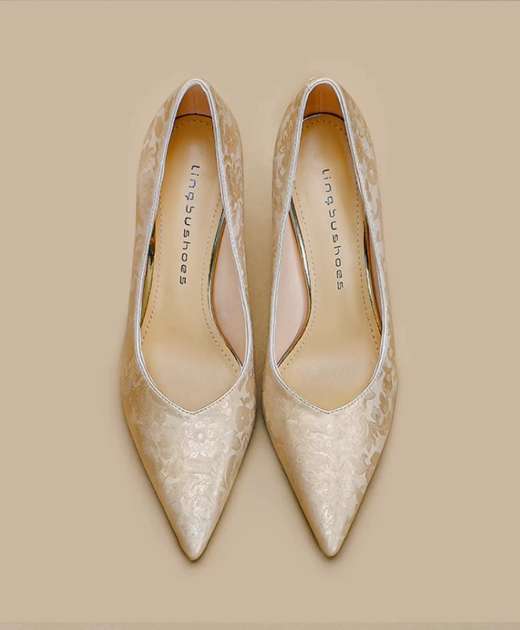
Keeping them clean without wrecking the finish
Women’s cream heels live or die on the order you do things in. Protection first, cleaning second. A fluoropolymer spray applied before the first wear stops dye transfer and makes rain bead. Applied after the first mark, it seals the mark in. That sequencing is the single most useful thing here.
For a broader view of the shade family and what it pairs with, the archive of heel guides by colour and shape is a sensible place to compare before you commit to a light pair.
Clean with the least aggressive thing that works, in this order: dry brush, damp cloth, leather cleaner, professional. Most marks come off at step one or two. Going straight to a strong cleaner takes the finish off and leaves a dull patch that never polishes back.
Dry them at room temperature, stuffed with paper, away from radiators. Heat dries leather unevenly and sets creases. A pair dried too fast will crack at the flex point within a month, and there’s no repair for that.
- Spray before the first wear and again every eight weeks
- Brush dust off after each wear, not once a month
- Keep them away from denim for the first three wears
- Store in a dust bag, never in a plastic box
Storage matters more than people expect. Cream leather in a sealed plastic box can go yellow from the plasticiser in the box itself, and a pair stored in a dark cupboard for a year often comes out a shade darker than it went in.
If you want a pair that takes this maintenance well, a covered leather style with a slim heel is easier to keep clean than a strappy sandal, simply because there are fewer edges for dirt to collect in. These champagne heels with a slim heel and a closed upper are the shape that survives real wear best. A lighter option is a pair of woven white leather heels, though the weave traps dust and needs a brush weekly rather than monthly.
The honest summary: cream is a maintenance commitment, not a neutral you can ignore. Buy one pair, spray them, brush them, and they’ll look good for two years. Buy three and you’ll spend your Sundays cleaning shoes.
One last check before you decide. Stand in the shop with the shoe on and look at it against your bare leg in daylight, near a window. If the colour disappears against your skin, that’s your pair. If it looks like a separate object sitting on your foot, you’ll notice that every time you put them on, and no amount of cleaning will make you stop noticing it.
