

Three boxes on the fitting-room floor, same style, sizes 38, 38.5 and 39, all of them ladies suede heels in the same colour. This is the scene that decides most suede purchases, and it usually gets decided too fast. People try the size they always buy, look at the mirror, and leave. The two boxes next to it never get opened.
Suede makes that shortcut expensive. It has almost no stretch along the grain, it marks where it creases, and it holds the shape of the last it was built on. A leather pump will forgive a half size of error within a week. Suede won’t.
So the two extra boxes matter.
What follows is the version of the three-size test that a shop would run if nobody was waiting: which size pulls where, what the nap does under pressure, and how to pick the box to keep without walking 40 steps in all three.
Why suede needs a different size test than leather
Suede is leather with the grain sanded away, and the layer left behind has a directional pile. Push the pile one way and the surface looks darker and feels smooth. Push it the other way and it feels rougher and slightly resistant. That resistance is the whole problem in a fitting room, because it changes how a shoe slides on and off.
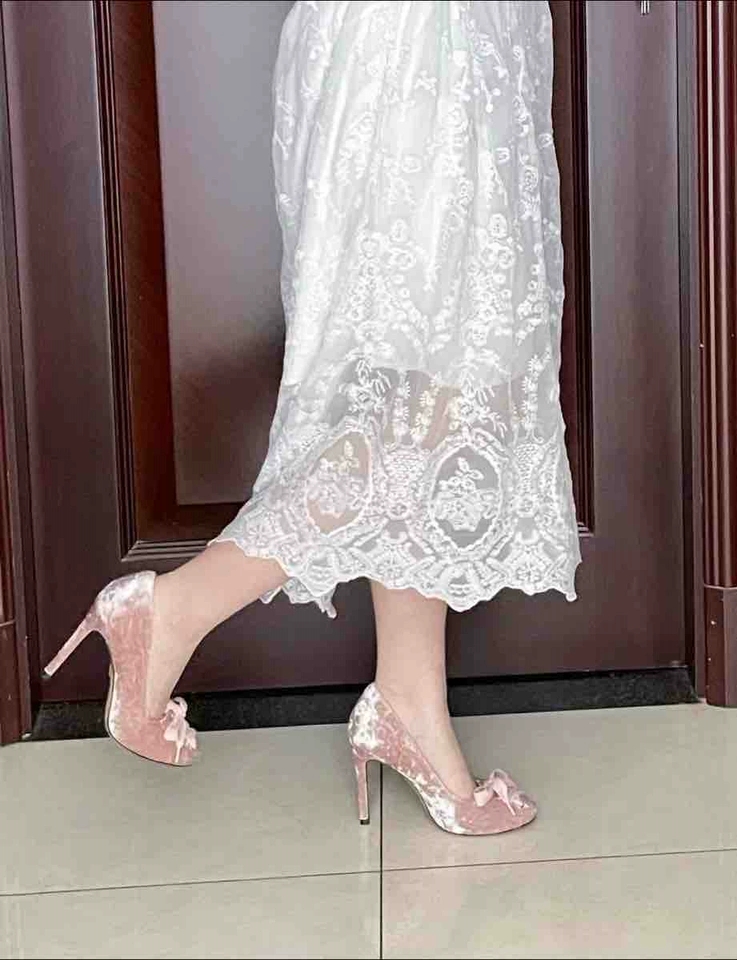
The practical consequence: suede doesn’t glide. A leather pump slips onto the foot and settles. Suede catches at the heel and the instep, so a pair that’s technically the right length can feel a half size small until the pile has been flattened by wear. The reverse also happens. A suede heel that feels perfect on the first try has often been tried on by six people before you, and the pile at the heel counter has already been compressed.
There’s a materials angle worth knowing. Suede is a by-product of splitting leather, which is why quality varies so much at the same price point. The general reference on how suede is split and finished explains why a thin split feels floppier than a full-grain nubuck, and that difference shows up in how the shoe holds its shape over the first month.
One more thing before the sizes. Suede has no natural shine, so creases read as shadows rather than highlights. A shoe that’s slightly too big will show a fold across the vamp within two wears, and no brush will take it out. That fold is your best long-term evidence of a bad fit, which is why the size test matters more here than in almost any other material.
The size you think you are, and where it pulls
Start with the size in your head. Most people arrive at ladies suede heels already convinced of their number, and that conviction is the main obstacle. Put the first pair on, stand up, and don’t look in the mirror yet. Look down at the shoe. Four places will tell you what’s happening: the big toe, the little toe, the instep, and the heel counter.
If the big toe touches the front edge, the shoe is short, and suede will not give you the 4mm you need. If the little toe pushes against the side, the last is narrow rather than short, and going up a size will fix the toe and leave the heel loose. Those are different problems and they need different answers.
The instep is the one people miss. Press the upper where the laces would be on a trainer. If it’s tight enough that your skin goes white around your finger, the shoe is pressing on the top of the foot, and no amount of breaking in will change it. That pressure produces the ache that starts behind the toes and works backwards.
At the heel, pinch the counter between thumb and finger. There should be a small gap, 3 to 5mm, between your heel and the back of the shoe when you stand. More than 8mm and the shoe will slip with every step. Less than 2mm and you’ll get a blister on the first long walk.
This is the stage where most people stop and buy the first size. It’s worth resisting for another five minutes, because the second box usually answers a question the first one can’t.
Half a size up: what actually changes
Half a size is roughly 4 to 5mm of length and about 2mm of width, and on suede that gap decides the whole purchase. That sounds trivial. In a suede court shoe it’s the difference between a toe that touches and a toe that clears, and it’s usually the change that makes the pair wearable for a full working day.
What it doesn’t fix is heel slip. Going up half a size adds length at the back as well as the front, and a suede lining is smooth, so a shoe that was borderline at the heel becomes a shoe that lifts. The fix is a heel grip or a thin insole, and both cost you the volume you just bought.
There’s a narrow window here where half a size up is clearly correct. If the original size presses at the toe and sits snug at the heel, half a size up lands right in the middle. If the original size already slips at the heel, going up will make it worse and you’re looking at the wrong last, not the wrong size.
Suede’s nap makes this easier to read than leather, oddly enough. Try on the half size and walk 20 steps. Then look at the inside of the heel counter. A fresh suede counter shows the pile pushed flat in a small patch where your heel sits. If that patch is right at the top edge, the shoe is too long. If it’s centred, the length is right.
For a longer treatment of how length and shaft height interact in taller styles, this guide to the three measurements the size chart leaves out covers the same logic with more numbers.
The full size up, and the heel-slip problem
Ladies suede heels rarely need a full size up. It adds 8 to 10mm of length. In most suede heels that’s too much, and the shoe announces it immediately: your heel lifts as you walk, and the shoe makes a small flapping sound on the floor.
There is one case where it’s the right call. A wide forefoot in a last that’s narrow at the metatarsal heads, combined with a strap or a high throat that holds the shoe on. The strap does the work the length can’t, and the extra room lets the toes spread. Without a strap, don’t do it.
The full size up also changes the flex point. A shoe bends where the sole is thinnest, and if the shoe is 9mm too long, the bend lands behind the ball of your foot instead of under it. You feel that as a strange rolling sensation in the arch after about 20 minutes. It’s not painful at first. It’s tiring.
Wide feet get sold the wrong size more often than any other group. A suede heel in a wide fitting exists, but most shops stock one width and hope. If the pair pinches at the sides in your usual size and floats at the heel when you size up, the honest answer is that the last is wrong for your foot, and a different style will fit better than a different size.
Reading the nap in 20 seconds
Before any of this, look at the shoe itself, because ladies suede heels are the easiest style in the shop to misjudge from a photo. Run a thumb across the vamp with the pile, then against it. New suede changes shade clearly in both directions. Worn suede changes less, because the pile has already been flattened by other people’s hands.
That matters in a shop where the same display pair gets tried on all afternoon. A pair that looks flat and slightly shiny at the toe has been tried on a lot, and it will feel looser than a fresh pair from the stockroom. If the display pair fits perfectly, ask for a sealed box in the same size before you commit.
Two other checks take seconds. Look at the seam where the upper meets the sole: suede that has been pulled too tight shows a wavy line, and that’s a lasting problem rather than a fit problem. Then press the insole at the arch. A firm ridge means there’s a shank, and a soft hollow means there isn’t.
The colour also tells you something about maintenance. Light suede picks up dye from dark jeans and marks from rain, and each mark darkens the pile permanently. Dark suede hides scuffs but shows dust. Either way, spray before the first wear, not after.
Where each size pulls when you walk 40 steps
Forty steps on a hard floor is the test that separates a fitting-room fit from a walking fit. Carpet hides everything. Tile or wood tells the truth within ten steps.
Ten steps is enough to feel the toe. Forty steps is what your afternoon will feel like.
- Toe pressure that appears at step 15 and grows: shoe is short
- Heel lifting audibly on each step: shoe is long
- Side pressure under the fifth toe: last is narrow
- Arch ache after 30 steps: flex point is in the wrong place
- Nothing at all, just a warm feeling: this is the size
Write down what you feel at step 10, step 25 and step 40. Most fitting problems are stable, but length problems get worse as the foot slides forward, and width problems get better as the suede warms up. Knowing which pattern you’re in tells you whether the shoe will settle or keep biting.
Suede warms up faster than smooth leather, which is why a suede heel can feel perfect at step 40 and still be too tight an hour later. The material takes your body heat within a couple of minutes and softens slightly. Judge the fit at step 40 rather than at step 5.
If you already know the heel height you want and only the fit is in question, a pair like these suede heels in a retro cut with a covered platform is a safer starting point than a stiletto. The platform shortens the effective pitch, so the same heel height puts less load on the toes, and the toe box usually has more depth because the last was built for comfort rather than for photographs.
Office wearers tend to get more out of a lower, squarer shape. These commuting heels with a wider toe and a 60mm heel hold their width better through a long day, and the suede on a lower heel creases less at the vamp.
The ruler trick that settles it
Take the insole out if it comes out, and measure it. Compare that number to your foot length, measured standing, heel against a wall, at the end of the day. The insole should be 8 to 10mm longer than your foot. Under 6mm is a short shoe. Over 14mm is a long one.
It sounds fussy, and most people skip it. It takes 30 seconds, and it’s the only measurement that doesn’t shift depending on how the shoe feels. Feet swell by up to half a size during the day, so a pair measured in the morning can be a full size off by 6pm. Measure late, buy late if you can.
Width is harder to measure at home. A rough proxy: stand on a piece of paper, trace the widest part of the forefoot, and measure across. Add 3mm for the upper’s thickness. If the shoe’s insole is narrower than that number, the sides will press.
One caveat worth stating plainly. If the ruler says one size and your foot says another across 40 steps, trust the 40 steps. Numbers describe the shoe. Only walking describes the fit.
What you wear with them changes the size you need
Tights add 1 to 2mm of thickness around the forefoot and the heel, and suede grabs at nylon rather than sliding over it. A pair that fits bare feet in July will feel short in November with 40 denier tights, and the toe pressure appears in the same place.
Bare feet in summer also swell more. Heat expands the foot by around 2% over a warm afternoon, which in a size 38 is roughly 5mm of length. That’s the same as half a size. If you’re buying for August, try the pair late in the day and after a walk, not at 10am with cold feet.
Heel grips and insoles change the geometry more than people expect. A 3mm gel insole lifts the heel and pushes the foot back, which buys you room at the toe and costs you grip at the counter. In a suede shoe with a smooth lining, that trade is usually a bad one. Take the insole out before you decide.
Socks are the outlier. If you plan to wear suede heels with a thin sock, which is a look that comes back every few years, buy the pair with the sock on. Suede plus sock is a different fit from suede plus bare skin, and the difference is a full half size.
What each size does over the first month
Suede doesn’t stretch much, which is why ladies suede heels reward a careful first fitting, but it does relax where it’s repeatedly flexed. Expect 2 to 3mm of give across the vamp in the first month, and almost nothing in length. The heel counter softens, the toe box does not.
This is why a pair that’s slightly snug at the toe is a bad bet despite what shop assistants say. The give happens at the flex point and along the sides. The toe box keeps its shape because there’s nothing flexing it. Buy for the toe, accept a little snugness at the instep if there’s a strap.
The reverse case is a pair that’s slightly loose everywhere. Suede won’t shrink back, and the crease across the vamp gets deeper each week until the shoe looks two years old in three months. A thin insole helps for a while, but the leather is already creasing in the wrong place.
If the shoe is going to be worn for a wedding or a long event, the arithmetic changes. A pair destined for one 9-hour day needs less break-in allowance than a pair you’ll wear twice a week. This breakdown of what survives a nine hour wedding goes through that calculation with real timings.
Verdict: how to choose between the three boxes
Keep the size where the toe clears by 5 to 8mm, the heel gap is 3 to 5mm, and nothing presses at the sides when you stand. That’s the whole rule for ladies suede heels. Everything else is detail.
Two out of three isn’t good enough here.
- Size down: never, unless the pair has no strap and slips already
- Usual size: correct if the toe clears and the heel stays put
- Half up: correct when the toe touches in your usual size
- Full size up: only with a strap or a very high throat
For a wider explanation of how heel height and foot shape interact, the archive of heel guides organised by height and toe shape is a reasonable next read. It’s organised by the things that change fit, not by season.
And if you’re dealing with pressure at the big toe joint, the clinical summary on bunions and forefoot pressure is worth ten minutes before you spend money on another pair that presses in the same place.
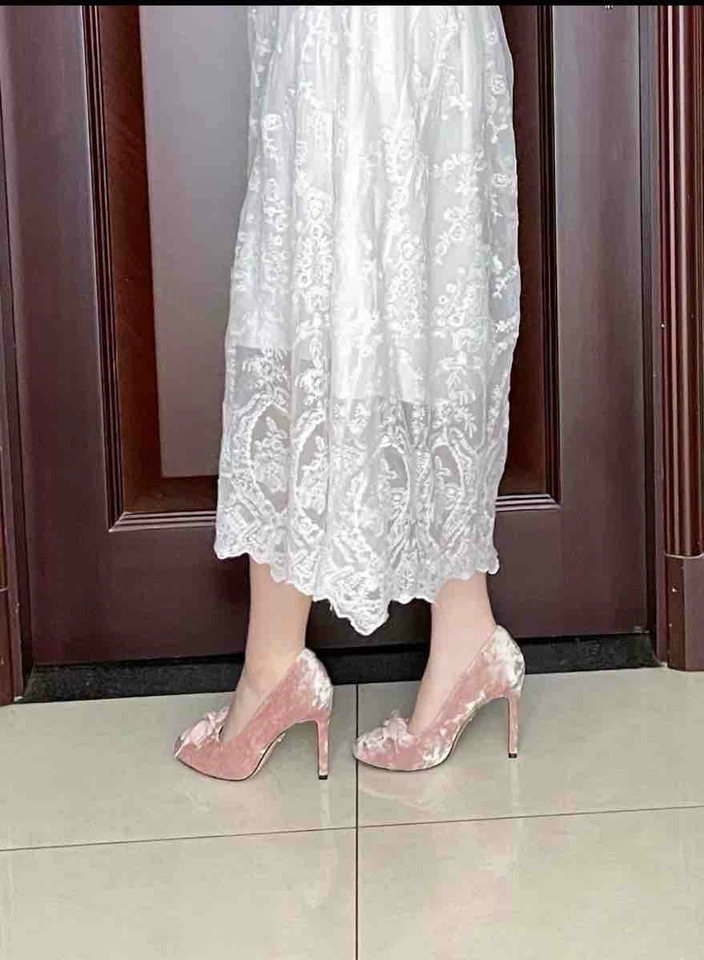
Twenty minutes in a fitting room with three boxes will save you a return, a cobbler’s bill, and the particular irritation of a pair that fits well enough to keep but never well enough to enjoy. Try all three. Keep one.
