

You’ve replaced your walking shoes twice this year. Both times the same thing happened: the outer edge of the heel wore down to the midsole while the inner side still looked new, and by month four your shins were aching on every hill.
That wear pattern is the giveaway. Your foot rolls outward when it lands, which is called underpronation or supination, and it’s the opposite of what most shoe shop advice is built for. Stability shoes, arch supports, motion control: all of it is designed for feet that roll in. Yours roll out.
Women’s walking shoes for underpronation need cushioning and flexibility more than they need support. Get that backwards and you’ll spend another year buying the wrong pair with the right intentions.
I’m not a physio and this isn’t a diagnosis. It’s the pattern I’ve seen across four pairs of my own and a lot of friends’ shoes, plus what the foam actually does under a foot that lands on the outside edge.
How to confirm it before you spend anything
Put your current walking shoes on the table and look at the outsole from the side. Three wear patterns cover almost everyone.
Worn on the outer heel and the outer edge under the little toe means you supinate. Even wear across the middle means neutral. Heavy wear on the inner edge of the forefoot means you overpronate, and this article isn’t for you.
Do it with two pairs if you have them, because one pair can lie. If both show the outer edge gone while the inner edge still has tread, that’s your pattern.
The other check is your arch. Wet your foot and stand on a dark tile. A narrow band down the outside with a big gap under the arch is a high arch, and high arches go with supination most of the time. A wide print with the whole sole touching is a flatter foot.
Pronation of the foot is a normal movement, not a fault. Everyone pronates to some degree. The issue is only whether yours is extreme enough to cause pain, and whether your shoe works with it or against it.
One more sign that’s easy to miss: shoes that feel loose across the middle after a few weeks. When the foot rolls outward, it pushes against the outer side of the upper and pulls away from the inner side, so the shoe looks baggy on the inside edge while feeling tight on the outside.
Measure the wear while you’re at it. If the outer heel has lost 3mm or more of rubber and the inner heel still shows the tread pattern, you’re firmly in supination territory. A millimetre either way is normal variation and means nothing.
Write the date on the inside of the tongue when you start wearing a pair. It sounds obsessive. It also ends the argument with yourself about whether these shoes are actually eighteen months old or four.
Why stability shoes make underpronation worse
Stability shoes put firmer foam or a plastic post on the inner side of the midsole. The idea is to slow down a foot that rolls inward. If your foot already rolls outward, that firm inner post pushes it further out. You’re adding force in the direction you’re already going.
Motion control shoes are the extreme version and they’re the worst choice here. Heel counters that are rigid, a wide flared base, a torsionally stiff midsole. On a supinating foot, they feel like walking in ski boots after 5km.
I’ve watched this happen twice with friends who were told they “needed support” because they had high arches. Both came back with calf tightness within a month, because a stiff shoe stops the foot from doing the small rolling movement it uses to absorb load, and the calf takes the rest.
What you want instead is cushioning under the outer heel and forefoot, a softer midsole from heel to toe, and enough flexibility that the shoe bends where your foot bends. The overpronation guide describes the mirror image, and it’s worth reading so you can spot the difference on a spec sheet.
Here’s the short version of what to look for on the box. Neutral category, not stability. Soft or medium foam. No medial post. No “guide rail” or “dual-density” language. If the marketing talks about controlling roll, put it back.
You can feel the difference with your thumb in ten seconds. Press the inner side of the midsole just behind the arch. On a stability shoe it’s noticeably harder than the outer side, sometimes almost plastic. On a neutral shoe both sides give the same. Do that test before you look at the price tag, because the two categories look identical on a shelf.
This is where most women’s walking shoes for underpronation go wrong. The shop assistant hears “arch pain” and reaches for support, because that’s the right answer for the other 70% of customers.
Stack height and heel drop, in numbers
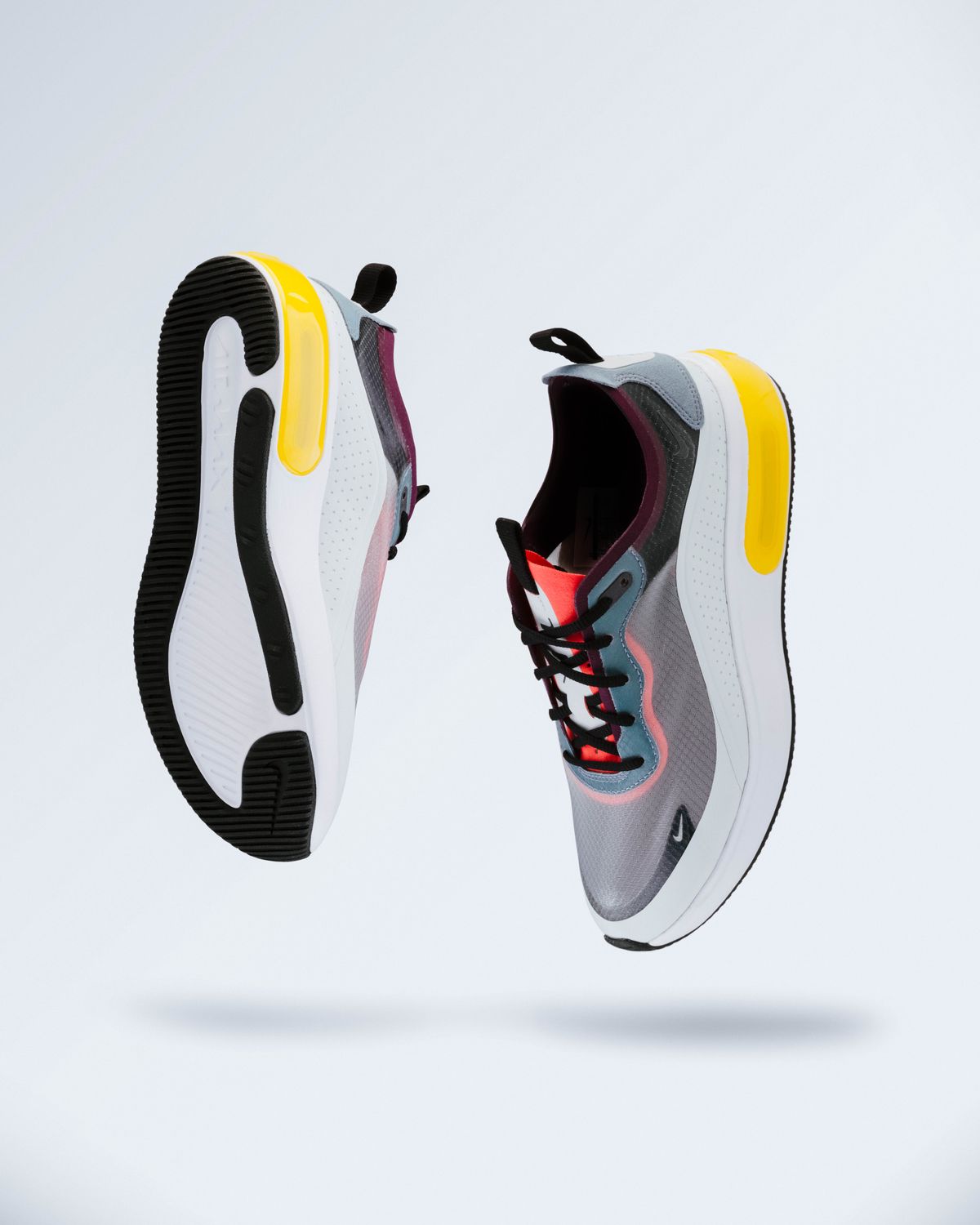
Stack height is how much foam sits between your foot and the ground. For walking, 25mm to 32mm at the heel is the useful range, with slightly less at the forefoot.
Heel drop is the difference between heel and forefoot stack. A 10mm to 12mm drop suits most walkers, because walking involves less ankle flexion than running and a higher drop reduces calf strain. If you get calf tightness or plantar pain in flat shoes, a higher drop helps.
Underpronators often do better with a little more foam under the outer heel specifically. A shoe with a beveled outer heel edge lets your foot land and roll slightly inward instead of slapping down on the outside corner. That single shape detail reduces the jarring sensation a lot of supinators describe.
Weight matters too. Above 350g per shoe, most women start dragging the heel rather than placing it, which makes the outer-edge wear worse. Lighter shoes don’t fix pronation, but they do change how you land.
Flexibility test: hold the shoe at the heel and toe and bend it. It should flex at about a third of the way back from the toe, where your toes bend. If it folds in the middle instead, it’s too soft and will collapse under the arch. If it barely bends at all, it’s too stiff for a supinating foot.
Check the toe spring as well. A shoe that curves up sharply at the front forces your toes into extension all day, and that’s a common cause of toe pain in high-arched feet. A gentle 10mm to 15mm of toe spring is plenty.
Outsole rubber is the last number worth comparing. Soft rubber grips wet pavement better and wears faster. Hard rubber lasts two winters and slides on painted lines in the rain. For city walking in a wet climate, soft is the better trade, and you’ll replace the pair a few months earlier. That’s cheaper than a fall.
High arches need volume, not inserts that fill space
A high arch means less of your foot touches the ground, so pressure concentrates on a smaller area. That’s why the ball of your foot and the outer heel hurt before anything else does. The clinical name for it is pes cavus, and it’s the foot shape most often paired with supination.
Insoles for this foot shape work differently from insoles for flat feet. You don’t want arch support pressing upward into a high arch. You want a soft, slightly cupped insole that spreads load across more of the sole, with cushioning under the metatarsals.
If a shop offers you a firm orthotic for a high arch, ask what it’s meant to do. Support under a high arch that doesn’t collapse is mostly pressure with no benefit.
Volume matters as much as shape. High arches take up more room inside a shoe, so a high-instep foot can feel tight across the top even when the length is right. Look for a shoe with a deep throat and a gusseted tongue you can open wide, and try it on late in the day.
Removable insoles are worth insisting on. They let you swap in something softer without changing the fit, and they tell you the maker expected people to adjust the shoe rather than accept it. The cushioned walking and running styles here both come with one you can lift out.
Thickness is worth measuring. A stock insole is usually 3mm to 5mm. Swap in a 6mm cushioned insole and you’ve changed how the shoe feels under the ball of the foot without touching the size. Go thicker than 8mm and the heel starts to sit too high, which changes your stride more than it helps.
If the pain sits under the ball of the foot and hasn’t moved in three months, that’s a metatarsal problem rather than a pronation problem, and a pad placed just behind the ball does more than any shoe change. Worth a physio visit before you buy pair number five. The honest version of the women’s walking shoes for underpronation question is that a shoe can absorb shock, and it can’t redistribute load on its own.
Fit tweaks that help a supinating foot
Shoes for underpronation are only half the job. How you wear them decides the rest.
Lace the bottom rung loosely and the top rung firmly. That holds the heel down without clamping the forefoot, and it stops the foot sliding outward inside the shoe on each step.
Use a heel lock if you get any slip. Thread the lace back through the top eyelet to make a loop, then pass the ends through it and pull. It takes ten seconds and it’s the difference between a stable walk and a hot spot after 3km.
Wear socks with a bit of cushioning under the ball of the foot. Thin socks on a high arch concentrate pressure, and you’ll feel it at the 40-minute mark.
Replace shoes sooner than the tread suggests. Supinators wear the outer edge fast but the rest of the midsole looks fine, so people keep going for another year on foam that’s already packed out. A simple rule: if you walk 8,000 steps a day, plan on a new pair every 12 to 14 months, or roughly 800km.
Rotate two pairs if you can. Foam recovers over 24 hours, so alternating extends the useful life of both pairs by more than half. It also gives you a dry pair on wet days, which matters more in a country where it rains sideways.
Width is quietly important for supinators. A shoe that’s too narrow pushes the foot onto its outer edge as it tries to find room, which exaggerates the pattern you’re trying to cushion. If your little toe has ever gone numb on a walk, go half a width wider before you change anything else.
For a wide, roomy walker that doesn’t fight a high arch, the casual walking shoes with a soft midsole are the shape I’d start with. The sneaker collection is worth a look too, mostly because you can compare stack heights side by side instead of guessing from photos.
When the shoe isn’t the problem
Underpronation gets blamed for a lot of pain that has a different cause. Two things to check before you buy another pair.
Training load. If you went from 4km walks to 10km in three weeks, the shoes are innocent. Bone and tendon adapt over six to eight weeks, not seven days. Cut back by a third for two weeks and see if the shin pain settles.
Calf and ankle strength. Supinators often have stiff calves and weak peroneals, the muscles on the outside of the lower leg that control the outward roll. Heel raises and single-leg balance work for five minutes a day change the pattern more than a new shoe does. It’s the boring answer, and it’s also the one that keeps working.
There’s an honest limit to what women’s walking shoes for underpronation can do. They cushion, they flex, they stop adding to the problem. They don’t stop your foot from rolling outward, and nothing on a shelf will. A shoe can take 20% of the sting out of a bad landing pattern. The rest is load and strength.
Also, don’t chase a diagnosis from a wear pattern alone. Outer-edge wear can come from a tight hip, an old injury, or simply walking on cambered pavements where one foot always lands lower. If pain is one-sided and getting worse, see a physio before you spend £130 on foam.
Surfaces count for more than most people admit. Twenty minutes on a cambered road shoulder loads the outside of one foot the whole way. If your usual route is a crowned country lane, alternate the direction you walk it. Free, and it works.
Start with the wear on your old pair. If it’s all on the outside edge, buy neutral, buy soft, and give it six weeks before you judge the result.
And if you get it right, the women’s walking shoes for underpronation you end up keeping will probably feel slightly boring in the shop. Soft, light, a bit plain. Boring is the correct answer here.
