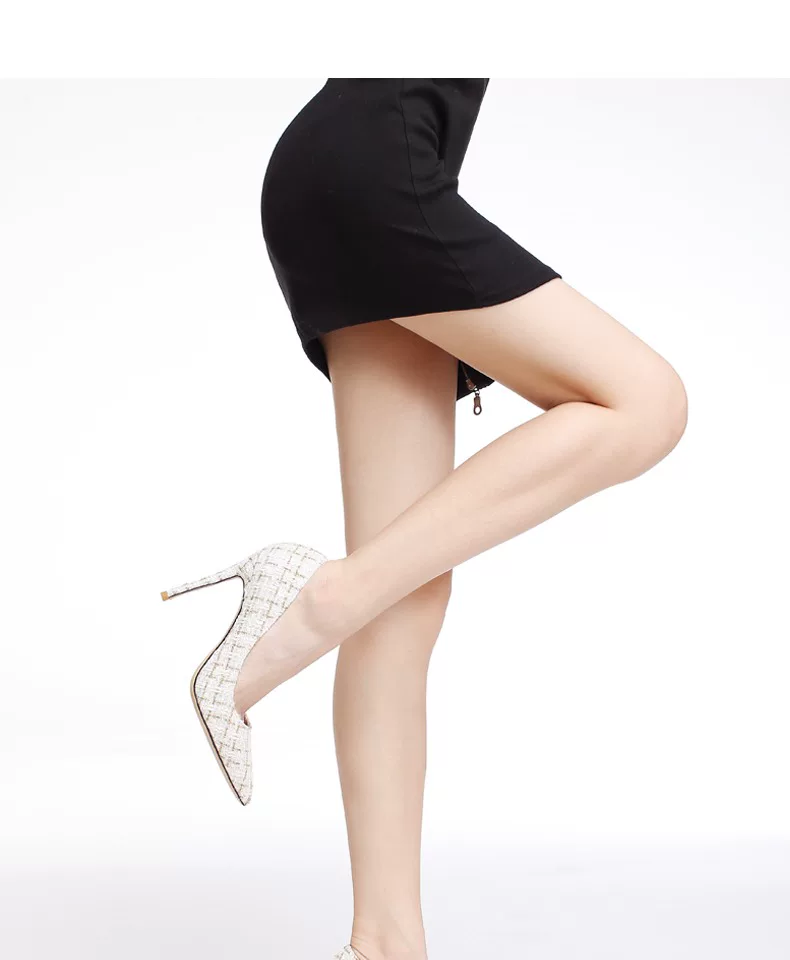
Somewhere around 4pm, your toes tell you the truth. Not the shoe shop, not the mirror, not the photo you took in the changing room. Your toes.
If the truth is that they’re pressed together like a closing fist, you’re wearing the wrong toe shape. Round toe heels for women exist for exactly that moment, and they’re not a compromise on style so much as a different set of proportions.
The toe box is the part of a heel that nobody photographs and everybody feels. Get it right and you can wear a 75mm shoe for a whole workday. Get it wrong and a 50mm kitten heel will still ruin your evening.
Here’s how to tell whether round is your shape, and how to wear it without looking like you borrowed shoes from 2011.
What a round toe actually does to your foot
A round toe gives your toes room at the widest point of the foot, which is across the ball. A pointed toe gives you length and a sharper line, but it does it by tapering the box, and your toes don’t taper.
Your toes are also not a straight line. The big toe sits at an angle to the toe bones behind it, and the whole forefoot is wider at the joint than at the tip. A tapered box ignores that geometry from the first step.
That’s the whole story, mechanically. When the toe box is narrower than your foot, the big toe gets pushed inward and the smaller toes curl. Do that for eight hours and you’ll feel it in your arch by dinner.
Round shapes keep the box closer to the actual outline of a foot. Not identical, but closer. For anyone with a wide forefoot, a bunion, or toes that have already spent twenty years in pointed shoes, that difference is the difference between wearing heels and not wearing heels.
They also change how the shoe reads. A round toe looks softer, younger, and less formal than a point. On a low heel it’s almost casual. On a high heel it’s a deliberate retro choice.
There’s a psychological part too. Pointed shoes make a foot look smaller on the shelf. Round shoes look wider, and that puts people off in the shop even when they fit better. Ignore the shelf. Look down at your own feet.
One warning: round doesn’t automatically mean comfortable. A cheap round toe with a hard, unlined toe box can still crush your toes. The shape helps, the construction decides.
Round, almond, square: the differences are small and they matter
These three shapes get used interchangeably in product descriptions. They’re not the same.
Round is the widest at the ball and has no taper at the front. It’s the most forgiving and the most casual.
Almond is round with a slight point, somewhere between a round and a pointed toe. It’s the shape most people should buy first, because it gives you most of the width with a cleaner line.
Square is wide at the front with a flat edge. It gives you width without looking round, which is why it comes back every few years. The downside is that a square toe can look heavy if the heel is thin.
A fourth shape, the soft point or “unstructured point”, looks pointed but has a wide interior because the leather is soft. That’s the one to look for if you want the look of a point without the squeeze.
Then there’s the toe spring, which is how much the front of the sole curves up. A round toe with a lot of spring looks like a clog and feels odd to walk in, because your toes are being pushed up rather than lying flat. A little spring is good. A lot is a design choice you’ll feel on stairs.
Measure the inside width of the toe box if you can, or at least compare the shoes side by side. Ten millimetres across the ball is the difference between a shoe you wear weekly and one you wear once.
Who should stop buying pointed heels
Not everyone. If your feet are narrow and your toes sit straight, points are fine and they look better with tailoring.
But there are groups who should genuinely switch.
Anyone with a bunion, first. A pointed toe presses directly on the joint that’s already inflamed. No insole fixes that, because the pressure is sideways.
Overlapping toes are another sign. If your second toe crosses over the big toe, a pointed shoe is going to make it worse. A round toe gives the toes somewhere to lie flat.
Anyone on their feet for more than six hours a day. The toe box is where swelling shows up first, and swelling in a pointed shoe has nowhere to go.
And anyone who has bought three pairs of pointed heels and worn each one twice. That’s not a style preference, that’s data.
If you’re in one of those groups, a round toe isn’t a downgrade. It’s the shoe you’ll actually wear.
The styling problem: round toes can look dated
Here’s the honest bit. A round toe heel, styled badly, looks like a shoe from a 2012 office wardrobe. Round toe plus a low block heel plus a dark colour equals sensible, and sensible is not what most people want.
The fix is contrast. Round toe shoes look current when something else in the outfit is sharp.
- Round toe heel with straight-leg jeans and a cropped jacket. The straight leg keeps it modern.
- Round toe heel with a long slip skirt. The softness matches and the length balances the toe.
- Round toe heel with wide trousers. Volume on volume, which reads deliberate.
- Round toe heel with a mini skirt and opaque tights. Slightly retro, works in winter.
Avoid round toe with a pencil skirt and a blazer unless you want to look like a 2015 newsreader. Avoid round toe in a very dark shade with a very low heel and a plain outfit. That’s the combination that reads old.
Ankle coverage changes it as well. A round toe with a very high vamp looks more formal, almost like a court shoe. With a lower vamp it looks like a loafer with a heel, which is a much more casual thing. Decide which one you want before you buy.
Colour helps. Round toe in white, cream, or a warm tan looks modern. Round toe in black patent looks like a uniform shoe. Round toe in suede looks expensive.
And proportion matters. A round toe on a very thin stiletto looks like a mistake, because the soft front and the aggressive heel fight each other. A round toe on a block, a kitten heel or a stacked heel looks intentional.
Sizing a round toe is not the same as sizing a point
People size up in pointed shoes because the toe box is short and narrow. In a round toe, that logic works against you.
A round toe usually has more length in front of your toes. If you size up out of habit, the shoe will slip at the heel, and a slipping heel is worse than a snug toe because it causes blisters on the achilles.
So: buy your true size first. If your toes touch the front, then go up half a size. Not before.
Width is the other variable. If the shoe is listed as wide fit, take it. If it isn’t, look at the shape of the toe opening. A round toe with a high vamp, meaning the leather covers more of the top of your foot, holds your foot better than a low-cut version. A low vamp can let your foot slide forward, which defeats the purpose.
Heel height interacts with all of this. A higher heel pushes your foot forward into the toe box, so a round toe at 90mm is not the same fit as a round toe at 50mm. If you want the height, look for a slight platform under the toe. Even 10mm takes pressure off the toes and keeps the shape looking intentional.
Try them on at the end of the day, with the socks or tights you’ll actually wear. And walk for two minutes. A round toe that feels tight at the ball on the first step will feel worse at hour three, because your foot spreads as it warms up.
Care, creases and the white shoe problem
Round toes crease across the top, right where your toes bend. That’s normal. What matters is whether the leather recovers.
Soft leather creases and relaxes. Corrected-grain leather, the kind with a plastic coating, creases and then cracks. If you’re buying white or cream, check the finish carefully, because cracks show up as grey lines that no polish hides.
Keep the shape in. Shoe trees after every wear stop the toe collapsing and stop the crease from setting into a hard line. For white shoes, store them in a dust bag away from sunlight, because white leather yellows with UV exposure.
Clean white round toes with a mild soap and a soft cloth, then dry at room temperature. Don’t use bleach. Don’t put them on a radiator. Don’t scrub in circles on smooth leather, because you’ll buff a shine into a matte finish and it will never match the rest of the shoe.
Rubbing against the other shoe is the other slow killer. The inner toe of one shoe brushes the inner heel of the other as you walk, and over a year that area goes bald. It happens to every pair. A shoe bag when travelling slows it down.
For suede, brush in one direction only. For woven leather, a slightly damp cloth works into the weave better than a brush.
And replace the heel tips before they wear through to the plastic. A worn tip changes the angle of the shoe and puts pressure on the toe box, which is the exact thing you bought a round toe to avoid.
What to buy first
Before you commit, check the return policy and wear them indoors for twenty minutes. Round toe heels for women are usually roomier, but “usually” isn’t a guarantee, and a pair that pinches at the ball won’t loosen enough to matter.
An almond toe is the safer first purchase if you’re not sure, because it gives you width with a cleaner line. But if your toes have been complaining for years, go full round and don’t apologise for it.
If you’ve been burned by pointed shoes before, most round toe heels for women will feel immediately different on the first step. Look for a 60mm to 70mm heel, a leather lining, a toe box you can press down with your thumb, and a sole that flexes at the ball. Those four things matter more than the colour.
Then style it with something sharp. A round toe with a straight-leg jean and a good coat looks like a choice. The same shoe with a matching skirt suit looks like a uniform.
You can start with a woven leather pair in white, which is the colour that makes a round toe look current, or go for an embroidered round toe if you want the shape to read as a deliberate vintage reference instead of an accident.
Whatever you choose, give the pair a fair test. Wear them for an hour at home on carpet, then for a short walk outside. If they feel fine at both, they’ll work. If either one feels off, return them while you still can, because a round toe won’t stretch where it matters.
And if you’re still unsure whether round is for you, spend an afternoon in your most comfortable pair and look at the shape of the toe box. Whatever that shape is, buy more of it. Your feet already voted, and the women’s shoes range has plenty of options in every toe shape. If you want to compare against a sharper silhouette first, these pink pointed heels show what the other end of the spectrum looks like.