

You bought the beige pair because it looked good on the shelf. Three weeks later it’s sitting by the door while you reach for the same black boots again. That’s not a colour problem. It’s an undertone problem, and it’s the reason so many neutral shoes for women end up unworn.
The fix is simple once you see it. Neutral isn’t one colour, it’s a family of them, and only about half of that family will work with the clothes you actually own. Get the undertone right and a $70 pair outworks a $200 pair in the wrong shade. Get it wrong and no amount of styling saves it.
Neutral is a family, not a colour
Beige, bone, taupe, greige, sand, camel, mushroom, off-white. They all get filed under neutral, and they behave completely differently next to your clothes. Two things separate them: how warm or cool they read, and how light or dark they are.
Warm neutrals have yellow or red in them. Think camel, tan, warm sand. Cool neutrals pull grey or pink. Think greige, taupe, stone, bone. Put a warm beige shoe next to a cool grey trouser and both look slightly wrong, like a photo with the white balance off. Nobody can name the problem, they just feel it.
There’s a fast way to test this at home. Take the shoe to a window at 10am, not to a shop mirror under warm bulbs. Hold it against your three most-worn bottoms. If it makes any of them look dingy, the undertone is fighting you. That test takes ninety seconds and saves you a return.
Pantone’s colour standards are what the footwear industry uses to name these shades, which is why two pairs called “sand” can arrive looking like different colours. Names aren’t regulated. Your eyes are the only reliable judge.
Pick the tone from your wardrobe, not the trend
Open your wardrobe and count. Not the colours you like, the ones you wear. If 60% of your trousers are black, navy and grey, you need cool neutrals: stone, greige, pewter, cool off-white. If you live in denim, cream, olive and rust, warm neutrals will slot in without effort.
Most people land in the middle, and that’s where one specific shade does the most work: a mid-tone taupe. It’s dark enough to anchor an outfit, light enough to read as neutral against black, and it doesn’t go chalky against denim. If you’re buying one pair and want it to survive five years of changing taste, buy taupe before beige. That’s the single most useful thing I’ve learned about neutral shoes for women, and it took me four bad pairs to get there.
Then there’s the practical side nobody mentions. Very light neutrals show every mark on suede and every crease on smooth leather. Very dark neutrals show dust within a day and scuff at the toe like a chalkboard. Mid-tone hides both. That’s the boring answer, and it’s the one that keeps a pair in rotation.
A neutral shoe should also match your leg, roughly. A bone flat with a bare ankle in July looks intentional. The same shoe with black opaque tights in November looks like a mistake, because the contrast lands in the wrong place.
Which materials hold a neutral tone
Smooth leather is the safest. It takes dye evenly, wipes clean, and holds its colour for years if you keep it conditioned. The downside is that it looks dressier, so a bone leather flat reads more office than weekend.
Suede and nubuck give you the softer, more expensive-looking version of neutral, and they’re the reason people fall for a beige pair in the first place. They also mark. A single splash of rain on light suede leaves a tide line that no brush removes, and dark denim will transfer dye onto a pale suede heel within one wear. If you want suede, choose a mid-tone and treat it before the first outing.
Canvas and woven textiles are the casual option, and they fade. That’s not always bad. A stone canvas sneaker that’s gone slightly pale looks better than a pristine one, in the same way a washed denim jacket does. But two shoes in a pair fade differently if one gets more sun, and then you’ve got a mismatch you can’t unsee.
Patent and coated neutrals are a separate case. They look crisp and wipe clean in one pass, which makes them tempting for anyone who commutes in the rain. They also crack at the toe crease after a couple of hundred wears, and once that happens no polish hides it. Fine for a wedding-season pair. Not fine for the pair you wear three days a week.
One rule covers all three. Don’t buy a neutral shoe you’re not willing to clean. The whole appeal is that it goes with everything, and that only holds while it still looks like the colour you bought.
Fit, and why three pairs beat one perfect pair
Comfort decides whether a neutral shoe gets worn, and colour decides nothing if the pair hurts. That ordering matters more than any colour rule in this piece, and it’s the part most buying guides skip.
Start with the shape of your own foot. A neutral flat with a shallow toe box will press on a long second toe no matter how good the colour is. If you’ve had blisters on the same spot from three different pairs, the problem is the last shape, not the brand.
Basic foot-care guidance keeps coming back to the same point: pressure and friction cause most shoe pain, and both get worse when a shoe is too short. Measure your foot in the afternoon and add 8mm to 10mm of clearance at the toe.
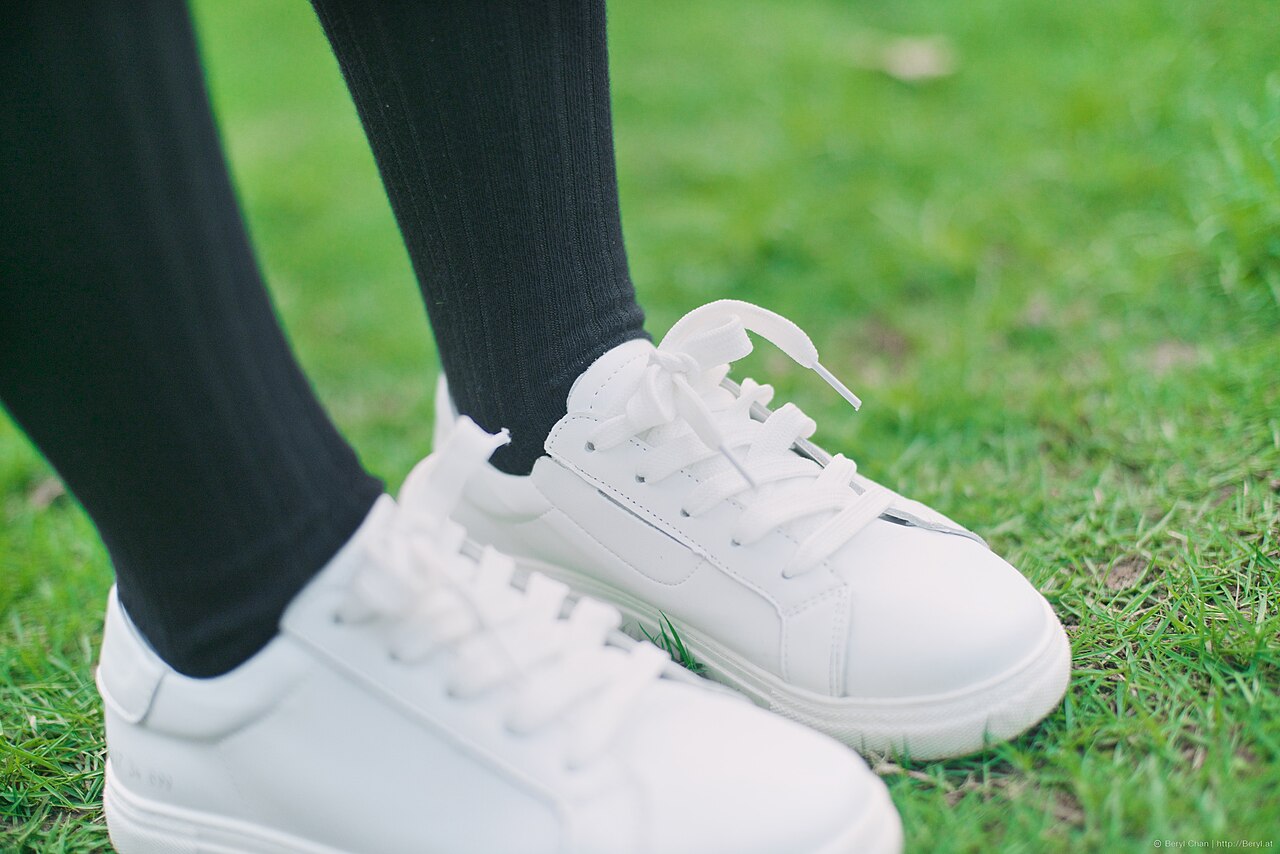
Then build a small rotation instead of hunting for one pair that does everything. Three pairs cover nearly every day of a normal week:
- A flat or low block in a mid-tone neutral, for commuting and errands
- A clean low-profile sneaker in bone or stone, for the days that involve actual walking
- One pair with a bit of height in taupe or black, for anything that needs a sharper line
Rotating also extends life. Shoes dry out between wears, and a pair worn every single day never gets that chance. Three pairs worn in turn will outlast three pairs worn one at a time until they die. If the sneaker slot is the one you struggle with, the fit notes on open-back sneakers explain why some pairs rub the heel and others don’t, and the women’s sneaker range on ShoesNeed is sorted by shape rather than brand.
If you want to see how the flat end of that rotation behaves over a full day, these breathable flat-bottomed casual shoes are the kind of thing that ends up by the door. For the sharper end, a pair of low-key commuting heels does the same job with a heel. And if you’re unsure which silhouette suits your week, there’s a solid rundown of heel heights and how to choose your pair that’s worth ten minutes.
What to check in the mirror before you commit
Shop lighting lies. Every shoe shop in the world uses warm bulbs that make beige look richer and grey look greener. Walk the pair to the front window and look at them against a black trouser and a blue jean, because that’s what they’ll meet in real life.
Then check three angles. From the front, make sure the toe shape doesn’t look wider than your ankle. From the side, look at where the vamp cuts across your foot, since a shoe that starts too far back makes the foot look long and flat. From behind, in a mirror, watch how the heel sits. If the back of the shoe gapes when you step, no insole will fix it.
Walk on a hard floor for two minutes, not carpet. Carpet hides a stiff shank and a slippery outsole, and both of those show up on pavement the first morning you wear them to work. Listen as you walk too. A clicking sound at the heel usually means a loose top piece, and that’s a repair before you’ve even paid.
Check the colour against your own skin, not the assistant’s. A bone shoe on a warm-toned ankle reads cream. On a cool-toned ankle the same shoe reads chalky. Neither is wrong, but one of them will make you feel like you’re wearing someone else’s shoes, and that feeling doesn’t fade.
Finally, look at the shoe from two metres away. That’s the distance everyone else sees you from. Details that obsessed you close up disappear. Proportion is what survives, and proportion is the one thing you can judge at a glance.
What to wear them with
Neutral shoes work best when they’re the quietest thing in the outfit. That means letting the shoe repeat a colour that’s already there rather than introducing a new one. A taupe flat with a grey wool trouser and a camel coat is three tones of the same idea. The same flat with a bright red skirt is a different, harder outfit.
Denim is the easy test again. A stone sneaker with dark straight-leg jeans and a white tee is about as reliable as clothes get. Swap in a bone leather flat and it reads slightly more polished without changing anything else.
For work, keep the shoe darker than the trouser or within one shade of it. A black trouser with a black flat elongates the leg. A black trouser with a bone flat chops it at the ankle, which is fine if the trouser is cropped and terrible if it isn’t.
Evening is where people overthink it. A neutral shoe at night needs either a heel or a very clean line. A scuffed beige ballet flat with a silk dress looks like you forgot to change. The same colour in a pointed shape with a 60mm heel looks deliberate. Shape carries the formality, not the colour.
Outerwear is the other lever. A camel coat and a stone shoe make a warm, low-contrast outfit that photographs well and reads calm in person. Add a black bag to that and the whole thing sharpens up. Take the black bag away and it gets syrupy. Small decisions like that do more than the shoe itself.
And if you only own one neutral pair, wear it with the outfit you get complimented on most. Confidence covers a lot of small colour mistakes, and it definitely covers a beige flat that’s half a shade off.
Keeping a neutral shoe neutral
Light neutral shoes for women need a routine, and it’s short. Brush suede after every wear, dry, with a suede brush. Wipe smooth leather with a barely damp cloth and condition it once a month. Store them away from sunlight, because UV shifts beige towards yellow faster than most people expect.
Deal with denim transfer immediately. If you see blue on a pale heel, a suede eraser will lift most of it while it’s fresh. Leave it a month and it’s in the nap for good.
Rotate, too. Two pairs of neutral shoes for women worn on alternate days dry out completely between outings, and dry shoes crease less. It sounds like fuss, and it takes about ten seconds at the door.
Store them with a shape inside, too. A cedar shoe tree holds the vamp up and pulls moisture out overnight. Without one, a soft neutral flat curls at the toe within a season and starts looking tired even when it’s clean.
The honest downside of this whole category: neutral shoes are the least forgiving thing you can buy if you’re rough on footwear. They show scuffs, they show rain, and they can’t be touched up the way a black pair can. If your week involves wet pavements and gravel car parks, buy one neutral pair for the good days and stop there. Black will do the rest, and it’ll look better doing it.
Buy the mid-tone first. Wear it for a month. Then decide whether your wardrobe wants the warmer or the cooler version next. That order saves money, and it’s the difference between a shelf of beige shoes you don’t wear and two pairs you reach for without thinking. Neutral shoes for women only work as a system, and a system starts with one pair that already fits the life you have.
