

A pair of shoes can pass ten minutes in a shop and fail by 3pm at a desk, and the gap between those two experiences is where most office footwear gets returned. In this trade you see the same pattern every season: the pair looks right, feels fine standing up, and then spends the afternoon half under a desk because something at the instep started pressing.
Professional shoes for women get judged on how they behave across a full working day, not on how they photograph. Sitting changes everything. Your foot spreads slightly, your heel settles back into the shoe, and any pressure point that was invisible while you were standing becomes the only thing you can think about.
This is also why the pair that works for a wedding doesn’t work for a Tuesday. A wedding is four hours with a lot of sitting and standing up. A Tuesday is eight hours with your feet flat under a desk, and then a walk to a train. Same shoe, two completely different tests.
What follows is what actually decides that, and how to test for it before you spend anything. It’s a short list, and most of it is about the two hours nobody tests in a shop.
A desk day is roughly eight hours of sitting with a handful of short walks, which is a very different load from standing on a shop floor for ten minutes. Office footwear gets sold on the standing test and lived through the sitting one, and that mismatch explains most of the returns in this category.
What a desk does that a shop never shows you
Standing and sitting load a shoe differently. Standing, your weight goes down through the heel and the ball, and the shoe mostly has to hold its shape. Sitting with your feet flat, the heel slides back against the counter and your forefoot relaxes forward, which puts pressure on the top of the foot where the vamp crosses the instep.
That’s why a shoe can feel roomy at 9am and tight at 11. It isn’t the shoe changing. It’s the position. Anyone who has taken a pump off under a meeting table knows the sensation: a band of pressure across the top of the foot, right where the laces would be if there were laces.
Three things happen over a desk day:
- The heel slides back by 2mm to 4mm, so a shoe fitted snug while standing starts to rub the Achilles.
- The forefoot relaxes and spreads, which is fine in a wide toe box and miserable in a pointed one.
- Body heat softens the lining, and a cheap one gets slick against a sock.
None of that shows up in a two-minute fitting. It shows up in a two-hour one, which is why the useful test is longer than most people are willing to stand in a shop.
The 30-minute mark and the 2-hour mark tell you different things
At 30 minutes, you learn about shape. If the shoe is going to press on a bone, this is when it starts. Sit down, cross your legs, put your foot back down, and notice whether the pressure returns in the same spot. A shoe that presses once and settles is usually fine. One that presses in the same place every time won’t improve.
At two hours, you learn about structure. This is when a soft insole has compressed enough to stop helping, when a heel counter that was too soft lets the heel drift, and when a sole with no shank starts to feel like standing on a bag of rice. If the shoe is still comfortable at the two-hour mark, it will very likely survive a full day.
There’s a useful variant for anyone who works from home half the week. Wear the new pair on a work-from-home day, at your actual desk, at your actual hours. It’s the closest thing to a free trial, and it exposes instep pressure that a 10-minute walk never will, because the pressure builds from sitting, not from stepping.
How to run this test without wasting a day: wear the pair at home on a hard floor for the first hour, doing desk work, and then go out for a 20-minute walk. Hard floors matter, because carpet absorbs exactly the pressure you’re trying to feel.
For the version of this test at three hours, with real walking included, this piece on comfortable shoes for a full work day covers the sequence in more detail. The 30 and 120 minute checkpoints are the two that catch most problems.
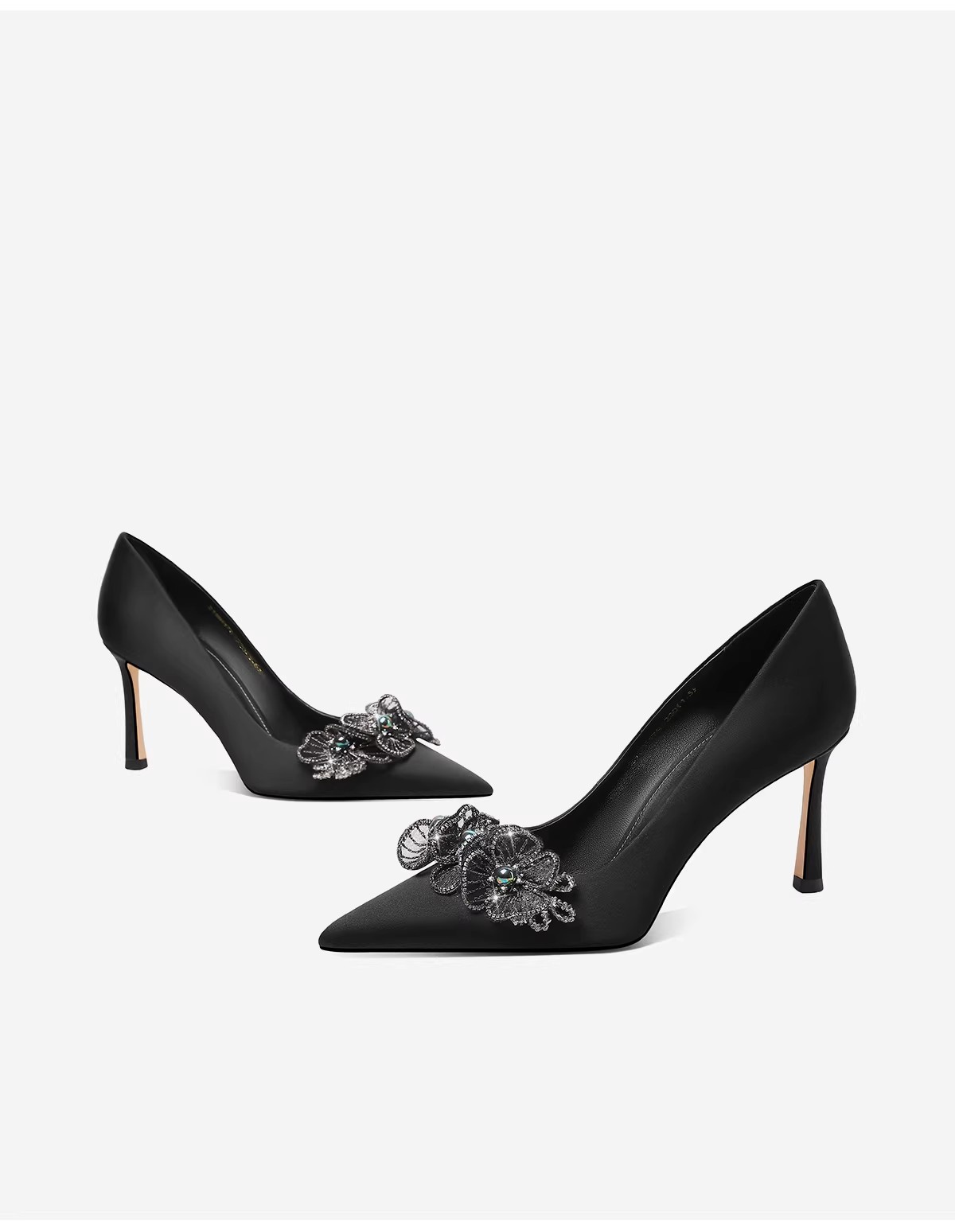
Why the cheap fix fails at 3pm, not at 9am
Almost everyone buys an insole before they buy better shoes. It’s cheaper, it feels like a solution, and it works for about four hours. Then the foam compresses, the arch support disappears, and you’re back to the shoe you started with, now slightly tighter.
The mechanics are simple. A 4mm EVA insole loses roughly a third of its thickness under a typical adult’s weight within a month of daily wear. A PU or latex one holds about twice as long. A cork footbed moulds and holds for years, but it’s rigid, and it needs a shoe with room for it.
So the order of operations matters. Fix the shoe first, then consider an insert, and only if there’s depth for it. In this trade the most common mistake isn’t buying the wrong insole. It’s buying a shoe with a glued-in footbed, then discovering there’s no room to add anything at all.
What the materials actually do over a working week:
- EVA: comfortable on day one, flat by week six, cheap to replace.
- PU or latex: firmer from the start, holds shape for a year, heavier.
- Cork: moulds to the foot, doesn’t compress, unforgiving if the shoe is narrow.
The honest recommendation is to spend the money on the shoe and skip the insert, unless a clinician has told you otherwise. A shoe with a firm shank and a real heel counter does more for a desk day than any 15 euro foam pad.
The specs that survive eight hours, and the ones that don’t
Heel height gets all the attention and very little of the blame. It’s also the spec most often chosen for how it looks in a mirror rather than how it feels at 3pm. Somewhere between 30mm and 45mm is where most people can sit, stand, and walk for a full day without noticing their feet. Below 25mm, a stiff flat starts pressing the Achilles when you sit. Above 60mm, the forefoot takes load it can’t shed while you’re seated with your feet flat.
Closed back matters more than people expect. A mule or backless pair is fine for a two-hour dinner and a bad idea for a day with eight hours of sitting and three walks to a meeting room. Without a counter, your heel sits wherever gravity puts it, and the shoe ends up half off by mid-afternoon.
Footbed depth is the spec nobody prints. You want enough room that a thin sock doesn’t change the fit and a removable insole sits flat, which usually means 4mm to 6mm of clearance under the heel.
What the three common office styles do across a day:
- Closed-back pump, 40mm: the safest all-day option. Needs a firm counter or the heel slips.
- Loafer with a 25mm heel: good for standing and walking, can press the instep when seated.
- Slingback, 50mm: convenient and cool, but the strap needs adjusting twice a day.
Wide feet change the calculus. In a narrow last, no insole helps, because the problem is width, not cushioning. A shoe that’s 3mm too narrow at the ball will feel fine standing and painful after two hours of sitting, when the forefoot spreads.
There’s one more spec worth checking and it takes a second: how stiff the sole is at the ball. Bend the shoe where your toes bend. If it takes real force, you’ll feel it by mid-afternoon when you push off to stand up. If it folds without resistance, there’s no shank and the shoe will collapse sideways under a desk chair. The right amount is a firm bend with a bit of spring back, and you can feel it with your hands in five seconds.
What actually gets returned, and why
The return reasons in office footwear are remarkably consistent, and almost none of them are about looks. The first is heel slip, which accounts for more exchanges than every other fit issue combined. The second is pressure across the instep, which is the one that sends most professional shoes for women back to the shop after a week rather than a month. The third is noise, which sounds trivial until you’re the person whose shoes squeak down a quiet corridor.
Heel slip is usually a length problem disguised as a grip problem. People add pads, inserts, and thicker socks before checking the obvious: is the shoe 5mm too long? A shoe that fits will hold the heel with no accessories at all.
Instep pressure is a last problem. If the vamp crosses your foot at the highest point of your instep, the shoe will press every time you sit. Nothing softens that permanently. You can stretch it 2mm with a shoe stretcher and a week of patience, and that’s often enough, but it’s a repair, not a fix.
Noise comes from three places: a loose heel counter, a synthetic lining rubbing on a sock, and a sole unit that’s too stiff to flex. The last one is the giveaway of a cheap construction, and it’s also the one that can’t be repaired.
The pattern behind all three is the same. Problems that show up while sitting are structural, and problems that show up while walking are fit. That’s why so many professional shoes for women get returned after a week of desk work rather than after the first ten minutes in the shop, when everything still felt fine.
For a sense of how much of this is about the upper and how much is about everything else, what a product listing leaves out is a useful reminder: the specs that matter for a desk day are almost never on the page.
Two pairs beat one perfect pair, every time
An office week is at least two different loads. Monday to Thursday is sitting, standing, and short walks. Friday might be a commute with a bag and a 15-minute walk at each end. Add a client dinner and you have a third.
A 40mm closed-back pair for the desk days and a 25mm loafer for the walking days covers more ground than any single shoe. It also doubles the drying time between wears, which is the quiet reason leather shoes last longer when you rotate them.
Two pairs also solve a problem nobody talks about: the Monday shoe. Leather takes about a day to dry out after a normal wear, and a shoe worn five days straight never gets that day. The lining stays slightly damp, the flex point above the toe weakens, and the upper cracks there first. Rotating isn’t about having more options. It’s about giving each pair 24 hours off. Two pairs of professional shoes for women, rotated properly, also means each one lasts about twice as long, which is the least fashionable argument in this piece and the most useful.
For the days that lean casual, the five-day office week test on black sneakers is a fair comparison point, and a 45mm commuting pair with a closed back is the shape most people end up buying twice, because the first pair wears out before the style does. A shallow-cut black pair is the version that works under trousers without showing a hard edge at the instep.
One last thing worth saying plainly: professional shoes for women are usually bought for the look and judged on the last two hours of the day. If you test for those two hours before you buy, in the afternoon, on a hard floor, sitting down for at least 20 minutes, you’ll skip most of what gets returned. Buy the pair that passes that test and not the pair that photographs best, and the difference shows up in your feet by Thursday. Sitting for long stretches is already hard on the body. The shoes shouldn’t add to it, and how heel height shifts load to the forefoot explains why the 40mm mark is where most of this settles.
