

The pair looks like a normal trainer until you turn it over and see the back is missing. Open-back tennis shoes for women sell fast in spring, mostly to people who are tired of bending down at the door. What they give up isn’t obvious until the third week, when the collar starts to gape and the foot slides forward on every step.
I’ve spent enough time on the fitting side of this trade to know the pattern. The people who love them usually have a narrow heel and a low instep. The people who return them almost always have a wide forefoot, and they bought their usual size because the shoe looked like a trainer.
Here’s what the design actually does, and the four checks that separate a pair you’ll wear for two years from a pair that ends up by the door as a slipper.
The heel counter is doing more than you think
Every standard trainer has a stiffener at the back, a shaped piece of board or plastic between the lining and the upper. It holds the heel in place and it takes the load when your foot lands. Remove it and the whole shoe changes behaviour.
What you get instead is a collar with a soft edge, sometimes elasticated, sometimes just folded leather. The foot enters from the top and stays put through friction and the shape of the vamp. That works while the upper is new. It works less well once the material has relaxed by 2mm or 3mm, which happens somewhere around the twentieth wear.
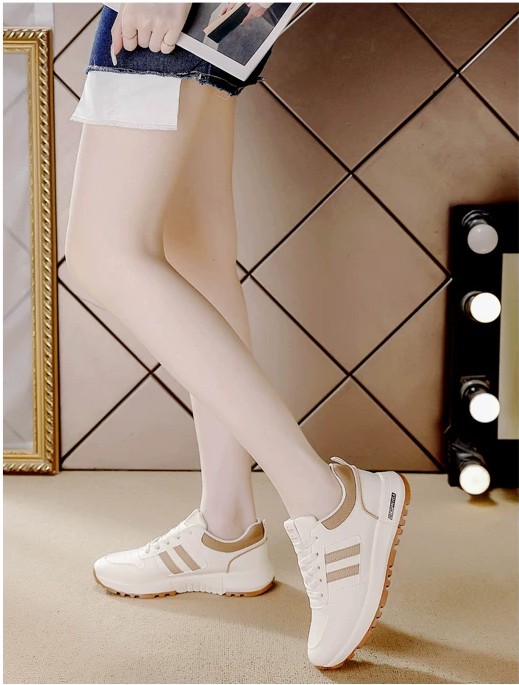
The ankle then does the stabilising work instead. That’s fine for a walk to the shop and less fine for 8,000 steps. The Achilles tendon takes the extra load, and it’s the structure most likely to complain if you wear this shape for a long day on hard ground.
So the first question isn’t about style. It’s whether you want a shoe that holds your heel or a shoe you step into. Those are different products, and the marketing photos blur them.
You can spot the difference from the outside. Run a thumb down the back of the heel on a normal trainer and you’ll hit a firm ridge about 40mm tall. Do the same on an open-back pair and your thumb sinks. If it sinks all the way to the lining with no resistance at all, there’s nothing holding your foot except the collar edge, and that edge is fabric with foam behind it.
Who this shape actually suits
Narrow heel, low instep, average arch: this is the foot the design was drawn around. The shoe stays on because the vamp sits close across the top of the foot and the collar grips just above the heel bone.
Wide forefoot with a narrow heel is the second good fit, provided you take the vamp seriously. The upper needs to be wide enough at the ball that the toes don’t press, and close enough at the instep that the shoe doesn’t flap.
Flat feet with a wide midfoot: usually a bad fit. The upper spreads under load, the collar opens, and the foot slides forward until the toes touch the front. You’ll feel it after about ten minutes, and no insole fixes a shoe that has nothing at the back.
High instep: mixed. The collar sits higher on the ankle and rubs, and because there’s no counter to anchor the heel, the whole shoe rotates slightly with each step. If you’ve ever had a blister at the back of the heel from a backless loafer, you know how this ends.
There’s one more category worth naming, and it’s the largest in the returns pile: people who buy their usual trainer size without thinking. A backless shoe needs the vamp to do the gripping, so the fit across the top of the foot matters more than the length. Half a size too long and the foot slides; half a size too short and the toes hit the front before the collar has a chance to hold anything.
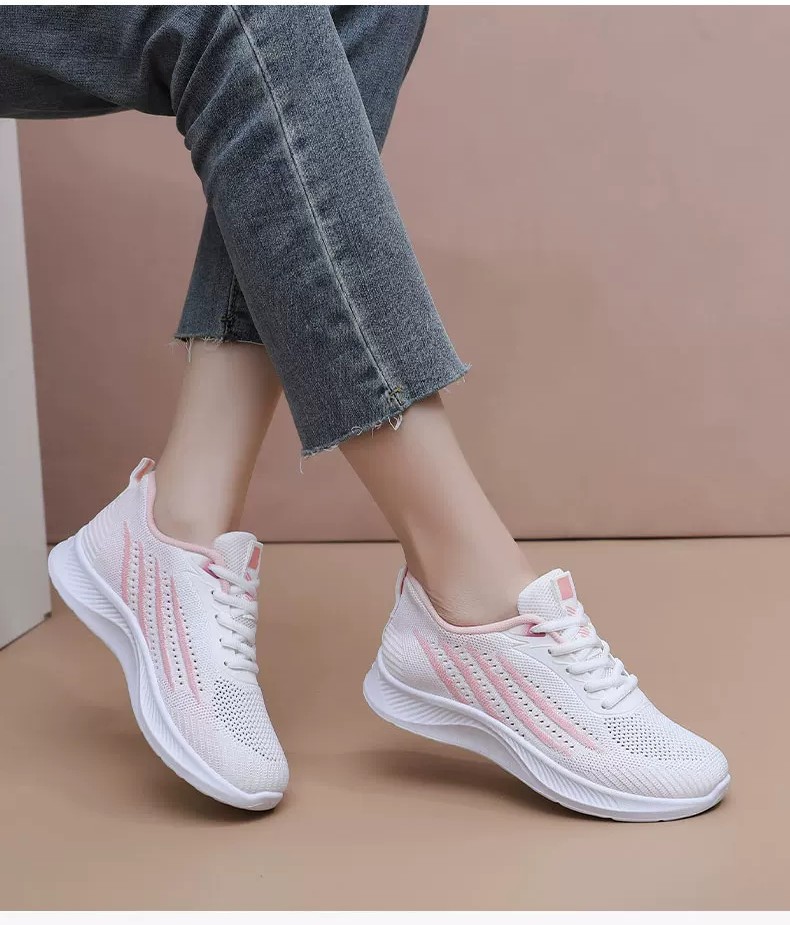
Ankles matter as much as arches here. If you’ve sprained an ankle in the last two years, or if you roll inward on uneven ground, this shape gives you nothing to lean against. A trainer with a counter lets the shoe absorb the wobble. A backless one passes it straight up the leg, and the first place you’ll feel that is the outside of the ankle after a long walk on cobbles.
Four checks in the shop, in this order
Skip the mirror. Do these first, because the mirror is where bad decisions get made.
- Step in without hands. If you need a finger, the collar is too tight and it won’t loosen.
- Walk ten paces on hard floor. Watch the heel gap. More than 6mm of lift means the shoe is too long or the collar too soft.
- Stand on tiptoe. The heel should stay in the shoe. If it lifts out, the pair is a slipper.
- Press the collar flat and let go. It should spring back within two seconds. Slow recovery means it’ll stay flattened.
That last test is the one most people skip, and it’s the one that predicts the third month. A collar that recovers quickly has a stiffener strip hidden inside the fold. A collar that stays flat doesn’t, and once it’s flat the shoe stops gripping anything.
You can run the same test at home with a return window and less patience. Order two sizes, walk around the kitchen for twenty minutes, keep the one that passes the tiptoe test, send the other back.
If a pair fails the tiptoe test but everything else is right, there’s a cheap workaround: a stick-on heel grip, the suede-backed kind, added to the inside of the collar. It buys about 3mm of grip and roughly two months. It’s not a fix for a shoe that’s genuinely too long, but it rescues a pair that’s drifting at the edge of acceptable.
The twenty-wear cliff, and what happens after it
New open-back trainers feel secure. The collar is upright, the upper is still tight, and the step-in motion is satisfying. Between wear fifteen and wear twenty-five, the material relaxes and the grip drops. Most complaints land in that window.
How much it drops depends on the collar. A folded leather collar with a stiffener holds for a season. A knit collar with elastic holds for about eight weeks and then starts to look tired. A padded collar looks plush in the shop and compresses fastest of the three.
Nothing you can do about it structurally. What you can do is buy the size that passes the tiptoe test when new, so there’s margin for the relaxation. Buying a pair that’s already snug at the collar is how people end up with a shoe they can only wear with thick socks.
There’s also a wear pattern at the back edge. The top line of the collar rubs against the heel and the lining goes first, usually a bald patch about 20mm across. That’s normal. When the patch becomes a hole, the shoe is finished as a shoe and starts its second life as a garden slipper.
One maintenance habit worth adopting: rotate. Two pairs worn alternately last roughly two and a half times as long as one pair worn daily, because the foam in the collar and the midsole needs about 24 hours to recover. If you only own one pair, take them off when you get home. Wearing them from 7am to 11pm is what flattens a collar in six weeks.
Mesh or leather: which holds the step-in shape
Mesh uppers dominate this category because they’re light and cheap to mould. They also stretch the most. A mesh open-back trainer after three months looks slightly wider than it did in the box, and the collar edge softens.
Leather holds its shape better and takes longer to relax, which is why the leather versions cost 40% more and last roughly twice as long. The trade is weight and breathability. On a hot day, leather open-back shoes get uncomfortable in a way mesh never does.
Knit sits in the middle again, and it’s the worst of the three for this specific shape, because knit has the least resistance to a heel pushing back against it. Knit backless trainers exist and they sell, but they’re the pairs that come back.
Look at the inside of the collar before you buy. A fabric lining with a visible seam is a sign of a real stiffener strip. A raw foam edge means the collar is just padding and it will flatten. Uppers are graded and tested against standards that most shoppers never see, and the construction of footwear is worth ten minutes if you want to read a spec sheet properly.
Cleaning decides how long the shape holds, too. Mesh goes in a basin with cool water and a drop of washing liquid, brushed with a soft toothbrush, air dried with newspaper inside. Never a machine. Leather gets a damp cloth and a neutral cream, nothing else. Both jobs take five minutes and both add months.
Where the price goes, from 30 to 120
At the bottom of the range, the upper is a single-layer mesh, the insole is glued foam, and the collar has no stiffener. Expect a season, and expect the collar to flatten by week ten.
In the middle band, most pairs add a moulded EVA midsole, a removable insole and a stiffer collar. That band is where the value sits, and it’s where I’d put your money if you want the shape to survive a summer.
Above that, the money goes into the last shape and the finishing, plus a heel patch that protects the lining. A heel patch matters more in this design than in any other trainer, because the collar edge takes all the abrasion. If a pair has one, it will outlast a more expensive pair without one.
One counterintuitive note from watching returns: the most expensive pairs aren’t the ones that stay on best. The variable that matters is collar stiffness, and plenty of cheap pairs beat expensive ones on that single measurement.
Where you buy changes what you can test. A shop lets you run the tiptoe check before paying, which is worth more than a discount. Online gives you selection but you’re guessing at collar stiffness from a photo. If you order online, order from somewhere with free returns and treat the first delivery as a fitting appointment, not a purchase.
Range matters less than people think at this price. There are maybe a dozen construction patterns across the whole market, and most pairs in the same band are built on the same three or four lasts. What changes is the upper material and the finish. That’s why a pair like these lightweight sports and leisure shoes for women can undercut a bigger name and still pass the collar test, while a more expensive pair with a padded collar flattens by August.
Socks, stairs and two situations to avoid
Bare feet and open-back shoes are the intended combination, and it works for about an hour. After that, sweat makes the foot slide forward and the collar starts to chafe. A thin no-show sock with a silicone heel grip solves it, and it’s the cheapest upgrade in this category.
Stairs are where the design shows its limits. Going up is fine because the foot pushes back into the shoe. Going down, the foot slides forward and the heel lifts, and you’ll feel the collar against the back of your ankle on every step. If your day involves four flights, this isn’t the shoe.
Two situations to avoid entirely: driving long distances, where a shoe that can slip off at the heel is a safety problem, and any kind of running. The open back means the foot moves inside the shoe with every stride, and the friction is exactly how you get a blister under the arch.
One more point on the fit that only shows up after a week. Because nothing holds the heel, the foot creeps forward by a few millimetres with every hundred steps, and by lunchtime the toes are touching a place they shouldn’t. That’s why a backless shoe needs at least a thumb’s width of clearance at the front, roughly 5mm more than you’d accept in a laced trainer. If the pair feels perfect at the toe when you try it on, it’ll be short by Friday.
For a commute that mixes a train, a desk and a short walk, they’re genuinely convenient. There’s a reason the shape spread from hospital clogs into fashion. The step-in motion saves a second every time you put them on, and a second twice a day adds up over a year.
Weather is the last practical point. Rain makes the inside of an open-back shoe a puddle, because there’s no collar to keep water out and the heel opening faces the sky. Light drizzle is fine. A walk through a downpour ends with wet socks and a damp insole that takes a day to dry, and a damp insole is where smell starts. Keep a spare pair of insoles if you’re wearing these through an autumn.
Building an outfit that doesn’t look like loungewear
The risk with open-back tennis shoes for women is the slide into pyjama territory. A soft upper, a soft trouser and a soft bag together read as a weekend at home, not an outfit.
Add one structured piece. Straight jeans with a visible seam, a tailored overshirt, a leather tote. Anything with a hard edge resets the balance, and the shoe stops looking like a house slipper.
Colour helps. A cream or off-white pair with dark denim reads deliberate. A grey pair with grey joggers reads like a dressing gown. The shoe is neutral, so the outfit does the work.
One detail that shifts the read more than people expect: the sock. A visible ribbed sock in cream or navy turns an open-back trainer into something that looks considered. A bare ankle looks relaxed. A white sport sock looks like you forgot to change after the gym, and no jacket fixes that.
For a sharper version of the same idea, a flat with a firm counter gives you the convenience with more support. These mesh soft-sole sports shoes for women are the closest thing in the range to the step-in feel without giving up the heel. If width is your usual problem, the women’s shoes collection is sorted by shape rather than by trend.
One last thing worth saying plainly. This shape is a convenience product, not a support product. It suits a commute and a coffee run. It doesn’t suit a ten-hour shift on a hard floor, and no cushioning claim changes the fact that the back of the shoe isn’t there.
If you want the step-in motion and a heel that stays put, look for a collapsible heel with a real counter behind it. Those exist at the same price, and you’ll stop noticing your shoes by the second week.
