

It’s 4:50pm, the office lights have gone yellow, and your white sneakers look like someone else’s shoes. That’s the moment tan starts to make sense. Tan tennis shoes for women don’t go grey under fluorescent light, they don’t go cream by August, and they don’t make your ankles look like they’re stuck in a bandage.
I bought my first pair in a size 38 after a shop assistant pushed them at me for twenty minutes. I didn’t want them. Six weeks later they were the only pair I reached for, and the white ones stayed by the door like an accusation.
This is what I’d tell you before you spend anything: the tone matters more than the brand, the toe box matters more than the cushioning claim on the box, and the pair that fits at 3pm may not fit at 8am. Everything below is about those three things.
The three tans, and why two of them are traps
Tan isn’t one colour. In a shop you’ll see at least three versions sitting next to each other, and they behave completely differently against skin.
Warm tan, the one that leans orange, flatters most medium and olive skin tones. It reads as leather rather than as a shoe, which is why it survives with jeans. Cool beige, that greyish sandy tone, looks clean on the shelf and washed out on the foot. It’s the one that makes people say “they look bigger in person”. Pale sand sits between the two and works if your legs are pale, because the shoe blends into the ankle instead of cutting it.
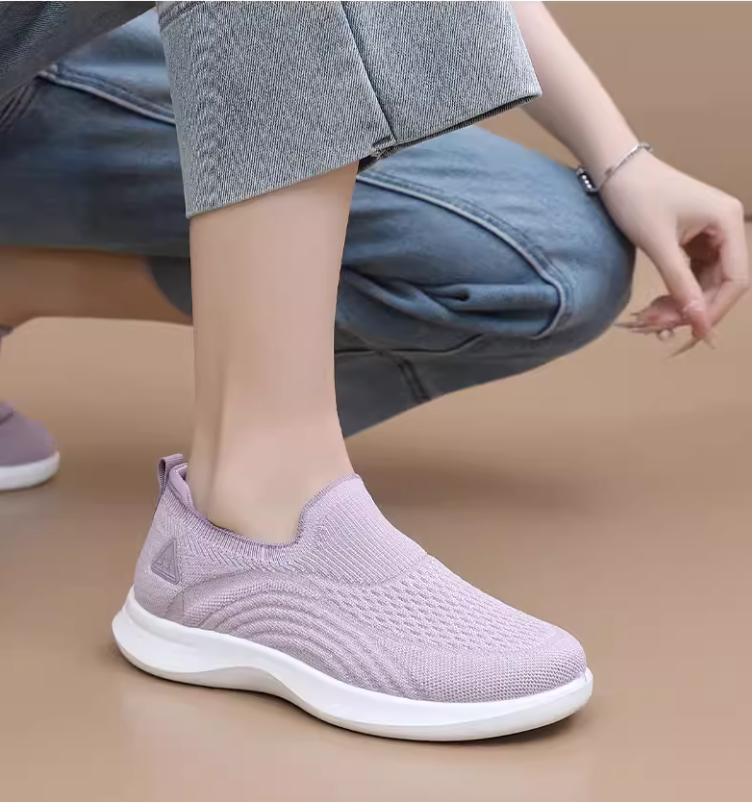
Put your hand next to the shoe in daylight. Not shop light, daylight, near a window. If the shoe turns pinkish against your skin, it’ll look wrong with every skirt you own, and no amount of styling fixes that. If it disappears, buy it.
The other trap is the sole. A bright white midsole under a tan upper makes the shoe look two-tone and slightly sporty, which is fine with denim and terrible with a linen dress. A gum sole, that honey-coloured rubber, pulls the whole thing warmer and hides street dirt better than anything else in this category. In the history of the sneaker, the gum sole was a practical choice for grip. It still is, and it still looks better after a month.
Here’s the part I got wrong. I assumed tan would be the safe neutral and bought a pair with a thick white platform. They made my feet look like two small boats. The colour was right and the sole was wrong. Look at the profile in a full-length mirror from three metres away. If the sole is more than about 30mm at the heel, the tan stops reading as neutral and starts reading as a statement.
Fit first: four places tan sneakers hide a problem
Light colours are honest about fit in a way black never is. A crease across the toe box shows up immediately. A gap at the heel shows as a shadow. That’s useful, if you know where to look.
Check the widest part of your foot against the widest part of the shoe. Most women I’ve stood next to in shoe shops press down on the toe and call it done. The toe isn’t the issue. The fifth metatarsal is, that knuckle at the outside edge of your foot, and it’s the spot where a narrow last will pinch after two hours.
Then check the heel. Slip the shoe on without lacing it, walk four steps, and watch whether your heel lifts more than about 5mm. Any more than that and you’ll be buying heel grips within a fortnight, which is a fix, but a fix that never sits quite right.
- Width: stand up when you try them, feet spread under load
- Toe box: you want a thumb’s width in front of the longest toe, no more
- Heel: under 5mm of lift, unlaced
- Instep: no red line across the top of your foot after five minutes
That last one catches a lot of people. Tan sneakers often use softer leather or mesh than the black version of the same shoe, so the upper collapses slightly and presses on a high instep. If you feel a band of pressure across the top of your foot while standing still, walk away. It doesn’t stretch out the way people promise.
One more: try them at the end of the day. Feet swell by up to half a size over a working day, and a shoe that’s snug at 9am is a shoe you’ll resent by 5pm.
And if you wear orthotics, take them out of your current pair and into the shop. A removable insole is only useful if the shoe’s own footbed comes out cleanly, and about a third of the tan sneakers I’ve tried are glued in. Press your thumbnail under the heel of the insole before you commit. If it doesn’t lift, the shoe won’t take a custom insert without a fight.
How tan ages, and the two things that will ruin it
Tan shows creases earlier than black and later than white. That’s the whole trade. Expect visible creasing across the vamp after about three weeks of daily wear, and expect it to look intentional rather than damaged, as long as the leather is full-grain or a decent synthetic.
What ruins tan is denim dye and rain. Indigo transfers onto the collar and the heel counter within days if you wear raw jeans, and it doesn’t come out with a brush. If you live in dark denim, either accept a blue-grey shadow on the collar or pick a darker tan.
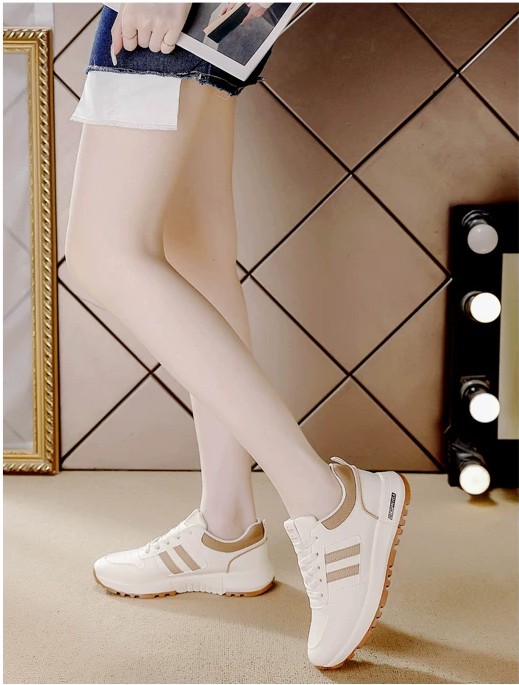
Water is the other one. A soaked tan upper dries with a tide line, and the salt in winter streets leaves pale rings. A suede brush handles nap; a damp cloth handles smooth leather. Neither handles a tide line, so if you’re walking through wet grass twice a week, buy the darker tone and stop worrying. Tanning and dyeing are old processes, and the basic chemistry of leather finishing explains why a coloured surface behaves differently from a dyed one.
Cleaning routine that actually works: brush off dry dirt, wipe with a barely damp cloth, let them dry away from a radiator, then use a neutral cream on smooth leather only. Fifteen minutes, once a fortnight. Do not put them in a washing machine. I did that once with a mesh pair and the midsole came out of the wash looking like a wet biscuit.
What to wear them with, and the one combination that fails
Tan sneakers do their best work with mid-blue denim, olive, cream and rust. They look odd with pure white and slightly odd with black, because a light shoe under a dark hem creates a hard line at the ankle.
If you want to wear them with black trousers, choose the pale sand tone and keep the hem cropped. The gap of skin at the ankle softens the contrast. Full-length black trousers over tan sneakers make the shoes look like an accident, and no belt fixes it.
The combination that fails almost every time is a tan sneaker with a pastel floral dress. Both pieces are quiet, so neither leads, and the outfit reads as a uniform nobody chose. Swap the dress for a solid colour and it snaps into place.
Two more pairings worth trying. A tan sneaker with a grey wool coat and dark jeans looks expensive, because the shoe warms up an outfit that would otherwise be cold all the way down. And a tan sneaker with a rust or terracotta knit picks up the sole and makes the whole thing look chosen rather than assembled.
For work, tan works better than white because it doesn’t scream at 9am meetings. I wear mine with wide-leg navy trousers and a plain knit, and nobody has ever commented on them, which is exactly the goal. If you need a smarter option for the same outfit, these light luxury commuting heels with a soft sole sit in the same colour family without the sporty sole. There are more shapes in the same palette on the women’s shoes collection page if tan sneakers are only one part of what you’re replacing.
Ten minutes in the shop: the routine I use now
Shops are designed to make you buy in the first four minutes. Here’s a sequence that slows the decision down without wasting an afternoon.
Walk in with the socks you’ll actually wear. Not the paper ones. Then take both shoes out of the box, because shops sometimes put a display shoe on one foot and a stock shoe on the other, and they’re not always the same last.
Next, try the size you think you are, then the half size up, then the half size down. Yes, all three. Fit varies by about 4mm between factories, and a tan shoe that’s 4mm short will crease in exactly the wrong place.
Then walk for a full two minutes on a hard floor, not carpet. Carpet hides everything. Hard floor tells you whether the heel slips and whether the sole flexes at the ball of your foot or at the arch.
Finally, look at them in daylight if the shop has a window, or take a photo under your phone torch. The colour you see in a warm-lit shop is roughly 15% more saturated than the colour you’ll see at home.
Mesh, leather or knit: what each upper does at 28 degrees
The upper decides whether the shoe is tolerable in July. Tan comes in all three materials and each one behaves differently once the temperature passes 25 degrees.
Mesh is the lightest and the most breathable, and it also shows dirt along the toe first. A tan mesh upper collects fine grey dust in the weave and a brush pushes it deeper. On the plus side, mesh dries in about an hour, so a summer downpour isn’t fatal.
Leather is the most forgiving to look at and the least forgiving in heat. A full leather upper with a tan finish looks smarter after a year than anything else here, but it holds warmth and it creases along the flex line within a month. If your commute involves more than ten minutes of walking in direct sun, mesh wins on comfort and loses on looks.
Knit sits between the two. It stretches around a wider forefoot, which is genuinely useful if you’re between sizes, and it doesn’t crease in a hard line. It does sag. After about eight months, a knit upper starts to look a little tired around the collar, and there’s no fix for that.
My rule: mesh for June to September, leather for the rest of the year, knit if your feet are wide and you’re tired of sizing up. And check the tongue, because a padded tongue in a tan shoe adds bulk that shows through the laces.
How to tell a real tan finish from a painted one
Some tan shoes are dyed through the material. Others are sprayed with a colour coat over a grey or brown base. Both look identical in a box. Three weeks later they don’t.
Run your fingernail lightly across the side of the toe, somewhere it won’t show. Dyed leather changes shade slightly and the scratch disappears with a rub of your thumb. A sprayed finish lifts as a pale line and stays there. That pale line is where the colour will wear through first, usually right at the flex point.
Then look at the edge where the upper meets the sole. Real tan leather shows a cut edge in a slightly darker shade than the surface. A painted synthetic shows a thin white line, like the edge of a laminated card. That white line is the sound of the shoe looking cheap in eight months.
Smell it, too. Leather smells like leather. Synthetic uppers smell like a new shower curtain. Not a perfect test, but it’s free and it takes a second.
Finally, check the stitching colour. On a good tan shoe the thread is a shade or two darker than the leather, so the seams read as structure. On a cheap one the thread is bright white and the seams pop out like a diagram.
Price bands: where the extra money goes
Under about £50, you’re buying a synthetic upper and a glued sole. That’s fine for a season. The upper will crease sharply, the insole will flatten in about 60 days, and the tan will go slightly grey at the flex point.
Between £50 and £110, you start getting a leather or leather-and-mesh upper, a stitched or stitched-and-glued sole, and a removable insole. That removable insole is the single most useful feature in this category, because it lets you put your own orthotic in without destroying the fit.
Above £110, the money goes into the last shape and the finishing. Whether that’s worth it depends on how many hours a week you’re in them. At 40 hours a week, an extra £60 works out at about 30p a wear over a year, which is a reasonable trade. At four hours a week, it isn’t.
One thing I’d push back on: the most expensive pair is not the most durable pair in this category. I’ve had a £140 pair split at the toe within eight months and a £55 pair survive two summers. Check the stitching at the toe and the join between upper and midsole before you check the price tag. If you’d rather spend the money on something with a heel, these low-key commuting heels in a similar warm neutral cost about the same as a mid-range sneaker and last longer at a desk job.
Socks and the 3mm that changes the fit
Nothing wrecks a tan sneaker faster than the wrong sock. A thick white sports sock with a tan shoe makes the ankle look thick and the shoe look borrowed. A no-show sock leaves a gap where the collar rubs, and tan leather marks quickly at the heel.
What works: a sock the same depth as the collar, in cream, oatmeal or a tan within one shade of the shoe. Three millimetres of extra thickness at the heel is the difference between a snug fit and a blister, which is why you should bring the socks you plan to wear, and why the pair that felt perfect in thin socks will feel tight in wool ones.
In winter I wear a thin merino crew sock with mine and go up half a size. In summer, a cotton no-show with a silicone heel grip. Both are boring answers. Both work.
One detail worth knowing: a tan shoe with a padded collar looks fine with a visible sock and slightly odd without one, because the padding creates a visible ridge above the heel. If you plan to wear them barefoot in summer, pick a pair with a slim, unpadded collar.
Where tan tennis shoes for women stop being the right answer
They’re wrong for a formal interview, wrong for a wedding where the dress code is written down, and wrong if you stand on a hard floor for ten hours with plantar pain. In that last case you want a rockered sole and a firmer heel counter, not a flat tan sneaker with a pretty profile.
They’re also wrong if you want a shoe you never think about. Tan needs a brush every couple of weeks and a bit of care after rain. If that sounds like admin you won’t do, buy dark grey or black and get on with your life.
For everyone else, the calculation is simple. If your current pair is white and looks tired by Wednesday, tan buys you a longer stretch of looking deliberate. Start with a warm tan, a gum sole and a heel under 30mm. Try the half size up and the half size down. Then walk on a hard floor for two minutes and see what your heel does.
That’s the whole test. The rest is styling.
