

You buy the white pair because it looks clean in the product photo, wear it for a week, then see a photo of yourself at a wedding and wonder why your shoes look grey and slightly blue at the same time. Nothing is wrong with the shoes. The photo is telling you the truth about how white behaves.
In the trade, white is the colour that generates the most returns and the most compliments, usually from the same customer in the same month. It photographs better than it wears and worse than it feels.
Here’s what actually happens to white walking shoes in daylight, under flash, and by the end of a normal week.
White Ages Faster Than Any Other Colour
A white upper shows three things that darker shoes hide completely: dust, creases and the grey ring that forms where the shoe flexes across the toes. None of those is a defect. All of them are visible at two metres.
The technical reason is contrast. Dirt on a black shoe reduces the difference between the surface and the mark, so the eye ignores it. On white, every particle changes the value, which is why a pair that looks fine in a hallway looks tired in a photo.
That’s not an argument against white. It’s an argument for knowing the maintenance cost before you pay. A white pair needs about 10 minutes of cleaning a week to stay presentable, and a mesh pair needs closer to 20 because dirt works into the weave rather than sitting on top of it.
The physics of white as a surface colour explains the rest. White reflects most visible light, which is why it looks bright indoors and blows out outdoors. Your camera exposes for the average of the frame, and a bright shoe pulls that average up.
What Daylight Does to a White Sole
Midday sun is roughly 5,500K, and phone cameras are calibrated around that number. Under it, a white upper renders as white and a white sole renders slightly warmer, because foam and rubber reflect light differently from textile.
That’s the first surprise in photographs: your shoes look like two different whites. The upper is cool, the sole is creamy, and the mismatch is obvious in a full-length shot.
Cloud cover changes it again. Overcast light is diffuse and around 6,500K, which pushes everything slightly blue. A white shoe in shade on a grey day can photograph almost lilac, and there’s nothing wrong with the shoe.
The color temperature background is well documented in the standard reference on colour temperature, and it explains why the same pair looks different in every holiday photo.
If you care about how the shoes look in pictures, shoot them in open shade rather than direct sun. The light is even, the sole and upper read as the same white, and you avoid the blown highlights that make the toe box look like a blank shape.
Flash at Night Is Where White Shoes Fall Apart
On-camera flash is the hardest test a white shoe faces. It fires at around 5,500K but only reaches the first two metres, so the shoe is lit and the background isn’t. The camera exposes for the flash, the shoe clips to pure white, and all the texture in the mesh disappears.
What survives is the shadow line under the laces and the tread pattern. Everything else becomes a white blob with a grey outline.
There’s a practical fix, and it costs nothing. Turn off the flash and use a phone torch pointed at the ceiling, or stand near a window. Bounced light keeps the texture visible and stops the shoe from turning into a shape rather than an object.
For evening events, white walking shoes also pick up whatever light is around them. A warm restaurant lamp at 2,700K makes them look yellow. A blue-lit bar makes them look cold. Both are accurate, and neither matches what you saw in the mirror at home.
If you only take one thing from this: white shoes are the most light-sensitive thing you own. Dress for daylight, then accept that the evening photo will be a different colour entirely.
The Camera Angle Nobody Uses
Most people photograph shoes from standing height, looking down. That angle compresses the shoe, hides the sole and makes the toe box look longer than it is. It also catches the top of the foot in shadow, which is why white uppers look dingy in so many outfit photos.
Kneel down. Shoot from 30cm off the ground at a slight angle, with the toe pointing about 20 degrees away from the camera. You’ll see the side profile, the sole thickness and the actual shape of the toe.
This matters if you’re buying online and relying on customer photos. A pair shot from above will look slimmer and cleaner than it is. A pair shot from ground level tells you whether the sole is 20mm or 35mm, which is the number that decides how the shoe feels after 8km.
It also matters for returns. In a shop, the most common reason a white pair comes back is that the customer expected the profile they saw in a photo. Ground-level photos are honest. Overhead photos flatter everything.
A Cleaning Schedule That Actually Holds Up
White walking shoes don’t need much, but they need it regularly. The schedule below is what keeps a pair looking acceptable for a full season rather than six weeks.
- After every wear: a dry brush on the outsole and a wipe with a damp cloth on the upper. Thirty seconds.
- Weekly: a soft brush with a drop of pH-neutral soap, then air dry away from heat.
- Monthly: a pencil eraser on the midsole scuffs, then a thin coat of whitener on the sole only, never the mesh.
Skip the washing machine unless the upper is fully synthetic. A hot cycle shrinks knit, softens adhesive and leaves the toe box slightly warped, and no white shoe recovers from that.
Mesh traps fine dust in a way leather doesn’t. If you walk on gravel or through a park, expect to brush the sides every second day, not every week.
What the Shop Sees: Returns and the White Shoe Problem
In retail, white walking shoes have a predictable return pattern. They come back in the first ten days, mostly for fit rather than colour, and the reason is almost always the same: the customer bought the size they wear in a darker shoe.
White uppers are often a thinner material, because the manufacturing process uses less pigment and a lighter backing. That changes the fit by 2 to 3mm across the forefoot. It sounds trivial. On a long walk, it’s the difference between a shoe that works and one that presses.
The other pattern is the “clean on arrival” expectation. Customers judge white shoes harder in the first minute, so a pair with a scuff from transit gets returned more often than the same scuff on a black pair. That’s a presentation issue, not a quality one.
What the trade does about it: white pairs are tried on later in the day, with the socks the customer plans to wear, and staff check the flex point against the widest part of the foot before the box leaves the counter. You can do the same thing at home.
Choosing a White Pair You’ll Still Wear by October
Three details separate a white shoe that survives a season from one that ends up at the back of the cupboard.
First, check the midsole material. EVA foam yellows with UV exposure, and there’s no cleaning product that reverses it. Rubber and polyurethane hold their colour much better. If the sole is bright white and feels light and springy, it will be cream by August.
Second, look at the toe cap. A reinforced toe box resists scuffing and holds shape, but it also creases along a hard line. A soft toe box creases more gently and cleans more easily. Neither is wrong. Pick based on how you walk.
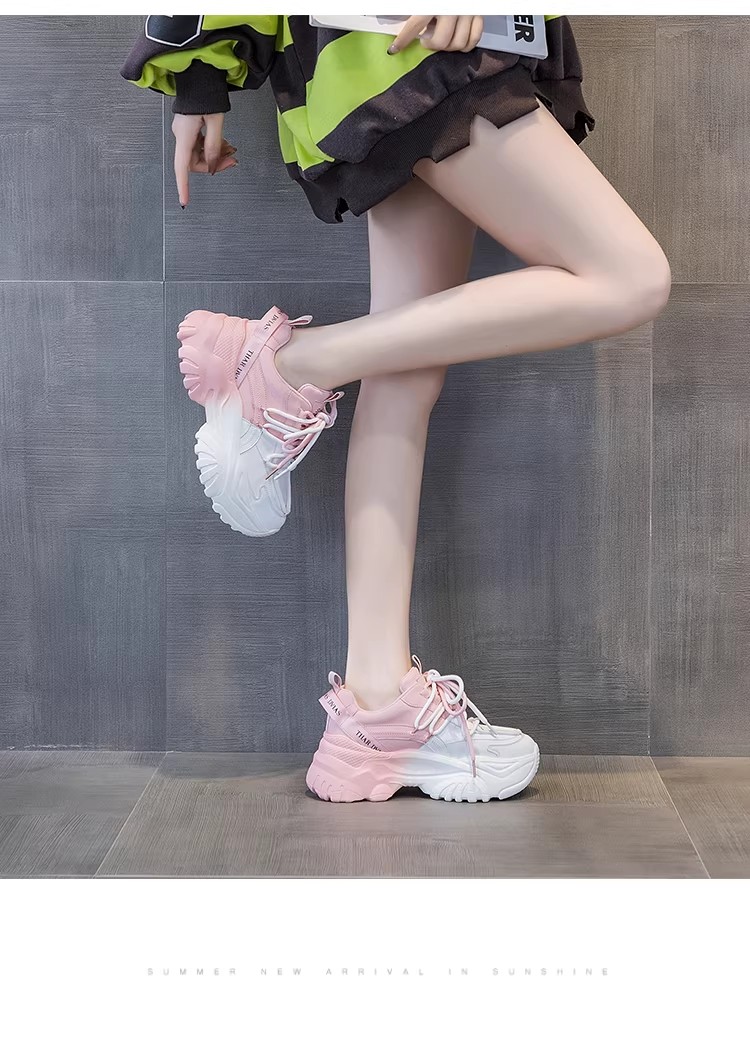
Third, check the lining. A white shoe with a dark lining hides dirt at the collar, which is where most of it collects. This white platform dad shoe with a 6cm sole is a good example of the type: the thick sole keeps the upper further from splash, and the shape photographs well from ground level. It runs about half a size large, so try your normal size first.
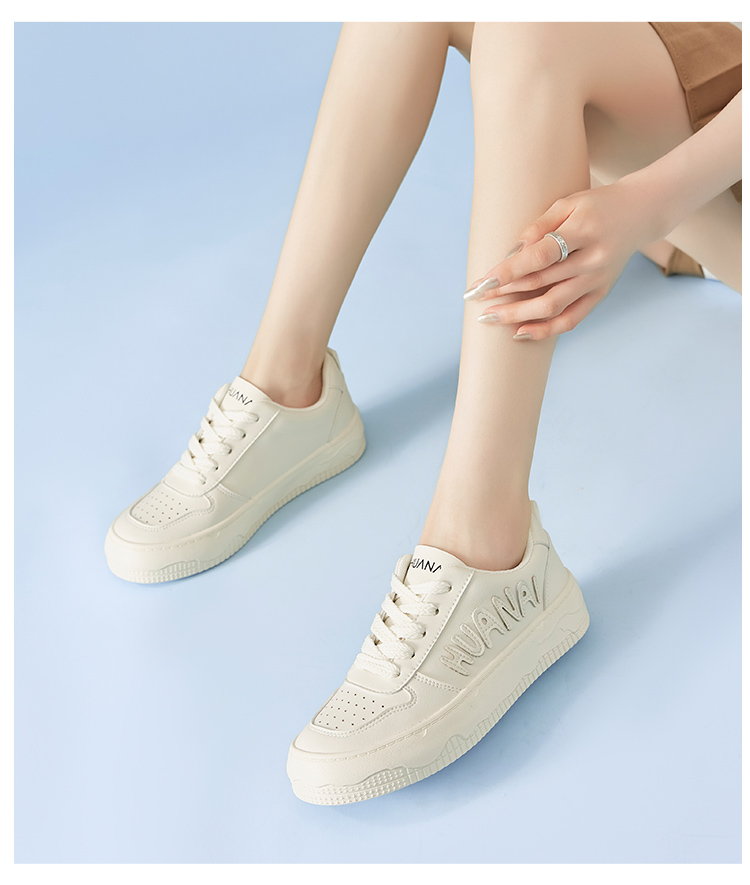
If you want something flatter, a flat-soled white board shoe works better with wide trousers and cleans up faster because there’s less mesh. It has less cushioning for long days, so it’s a city shoe rather than a walking shoe.
Either way, buy the pair that fits the walking you actually do. A white shoe bought for a two-week holiday will be worn for a year of school runs, and the sole is what decides whether that’s pleasant or not. The colour gets the attention. The midsole gets you home.
The rest of the walking shoes range is worth a look if you want to compare sole thickness side by side, and the piece on cost per wear on discounted pairs is useful before you buy two colours instead of one.
Sizing a White Pair When the Upper Is Thin
White uppers are usually thinner than the same shoe in black, because less pigment means a lighter backing and a slightly tighter weave. That 2 to 3mm difference is enough to change the fit, and it’s the reason so many white pairs go back within ten days.
The practical approach is to try white and black in the same size if the shop has both. Nine times out of ten the white one feels roomier across the toes, which sounds like good news until the heel starts slipping at speed. If you’re between sizes, take the smaller one in white and the larger one in black.
Width complicates it further. A white mesh shoe on a medium last can feel wide because the upper gives, and that’s not the same as a genuinely wide fit. If your little toe presses on the side, an upper that stretches will hide the problem for a month and then stop hiding it. The piece on where the extra width actually goes in a wide walking shoe explains the difference better than a size chart can.
Socks change the number too. A thin cotton sock plus a thin white upper is a different fit from a wool sock plus the same shoe, and the difference shows up at hour four rather than in the shop. Test with what you’ll wear in the season you’re buying for.
One last note for anyone buying online: order both sizes if the return policy allows it, try them on carpet, and decide within 48 hours. White shoes show handling marks, and a pair that’s been walked around a kitchen for a week is harder to return than one that’s been tried on for ten minutes.
What White Is Actually Good At
After all that, white still earns its place. It’s the colour that makes a summer outfit look deliberate rather than accidental, and it’s the easiest way to lighten a dark wardrobe without buying new clothes.
It also reads as clean in a way that grey and beige don’t, at least for the first month. That’s worth something if you’re photographing products, going to events, or working somewhere that notices.
The honest trade is this: white walking shoes cost you 10 minutes a week and one replacement pair per season if you wear them daily. If that’s acceptable, buy them. If it isn’t, buy the same shoe in stone or navy and get 80% of the look with none of the maintenance.
Just photograph them from ground level before you decide. The angle tells you more than the colour does.
And if you’re still unsure, wear them for one full day indoors with the tags on and the receipt in your bag. A white pair you can’t stop looking at in the hallway mirror is a good sign. A white pair you stop noticing after two hours is the better one, because that’s the version you’ll still be wearing in three months when the novelty has gone and the only thing left is the fit.
