

A white poplin dress, one pair of yellow heels, and four ways to wear them. That is the whole test. Most people buy a bright shoe and then discover it only works with one outfit, usually the one they tried it on with in the shop.
Part of that is supply. Most yellow heels for women get made in one shape and one width, because the colour is treated as a seasonal novelty rather than a core option. You buy what the shop ordered, and what the shop ordered is usually a pointed stiletto in a bright shade.
Colour is the other half of it. Yellow has no neutral to hide behind. Put it next to white and it sings. Put it next to beige and it goes quiet in a bad way. Swap a 70mm heel for a 90mm and the same outfit changes character without any other alteration. So the useful question isn’t whether yellow heels look good. It’s which shoe goes with which outfit, and what changes at the ankle when you swap one for another.
Four pairings, one dress, one day. Heels in a warm yellow sit at the centre of all four, and each one produces something different.
If you already own the white dress, the useful test is to try all four combinations in front of a mirror before you buy anything. Put the dress on, then swap the shoes and watch what happens at your ankle. You’ll see the difference in under ten minutes, and it’s the difference that decides whether your yellow heels earn a second wear or sit in the box until next summer. Your hem matters as much as your shoe here, which is why the order of testing is dress first, shoe second.
The same outfit, four different shoes
Start with a plain white poplin shirt dress that stops just below the knee. Nothing about it is interesting on its own, which makes it a fair test bed. The dress is the constant. The shoes are the variable, and the variable does most of the work.
What changes between pairings is rarely the colour of the shoe. It’s the ankle. A shoe that cuts across the ankle bone shortens the visible leg by roughly 4cm, no matter what height the heel is. A shoe with a low vamp and a deep throat opens the top of the foot and adds that length back. Two shoes of identical heel height can produce a visible 4cm difference in how tall the wearer looks, and that difference shows up in every photograph.
There’s a second variable: the tone of the yellow itself. A lemon yellow reads cool and slightly acid next to white. A mustard or ochre reads warm and blends into skin. A bright sunflower yellow is the one that photographs best and the one most likely to look wrong in person, which is the opposite of what most buyers expect.
- Lemon yellow: cool, sharp, best with white and grey
- Mustard: warm, forgiving, works with navy and olive
- Sunflower: high impact, photographs well, fussy in person
- Ochre: the closest to a neutral, easiest to wear often
Pairing one: yellow with a white dress
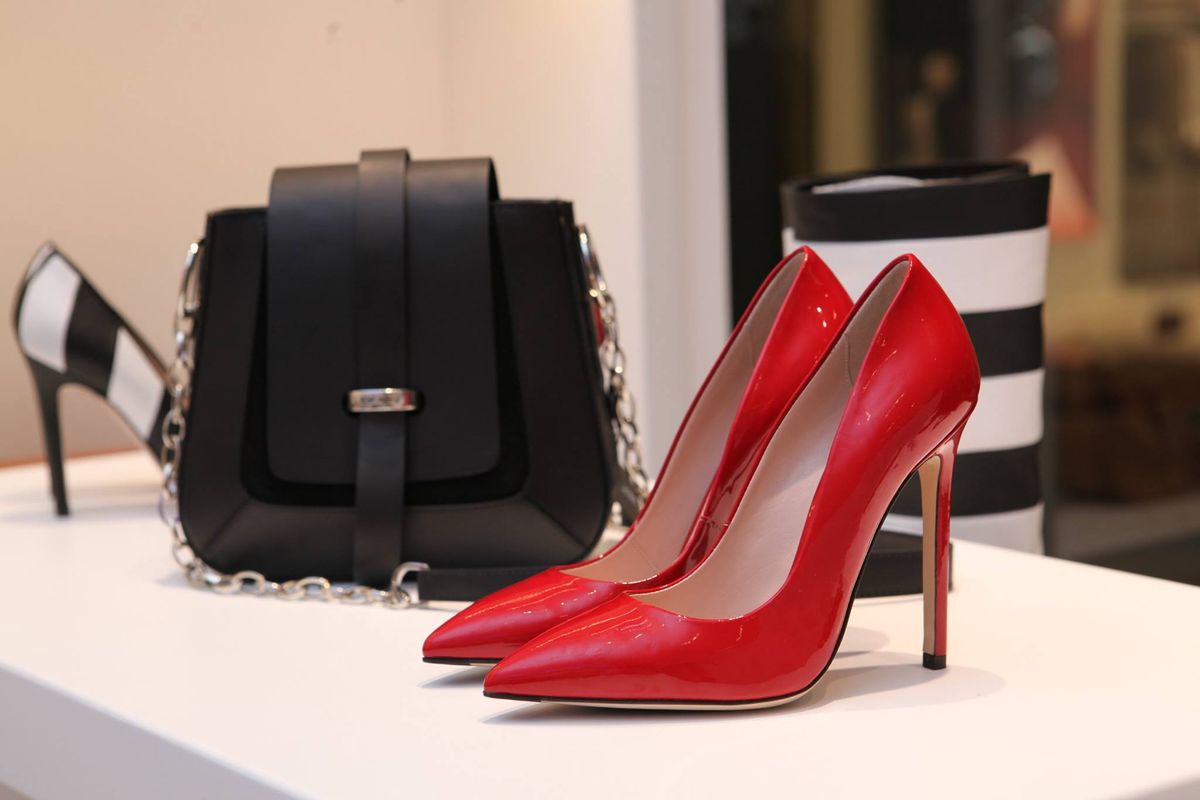
This is the pairing everyone imagines, and it works, but only if the yellow has enough depth to hold its own against a bright white. A pale lemon heel next to optic white looks washed out, as if the shoe were fading. A mustard or golden yellow next to the same dress looks deliberate.
The heel height matters here more than anywhere else. On a knee-length white dress, a 70mm to 80mm heel keeps the proportion calm. At 90mm or above, the outfit starts to read as evening wear, and the white poplin stops looking like a summer dress and starts looking like a costume. If the plan is a daytime event, keep the heel under 85mm. If it’s a wedding with a 6pm ceremony, the taller heel is fine and the dress is the thing that’s wrong.
The ankle line decides the rest. A shoe with a low-cut throat and no strap gives the longest line. A slingback with a thin strap adds a horizontal break that reads as a detail, which is good, and slightly shortens the leg, which is the trade. An ankle strap on a white dress is the one version that tends to fail, because it cuts the leg in three places at once: hem, strap, and floor.
One practical note that has nothing to do with style. White poplin marks. A yellow shoe that scuffs the back of a white dress hem leaves a mark that doesn’t wash out easily. If the dress is long enough to brush the shoe, expect to see it.
Pairing two: yellow with denim
Yellow and blue are close to complementary, which is why this pairing works with almost no effort. A straight-leg mid-blue jean and a yellow heel is one of the few combinations where a bright shoe looks relaxed rather than dressed up.
The hem is what makes or breaks it. A cropped straight jean that stops 3cm above the ankle bone gives the shoe room and lets the colour be the point. A full-length jean that breaks over the foot hides the top of the shoe and leaves only the toe visible, which turns a bright heel into a small yellow smudge. Take the jean up rather than hoping.
Denim also changes the acceptable heel height. With a cropped straight leg, 60mm to 75mm looks intentional and comfortable. A 100mm stiletto with a raw-hem jean looks like two outfits that met by accident. The block heel version of the same shoe reads calmer still, and on cobbles or a gravel path it’s the only version that’s actually walkable.
If you can’t sew, a tailor charges very little to take up a straight hem, and it’s the single alteration that makes bright yellow heels usable with the jeans you already own. Ask for a 3cm clearance above the ankle bone and take the shoes with you to the fitting. Your hem should be measured against the shoe, not against a number on a chart.
For anyone who wants the shape without the wobble, a shallow-cut heel with a wider base does the same job as a stiletto in this pairing and stays upright on uneven ground.
Pairing three: yellow with black tailoring
Black trousers, black knit, yellow shoe. This is the pairing that surprises people, because yellow against black reads brighter than yellow against white. The contrast is doing more work, so the shoe needs less saturation to have the same impact. A mustard heel with black looks rich. A neon yellow heel with black looks loud.
Proportion is the whole game here. Wide black trousers need a shoe with a visible toe and a heel that lifts the hem off the floor. A pointed toe helps, because a wide trouser hem over a round toe looks like the shoe gave up. A cropped wide trouser that lands at the ankle bone, with a yellow pump underneath, is one of the cleanest outfits available to anyone who works in an office with no dress code.
What fails: yellow with black and a third colour added. Black, yellow and red is a traffic light. Black, yellow and a strong green is a football kit. The pairing works because it’s two colours, and the moment a bag or a scarf introduces a third saturated one, the yellow stops being the point.
If your working wardrobe is mostly black, this is the pairing to build on. Buy the yellow in a matte finish, keep your bag black, and let the shoe be the only colour in the frame. You’ll get more wear out of one pair this way than out of three pairs bought for special occasions. Your colleagues will notice the shoes once, then stop noticing, which is exactly what you want from a shoe you wear twice a week.
For a slightly softer version of the same idea, a metal-toe heel in a warm tone gives the same lift with less colour commitment, and it survives a winter commute better than suede.
Pairing four: yellow with a navy midi skirt
Navy is the safest background for yellow, and the midi skirt is the safest hem length. A navy skirt that stops at mid-calf, a yellow heel, and a visible strip of ankle between them: that’s the version of this outfit that works on almost everyone.
The strip matters. Less than 8cm of visible ankle and the skirt starts to sit on the shoe. More than 15cm and the shoe looks separated from the outfit rather than part of it. The midi length is forgiving because it lets the wearer adjust by 5cm without changing anything else.
This is also where heel shape changes the read most clearly. A stiletto with a navy midi reads formal. The same yellow in a block heel reads like something worn to a gallery on a Saturday. Neither is wrong, but they aren’t interchangeable, and buying the wrong one for the wrong context is the most common mistake in this whole exercise.
One honest limitation: yellow heels with a navy skirt and pale legs in February look stark. The contrast that works in July looks severe in winter, when most people’s legs are at their palest. In cold months, this pairing wants a sheer 15-denier tight rather than bare legs, and it wants the yellow to be deeper rather than brighter.
What changes at the ankle when the heel drops 20mm
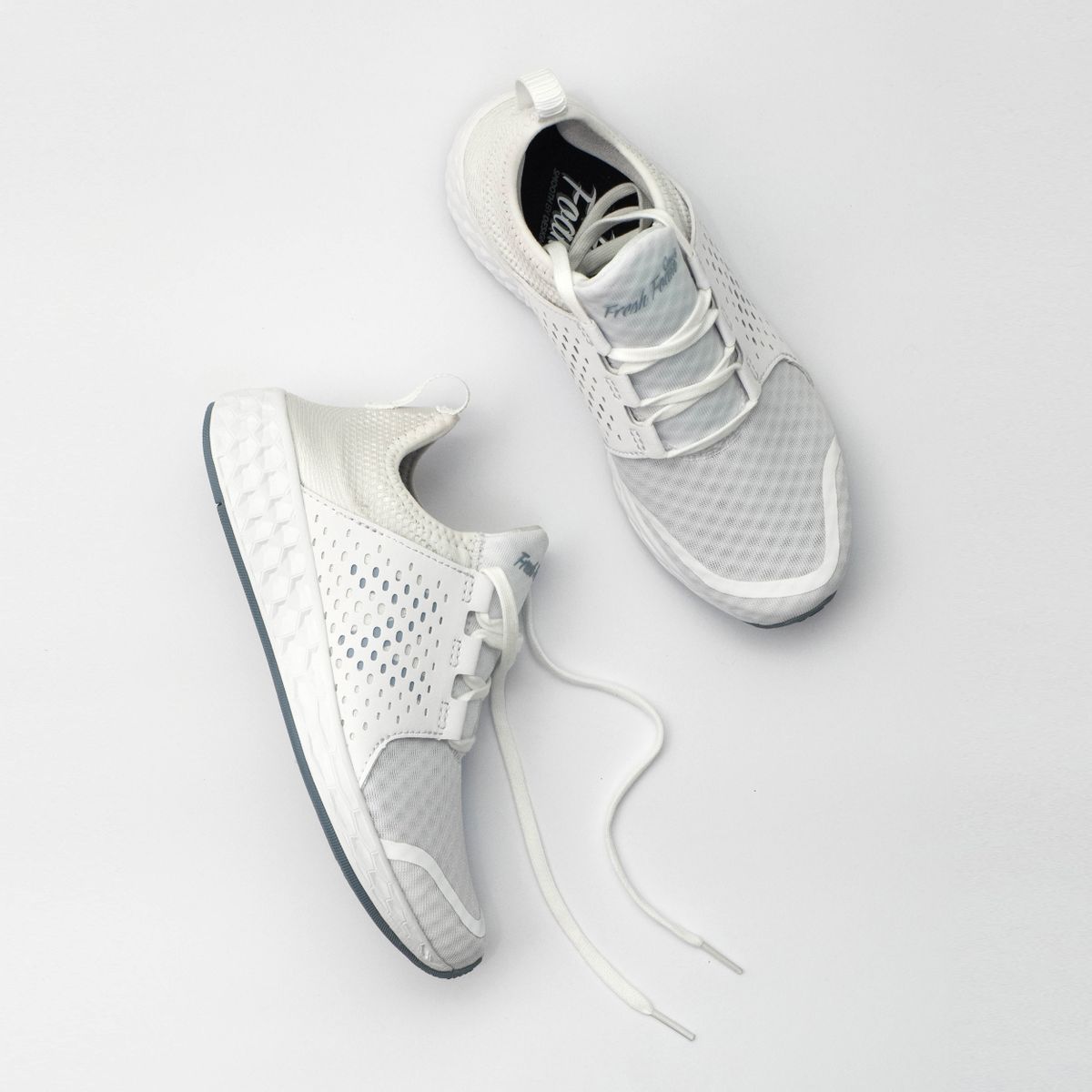
Take the same yellow shoe in 90mm and 70mm and put them on the same foot with the same dress. The colour is identical. The outfit is not.
A 90mm heel tilts the foot to roughly 30 degrees, which pushes the arch up, shortens the visible foot, and pushes the calf into a flexed line. It reads as evening. A 70mm heel sits at about 20 degrees, which keeps the foot closer to flat, lengthens the visible foot, and reads as daytime. Same shoe, two different contexts, and the 20mm is doing all of it.
There’s a comfort consequence too, and it’s bigger than the 20mm suggests. Going from 90mm to 70mm roughly halves the load on the ball of the foot, because the ankle angle changes how body weight distributes through the metatarsals. Most people who say they can’t wear heels are really saying they can’t wear 90mm heels for four hours, which is a different claim.
The ankle line changes with the heel, and this is where buyers get caught. A tall heel pulls the shoe’s throat lower on the foot, because the foot slides forward into the toe box. That’s why a 90mm pump can look like a lower-cut shoe than a 70mm of the same design. If a shoe pinches across the top of the foot at 90mm, dropping to 70mm often fixes it without changing size.
When you try both heights in a shop, do it standing, not sitting. Sit down and every heel feels fine, because your weight is on the chair. Stand for two minutes in each and you’ll feel where your toes land, whether your arch is being pushed, and whether the counter holds your heel. That two minutes tells you more than any size chart, and it’s free.
The pairing that fails: yellow with beige
Nearly every yellow heel fails against beige. The two colours sit at similar brightness, so the shoe stops separating from the outfit, and the result looks like a mistake rather than a choice. Camel, sand, oat, stone, and every shade sold as “nude” will do this to a yellow shoe.
The exception is a yellow that’s much deeper than the beige, which is why ochre works with camel and lemon doesn’t. If the plan is a beige outfit, the shoe should be at least three shades darker, or a different colour entirely. This is the one pairing worth abandoning rather than rescuing.
There’s a photographic reason too. Two colours of similar value produce a low-contrast image, and low contrast flattens everything: the shoe disappears, the hem disappears, and the whole outfit reads as a single pale block. A photograph of that outfit will look like it was taken through a dirty window. Yellow heels for women who wear a lot of beige are a genuinely difficult buy, and pretending otherwise wastes money.
Comfort notes after a full day
Six hours in yellow heels for women who spend most of the week in 40mm shoes is a bigger jump than it sounds, and the body reports it honestly. Four thousand steps plus two hours standing at a reception produces predictable results. The ball of the foot is the first thing to complain, then the outside edge of the little toe, then the heel where the counter rubs.
Three things make the difference. A padded insole under the ball, which most heels don’t have and all of them should. A heel height under 80mm for anything involving walking, because above that the load on the forefoot climbs faster than most people expect. And a shoe that’s been worn indoors twice before the event, because a stiff leather upper will find the top of the toes by hour two.
Yellow shows scuffs more than black and less than white, which puts it in a workable middle. A matte finish hides marks better than patent. Suede hides almost everything until it rains, and then it shows everything at once.
One thing worth knowing: yellow dye on a cheaper leather can transfer onto pale socks and onto the inside of a light-coloured shoe bag. It doesn’t happen often, but it happens, and it’s not something a shop will mention.
If your day runs past six hours, pack a flat in your bag. Sounds obvious, and almost nobody does it. A thin folding flat takes up less room than a water bottle and it turns a night that ends at 11pm into something you can still walk home from. Your feet will thank you, and your yellow heels will last longer because you stopped wearing them past the point where they were comfortable.
If you own one pair, make it this shade
Ochre. Not lemon, not neon, not a bright sunflower. An ochre or deep mustard heel works with navy, black, white, denim, olive and grey, which covers most wardrobes. It also photographs better in low light, because the depth holds up when the light drops.
Lemon and sunflower yellows are the ones that get photographed in shop windows and bought on impulse. They’re also the ones that come out of the box twice a year. If you’re shopping for yellow heels for women and the only pair left in your size is a lemon stiletto, waiting a season is usually the better move. There’s nothing wrong with owning a loud pair if the calendar supports it, but the pair that earns its money is the deeper shade.
One more thing about fit. Yellow heels for women are rarely offered in a wide fitting, and a bright colour makes a tight shoe more obvious, not less, because every crease shows up as a shadow. If the pair pinches in the shop, it’ll pinch at the event with an audience.
For the wider context on how a single colour trend moves through a season, the industry coverage at Vogue tracks it faster than any shop does. The technical side of why yellow behaves the way it does next to other colours, including the way it reflects light, is covered in the reference entry on yellow.
The last thing to check is the toe shape against the outfit you own most. A pointed yellow heel sharpens a soft outfit and clashes with an already sharp one. A round toe softens everything, which is why it’s the safer choice for a first pair. If the wardrobe is mostly tailoring, buy pointed. If it’s mostly cotton and linen, buy round.
Before you pay, count the outfits in your head that the pair works with. If you can name five without trying, buy them. If you can name one, and that one is a wedding in June, you’re buying a photograph rather than a shoe. There’s nothing wrong with that, as long as you know which one you’re doing.
Four pairings, one dress, one conclusion. The shoe isn’t the outfit. It’s the thing that decides which version of the outfit shows up, and a yellow heel decides loudly. Pick the shade that survives the most mornings, then let the hem and the ankle line do the rest.
