

I bought a pair of white heels for a July wedding, wore them for the ceremony, saw the photos three days later, and spent twenty minutes deciding whether I’d been sabotaged. In the mirror they were clean and bright. On camera, under the reception flash, they looked like two grey blocks with a shine on top.
That was the first time I understood that white is the hardest shoe colour to buy blind. Black forgives. Nude flatters. White tells the truth about the light in the room, the hem above it, and the camera that will be pointed at it. Women’s white heels are also the pair most likely to be worn once, which is why I now test the colour before I test the fit. If you’re shopping for heels in white, the buying decision is mostly a light decision. Here’s how I test for it now, and what I’d do differently.
Why white heels look different in every light
A white shoe has no colour of its own to fall back on. Every photon that hits it is bouncing off a surface that reflects almost everything, so the shoe takes on whatever colour the light happens to be. Under a tungsten bulb at 2700K it reads warm, almost cream. Under the cool white LED of a fitting room at 5000K it reads blue and slightly clinical. Outdoors at noon it goes bright enough to blow out a phone sensor.
I learned this the expensive way. The pair I bought looked perfect in the shop, which had warm lighting and a beige carpet. At the wedding, the ceremony was outdoors in shade, which made them look chalky against my skin, and the reception was indoors with flash, which made them look like plastic. Same shoes. Three different shoes, really.
This is why white heels get returned more than any other colour, in my experience. It’s not the fit. It’s that the buyer evaluated them in one light and then wore them in four.
- Shade outdoors: cool and slightly grey, flattering on most skin tones
- Direct sun: blows out to pure white, loses all shape in photos
- Warm indoor bulbs: turns cream, can look yellowed next to a white dress
- Phone flash: flattens the surface, shows every scuff and glue line
The fix isn’t complicated. Test the pair in at least two kinds of light before you commit, and be honest about which one you’ll actually be standing in. A wedding is mostly shade and flash. An office is mostly cool LED. A summer dinner outdoors is mostly golden hour, which is the one light where women’s white heels look genuinely good without any help.
There’s a second variable nobody mentions: the floor. A pale wood floor bounces warm light up onto the shoe, a grey carpet bounces nothing, and a dark floor makes the white look brighter than it is. The same pair in three shops on the same street will look like three different shoes, because the shops are lit and floored differently. If you try a pair on in one shop and then order it online, expect a small surprise.
The flash test: what a phone camera at night does
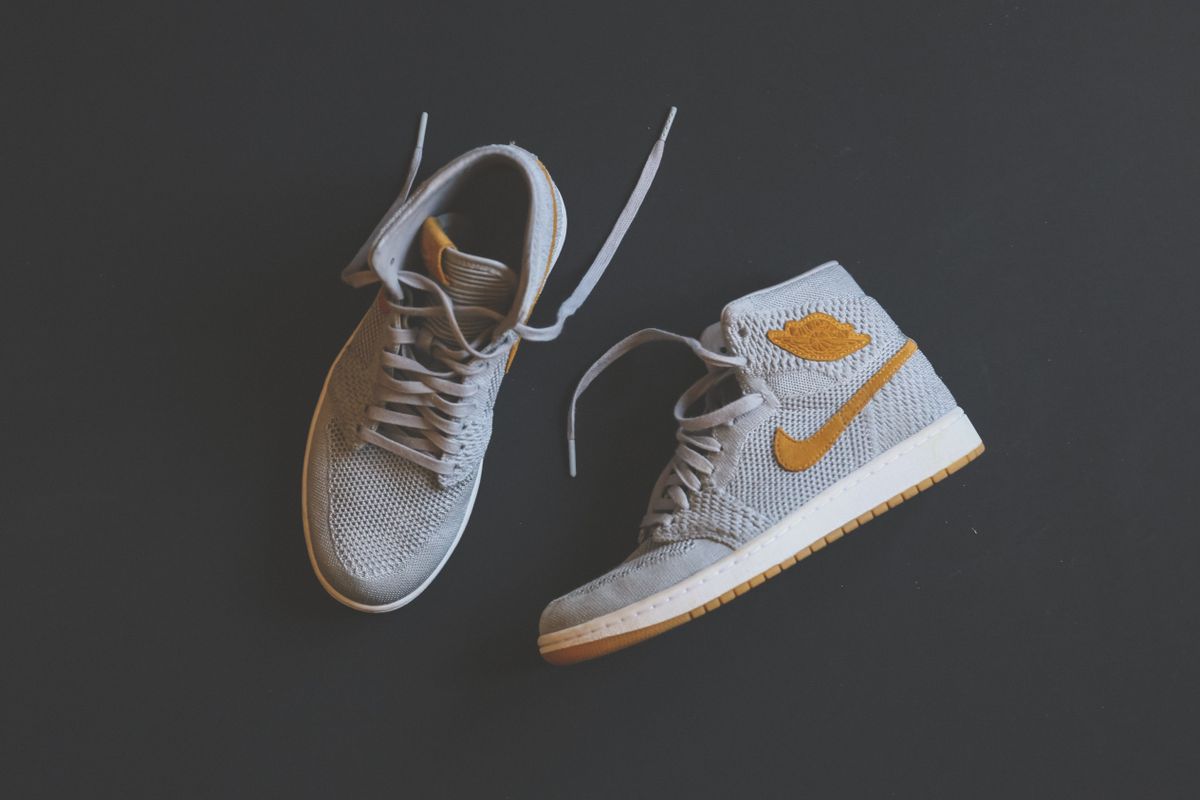
Here’s the test I run now, in the shop, before I pay. I take one shoe to the doorway, stand where the light is dimmest, and take a photo with the flash on. Then I look at it on the phone screen, not at the shoe.
Two things show up immediately. First, the material. A coated synthetic with a high shine turns into a white blob with no edge definition, because the flash reflects straight back at the lens. A matte or lightly grained leather keeps its shape, and you can see where the toe ends. Second, the tone. Cheap white leather often has a blue or pink cast that you don’t notice in daylight and can’t unsee in a flash photo.
I did this with three pairs in one afternoon last spring. The shiniest pair, a patent-looking synthetic at a mid price, photographed as a bright smear. The most expensive pair, a soft matte nappa, photographed beautifully and showed a faint crease where I’d flexed my foot. The cheapest pair, a bone-white faux leather, photographed almost identically to the expensive one, which annoyed me more than it should have.
Flash also reveals construction. Glue lines along the sole edge glow under a direct flash. So do the tiny white stitches where the lining meets the upper. If a pair looks messy in a flash photo, it’ll look messy in every guest’s photo album, because most of those photos are taken with a flash.
One more thing the flash test catches: a heel that doesn’t match the upper. Plenty of women’s white heels have a slightly warmer or cooler heel than the front, usually because the two parts came from different dye lots. In daylight it’s invisible. In a flash photo it looks like two different shoes glued together, and once you’ve seen it you can’t stop seeing it. Check the heel from the side under flash before you take the paper off.
Daylight at 3pm is the honest test
Take the shoe to a window. Not a shop window with a display behind it, a real window with sky outside. Hold it at hip height, look at it against your hand, and then look at it against the floor.
What you’re checking is whether the white has enough body to separate from your skin. A white heel that’s too close to your own skin tone in brightness disappears at the ankle, and the whole leg looks shorter. A white heel with a bit of contrast holds the line. This is the same reason nude heels are matched to skin, and the same reason a white that’s 3% too bright looks like a bandage.
Daylight also exposes the finish. In shade, a grained leather shows its texture and a smooth calf shows a soft sheen. Under a shop’s warm downlights, both look like the same smooth surface, and you find out which one you bought when you get home.
If you can only do one test, do this one. Daylight at the window tells you the true colour and the true texture at the same time. The flash test tells you what photographs will do, which matters for a wedding and matters less for a Tuesday.
The shade problem: bone, ivory, cream, optic white
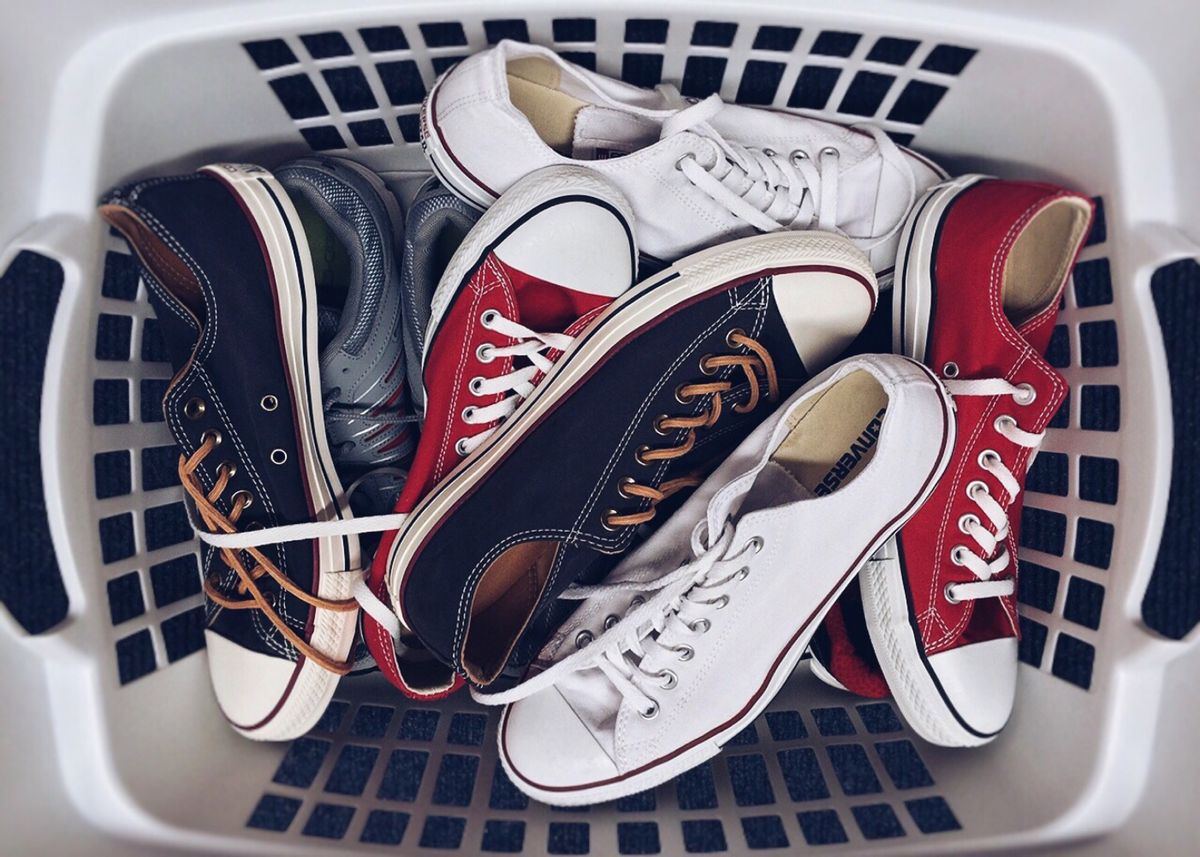
White is not one colour, and the four versions sold as white behave completely differently next to a dress.
Optic white is the brightest, with a hint of blue. It’s the white of a new tennis shoe. Next to an ivory or cream dress it looks stark and slightly cheap, because it’s the only pure white in the frame. Next to a crisp white shirt it’s invisible in the good way.
Bone has a touch of grey or beige. It’s the most forgiving shade for photography and the easiest to wear with skin tones from light olive to deep brown, because it never competes.
Ivory sits warm without going yellow. It’s the classic bridal shade and it works with most wedding palettes, though it can read slightly aged next to optic white.
Cream is the warmest and the riskiest. Next to a white dress it looks dirty in photographs, especially in shade. Next to a beige or champagne outfit it’s perfect, and it’s the shade I’d pick for a summer dinner where nobody is wearing white.
My rule now: match the shade to the nearest white in the outfit, or go deliberately warmer. Never split the difference. A bone shoe with an optic white dress looks like a mistake. A cream shoe with an ivory dress looks like a decision.
Most women’s white heels sold online sit somewhere between bone and ivory without saying which. Photographs on a white background are useless for judging this, because the studio has balanced the colour to make the product look clean, not accurate. Ask for a photo of the shoe on a hand or against a wooden floor. Skin and wood are the two references your eye can read instantly.
What photographs flat, and the two fixes that work
Some white heels photograph like a paper cutout no matter what you do. Two things cause it, and both are fixable at the buying stage.
The first is a closed, rounded toe in a matte finish with no hardware. There’s nothing for light to catch except the top surface, so the shape vanishes. A pointed toe gives you a longer line and a sharper edge. A slingback or an ankle strap adds a break that reads as structure in a photo. If you want a plain white pump, look for a slightly higher vamp and a fine stiletto, because the heel itself becomes the shape cue.
The second is a sole that matches the upper exactly. When the sole edge is white too, the shoe merges into one flat mass. A tan or natural sole edge gives the eye a line to follow at the bottom, and the shoe suddenly has a base. This is why designer white heels so often have a visible leather sole edge, and why cheap ones so often don’t.
Hardware helps, up to a point. A slim gold buckle reads as a detail in photos. A large crystal cluster reads as a bright spot that pulls attention to your foot rather than your face. I’ve made that mistake too, at a December party, and every photo from that night has a sparkle where my ankle should be.
The hem line that decides whether white heels work
White heels are unusually sensitive to what sits above them. The same pair that looks elegant under a midi skirt can look clumsy under a cropped trouser, and the variable is the gap between hem and shoe.
With a midi or maxi dress, the hem should stop 8cm to 12cm above the top of the shoe, so there’s a visible strip of ankle. Any less and the white shoe merges into the fabric. Any more and the shoe starts to look like an afterthought. A slit helps, because it breaks the block of fabric and gives the shoe somewhere to sit.
A cropped wide trouser wants the hem at the ankle bone, no higher. A white pointed toe peeking out under a wide navy trouser is one of the cleanest combinations in summer dressing, and it fails completely if the trouser is 3cm too short.
With jeans, it’s a different calculation. Raw denim and white heels can work, but only with a straight leg and a hem that’s been taken up. A wide, dragging jean over a white heel looks like you got dressed in a hurry, which is fine on a Saturday and not fine at a lunch.
If you’re unsure, put the outfit on with the shoes and look in a full-length mirror from 3m away. Whatever you see at that distance is roughly what a photo will show. Up close, everything looks better than it is.
One hem detail worth knowing: a white shoe under a white hem needs a gap, not a match. If the dress and the shoe are the same shade and they touch, the leg disappears and you look shorter than you are. 10cm of visible ankle fixes it. That’s the difference between a bride who looks tall in her photos and one who doesn’t, and it has nothing to do with the heel height.
Where I got it wrong: the pair I sent back
I returned a pair of white heels in March and I still think about them, because they were the most comfortable white heels I’ve tried and I sent them back for a reason that had nothing to do with comfort.
They were a 75mm slingback in a soft white leather, and they fit perfectly. The problem was the shade. In the shop they looked like a clean white. At home, under the bedroom light, they turned a pale butter yellow, and next to the dress I’d bought them for they looked like they’d been stored in a box since 1998.
I could have kept them and worn them with something else. That’s the honest version: they weren’t bad shoes, they were the wrong white for the one outfit I needed them for. I sent them back, and I’ve since learned to bring a photo of the dress on my phone and hold the shoe next to the screen. It’s not a perfect colour reference, but it catches the obvious mismatches.
The return was easy, which is worth saying. The shop took them back without a fight because I hadn’t worn them outside. Wear white heels outdoors once and you own them, scuffs and all, so do the light testing indoors and keep the soles clean until you’re sure.
The other thing I got wrong was timing. I bought them nine days before the event, which is not enough time to test a white shoe in three kinds of light and still return it. Buy white heels a month out, or accept that you’re keeping them.
A five-minute camera check before you commit
If you take one thing from all this, take the routine. It costs five minutes and it saves a return.
- Photograph the shoe on your foot with the flash on, in the dimmest part of the shop
- Photograph it again by a window, at hip height, next to your hand
- Look at both photos on the phone, not at the shoe
- Hold it next to a photo of the outfit you’re buying it for
- Check the sole edge colour against the upper
None of this takes long, and it’s the only reliable way to judge women’s white heels before money changes hands.
Then walk 20 steps on the hardest floor in the shop. White heels hide nothing, including a heel that slips, and a slingback that feels fine standing still will saw at your heel by the second hour. If it slips in the shop, it’ll slip at the event, and there’s no plaster for that.
For more on how lighting deceives buyers, the same logic shows up in my notes on silver sparkly heels and store lighting, which is the metallic version of this problem. And if the white pair turns out to be more than you want to spend, a woven white leather heel tends to photograph better than a plain one because the texture gives the camera something to hold onto.
Photography behaves like a physical process with a set of known rules, which the reference entry on flash photography explains better than any styling guide. And colour matching against a reference is the same problem the Pantone colour system was built to solve, which is why holding a swatch against fabric beats trusting your eye.
One last thing, and it’s the bit nobody tells you. White heels look best in the first two hours of an event and worst in the last, because that’s when the scuffs show and the shine goes. If the photos that matter are at the end of the night, bring a soft cloth, or pick a champagne shade with a bit of pattern that hides what white can’t. Fair enough if that feels like giving up on the white pair. It isn’t. It’s just knowing where the failure happens.
