

The invitation says garden party, 3 pm, and you’ve got a pair of pink and black sneakers sitting by the door that you’d love an excuse to wear. Whether that’s a good idea depends on three things nobody puts on the card: the ground, the photograph and the mood of the couple.
In this trade you see the same scene every summer. Guests arrive at a marquee wedding in footwear chosen for the outfit rather than the field, and by 4 pm they’re standing on the edge of the lawn in bare feet with their shoes in one hand. Pink and black sneakers are one of the few options that sidestep that entirely, which is why the shop sells more of them in June than in any other month.
What follows is how this actually plays out, from the perspective of people who sell shoes to wedding guests for a living. You’ll get the dress-code readings that work, the photographs that don’t, and the specific mistakes that turn up in the same week every year.
What guests actually wear, versus what the invitation says
Formal invitations get interpreted loosely, and the interpretation is almost always driven by terrain. A registry office and a hotel ballroom produce heels. A field, a barn and a garden produce something else, and that something has shifted hard towards sneakers over the last four summers.
The pattern in the shop is consistent. Guests under about 35 buy sneakers for outdoor weddings without much agonising. Guests over 45 tend to buy a block heel and then come back the following week asking for something they can walk in. The second purchase is usually the one that gets worn.
There’s a reason beyond comfort. Wedding days run long. A 3 pm ceremony with a 1 am finish means eleven hours in the same pair of shoes, and the arithmetic on that is unforgiving. Anyone who’s done a full day in 90mm heels knows the last three hours are a calculation about which part of the foot hurts least.
Sneakers remove the calculation. That’s the whole case for them, and it’s a stronger case than any aesthetic argument.
What guests consistently underestimate is how much of the day happens on foot. Standing for the ceremony, walking to the marquee, crossing to the bar, a lap of the garden for photographs, then dancing. It adds up to something close to 6,000 steps, and none of it is on a flat indoor surface.
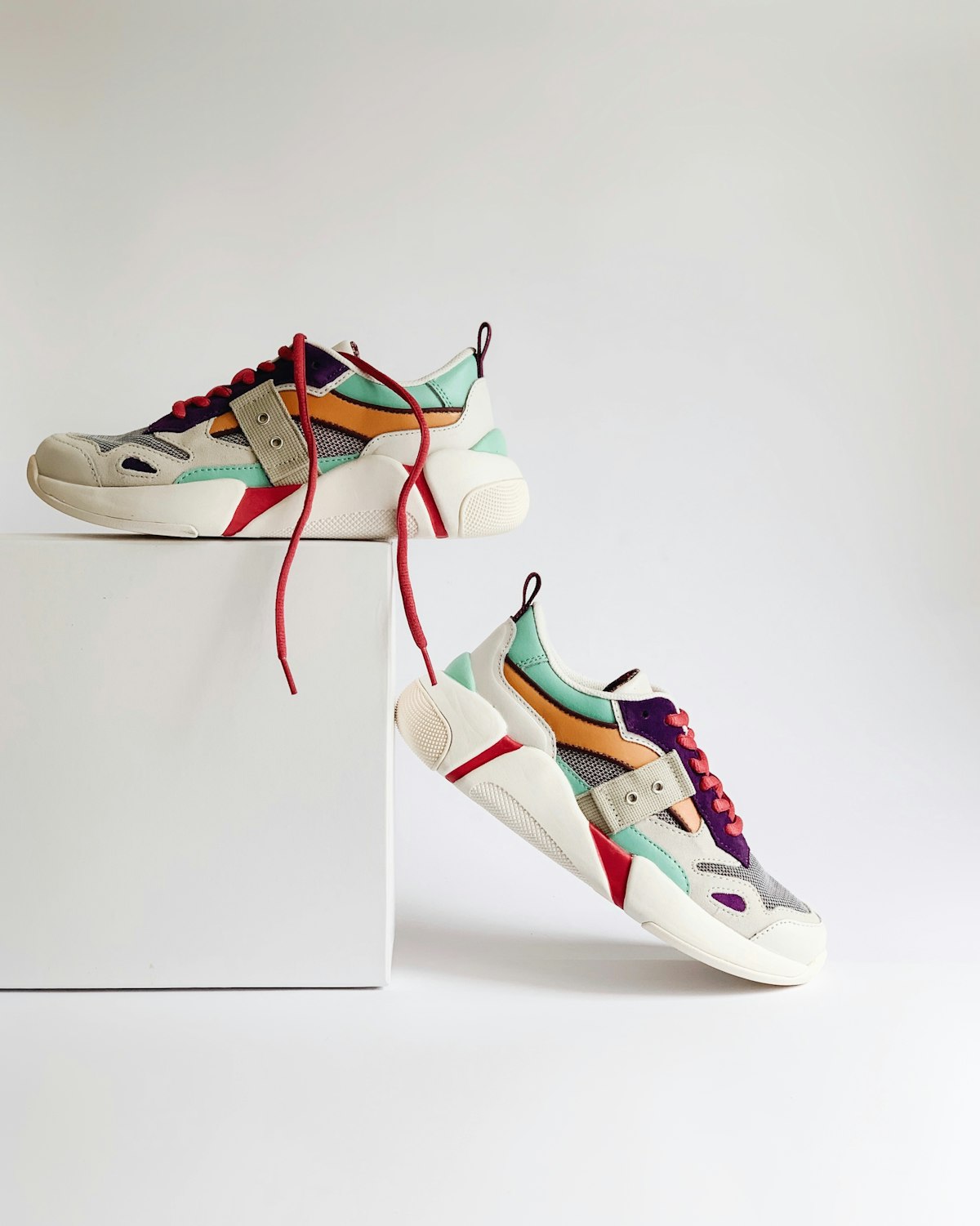
One condition, though. The sneaker has to look like it was chosen. A pair that reads as “I forgot my real shoes” looks worse than an uncomfortable heel, because it signals you didn’t take the invitation seriously. Pink and black does a lot of work here, because the combination reads as deliberate in a way that plain white doesn’t.
There’s a detail in the sales pattern worth knowing. Guests who buy a pair specifically for the wedding spend around 40% more than guests buying the same style for everyday wear, and they return them far less often. That’s not because expensive shoes are better. It’s because they try them on three or four times before the day, which makes the fit decision deliberate rather than rushed.
The shape of the day matters too. A garden ceremony starting at 3 pm puts the reception into the evening, which means dew on the grass by 9 pm. Dew ruins suede and soaks through canvas. A coated leather or a dense textile upper handles it, and a rubber sole keeps you upright when everyone else is sliding.
Reading “garden party” without overthinking it
Three words on an invitation do most of the work, and each one changes the answer.
- Garden party: grass, uneven ground, possibly gravel. Sneakers are the sensible choice, and a dark sole hides the mud line.
- Cocktail: usually means a venue with a terrace and a lawn. Sneakers pass if the rest of the outfit is sharp.
- Black tie: not a sneaker event, whatever anyone tells you. This is the one code where the risk isn’t worth it.
For the standard dress-code language and how much latitude each term allows, the reference on dress codes and their social conventions is more useful than most fashion advice, because it treats them as conventions rather than rules with edges.
Venue language is worth translating before you shop. “Reception in the walled garden” usually means a lawn with a gravel path to the marquee, which is the worst possible surface for a thin sole. “Terrace and lawn” is the friendlier version. “Barn” almost always means an unpaved approach, and that’s where pink and black sneakers earn their keep while everyone in block heels walks on their toes.
The variable people miss is the couple. A wedding where the couple met at a festival and printed the invitation on recycled card is a different event from one with a string quartet and a seating plan. In the first case, pink and black sneakers will get compliments. In the second, they’ll get a look from an aunt.
If you’re unsure, the honest test is the invitation’s typography. Serif fonts and a monogram mean go conservative. Sans serif and a hand-drawn illustration mean you have room.
How pink and black reads in a photograph
This is where the choice either works or doesn’t, and it has nothing to do with taste.
Wedding photography is mostly group shots on grass, taken in flat afternoon light, with a lot of pale colours around. Against that background, a pink and black sneaker becomes a visual anchor. Your feet will be the darkest thing in the lower third of every frame.
Whether that’s good depends on the dress. With a floral midi, the black sole ties to the print and the pink repeats a colour already in the fabric, so the shoe reads as part of the outfit. With a plain cream dress, the same shoe reads as a separate object and draws the eye downward, which is rarely what you want in a photograph you’ll look at for twenty years.
The practical fix is a longer hem. A midi or maxi that breaks just above the ankle covers most of the shoe in standing shots, so the visible part is a sliver of pink at the toe. That reads as a deliberate flash of colour rather than a pair of trainers.
One photographic detail that surprises people. Pink reads lighter on camera than it does in the mirror, especially in the flat light of a 4 pm ceremony. A raspberry that looks bold at home looks almost pastel in the group shots. If you want the colour to register in the photographs, go one shade deeper than feels right in the shop.
Black does the opposite. It reads as a solid dark shape and holds its edge in every frame, which is why the black sole is the part that anchors the outfit. Worth remembering when you’re deciding between a black sole and a white one: the white one disappears into the grass and the black one doesn’t.
For the record on how wedding dress conventions have loosened over the past decade, the general background on wedding customs and dress is a reasonable starting point, if only to see how recently these rules became flexible.
The mistakes that repeat every season
Four failures show up with such regularity that the staff can predict them by looking at the weather forecast.
Brand-new shoes. The single biggest one. People buy pink and black sneakers for women the week of the wedding and wear them for the first time on the day. Four hours in, the collar has rubbed a blister and the day is ruined. Buy them three weeks early and wear them for two full days first.
White soles on wet grass. A white midsole picks up mud in about nine seconds and there’s no fixing it on site. If rain is forecast, choose a dark sole or accept that your shoes will be brown by the speeches.
Ankle socks that show. Visible white ankle socks with a dress reads as gym, not garden. Either go bare with a low-cut liner sock, or wear a sheer ankle sock that matches your skin tone. The in-between option, a trainer sock peeking above the collar, is the one that ruins the outfit.
Wearing them to the ceremony and changing later. This sounds sensible and almost never happens. Nobody carries a second pair of shoes to a wedding and then finds a quiet moment to swap. Either commit to the sneakers for the whole day or wear the heels for the whole day.
The advice that gets repeated most often at the counter is simple: try the pink and black sneakers for women you like with the dress you’ve already bought, not the dress you wish you owned. Most outfit disasters at weddings come from buying for an imagined version of the day.
Two more that come up often enough to mention. Guests wear the sneakers with a formal coat and then take the coat off at 6 pm, at which point the outfit loses the one formal element holding it together. If the plan depends on a jacket, keep it on until the dancing starts.
And guests forget the walk from the car park. A 300m walk across a field in the wrong shoes is where the day starts going wrong, before the ceremony has even begun. That’s the ten minutes nobody budgets for, and it’s the whole argument for a pair you can actually walk in.
There’s a fifth, subtler mistake: choosing a pink that fights the flowers. If the bouquet and the table settings are coral, a bubblegum pink shoe will look wrong in every photograph. A deeper raspberry tone sits closer to coral without matching it, and mismatching on purpose reads better than matching badly.
What to buy, and what staff would actually say
If the wedding is outdoors and the dress is a midi, the safest shape is a low-profile sneaker with a dark sole and a single pop of colour. That’s the version that photographs well and walks across a field without incident.
These thick-soled casual sneakers with hidden height are the shape most guests end up choosing, because the platform lifts the hemline slightly and keeps the shoe out of the grass. Worth knowing that a 30mm platform is comfortable on a lawn and a 50mm one isn’t, since the extra height makes an uneven surface feel worse rather than better.
There’s a straightforward way to test whether a pair of pink and black sneakers for women will work with your dress. Lay the dress flat on a bed, put one shoe at the hem, and stand back three metres. If the shoe is the first thing you notice, it’s too loud for the outfit. If it’s the third or fourth thing, it’s right.
The other practical note is colour placement. Pink on the upper with black on the sole is the version that works. Black upper with pink accents reads younger and more casual, and it’s harder to carry with a formal dress. If you’re only buying one pair and the wedding is the main event, put the colour up top.
For anything with a heel or a wedge in the mix, the same outfit logic applies, and this lighter leisure sneaker with a flatter sole is closer to a ballet flat in profile, which some guests prefer with a longer dress.
If the couple’s colour scheme is already busy, a pair of pink and black sneakers for women gives you one loud element to place and no more. That’s the practical argument for the colourway, as opposed to the aesthetic one: it lets you stop deciding.
Before you pay, check the sneaker category organised by sole and silhouette rather than by brand. Sole depth is the thing that decides whether a shoe survives a lawn, and it’s the one figure most product pages bury.
One last point, and it’s the one staff would make if asked directly. Nobody at the wedding is looking at your feet. They’re looking at the couple, the food and each other. The only person who will think about your shoes all day is you, and that’s exactly why the choice should be the pair you can stand in for eleven hours. Pink and black sneakers for women pass that test far more often than the beautiful pair in the box under the bed.
If the ground is genuinely rough, check the notes on where walking shoes give out over 10,000 steps before you commit, and if you want to compare shapes, the wider shoe range is the place to start. Then buy three weeks early, wear them twice, and spend the wedding thinking about something other than your feet.
