

It’s 8:41 on a Monday, you’re holding a coffee and a laptop bag, and you have about forty seconds to decide what goes on your feet. Not a philosophical question. A practical one, because whatever you pick has to survive a commute, a desk, a lunch queue and the walk home in the dark.
This is the exact problem that womens navy blue slip on sneakers solve better than most shoes in the same price bracket. Not because navy is fashionable this year, but because navy hides scuffs at 8:41 in a way that white doesn’t, and because there’s nothing to tie when you’re already late.
I’ve watched this play out in offices for years. The people who look consistently put together aren’t wearing more expensive shoes. They’re wearing one dark, plain pair that survives weather and repetition, and they never have to think about it before the second coffee.
What follows is a working plan for five days, one pair, and a building full of people who will notice if you look like you slept in your clothes. You’ll get the outfit logic, the fit checks that actually matter, and the two days of the week where this shoe stops being the right answer.
Why navy works in an office where black looks like a uniform
Black shoes in a normal office read as either formal or service-industry, and there’s not much space between those two. Navy sits in the gap. It’s dark enough to pass with wool trousers and a blazer, soft enough that it doesn’t look like you’re heading to a funeral, and it photographs as near-black in low light, which matters more than anyone admits.
There’s also a practical side. Navy scuffs go grey, and grey on navy reads as patina. Black scuffs go white, and white on black reads as damage. If you walk 4,000 steps a day on pavement, that difference shows up within a fortnight.
Consider what the shoe has to work with over a week. Wool trousers on Monday, denim on Tuesday if your office allows it, a skirt on Thursday, and something closer to athleisure on Friday. Black sneakers sit awkwardly next to the denim and the skirt days. Navy sits comfortably with all four, because it’s the only dark neutral that reads casual without reading sporty.
The one rule you should hold onto: navy sneakers need to be a real navy, meaning a deep, slightly desaturated blue with no purple in it. Purplish navy looks cheap under office lighting, and you’ll spot it in the lift mirror at 9 am with regret. Hold the shoe next to a navy wool coat in daylight before you buy. If the shoe looks brighter, walk away.
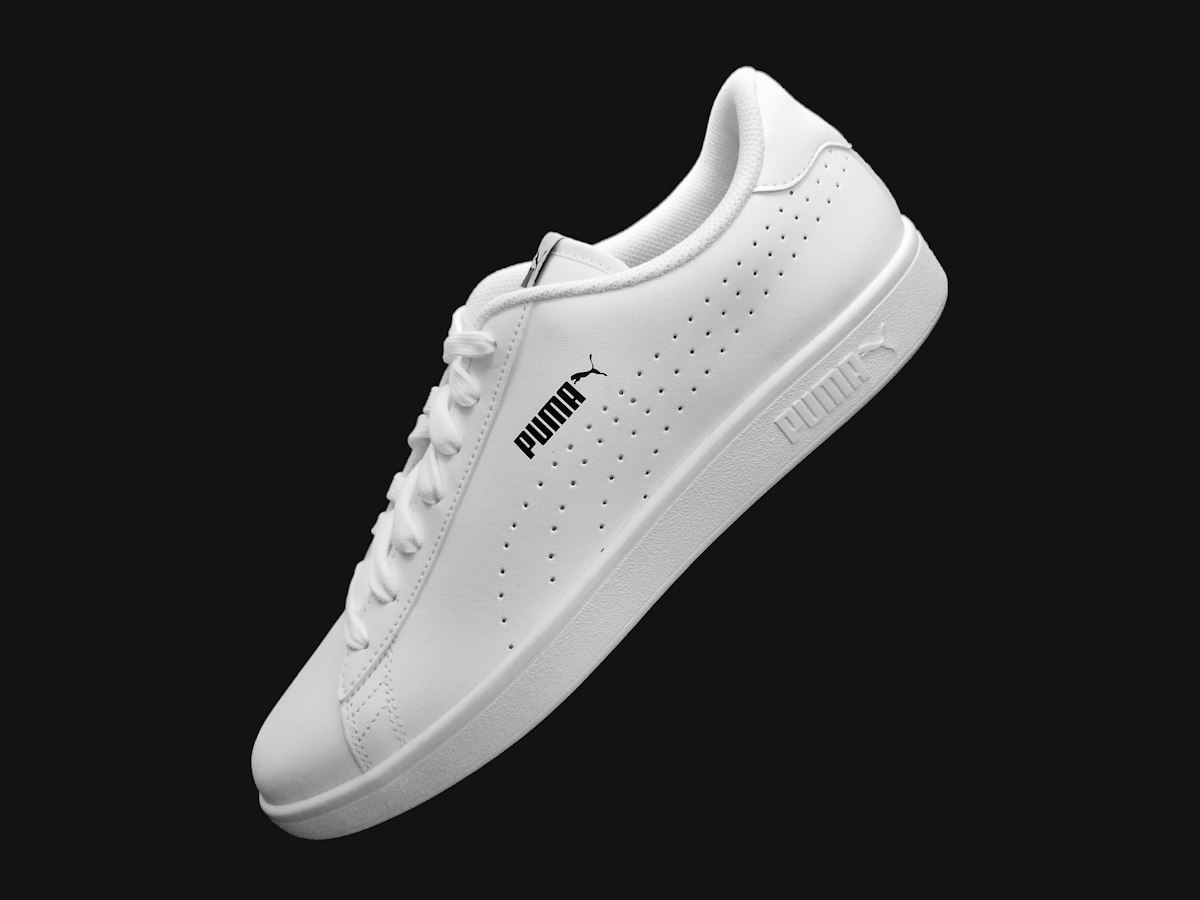
For the colour naming rabbit hole, the reference entry on navy blue is oddly useful. It explains that what most brands call navy spans a wide range, which is why two navy shoes can clash with each other and with your coat.
Monday: the outfit that removes the decision
Mondays need a uniform, not a choice. Here’s a combination that works with slip-ons and needs no thought at all:
- Straight-leg wool trousers, hem sitting just above the shoe collar.
- A knit in cream, grey or navy, tucked or half-tucked.
- One structured bag, no tote slouch.
- The navy slip-ons, plain socks or none.
The hem is the detail that decides whether this looks deliberate. If your trousers break over the shoe, you get a soft, slightly rumpled line that works with a sneaker. If they stop 3cm short and show ankle, you get something sharper and more modern. What doesn’t work is a hem that bunches on the tongue, because that’s what makes sneakers look like a mistake rather than a choice.
Try it once at home with the trousers you actually own. Stand in front of a mirror, walk four steps, and look at where the fabric lands. Five minutes here saves you a week of feeling slightly wrong.
Two small adjustments worth testing before Monday morning. If the trousers are wide, a slightly cropped hem keeps the whole thing from looking heavy. If they’re slim, leave the hem long and let it break once, softly, just above the collar of the shoe. Both work. What fails is a half-inch break that breaks in the wrong place and flips up every third step.
The other decision is socks. Bare ankle reads more relaxed, and it works from April to September. From October, a thin crew sock in the same colour family as the trouser keeps the line clean and stops you noticing the cold on the platform. Navy shoes make that easier, because a mid-grey or charcoal sock disappears against them without creating a second colour block.
The laceless advantage, measured in seconds
Slip-ons get dismissed as a comfort compromise, and half the time that’s fair. But there’s a straightforward argument for them that has nothing to do with comfort: time.
Lacing a pair of high-top sneakers takes about eleven seconds if you’re practised. Doing it twice a day, five days a week, for a year, is roughly sixteen minutes. That’s not the point. The point is the moment at 8:41 when your hands are full and you have to put a bag down on a wet pavement to tie a lace. Slip-ons remove that moment entirely.
What you give up is lockdown. A slip-on can’t be tightened across the instep, so it either fits your foot shape or it doesn’t. That’s why the next section matters more than any styling advice.
There’s a way to get most of the convenience back without losing fit. Buy a pair with a slightly deeper collar and a reinforced heel counter, then treat them as a two-finger entry: one finger in the heel, one hand on the tongue, and no standing on the back of the shoe. People who kick their slip-ons off at the door destroy the counter within a season, and then wonder why the shoe flaps. That’s not a design flaw. That’s the counter folding over 200 times.
If you want a middle option, look for a pair with an elastic gusset rather than a plain collar opening. The gusset gives about 8mm of stretch, which is often the difference between a shoe that stays on and one that flaps. A pair like these soft-soled mesh sneakers with a stretchy collar opening is the useful reference point for what to look for.
Where slip-ons go wrong on the foot
Three failure points, in order of how often they happen.
First, the heel. With no laces, the collar has to do all the holding, so a shallow collar plus a smooth lining equals a shoe that lifts with every step. Test it by walking ten steps on a hard floor in the shop. If you can hear a soft clap each time your heel lands, it will only get worse as the lining polishes.
Second, the instep. Slip-ons are built on a lower last because they have to be entered from the top. If you have a high instep, the upper will press down across the top of your foot and your toes will go numb around the 40-minute mark. Press the upper with your thumb. If there’s less than 5mm of give before it touches your foot, size up or pick a different shape.
Third, the length. People size down in slip-ons because the opening feels loose, and then their toes hit the front by week two. Don’t. Measure your foot on paper at the end of the day, add 8mm, and match that to the insole length rather than the size label.
One more thing worth knowing: wide feet and slip-ons are a difficult combination, and no amount of breaking in fixes it. If the upper bulges over the sole edge when you stand, the shoe is too narrow.
This is also where most people give up on the whole category too early. One bad pair of womens navy blue slip on sneakers, bought in the wrong last shape, convinces them that laceless shoes don’t work for their feet. In reality they tried one shape out of six. Spend an afternoon trying three pairs in different brands and you’ll find that the collar depth varies by 6mm or more between them, which is the difference between a shoe you forget and a shoe you resent.
If you only do one test, do this one: put the shoe on, stand up, and lift your heel 3cm off the ground while keeping the toe down. If the shoe stays on your foot without you curling your toes, the collar and counter are doing their job. If it drops off, it will always drop off.
What reads professional and what reads gym
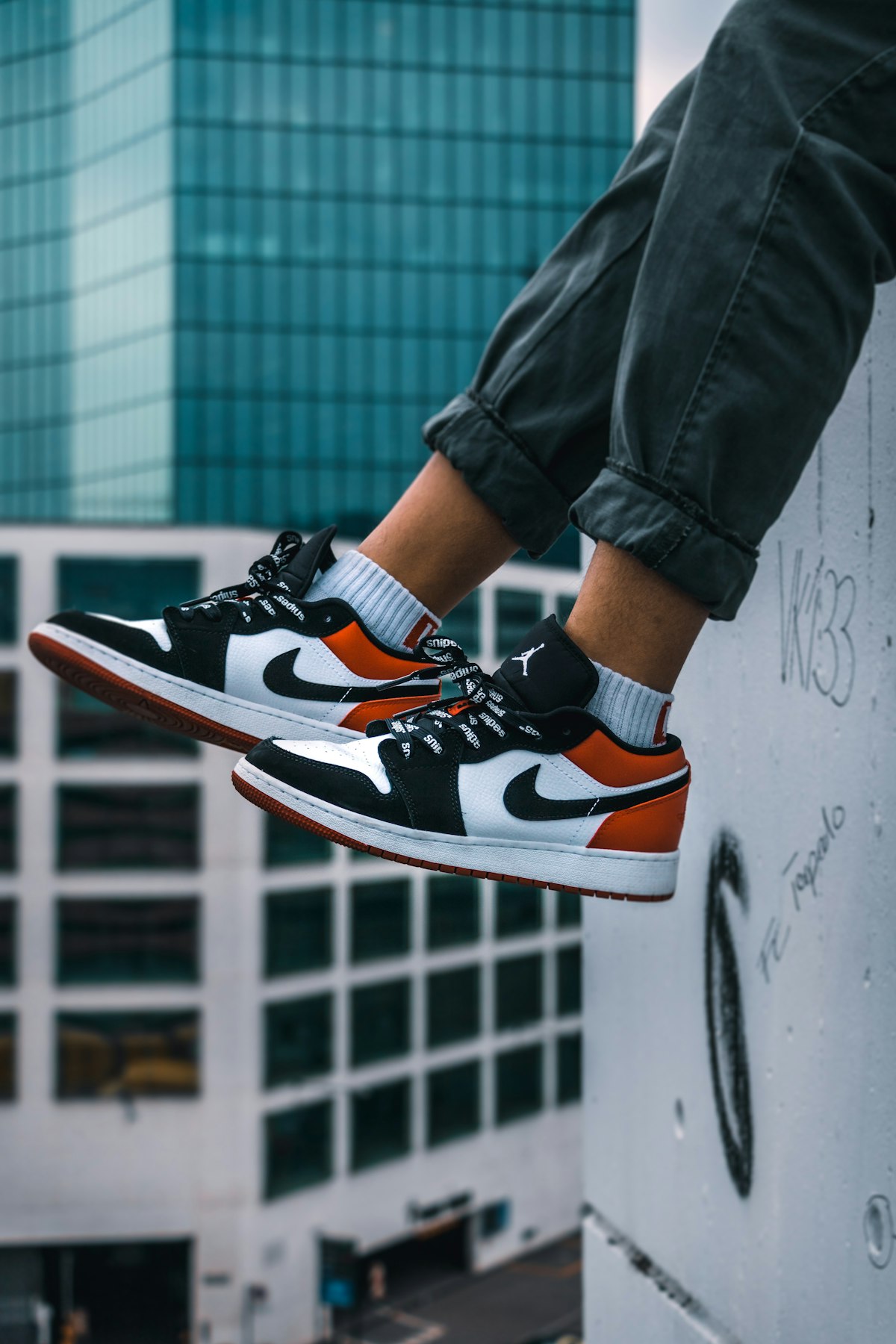
The line between office-appropriate and gym-appropriate is narrower than the marketing suggests, and it comes down to four visible signals.
- Sole thickness. Anything over 30mm at the heel starts to look athletic.
- Logo size. A small wordmark on the heel is fine. A 4cm side logo is not.
- Upper material. Smooth leather or a fine knit reads smarter than chunky mesh with visible overlays.
- Colour count. One colour plus a white sole is the safe formula. Three colours is a weekend shoe.
Navy with a white sole sits right on the boundary and works in most offices. Navy with a navy sole is safer still, because the shoe reads as a single dark shape from a distance, which is what makes it look intentional with tailoring.
If you want to understand why some soles look smart and others look like running kit, the comparison of vulcanised and cupsole sneaker construction is worth ten minutes. A cupsole gives you the flat, dense profile that reads as a shoe rather than a trainer.
What you should avoid: performance details. Reflective strips, pull tabs, air vents in the midsole, anything with a moulded heel cage. They’re useful on a run and they look wrong under a desk.
There’s also a length question that decides professional versus casual more than people expect. A shoe that ends right at the ankle bone looks sharper than one that comes up higher, because it creates a visible gap between trouser hem and the shoe collar.
Navy slip-ons with a low collar work with cropped trousers for exactly that reason. Higher collars push you towards a fuller trouser and a more relaxed silhouette, which is a different look and not always the one you want on a Tuesday. Worth checking both before you decide which womens navy blue slip on sneakers belong in your week.
Wednesday: the meeting-day upgrade
Wednesday is usually the day with the meeting that matters, and this is where a navy slip-on either earns its place or gets swapped for something else.
The upgrade isn’t a different shoe. It’s a different sock and a different hem. Swap to a thin navy or charcoal sock so there’s no visible skin at the ankle, and pick trousers with a clean front crease. That’s it. The shoe that looked casual on Monday now looks like a decision.
What you shouldn’t do is try to dress the shoe up with a suit. Navy knit sneakers under a full worsted suit look like you forgot your shoes, and no stylist has ever fixed that with confidence. If the meeting is with a client who wears suits, wear a low block heel instead and save the sneakers for Thursday.
There’s a second Wednesday issue nobody mentions: sitting. If you’re in a two-hour meeting, your feet swell by roughly 4% by the end, and a slip-on with no laces has nowhere to expand. That’s when the instep pressure shows up. Take the shoes off under the table for ten minutes if you can, or pick a pair with a softer knit upper for meeting-heavy days. The spring and summer leisure sneakers with a softer knit upper handle that swelling better than leather does.
If the meeting is in the morning and the rest of the day is normal, there’s a simpler answer. Wear the navy pair, bring a spare pair of thin socks, and change them at lunch. Sounds fussy. It’s the difference between finishing a long day comfortable and finishing it with hot feet, and it costs nothing.
Navy goes chalky, and how to stop it
Here’s the thing about navy sneakers that nobody tells you before you buy: they go chalky. Not dirty exactly. More like faded at the flex points, with a white bloom along the creases where the dye has been pushed out by the leather flexing.
It happens fastest in winter, because road salt and wet pavements pull dye out of the surface. Two habits keep it under control:
- Wipe with a damp cloth and a drop of mild soap after any wet walk, before the salt dries.
- Condition the leather every six weeks with a neutral cream, not a coloured polish.
Coloured polish is a trap. It looks good for a day and then transfers onto your trousers in the rain. Neutral cream restores the surface without changing the colour.
If the chalky look has already set in, a suede brush on smooth leather won’t help, and neither will vinegar. What works is a very small amount of leather cream worked into the crease with a fingertip, left for ten minutes, then buffed. It won’t be perfect. It’ll be 80% better, which is enough.
What you shouldn’t do is put them in the washing machine, which is a thing people genuinely try with knit uppers. A cold wash won’t destroy a canvas shoe, but it will soften the midsole glue and flatten the collar, and womens navy blue slip on sneakers never come out of a drum looking like themselves. Ten minutes with a cloth beats forty minutes with a machine every time.
What to buy second, and what to skip
If the navy pair works, the sensible second purchase is a dark grey or charcoal pair in the same shape, worn on the days you’d otherwise reach for black. The reason is simple: two dark neutrals cover almost every outfit you own, and rotating them doubles the lifespan of each.
What to skip is a white slip-on for office use. It looks great in photographs and looks exhausted by Thursday. Also skip anything with a memory foam insole if you stand for more than four hours a day, because foam compresses and stops recovering after about six weeks.
If you’re building the rest of the week around one pair, pair it with something with more cushioning for the days you walk further. These breathable flat-bottomed casual shoes with a thicker sole are the better choice for a 9,000-step day, and the shape is similar enough that nobody will notice you swapped.
One last pointer on the wider category. If you’re unsure whether your foot shape suits a laceless shoe at all, the 10,000-step walking test on tennis shoes covers how uppers fail over distance, and the same logic applies here. And if you’re still deciding between colours, the full sneaker range is organised well enough to compare shapes in one sitting.
Five days, one pair, no laces at 8:41. That’s the whole argument. If your week involves a suit meeting and a client dinner, this isn’t your shoe. For everyone else with a desk, a commute and a lunch queue, it’s the pair you’ll reach for without thinking, which is exactly what you want on a Monday.
Buy them in daylight, check the collar with the heel-lift test, and give yourself a fortnight before you decide they’re not working. Most pairs of womens navy blue slip on sneakers feel slightly odd for the first three wears and then disappear into your week. That’s the whole point of a work shoe: it should stop being a decision.
