

The coat comes out in October, the boots come out with it, and by the second week of November most people have remembered why they hate the transition. Boots are warm and heavy. Trainers are light and cold at the ankle. A tan slip-on sits in the gap between those two, which is exactly why it gets bought in November and abandoned by January.
Slip-on sneakers for women are judged on three things in cold weather: whether the collar holds the heel without laces, how much ankle the shoe leaves exposed under a coat hem, and what the sock does to the fit. Size barely comes into it. A pair that works in July can be unwearable in December with a 4mm wool sock inside.
What follows is the check most shops won’t do for you, run on a wet Tuesday outside a café rather than on a carpet.
The twenty-second heel test, done without laces
Laces do a lot of quiet work. They pull the midfoot down and back, which is why a lace-up can feel secure on a foot that a slip-on lets slide. Take the laces out of the equation and the shoe has to hold your heel with the collar and the elastic gusset alone. The elastic-gusset construction itself has been around long enough that it barely changes: a panel of woven elastic stitched across the throat, doing the job laces would do. Wikipedia’s entry on the slip-on shoe is a short read if you want the history, though it won’t tell you anything about fit.
Stand on a hard floor, not carpet. Walk ten paces, turn on the spot, and walk back. You’re watching for two things. First, whether the heel lifts more than 5mm out of the shoe at each step. Second, whether the shoe stays on when you push off with the toes, which is what happens on stairs and kerbs.
Most slip-ons fail the second test before the first. The heel stays put but the whole shoe rotates slightly, so the outer edge of the sole lifts at the toe. That’s a sign the gusset is too stiff or the last is too long, and it gets worse as the elastic relaxes over a season.
There’s a simple counter-check that takes ten seconds. Press the collar down at the back with your thumb. It should resist, then spring back. If it folds flat and stays folded, the heel counter has no structure and the shoe will turn into a mule by March.
Carpet hides everything, which is why shop tests flatter so many shoes. A deep pile gives the sole something to grip and mutes the rotation you’d feel on tile. Walk to the door and try the same ten paces on the hard floor by the entrance, then on the slight slope of a threshold if there is one. If the shoe only behaves on carpet, it’s a house shoe.
Also worth knowing: the elastic panel needs to sit over the instep, not over the toes. Panels placed too far forward pull the vamp tight across the ball of the foot, which is where the width problem shows up first. Look at the shoe side-on with your foot inside. The stretch zone should be roughly under the ankle bone.
Elastic ages faster than leather, and it’s the part nobody budgets for. A gusset cycled through 40 wears loses about 10% of its snap, which is why a pair bought in October feels loose by February. Two things slow that down: don’t pull the shoe off by standing on the heel, and don’t dry them on a radiator, since heat is what kills elastic. If the panel already feels soft in the shop, it was stored warm or sat on a shelf for two seasons.
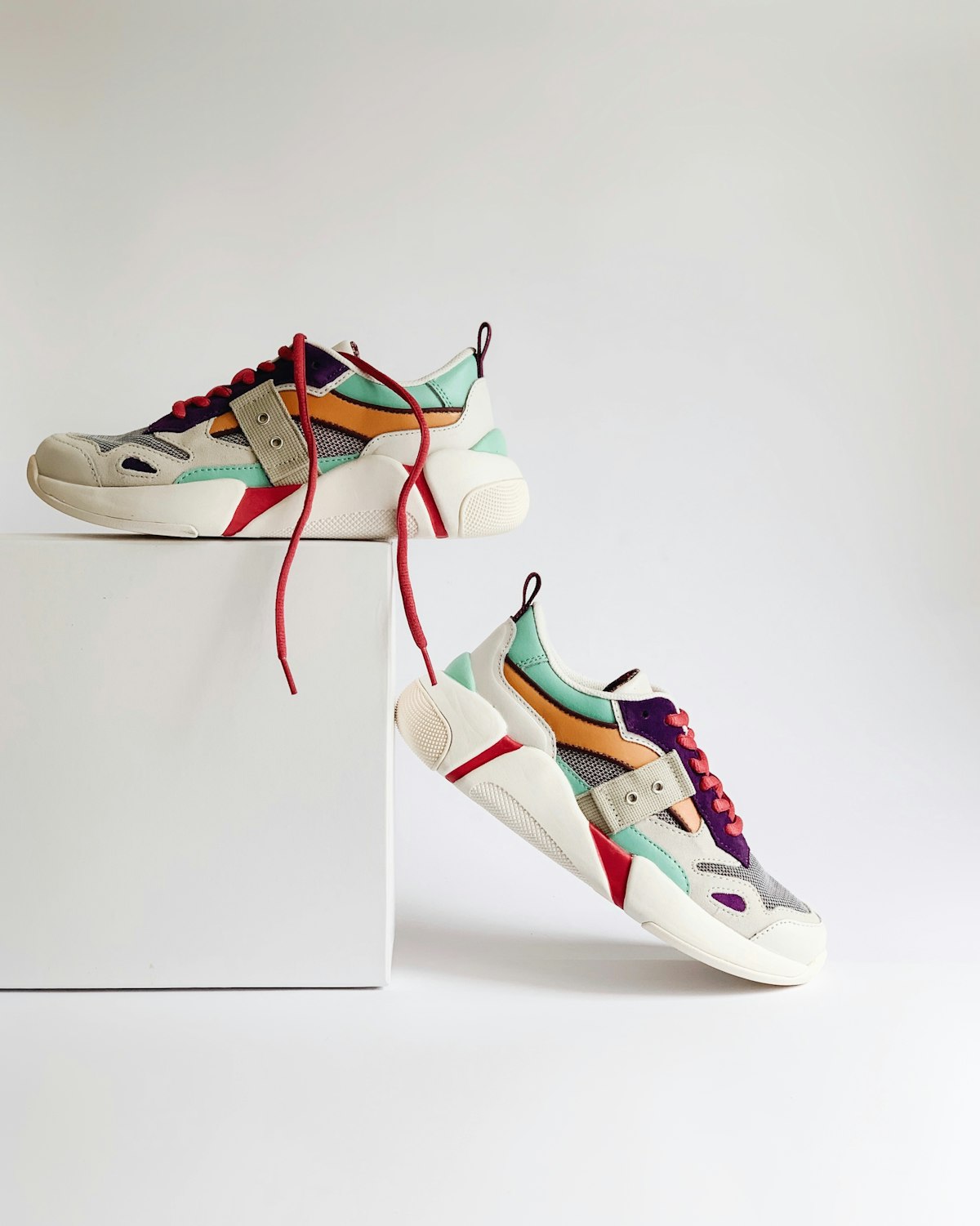
Under a coat: the ankle gap nobody measures
A coat hem lands somewhere between the knee and mid-calf for most people. That leaves a visible strip of ankle between the hem and the shoe collar, and the width of that strip changes the whole outfit more than the colour of the sneaker does.
With a mid-calf wool coat and a standard low slip-on, the gap runs about 12 to 15cm. Bare ankle at 6°C is not a styling choice, it’s a decision you’ll regret by the third block. Trousers solve it if the hem breaks on the shoe, but a straight-leg trouser that ends above the collar leaves the same gap, just with fabric flapping in it.
Three combinations that work, in order of warmth:
- Cropped wide-leg trousers plus a 4mm sock. The hem covers the collar and the sock shows only when you sit. Warmest without bulk.
- Full-length straight trousers, hem at the sole. Covers everything, but the fabric drags on wet pavement. Fine in dry cold, miserable in slush.
- Midi skirt plus a thick ankle sock. The sock becomes part of the outfit rather than a compromise, and it’s the only one of the three that looks deliberate.
What doesn’t work is the thing most people try first: tights under a slip-on. The nylon slides against the lining, the heel lifts, and by the end of the day the shoe has rotated inward at the ankle. If you want to wear tights, add a thin no-show sock with a silicone heel grip. It sounds fussy. It takes four seconds and it’s the difference between walking and shuffling.
Bulk is the other half of this. A tan slip-on adds almost nothing under a coat, which is the point. A chunky trainer with a 35mm sole pushes the trouser hem up and makes the ankle gap wider, and it also catches the coat lining when you walk. If your winter coat is long and heavy, a low-profile slip-on keeps the line clean and stops the hem from riding up.
Height changes the maths more than most people expect. On a 160cm frame, a mid-calf coat hits closer to the knee and the gap shrinks by several centimetres, which is why the same trousers and shoes look different on two friends. On a 178cm frame, the gap can stretch past 18cm and bare ankle stops being practical below about 8°C. Neither is a styling failure. It’s just geometry, and it’s easier to fix with sock height than with a new coat.
Socks change the fit more than half a size does
A 2mm cotton no-show and a 4mm merino crew differ by roughly 2mm of thickness all round, which is about a third of a size in volume. That’s enough to turn a snug slip-on into a painful one, and it’s the reason the same pair feels different in October and January.
The fix isn’t sizing up. Buy the shoe for the sock you’ll actually wear most, then adjust with the thin option when it’s warm. If you need both, a leather insole that you remove in winter buys back 3 to 4mm without changing the outer shoe.
Wool beats cotton in cold weather for a boring reason. Cotton holds moisture against the skin and stops insulating once it’s damp; merino moves it away and stays warm. On a 3°C morning with a 20-minute walk, the difference is noticeable at the toes, which is where slip-ons are coldest because there’s less material over the toe box.
One detail that catches people out: a thick sock pushes your foot back in the shoe, so the heel sits deeper in the collar. That feels secure at first, then the collar edge presses on the Achilles after an hour. If the top edge of the collar sits right at the bony point of your heel, a thicker sock will make that worse, not better.
Socks also shrink. A cheap cotton crew can lose 8mm of length and some of its loft after ten washes, which quietly changes the fit of every shoe you own. If you find a sock that works with a particular pair, buy three identical ones and keep them for that shoe. It sounds excessive until you’ve spent a morning trying to work out why one foot feels tighter than the other.
What winter does to tan, and what to do about it
Tan is the most forgiving colour in summer and the least forgiving in winter, for one reason: road salt. Salt dries into pale tide lines that sit inside the leather or suede rather than on top, and they appear at the exact height where the shoe meets the pavement splash zone.
Smooth leather can be wiped. Suede can’t be wiped, only brushed, and once salt has dried into suede the nap stiffens and the patch stays visible in raking light. If your commute involves treated roads, a smooth tan leather is the safer buy, even though suede looks better in the shop.
The maintenance routine that actually keeps a tan pair wearable:
- Wipe with a damp cloth the same day, not the next morning. Salt sets overnight.
- Use a neutral cream on smooth leather every three or four wears through winter.
- Brush suede dry with a brass brush once a week, and use a protector spray before the first wear, not after the first stain.
- Keep them away from radiators. Heat dries the leather unevenly and stiffens the collar.
Colour transfer is the other winter problem. Dark denim, black wool trousers, and unlined coats all bleed onto light tan at the collar and the outer heel. It shows up as a grey-blue shadow that no brush removes, because the dye has bonded with the finish. The finishing stage of leather is what determines how much of that dye the surface absorbs, and a sealed finish resists it far better than an aniline one.
If you’re buying in November and plan to wear them daily until March, accept that the pair will look used by spring. Tan shows a season honestly. Black hides it and looks flat instead.
One product worth skipping: the aerosol waterproofing spray sold next to the till. On smooth leather it does very little, because the surface is already sealed, and on suede it can darken the nap unevenly if you hold the can too close. A cream or a wax does more for leather, and a brush plus a protector applied in two light passes does more for suede. The spray isn’t harmful. It’s just mostly theatre.
Where slip-ons fail, and what to wear instead
Long walks are the first failure. Without laces, the midfoot isn’t locked down, so the foot slides forward on downhills and the toes take the pressure. Past roughly 8,000 steps on a hilly route, most people feel it under the big toe. If that’s your daily commute, a lace-up or a strap does the job better, and there’s no shame in admitting it.
Stairs are the second. A slip-on with a relaxed gusset will half come off on a steep descent, and the natural correction is to curl your toes, which is how you end up with a sore arch by Friday. Test stairs before you buy, not after.
Wet pavement grip is the quiet third problem. Many tan slip-ons use a flat rubber outsole with a shallow tread, which is fine on dry concrete and genuinely poor on wet tiles, especially at station entrances and supermarket floors. Press a thumbnail into the tread in the shop. If it barely dents, the rubber is hard and will skate. Softer compounds wear faster but hold their grip for the two winters you’ll actually own the pair.
Narrow heels are the fourth. If your heel is narrow and your forefoot average, the shoe will rotate rather than slip, which is harder to notice and worse for your ankle over months. A mesh slip-on with a padded collar holds better than a flat leather one, because the padding takes up the space the collar can’t.
And if the whole idea was to avoid bending down in the morning, there’s a middle option: a flat-bottomed casual shoe with a wide opening. You still step in, but the sole is thicker and the collar is higher, so it survives a wet pavement and a cold ankle better than a canvas slip-on does.
The honest summary: tan slip-on sneakers for women are a good November shoe and a mediocre January one. They earn their place on dry cold days, under a long coat, with a wool sock and a trouser hem that covers the collar. On slush days, wear something else and don’t feel bad about it.
Two places they genuinely shine, though, and both are worth planning around. Airport security, where no laces means no bending and no queue fumble. And the office, where a pair that slips off under the desk at 4pm is the difference between a decent afternoon and a long one. If your week includes either, the shoe pays for itself in small, unglamorous ways that never show up in a review.
If you’re replacing a pair this month, check the heel counter first, then the sock you’ll wear with it, then the colour. In that order. The rest is styling, and styling is the easy part. More low-profile shapes sit in the sneaker collection, and the high-top fit checklist covers the ankle-height question in more detail.
