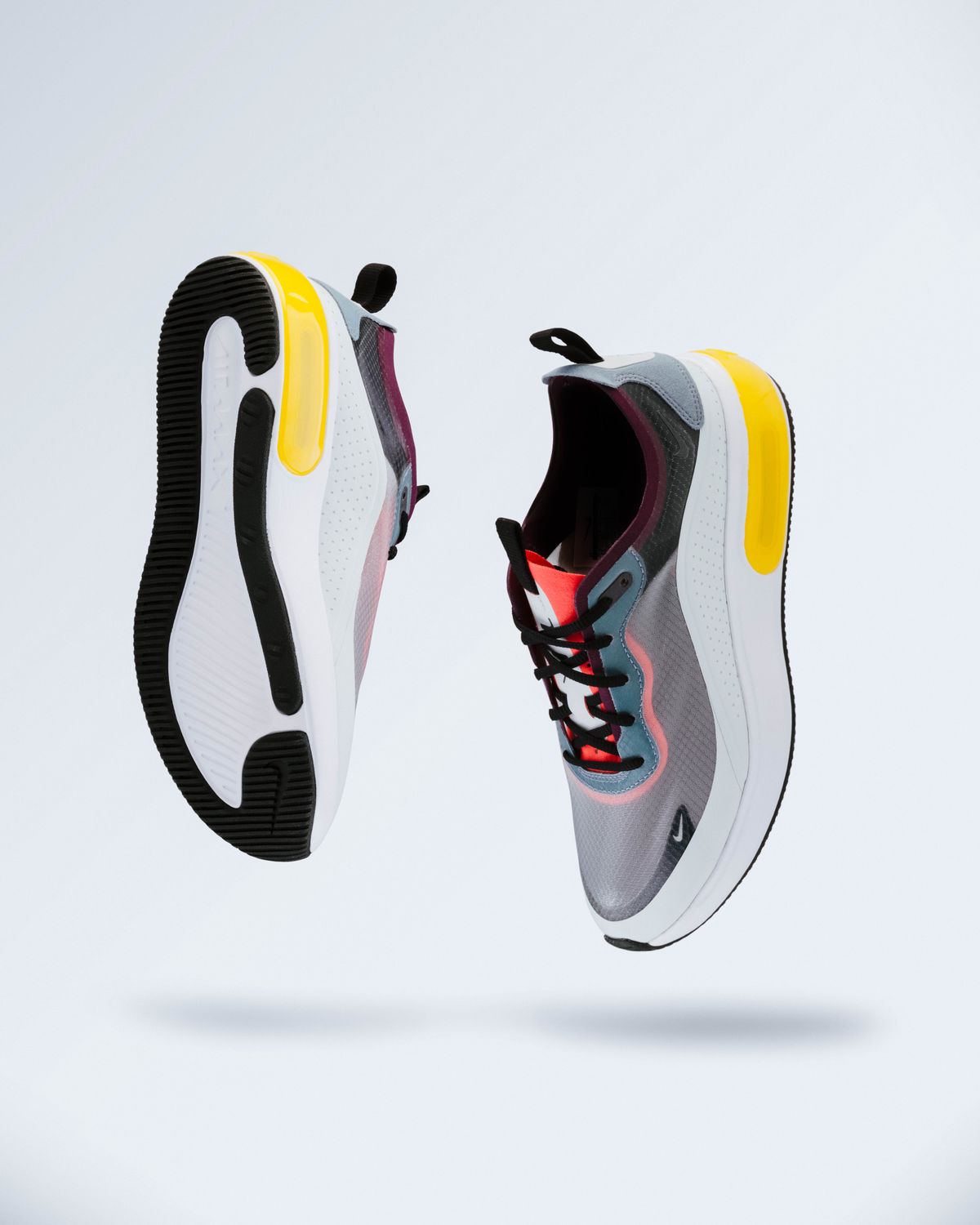
You’ve found a pair you like. You put your foot in, and something is pressing across the top of your foot, right where the laces or the edge of the upper ends. Not painful exactly. Just there. You take them off, put them back, tell yourself they’ll loosen up.
They won’t. That pressure line is a vamp problem, and it’s the single most common reason a shoe that fits everywhere else still gets left in the cupboard.
High vamp shoes for women have more material across the top of the foot than a low-cut pair. Sometimes that’s exactly what you want. Sometimes it’s the thing that makes the shoe unwearable, and the difference comes down to two measurements and one seam.
What “high vamp” means in plain terms
The vamp is the front section of the shoe, the part that covers your toes and the top of your foot. It ends at a seam or edge somewhere between your toe joints and your ankle. Where that edge sits is the whole story.
A low vamp, sometimes called a shallow cut, stops well short of your instep and shows a lot of skin. A high vamp comes further back and covers more of the top of your foot. Court shoes with a deep cut are low vamp. Loafers, lace-ups, mary janes and most closed pumps are high vamp by default.
Why does it matter beyond looks? Because your instep isn’t flat. The top of your foot rises to a peak somewhere around the middle of your arch, and the shoe has to clear that peak without pressing on it. A high vamp gives the shoe more material, which usually means more room, but it also means the edge lands closer to the highest point. That’s where pressure lines come from.
- Low vamp: shows toes and instep, cooler, less grip on the foot
- Mid vamp: edge sits on the slope before the instep peak, safest fit
- High vamp: edge sits near or above the peak, best hold, highest pressure risk
Find your instep height before you shop
You can measure this at home in a minute and it will save you a lot of returns. Sit down, put your foot flat on a sheet of paper, and lay a ruler across the top of your foot at the highest point, roughly where the laces would tie. Measure from the paper up to the ruler.
Most women land between 55mm and 75mm. Under 60mm is a low instep, over 70mm is high. If you’re at 74mm and you’ve spent years buying shoes that cut across the top of your foot, you now know why, and it isn’t the size.
Then measure the shoe. Push a ruler into the shoe from the opening down to the insole at the point where the vamp edge crosses. That gives you the internal depth. You want 6 to 10mm more than your instep height. Less than 5mm and the upper will press; more than 15mm and your foot will slide forward with every step.
This is why ordering the same size in two different brands gives you two different fits. The length is the same. The internal depth isn’t. And nobody puts internal depth on the product page.
Three foot shapes, three different answers
Instep height is only half of it. The width of your forefoot changes where the vamp seam presses, and the combination decides whether a high vamp works for you.
High instep, average width. This is the group that gets hurt most by high vamp shoes. The edge lands right on the peak. You want a vamp seam that sits lower, a stretch panel, or an elastic gusset. Lace-ups with a wide tongue opening let you control the fit, which is why they work better than slip-ons for this shape.
Low instep, narrow foot. High vamp is your friend. A low-cut shoe will gap at the sides and your heel will lift with every step. A covered instep holds the foot down. Mary janes with an ankle strap do this best because the strap stops the foot sliding forward.
Wide forefoot with a high instep. The hardest combination, and the one where most people give up and buy men’s shoes. You need width at the ball and depth over the instep at the same time. Look for a rounded toe and a seam that runs diagonally rather than straight across, because a diagonal seam follows the shape of your foot instead of cutting against it.
If your foot doesn’t fit any of those three cleanly, you’re not unusual. Most feet are a mix. The measurement still works: match the depth, then worry about width.
Why high vamp shoes are harder to fit
There’s a structural reason this category is fussy. On a low-cut shoe, the foot can escape upward. There’s no material holding it, so a slightly tight fit just means a slightly visible gap. On a high vamp shoe, the foot is enclosed, so any shortage of volume has to go somewhere. It goes into pressure on the top of your foot.
Leather helps. Good leather gives about 3 to 5mm over the first two weeks as it warms and moulds. Patent leather doesn’t. Neither does most synthetic upper material, and neither does suede that’s been backed with a stiffener. If you’re between sizes on a high vamp shoe, go up rather than hoping for give.
The other problem is the toe box depth, which is connected. A high vamp carries material all the way back, so the shape of the toe has to accommodate volume. A very pointed high vamp shoe has nowhere for your toes to go, and you’ll feel the top edge of your toes against the upper by the end of the day. This is where bunions get worse, and Healthline’s overview of bunions names tight, narrow footwear as one of the main aggravating factors.
Stretch panels and elastic gussets: what they buy you
Once you know your instep is the problem, the fix is usually one of two bits of construction. Neither is expensive, and both are visible in a product photo if you know what to look at.
A stretch panel is a small piece of elastic-backed fabric set into the upper, usually near the vamp edge or at the side of the opening. It does one job: it lets the opening give by 5 to 8mm when your foot goes in, then closes back. On a high instep, that’s the difference between a shoe you can put on standing up and one you fight with every morning.
The catch is where the panel sits. A panel at the side of the vamp relieves width. A panel at the back relieves the heel. If your pressure point is right across the top of the foot, you need the panel to run along the edge itself, and plenty of shoes put the elastic somewhere decorative instead. Look at the seam pattern before you assume it’s working for you.
An elastic gusset is the bigger version, common on boots and slip-on styles. It’s a full elastic insert on the side of the opening and gives 10mm or more. Brilliant for a high instep. Less brilliant after two years, because elastic fatigues and the shoe starts to gape. If you go this route, buy a pair where the elastic is hidden inside the lining rather than stitched to the outside, since those last noticeably longer.
A third option people forget: laces. A lace-up with a wide tongue opening lets you adjust the volume over your instep daily, which is more control than any stretch panel gives. The trade-off is time in the morning and a more casual look. For a high instep and a smart office, a derby beats a slip-on almost every time, which is worth remembering when a beautiful slip-on has just let you down.
What doesn’t work is a shoehorn and hope. If you need a shoehorn every morning for the same pair, the opening is too small, and stretching won’t change the opening size by more than a couple of millimetres.
The sock test, and three other checks in the shop
Wear the socks you’d actually wear with the shoe, not the paper-thin try-on pairs shops hand out. Then walk for two minutes and pay attention to one specific thing: whether you can feel the vamp edge at all. If you can feel it in the shop, you’ll be aware of it by 3pm.
Then do these in order.
- Press down on the top of the shoe above your instep. You want a few millimetres of give, not a drum skin
- Stand on tiptoe. If the heel lifts more than 5mm, the vamp is too long for your foot
- Sit down and cross your legs. The upper shouldn’t cut into the front of your ankle
- Walk on a slope or stairs if the shop has them. Vamp pressure shows up on inclines before it shows up on flat floors
The tiptoe test is the one that catches most bad fits. When you rise onto your toes, your foot shortens and the vamp edge moves relative to your instep. A shoe that’s fine standing still can press hard in that position, and that’s the position you’re in every time you climb a staircase.
If you’re shopping for the opposite problem, meaning you want less coverage and more openness, a shallow-cut pair that leaves the instep open solves exactly that, at the cost of hold. It’s a straight trade and worth knowing which side you need.
What high vamp does to your outfits
Coverage changes proportions. A shoe that comes further up the foot makes your ankle look like it starts lower, which shortens the leg line in photographs. That’s not a reason to avoid the style, but it’s a reason to think about hem length.
Cropped trousers and a high vamp shoe is the cleanest combination, because the gap at the ankle does the work the shoe can’t. Wide-leg trousers that break exactly at the vamp edge will look chopped. And a midi skirt with a covered instep and no visible ankle tends to make the whole outfit read heavy, especially in a dark colour.
The fix is usually 2cm. Raise the hem, or lower the vamp, or show a sliver of ankle with a slightly cropped trouser. What length does to a shoe is covered well in this piece on heel height and hems, and the logic runs the same way at 40mm.
Colour is the other lever. A high vamp shoe in the same tone as your trousers extends the line because there’s no visible break. A contrasting shoe creates a hard stop at the ankle. Both are usable, but if you’re short and wearing wide trousers, tonal is the safer bet.
When a high vamp is the wrong choice
Three situations where you should walk away from the style, even if the pair in front of you is lovely.
August, no air conditioning. A covered instep is the warmest part of any shoe. If you’re wearing them in 32°C with no aircon, your foot will swell and the vamp edge will press harder by the afternoon. This isn’t a fit problem you can solve, it’s physics. Switch to a breathable mesh pair with a soft sole for those weeks and keep the leather for September.
A high instep plus a stiff upper. If you measured over 70mm and the shoe is patent or heavily structured, no amount of breaking in will help. The material won’t stretch where you need it to.
Any shoe where you can’t get your foot past the opening without a shoehorn. That sounds obvious, but people force it. If the opening is smaller than your instep, the shoe will never be comfortable, because you’ll be squeezing through the same gap every morning. A pointed pair with a properly cut opening is the version of this style that actually works for a high instep, because the opening is wider than the vamp edge.
The general rule on construction is worth a skim if you want to understand why openings vary so much between brands. Wikipedia’s entry on dress shoes covers the basic patterns, and once you can name a derby versus a loafer, you can predict which one will have more volume over the instep.
If you only do one thing before your next pair, measure your instep with a ruler and a bit of paper. Two minutes. It tells you more than a size chart, and it explains every pair that has ever cut across the top of your foot. The heel range here is a decent place to test the theory with real shoes in front of you.
Which is it for you, pressure across the instep or a heel that won’t stay on? Those two problems point to opposite shoes.