

You want one pair that covers a Tuesday meeting and a Thursday dinner. Black does the meeting. White does the dinner. So you buy the black-and-white pair, wear it four times, and then notice the white toe looks like it’s been dragged through a car park.
Two-tone heels are the most photographed and least understood shoe in the closet. The contrast is what makes them striking, and the contrast is also what makes every scuff, every crease, and every proportion mistake visible from across the room.
Here’s how to pick a pair that survives actual wear, and where the line falls matters more than anything else on the box.
The contrast line is the whole design
On a two-tone heel, the boundary between black and white is doing all the work. Move it 20mm and the same shoe looks longer, shorter, wider, or cheaper. Nothing else about the pair changes.
A spectator shoe, the classic version of this idea, puts a light panel across the toe and keeps the rest dark. That break at the toe shortens the visible foot, which is why the style was originally a men’s shoe and why it flatters a long foot and fights a short one.
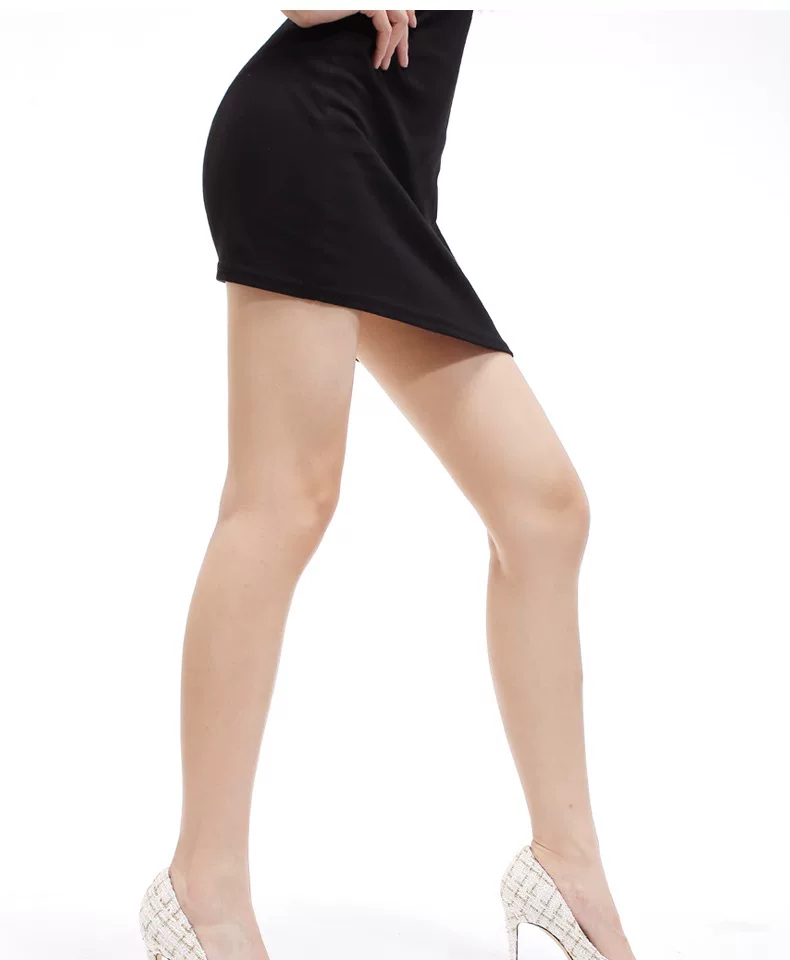
Three placements, three different effects:
- Contrast toe cap. Cuts the foot short by roughly a size in visual terms. Good for long, narrow feet. Bad if you’re already buying the smallest size on the shelf.
- Contrast heel counter. The dark at the back, pale at the front. This stretches the leg line and reads lighter overall. The most forgiving placement for most people.
- Contrast strap or sling. A single pale band across an otherwise black shoe. Nearly weightless, very summery, and the version least likely to look dated in two years.
The rule underneath all three: contrast draws the eye. Whatever panel is lighter will be the thing people see first. If you want attention at your ankle, put the pale panel there. If you want the leg to read long, keep the pale part at the front and let it run.
One detail worth checking before you buy: the line itself. A crisp edge between the two colors looks intentional. A wavy or slightly blurred boundary means the panels were glued by someone in a hurry, and it will look worse after a month of walking.
Cap toe, spectator, or full contrast: pick by foot length
Most shoppers pick by photo. Pick by foot instead, because the placements are not interchangeable.
Long feet, narrow. The classic spectator with a pale toe cap is made for you. It breaks up the length that a plain black pump exaggerates. A 60mm heel keeps the proportions calm.
Short feet, wide. Skip the toe cap entirely. Go for a black shoe with a pale ankle strap, or a slingback with a pale heel counter. Both pull the eye upward without chopping the foot in half.
Average everything. Full contrast, where the front half is white and the back half is black, is the one that most often works. It’s bold, it’s the version you see on the runway, and it’s the version that looks worst with ankle straps because there are already two horizontal lines competing.
There’s a fourth option people forget: the printed or woven two-tone. Instead of panels, the material itself carries the contrast. These woven white leather heels read as texture rather than as a hard block of color, which means they don’t fight a patterned outfit the way flat panels do.
And a warning about the pale-panel-plus-pointed-toe combination. A white pointed toe on a black shoe creates an arrow pointing at your toes. It’s a strong look and it works on stage. In an office it reads as a costume, and you’ll notice yourself hiding your feet under the desk.
Why black-and-white is the least forgiving colorway
Here’s the part the photos leave out. A single-color shoe hides its age. A two-tone shoe documents it.
The white panel shows every scuff, every bit of road grit, and every crease from bending. Black leather can be polished back to near-new with a cloth and five minutes. White leather cannot. Once it’s grey at the toe, it stays grey at the toe, and the contrast makes sure everyone can see it.
Then there’s dye transfer, which is worse on pale leather than on any other surface. Dark denim, dark tights, a black bag resting on your foot in a taxi. All of it transfers, and on a white panel it shows as a blue-grey shadow that no cleaner fully lifts.
What actually helps:
- Buy the pale panel in coated leather or patent rather than soft matte. Coated surfaces wipe clean, and matte absorbs.
- Spray both panels before the first wear. Two light coats, twenty minutes apart.
- Keep a suede eraser in your bag. It lifts scuffs off patent better than a tissue does, and it costs almost nothing.
- Don’t wear them in rain. Water marks on pale leather dry into rings, and rings on a white toe are permanent.
The honest conclusion: a two-tone pair is a shorter-term shoe than a plain black one. If you want one pair to last five years, buy black. If you want a pair that gets commented on for two seasons, buy the contrast and accept the maintenance.
Heel height that works with a two-tone shoe
Contrast adds visual weight, and visual weight at the foot needs a heel that can carry it without looking unbalanced. This is why the classic spectator sits at 50mm to 70mm and why the extreme versions rarely look right.
At 40mm and under, a two-tone shoe goes preppy. That’s a legitimate look, and it works with cropped trousers and a blazer. It does not work with a cocktail dress, and no amount of styling fixes that.
Between 60mm and 75mm is the sweet spot. Enough lift to make the leg line work, stable enough to walk a city block, and the proportion reads as deliberate rather than as a mistake.
Above 90mm, the contrast starts to look top-heavy, especially on a pointed toe. The shoe becomes an accessory rather than footwear, which is fine for a 40-minute event and miserable for anything longer.
Two structural notes that matter more than height on this style:
- Where the panels meet. If the seam between black and white runs across the flex point of the foot, it will crack there first. Look for a seam that sits behind the ball of the foot.
- Two materials, two stretches. Black calf and white patent age at different rates. A pair where the panels are the same material throughout holds its shape far longer.
If you want the look without the maintenance, a satin black pair with a pointed toe gives you the sharp silhouette and none of the white-panel anxiety. Wear it with a pale trench and you get the same contrast from the outfit instead of the shoe.
Fit and sizing: two-tone pairs cut differently
Two-tone shoes are usually built on a different last than a plain pump, because the panel construction adds a layer at the seam. In practice that means a pair can feel 2 to 3mm tighter across the vamp than the same brand’s single-color shoe in the same size.
Try them at the end of the day. Feet swell by around 5% over a working day, and a seam that presses at 9am will be cutting in by 4pm. If the shop will only let you try them on in the morning, go up half a size rather than gamble.
Check the toe cap position relative to your toes, not to the shoe. A hard contrast seam sitting directly on top of your toe joints will rub with every step, because the material on either side of the seam behaves differently. You want that seam to land either behind the joints or well forward of them.
Heel slip is the other thing to test, and it’s more common on slingbacks with a contrast panel because the strap is often the stiffest part of the shoe. Walk twenty steps on a hard floor. More than about 6mm of lift and the shoe is too long.
If you want the same sharp silhouette in one color, a 40mm black kitten heel is the easier version of this shoe to live with.
Wide feet should size on the widest point, not the length. If the front panel pinches, going up a size adds length you’ll trip over. A better answer is a different last, and the measurements in this guide to wide-width heel fitting will tell you what to ask for.
Five outfits that work, and two that don’t
If you keep circling back to black, the rest of the women’s shoes range is a better place to start than a contrast pair. Two-tone heels are one of the few shoes that make a plain outfit look styled. They’re also one of the few that can make a busy outfit look chaotic. The difference is how many other contrasts are already in play.
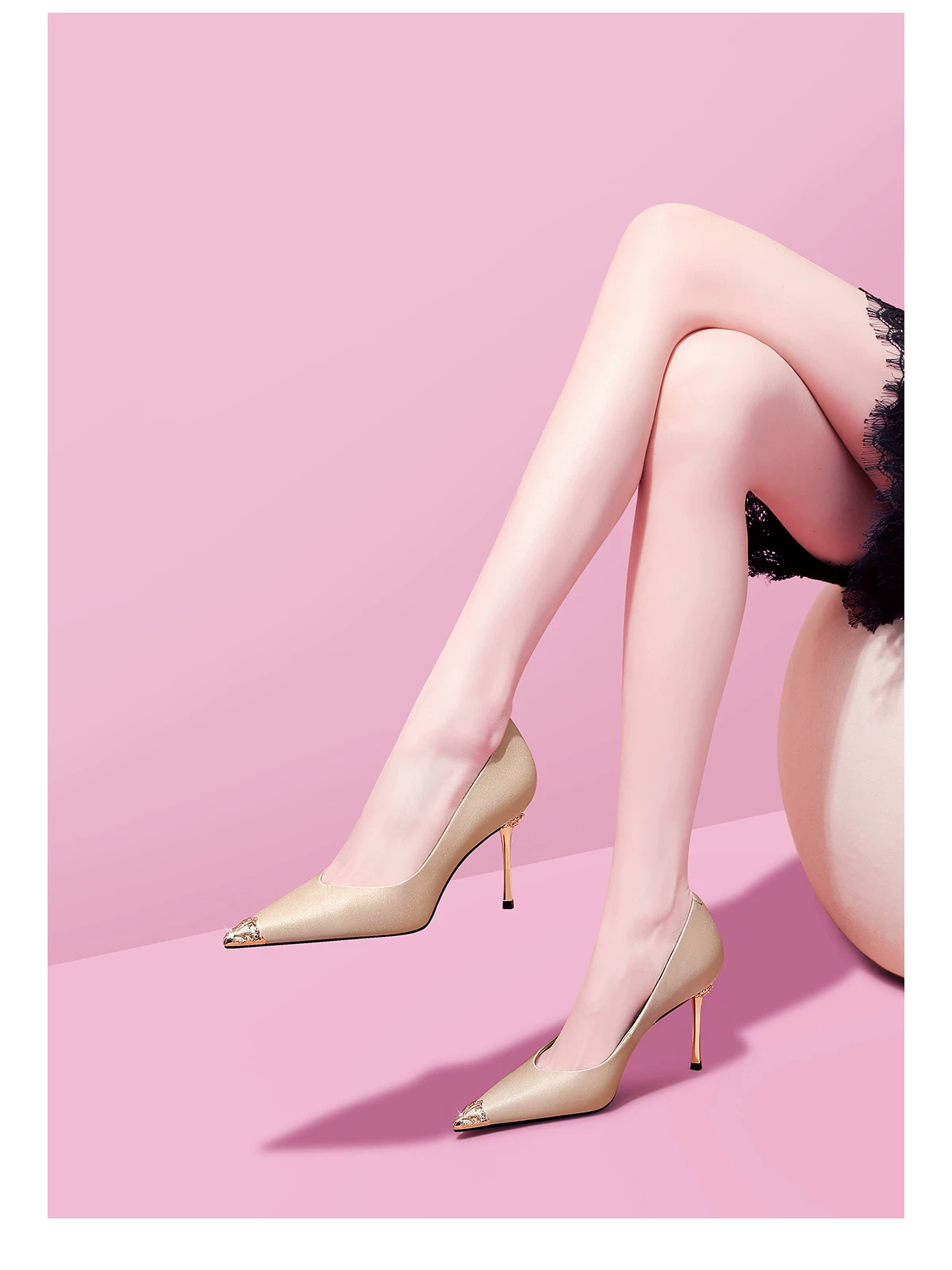
What works:
- All black, nothing else. Black trousers, black knit, black bag. The shoes are the only break in the column, and they do all the work.
- Blue jeans and a white shirt. The white panel echoes the shirt, the black echoes the denim. It’s the least contrived way to wear them.
- Wide-leg cream trousers. A dark shoe with a pale toe keeps the hem from swallowing the foot entirely.
- A tuxedo-style suit. The original setting for this shoe. Nothing needs to change.
- Monochrome grey. Grey acts as a bridge between the two colors, and the whole outfit suddenly looks considered.
What doesn’t: anything with a strong print, because the eye has nowhere to rest. And anything with an ankle strap in a third color, which turns the foot into a diagram.
One more that surprises people: a pale summer dress. A black-and-white shoe can look heavy against linen in bright light. If you want a two-tone effect with a light dress, put the contrast in the bag and keep the shoe quiet.
Is the white panel actually leather?
This is the check that separates a two-season pair from a two-wear pair, and it takes about a minute in the shop.
Press the white panel with a thumbnail. Real leather creases in fine lines and springs back. Synthetic creases in a single hard fold and stays there. Then look at the cut edge of the panel, where it meets the sole: leather shows a fibrous cross-section, synthetic shows a uniform foam or fabric backing.
There’s a broader point about pale leather worth knowing: how leather is finished and coated decides whether a white panel wipes clean or stains permanently, and the finish matters more than the price tag.
Smell it too. Leather smells like leather. PU smells like a new inflatable pool, and that smell doesn’t leave.
Then check the interior lining. Leather lining breathes and keeps the shoe from turning into a sauna at 3pm. Synthetic lining in a closed two-tone shoe is the most common reason people describe this style as “hot”.
Finally, look at how the two panels are joined. Stitched panels can be repaired by a cobbler. Glued panels can’t, and a glued white toe that lifts at the edge is unrepairable in any practical sense. If you’re spending real money, stitching is the line to hold.
Where the money goes
Buy the pale panel in a coated leather, keep the heel between 60mm and 75mm, and make sure the contrast seam lands behind your toe joints, not on them. That’s the combination that gets worn past the third month.
Then decide how much you care about scuffs. If the answer is “a lot”, buy black and put the contrast in your bag. If the answer is “not much”, the two-tone pair will still be the one people ask about.
