

Your arch disappears the moment you stand up. Maybe it’s been like that since you were a kid, maybe it started after your second pregnancy, and either way you’ve been told at some point that you need “proper support.” So you bought a pair with a big arch bump inside, and it felt like standing on a tennis ball for a week.
That’s the usual story, and it’s why women’s walking shoes for flat feet is such a messy category. Half the shoes sold under that label are overbuilt bricks. The other half are marshmallows with a gel pad glued in. Neither is what most flat-footed walkers actually need.
Here’s the position I’ve landed on after too many pairs and one honest conversation with a podiatrist: support comes from how a shoe is built, not from how much stuff is stuffed inside it. Everything below is about telling those two things apart in a shop, in thirty seconds, without a gait analysis.
Most flat feet don’t need a special shoe, and starting there saves money
Flat feet are common. Somewhere between one in ten and one in five adults has a foot that sits low to the ground with little visible arch, and the great majority of them walk, run, and stand all day without a single problem. The Mayo Clinic’s summary of flatfeet says it plainly: most people have no symptoms and need no treatment.
So the first question isn’t “which shoe?” It’s “does my foot hurt?” If the answer is no, buy whatever fits and feels good. You don’t need a motion control shoe, and you probably don’t need a $400 insole. Plenty of people with flat feet have walked tens of thousands of kilometres in cheap canvas plimsolls.
The picture changes when there’s pain. The pattern to watch is discomfort on the inside of the ankle and along the arch after a long day, not during it. That’s the posterior tibial tendon complaining about doing more work than it wants to. Swelling by evening, a foot that flattens more on one side than the other, or an arch that has visibly dropped in the last couple of years all point to getting it looked at rather than shopping around it.
There’s a second group worth separating out. Flexible flatfoot means your arch reappears when you sit down or rise onto your toes; the clinical description of flat feet splits the two categories along that line. Rigid flatfoot means it doesn’t. The flexible version is a normal human variation. The rigid version, especially if it’s painful or one-sided, is a clinical question, and no shoe is going to answer it.
Stand up and look down. If you can slide a fingertip under the inside edge of your foot while sitting, and it vanishes when you stand, you’re in the flexible camp and the rest of this page applies to you.
That’s also the group most of the women’s walking shoes for flat feet advice online is aimed at, which is worth knowing before you spend an evening reading product pages. If your arch vanishes under load and comes back when you sit, you’re dealing with a normal foot that needs a decent chassis. Not a medical device.
The wet footprint test is mostly useless. Try these two checks instead
You’ve seen the diagram: wet your foot, step on cardboard, compare the shape to a chart. It’s the most shared piece of foot advice on the internet and it tells you almost nothing useful. A wet print shows how your soft tissue spreads under your body weight at one moment on one surface. It doesn’t show how your foot behaves over 5,000 steps, and it doesn’t distinguish a foot that needs support from one that’s simply wide.
Better check one: the heel raise. Stand barefoot, hold a counter, and rise slowly onto the balls of your feet. Look down at your arch. If it lifts and deepens, your foot still has a working windlass mechanism and the tendon is doing its job. If the arch stays flat and the heel tilts outward, that’s worth a professional opinion.
Better check two: the view from behind. Stand with your feet hip-width apart and have someone look at your heels from directly behind. If you can see the fourth and fifth toes sticking out past the outside of your ankle, your foot is rolling inward more than usual. That’s the “too many toes” sign, and it’s more informative than any cardboard.
Ten seconds. No cardboard.
Neither check replaces an assessment, but both take ten seconds and both are free. They also tell you what to look for in a shoe: a heel that holds, and a midsole that resists twisting.
One more useful observation, and it costs nothing. Look at the wear pattern on your current pair. Heavy wear on the inner edge of the heel and the inside of the forefoot is what an inward-rolling foot does to a shoe. Wear that’s even across the ball and slightly heavy on the outer heel is normal. If your shoes wear out on the inside within four months, that’s your foot telling you something the wet print never will.
Support lives in the chassis, not in the arch bump
Pick up a shoe and twist it. Hold the heel in one hand and the forefoot in the other and try to wring it like a towel. A walking shoe for a flat foot should resist you in the middle. Not completely, because you still need to flex where your toes flex, but the middle third should feel like a plank rather than a sock.
Then squeeze the heel counter, the stiff cup around the back of the shoe. Push your thumb into it from the outside. If it folds, the shoe will let your heel tilt inward with every step, and no insole can fix that. If it barely moves, you’ve found the part that does the actual work.
The arch bump inside the shoe matters far less than either of those. A raised arch pad presses into soft tissue, feels strange for a fortnight, and does almost nothing about the direction your ankle travels. What it can do is take up volume, which is why so many people find arch-support shoes tight across the top of the foot.
When you’re comparing women’s walking shoes for flat feet in a shop, almost all the marketing points at the footbed. Ignore it for a minute and look at the chassis instead. That’s where the difference between a good pair and a bad one actually lives.
Look at the midsole from the side, too. Many walking shoes now use a softer foam on the outside and a firmer wedge on the inside. That dual-density design is the modern version of support and it’s much more comfortable than the old grey plastic shanks. You can often see the two colours meeting in a line along the midsole.
A rocker sole helps as well, and it’s underrated. A shoe with a curve at the front and back rolls you through the step instead of asking your arch to do the pushing. For a flat-footed walker with a tired tendon, that’s worth more than any insert. It’s also the reason some walking shoes feel oddly fast the first time you put them on.
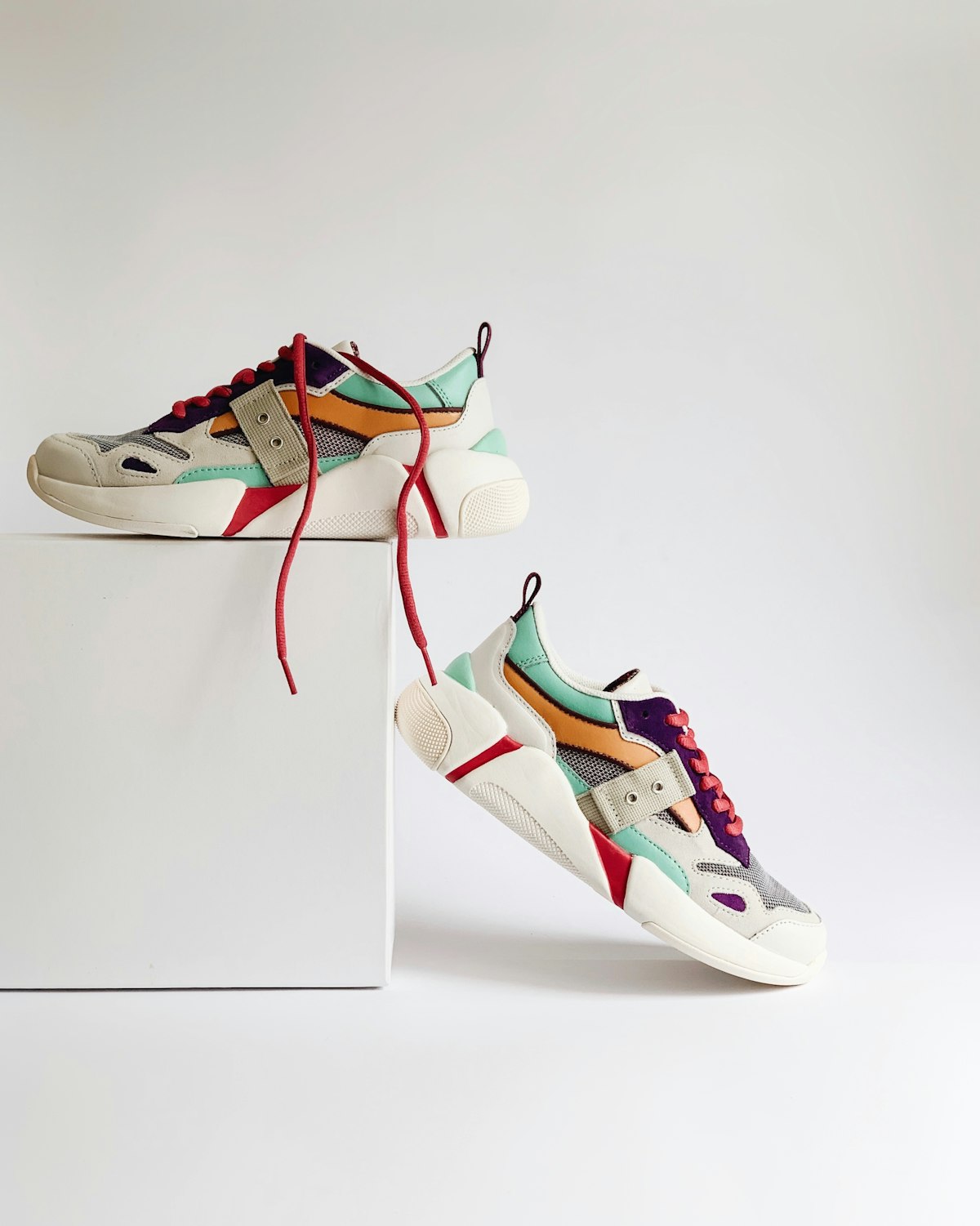
For everyday pavement miles, a pair like these breathable mesh walking shoes does the job if the heel counter is firm enough for you. Test it in the shop. If it folds, walk away even if everything else about the shoe is right.
Cushioning has a ceiling, and soft is not the same as supportive
Every few years the midsoles get thicker. That’s fine for joints, up to a point. Past that point, a very soft shoe becomes unstable for a foot that already rolls inward, because the foam compresses unevenly and your ankle follows the slope.
You can feel this in the shop. Put both shoes on, stand on one foot, and count to ten. If you’re wobbling and grabbing with your toes, the midsole is too soft for your foot. Try the same test on carpet, which is closer to what a real floor feels like than a shop’s rubber mat.
There’s a second reason soft shoes fail here. Foam packs down. A midsole that feels plush in the shop at 9am can lose 2 to 3mm of height by the end of a working day, and the side that compresses first is the side your ankle leans toward. That’s how a supportive shoe quietly becomes an unstable one around month four.
Stack height is the number to check if the product page lists it. Under 20mm at the heel is thin and firm, which suits people who want ground feel. Between 25 and 35mm is the usual walking-shoe range and it’s where most people are happiest. Above 40mm, you get a lot of cushioning and a higher chance of rolling an ankle on a curb.
Heel drop matters too, and flat-footed walkers often get this wrong. Zero-drop shoes are popular and they’re not evil, but moving from a 10mm drop to zero overnight loads the Achilles and the calf in a way that takes six weeks to adapt to. If you’re curious, buy a low-drop shoe as a second pair and wear it for twenty minutes a day to start.
Stiff and light rarely come together.
Weight is the last number worth knowing. A women’s walking shoe around 250 to 300g is light enough that you stop noticing it. Past 350g, every step costs a little more, and by late afternoon you feel it in your hip flexors rather than your feet. Wide, supportive shoes tend to be heavy, which is the honest trade-off in this category.
Insoles: what forty dollars buys you, and what four hundred doesn’t
Insoles are where the women’s walking shoes for flat feet conversation usually starts, and it’s also where most of the money gets wasted. So let’s separate the two products people confuse.
Off-the-shelf insoles help a lot of people, mostly by taking up volume and giving the arch something to rest against. They cost between $20 and $60, they fit in most shoes, and you can move them between pairs. For a mild flexible flatfoot with occasional arch ache, that’s a sensible first move.
Custom orthotics are a different product. They’re made from a cast or scan of your foot, they cost several hundred dollars, and they’re worth it in specific situations: a rigid deformity, a diagnosed tendon problem, one leg measurably longer than the other, or a job that has you standing ten hours a day. They are not worth it as a first response to “my arches ache after a long walk.”
Whatever you buy, check that the shoe’s own footbed comes out. Most walking shoes have a removable insole, and that’s the difference between an insert that fits and one that pushes your heel out of the shoe. If the factory insole is glued in, adding another layer will raise your heel by 4 or 5mm and change the whole fit.
Take the insert with you when you try shoes on. Or buy the shoes first, walk in them for a week, and only then decide whether you need anything inside. Adding an insole to a shoe that’s already snug is the fastest way to waste $50 and end up with a pair you can’t wear.
One warning about hard plastic orthotics: they need room, and they need a shoe with a flat, stable base. Dropping a rigid insert into a soft, deeply cushioned walking shoe creates a pressure point under the arch that gets worse with every mile. If you already have orthotics, buy shoes with a firm midsole and a deep heel cup, then have a fitter check the combination.
Fit checks for a foot that flattens under load
Here’s something that catches people out: a flexible flat foot gets longer when you stand on it. The arch drops, the foot spreads forward, and it can gain 3 to 6mm in length compared with a seated measurement. If you’ve ever bought a shoe that fit perfectly in the shop and jammed your toes by the second week, this is probably why.
So measure standing, in the afternoon, with socks on. Add 8 to 10mm to your longest toe for clearance. Don’t add more than that hoping for comfort, because extra length means your heel slides forward and the flex point of the shoe lands in the wrong place.
- Width at the ball should let your forefoot spread without pressing on the little toe.
- Toe box height should clear your toes by a few millimetres when standing.
- The heel should hold with less than 5mm of lift when you walk uphill.
- The flex point of the sole should line up with where your toes bend, not ahead of them.
- The upper should not press on the top of your foot when the laces are snug.
Lacing matters more for flat feet than most guides admit. A foot that rolls inward tends to slide forward, and the fix is a heel lock at the top two eyelets rather than tighter laces across the middle. Tight middle laces compress the instep and make the arch feel worse, not better.
One more fit note for this shape of foot: the collar of the shoe should sit below your ankle bone, not on it. A high collar looks supportive and feels like a bruise after an hour, especially if your heel tilts outward and presses the collar against the bone on each step.
If you want a wider, flatter platform under the forefoot, something like these flat-soled casual board shoes can work for short errands, though the sole is stiff enough that I wouldn’t choose them for a 10,000-step day. For a soft, low, everyday option, the walking shoes section has more choices than the flat-feet label suggests.

Two weeks of walking: what to change, and when to give up on a pair
New shoes and a new insert at the same time is a bad experiment, because you won’t know which one caused the ache. Change one thing at a time. If you’re adding an insole, wear it for twenty minutes on day one and build from there.
Give any pair of women’s walking shoes for flat feet a fortnight to settle before you decide. Expect some adjustment. A shoe with a firmer midsole will feel strange if you’ve been walking in something soft, and the muscles along the outside of your shin will let you know about it. That’s adaptation, not injury, as long as it fades with rest.
What shouldn’t happen is sharp pain under the arch, numbness in the toes, or a hot spot on the inside of the ankle. Any of those means the shoe or the insert is wrong, and more walking won’t fix it. Take them back inside the return window.
Build distance slowly. If your normal walk is 4km, don’t do 8km on day two. Add a kilometre every few days and keep one rest day. Tendons respond to load over weeks, and the posterior tibial tendon in particular is not a fan of sudden enthusiasm.
Worth adding alongside the shoes: thirty seconds of heel raises while you brush your teeth. Standing on one foot while the kettle boils. These small doses of loading are what actually strengthen the arch over months, and they cost nothing. Shoes support a foot. They don’t rebuild one.
If you’re also dealing with an inward roll that shows up as knee or hip ache, the piece on walking shoes for overpronation and what’s overkill goes further into that. And if your main issue is width rather than arch height, the guide to women’s 4E width walking shoes explains why the letter on the box rarely matches the fit.
If you only do one thing this week, do the twist test on the pair you already own. Most flat-footed walkers find their current shoes fail it, which explains a lot about why the arch ache keeps coming back.
Buy the pair that survives the twist test and the thumb test, wear it for a fortnight with one change at a time, and judge it on how your ankle feels at 6pm rather than how it looks in the mirror at 9am.
