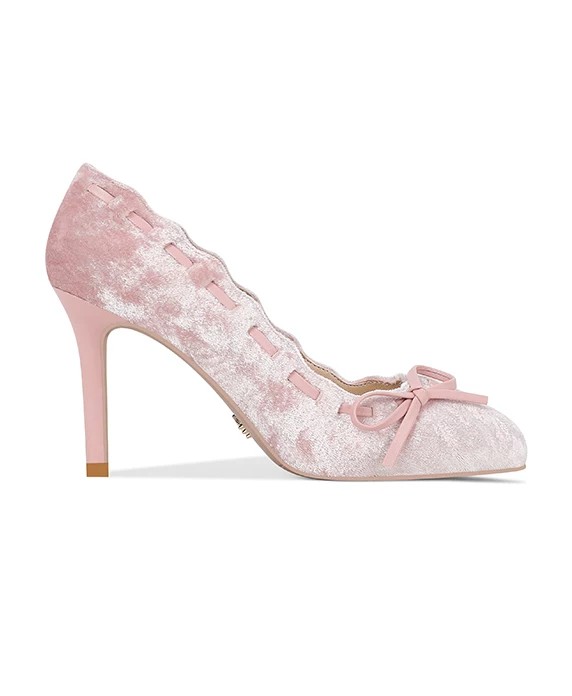
You saw them in the window, or in a photo, or on someone at a wedding, and you thought: those are fun. Then you got them home and put them next to your actual clothes and the fun went quiet.
That’s the pink heel problem. The colour is loud in isolation and shy in a wardrobe. Women pink heels can look like the best thing you own or like something from a fancy dress box, and the difference is almost never the price.
Most women pink heels fail on one of three things, and none of them is the colour itself. It’s the shade, the finish and the height. Get those three right and pink becomes the easiest colour you own, because it goes with more than black does.
Here’s how to pick a pair you’ll actually wear twice a week instead of once a year.
Pink is a family, not a colour
There are at least four pinks that behave completely differently on a foot, and shops use the same word for all of them.
Blush and nude pink sit close to skin. They make the leg look longer because there’s no hard line at the ankle, and they work with almost everything. This is the pair to buy if you want one pink shoe and no regrets.
Dusty rose and mauve have grey in them. They read grown-up, slightly vintage, and they photograph beautifully in low light. They’re also the hardest to match with a bright outfit, because grey undertones fight with saturated colours.
Fuchsia and hot pink are pure pigment. They look incredible with denim, white and black, and terrible with anything pastel. One pair is enough. Two is a collection.
Baby pink and candy pink are the ones that read young. That’s not a bad thing, but it narrows the outfits that work. If you’re over 30 and want to wear them to the office, the styling has to be very plain everywhere else.
There’s also a size effect. The smaller the shoe, the more intense a pale pink looks, because there’s less surface to dilute it. That’s why a blush flat can look almost white and a blush boot looks properly pink.
Hold the shoe against your forearm in daylight before you decide. Pink changes more under artificial light than any other colour. The pink spectrum runs from near-neutral to almost red, and a shade that looks soft in a shop can look neon in a restaurant.
Heel height decides whether pink looks grown-up
A pink stiletto at 100mm is a statement. A pink block heel at 65mm is a shoe you can wear to lunch. Same colour, completely different message.
The reason is proportion. Bright colour draws the eye, and the eye follows the shape. A tall thin heel under a bright shoe makes the whole thing look like a cocktail garnish. A lower, wider heel gives the colour somewhere to sit.
For most people, 60mm to 75mm is the range where pink stays wearable. A block or a stacked heel is more forgiving than a stiletto, and it also means you can walk on grass, cobbles or a badly paved car park without thinking about it.
One thing to check on a lower block: the sole thickness. A pink shoe with a very thin sole looks cheap even when it isn’t, because the colour has no weight under it. A slightly chunkier sole makes the same pink look deliberate.
If you want the high version, keep the rest of the outfit quiet. A pink 90mm pump with a plain black suit is a decision. The same shoe with a floral dress is a costume.
Ankle straps deserve a mention here. On a pink shoe, a delicate strap reads as detail and a thick one reads as a bandage. If the shoe already has a lot going on, keep the strap thin or skip it.
Toe shape matters too. A pointed toe makes pink look sharper and more formal. A round or almond toe softens it. If you’re buying your first pair, almond is the safer shape because it works with both jeans and dresses.
What pink heels go with, and one pairing I’d skip
Denim is the easiest match in the book. Light blue jeans, white shirt, pink shoe. Nothing else needed. The blue balances the warmth in the pink, and the whole thing looks intentional without effort.
Grey is the underrated one. Charcoal trousers or a grey knit make a blush heel look expensive. Grey is neutral enough to let the pink speak without competing.
Black only works when the pink is bright. Hot pink with black tailoring is a classic for a reason. Blush pink with black can look slightly dated, like a 2010s office outfit, so add white or cream somewhere to break it up.
White is summer, navy is a wedding, and olive is the combination nobody tries and everybody compliments. Try olive once and you’ll understand.
The pairing I’d skip is pink shoes with a red dress. It can work if the two colours are close in temperature, but most of the time it looks like an accident that nobody mentioned.
- Light jeans, white tee, blush block heel. Weekend sorted.
- Charcoal suit, pink pump, no other colour. Office-safe.
- Navy midi dress, fuchsia sandal. Wedding-ready.
- All white outfit, one pink shoe. Summer photos.
Suede, patent or satin: the finish decides how long they last
Pink is a colour that shows damage. A scuff on a black shoe disappears. A scuff on a blush suede toe looks like a stain.
Suede is the softest-looking and the most fragile. It marks with water, dust and the wrong brush. On the plus side, suede holds deep colour beautifully, so fuchsia suede looks richer than fuchsia leather. Keep a suede brush and a protector spray, and don’t wear them in the rain.
Patent is the easiest to clean and the hardest to keep looking soft. It wipes clean with a damp cloth, which matters if you’re wearing pink to a party with red wine. It also creases at the toe, and once patent creases it stays creased.
Satin is for one night. It’s beautiful in photos and it water-stains permanently. If the event is indoors and short, satin is fine. If you’re walking to the venue, it isn’t.
Matte leather is the practical middle. It takes a polish, hides small marks better than patent, and doesn’t need special products. If you want pink shoes you can wear on a Tuesday, this is the finish.
There’s one finish that gets overlooked: woven leather. It’s textured enough to hide scuffs, it doesn’t crease like patent, and it looks more expensive than it costs. Pink woven leather is a good compromise if you want something that isn’t flat matte.
Whichever you choose, check the inside. A leather lining makes a huge difference to how the shoe feels after two hours, and it’s the first thing brands cut when they’re keeping the price down.
Skin tone is a red herring. Contrast is what matters
You’ll read a lot about which pinks suit which undertones. Most of it is overcomplicated.
The useful rule is contrast. If your skin is pale, a pink that’s close to your skin tone can wash you out, so go a shade brighter or a shade deeper. If your skin is deep, very pale pink can look chalky, so look for saturation rather than lightness. If your skin is olive, cool pinks with a bit of blue in them tend to sit better than warm peachy pinks.
There’s a shortcut if you don’t want to think about undertones at all: match the shoe to the temperature of your jewellery. Silver jewellery plus cool pinks, gold jewellery plus warm pinks. It’s not a law. It just stops the outfit from looking like two different lighting conditions.
But the shoe isn’t next to your face. It’s next to your ankle, your tights and your hem. That’s the contrast that actually shows in a photo.
So try the shoe against the tights you’ll wear, not against your wrist. Nude tights with a blush shoe gives you a long, unbroken line. Black tights with a pale pink shoe gives you a sharp break at the ankle, which is a look, but a deliberate one.
Reds and oranges are the shades that fight pink hardest. If your outfit is warm, a cool pink shoe will look separate from it, and not in a good way. Balance the temperature and the contrast stops being a problem.
And if you’re wearing a dress in a colour that’s close to the shoe, go one step lighter or darker. Matching exactly looks like a set. Nearly matching looks like you know what you’re doing.
Care, scuffs and the fading problem
Pink fades. That’s the part nobody tells you. Sunlight, cleaning products and cheap dye all push pink toward a paler, slightly yellow version of itself. A pair that starts as rose can look dusty peach after two summers.
Store them away from direct sun, in a dust bag, and don’t leave them on a windowsill to dry. If they get wet, stuff them with newspaper and let them dry at room temperature. Heat speeds up the fade and shrinks the leather.
For scuffs on smooth leather, a tiny amount of matching cream polish works better than a generic colourless one. For suede, a soft brush in one direction lifts the nap. Don’t rub in circles, because you’ll polish a shiny patch into the middle of the toe.
One specific warning: don’t use baby wipes on satin or suede, even though everyone recommends it. The alcohol and fragrance in most wipes leave a ring. Use a dry cloth first, then a dedicated cleaner if you must.
Store them with the shape in. A pair of cheap shoe trees stops the toe curling up, which is the first sign a pink shoe is getting old. Without them, the leather dries into whatever position it was left in, and a curled toe looks tired even after a polish.
If the shoes have a leather sole, add a rubber half-sole before the first wear. It costs very little and it stops the pink upper from absorbing water from the pavement.
Buying a pair you won’t regret
If you’re shopping for women pink heels for the first time, start with blush or dusty rose, almond toe, 70mm block heel, matte leather or suede. That combination goes with jeans, tailoring and dresses, and it survives more than one season.
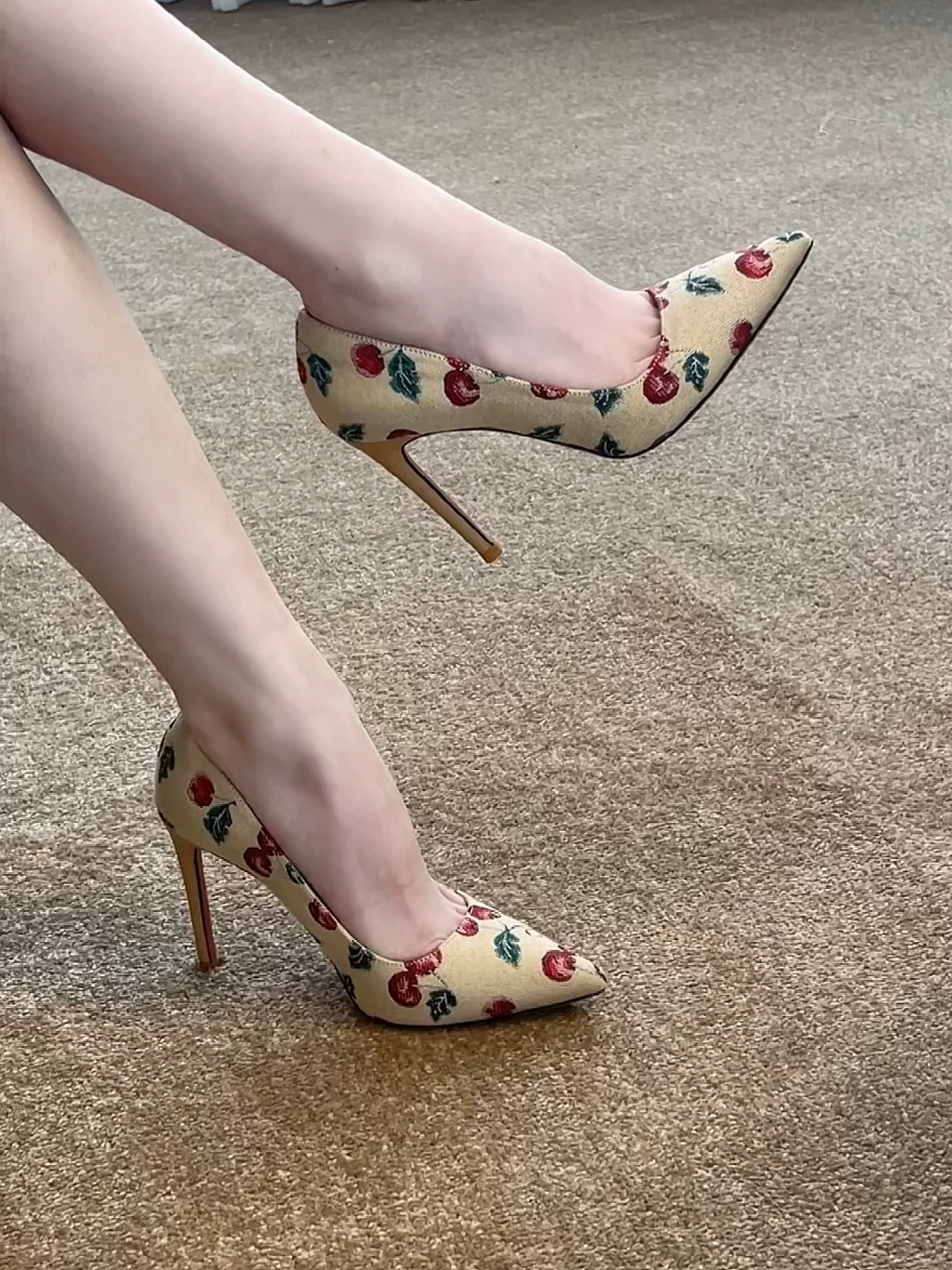
Then decide if you want a second pair in a brighter shade. Hot pink is the one that earns its place, because it works with denim and black and needs nothing else. A soft pink heel with a slim shape is the version that handles weddings and dinners, while a printed pointed pair does the summer weekends.
Check the dye lot too. Two pairs of the same pink can arrive a shade apart, especially at lower price points. If you’re buying the second pair to replace the first, check them side by side in daylight before the return window closes.
Try them on in the afternoon, walk for two minutes on a hard floor, and check that your heel doesn’t lift. Pink shoes get noticed, so a shoe that slips will be noticed too.
And if you’re hesitating between pink and a safe neutral, ask yourself one question: do you already own three pairs of black heels? If the answer is yes, the pink pair will get more wear than you think. If the answer is no, buy the neutral first. You can always add colour later, and the women’s shoes range has plenty of both.
One last thing. Pink heels look best when you stop treating them as a special occasion. Wear them to the supermarket. Wear them to a Tuesday dinner. The more normal they become, the less they look like a costume, and the more they start to feel like your shoe.