

New Balance Women’s Shoes: An 8-Hour Honest Test
Sneakers are the only shoes most of us wear for eight hours straight, and we buy them on looks about 70% of the time. That’s backwards, and it’s why so many pairs end up at the back of the cupboard with 40 miles on them.
I’ve been wearing walking new balance womens shoes as my default for about three years now, through commutes, school runs and one very long airport day. Here’s what actually matters when you pick a pair, and what’s just marketing.
The Engineering of Ease: Biomechanics and Cushioning
A human foot is 26 bones, 33 joints and a hundred-odd muscles and tendons, and it was designed to work without a shoe at all. Everything a shoe does after that is compensation. The good ones compensate in ways your knees don’t have to notice.
Practically, that means foam. Fresh Foam is the softer, more sculpted stuff on the 1080 and the More lines; ABZORB is the older, denser compound you’ll find in the 574 and 990. Neither is better in the abstract. Soft foam feels wonderful for the first hour and can feel vague by hour six if you overpronate. Firm foam feels dead in the shop and then, three weeks later, you realise you never think about your feet anymore.
The thing that actually wears you out isn’t the walking, it’s the heel strike. Every step sends a jolt up through the ankle and the shin, and cushioning exists to eat that jolt before it gets there. What you feel at 6pm after a long day is the accumulated total of about 9,000 of those.

Arch Support and Stability: The Unseen Framework
This is where New Balance earns its reputation, and it has nothing to do with the logo. It’s the widths.
Most brands sell one width, which is a B, which is a medium, and if your foot isn’t a medium you spend your life sizing up to get the width and then having too much length. New Balance still runs 2A, B, D and 2E in a lot of women’s models. If you have a wide forefoot, that alone is worth the price of admission, because a foot that can’t splay on landing rolls inward, and that’s where plantar fasciitis and shin splints come from.
Several models also put a firmer wedge of foam on the inner side of the midsole, which slows that roll down without locking your foot in place. I’ve worn proper motion-control shoes and they feel like wearing a cast. This is gentler than that, and for walking rather than running it’s enough.
Fair warning: the wider fits look wider. A 2E in a light colour reads a bit boat-like from above. Nobody has ever noticed this on my feet, but I noticed it in the mirror for the first month.

Why They Stopped Looking Like Gym Shoes
Here’s the honest version of why these became popular: the 574 and the 990 look like the shoes your dad wore, and at some point that stopped being an insult. Grey suede with a mesh panel is neutral enough to wear with tailored trousers and odd enough to look intentional.
The colourways help. Most of the women’s line sits in greys, creams, off-whites and muted greens, which is exactly the palette that goes with everything and photographs well. The loud ones exist, and they’re fun for about a season.
What they don’t do is dress up. A pair of grey 574s with a blazer is a good outfit. The same pair with anything satin or structured is a mismatch, and you’ll feel it before anyone says anything.
Length is the practical bit. Sneakers like these look best with a hem that stops just above the ankle, so the shoe isn’t swallowed by a wide-leg trouser. Cropped jeans, a straight-leg with a single turn-up, or a midi skirt with a bit of ankle showing. Full-length bootcuts over a chunky sneaker is the one combination that reliably looks like you got dressed in the dark. This is why walking new balance womens shoes end up in so many capsule wardrobes: they work with the clothes people already own.

Recycled Uppers, and What They Actually Change
Several lines now use recycled polyester in the upper and bio-based foam in the midsole. I’m sceptical of how much this changes anything at scale, but it does change the shoe in one specific way: engineered knit uppers have no seams across the toe box, so there’s nothing to rub.
That’s the real benefit. Not the environmental math, the absence of a seam where your pinky toe sits. If you blister easily, knit beats leather every time.
The trade-off is structure. Knit stretches. After a year of daily wear, a knit upper can look slightly collapsed over the toes, and it holds dirt in a way suede doesn’t. Suede, meanwhile, marks the first time it rains and never fully recovers.
One Pair, One Week: What Actually Happened
I tested this properly, mostly by accident. One pair of grey 990s, one week, no other shoes, a normal schedule with a lot of walking in it.
Monday was the office, 20 minutes on foot each way. Tuesday I did 14,000 steps because the tube was down. Wednesday was the school run plus a supermarket trip plus a two-hour standing meeting, which is the day that normally ends with me taking my shoes off under the desk. I didn’t. That’s the whole review, really.
By Friday the insole had molded to the shape of my foot, which is either a feature or a sign that the standard insole is thin, depending on your mood. I’d say both. It’s the first thing I’d upgrade if I were doing serious mileage.
What I didn’t love: they’re heavier than a running shoe, the 574 in particular feels like a brick next to anything modern, and the white mesh versions go yellow at the eyelets within a summer. Washing them helps for about a week.
The 327 is the one I’d skip if walking is the actual job. It’s a lovely shape and the sole is thin enough that you feel every paving slab, and after two hours on a hard floor your heels will have opinions. Buy it for the look, not for the mileage.
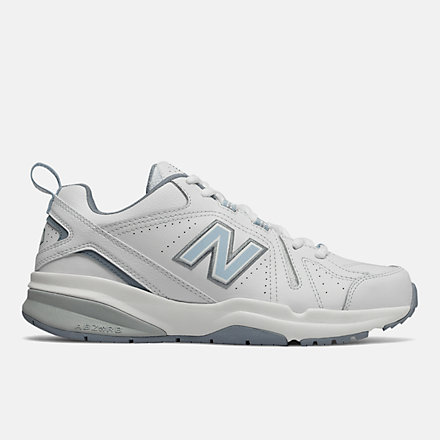
Sizing is the one thing I’d get right before anything else. They run true to length, so don’t size up for width; pick the right width instead. If you’re between a medium and a wide and you can’t try them on, take the wide and wear a thicker sock.
And don’t pay full price for the lifestyle models. The 574 and 327 go on sale constantly, sometimes under $70, and there’s no version of that shoe worth $150. The 990 is a better shoe and it’s still not worth the markup unless you’re standing all day.
Buy one pair, wear it for a month, and see whether you reach for it without thinking. That’s the only test that means anything, and it’s the reason the pair by my door is never the expensive one.
