

The return bin is a better teacher than any trend report. A pair comes back three weeks after purchase, barely creased, and the note says “too narrow”. Nine times out of ten the shoe was never narrow. The buyer ordered the length they wear in a different brand and assumed the width would follow.
Black and silver sneakers women order online are especially prone to this, because the silver panel draws the eye to the outside edge of the foot, which is exactly the part that gets measured wrong. The pair looks sleek in a photograph and feels tight at the fifth toe in real life.
This is the trade view of that problem: what comes back, what the numbers say, and which checks separate a pair that works from one that ends up in the bin with a folded note.
What comes back, and in what condition
Returns cluster into three categories, and the condition of the shoe tells you which one you’re looking at before you read a word of the note.
Unworn, tags attached. Fit panic. The buyer ordered two sizes intending to keep one, or ordered one size in a brand they don’t know. Nothing wrong with the shoe, everything wrong with the sizing assumption.
Creased at the toe, clean sole. Worn indoors for a few hours, then reconsidered. This is the most useful category, because the crease shows exactly where the shoe was too long. A crease that sits half a centimetre behind the toe joint means the internal length was 5 to 8mm too generous.
Scuffed, dirty sole, worn at the outer heel. Worn outside, often for a week. At that point the return is a goodwill decision rather than a fit decision, and the honest answer is that the shoe fit fine and the buyer changed their mind about the look.
The pattern across all three is the same. Nobody returns a pair because the color was wrong. They return it because the feel at the fifth toe, the instep, or the heel counter didn’t match what the box promised. The silver panel just makes the disappointment more visible, since a metallic finish shows every fold.
That’s worth knowing before you order, because it tells you where to spend your attention. Not on the photograph. On the internal measurements and the last shape.
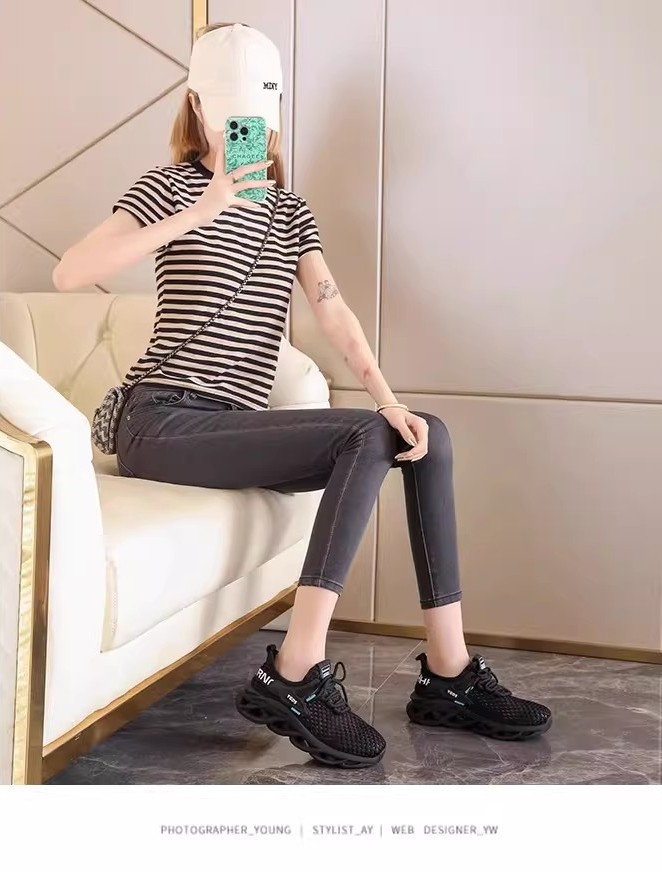
The 6mm gap that starts most returns
Six millimetres is roughly the length difference between adjacent EU sizes in most women’s ranges. It’s also the size of the error that makes a pair feel wrong without looking wrong.
Two things create that gap. First, brands measure internal length differently, some to the last, some to the insole, some to the outer sole. Second, the same nominal size can be built on a wider or narrower last.
So a size 38 from one brand and a size 38 from another can differ by 6mm in length and 4mm in width. Neither is lying. They’re using different lasts, and the number on the box is a label rather than a specification.
For black and silver sneakers women order without trying, that gap is the whole game. The practical consequence: order by internal length in millimetres if the listing gives it, and by your larger foot if it doesn’t.
Measure your foot properly once. Stand on a sheet of paper against a wall, mark the longest toe, and measure heel to mark. Do it at the end of the day. Most people find their two feet differ by 3 to 5mm, and the standard advice to fit the larger foot is correct for a reason.
Then add 8 to 10mm of clearance for a closed sneaker. That’s the number that prevents the crease in the wrong place and the toe contact on descents.
The wider industry view is that shoe sizing has never been fully standardized, which is why the same foot can be a 38 in one shop and a 39 in the next. Treat the number as a starting point, not an answer.
Silver panels hide width problems until week two
Metallic finishes are stiff. That’s the material fact behind most of the complaints, and it doesn’t show up in the first five minutes of trying a pair on.
A coated silver panel doesn’t stretch the way a knit or a soft leather does. Where it sits over the widest part of the foot, it holds its shape and presses. On day one that reads as “snug and supportive”. On day fourteen it reads as a bruise on the little toe.
Three places to look before you commit:
- The panel position. Silver over the midfoot is fine. Silver wrapping the fifth toe joint is where pressure accumulates.
- The seam under the panel. A seam running along the widest point doubles the pressure. A seam set behind it or above it doesn’t.
- The lining. Leather lining under a stiff panel gives a little. Synthetic lining doesn’t, and it holds heat.
There’s a reason metallic finishes photograph so well and wear so badly. The coating reflects light evenly, which flattens the shape of the foot inside it. What you see in the image is a clean silhouette. What you feel at hour six is a rigid edge across the top of your foot.
None of this makes black and silver sneakers a bad choice. It makes them a choice that needs a fitting rather than an order, or at least a retailer with a return window you’re willing to use. In this trade, the buyers who end up happy with metallic panels are the ones who tried them on in the afternoon, when their feet were already slightly swollen, and walked a hundred metres on a hard floor.
If you’re ordering without trying, size up half a size and accept a little extra length. With a stiff panel, length is recoverable and width isn’t.
Where the price gap actually shows up
The difference between a 50 dollar pair and a 150 dollar pair is rarely the upper. It’s the three parts you can’t see in a photograph.
First, the insole. Cheap pairs use a flat die-cut foam. Better pairs use a molded insole with a shaped heel cup and a firmer arch. That difference is worth about 20 dollars on its own and it’s the first thing to fail in a cheap pair.
The shank. A stiff board or composite plate through the midfoot stops the shoe folding in the middle. Without it, the sole bends where your arch is, which is the wrong place. You can test this by holding the toe and heel and trying to fold the shoe in half. It should resist in the middle and bend only at the ball.
And the heel counter. Molded counters hold the heel. Soft ones collapse. A collapsed counter is why some cheap sneakers feel like slippers for a week and then feel like nothing at all.
What the price doesn’t buy, in most cases, is better leather on a fashion sneaker. Coated splits and corrected grain appear at every price point. If the surface is perfectly uniform and the crease test leaves a pale line, you’re looking at a coating whether the shoe costs 60 or 160.
There’s a fourth difference that doesn’t get discussed much outside the trade: consistency. Expensive pairs are cut from the same hide, in the same run, with a quality check between the cutting and the closing. Cheap pairs are assembled in batches where one shoe can differ from its partner by a few millimetres in the quarter panels. Buyers notice this as one shoe feeling tighter than the other, and it’s a real phenomenon, not imagination.
That inconsistency is why trying both shoes matters. Put the left on the right foot and the right on the left. If one feels noticeably different, you have a mismatched pair, and no amount of breaking in fixes it. It’s also a legitimate return reason that most people never think to check.
For context on where the whole category is heading, footwear trade coverage tracks the split between performance construction and fashion construction, and the two have been drifting apart for years. A metallic panel is a fashion decision. A molded insole is a performance decision. The pair that works for a full working day usually has one of each.
The honest trade recommendation is to spend on the insole and the sole unit, and to be indifferent about the badge. A 90 dollar pair with a molded insole and a firm shank will outlast a 200 dollar pair with a soft build and a metallic panel that creases.
The two-week test most people never run
Fit problems that matter show up between day seven and day fourteen, which is exactly the window most people spend wearing a new pair to the office and ignoring the signals.
Run it deliberately instead. Wear the pair for two hours a day for the first week, indoors or on short errands. Then check four points on day seven:
The fifth toe. Any redness that lasts more than ten minutes after removal means pressure. A stiff silver panel won’t give, so this is a sizing decision, not a break-in.
Next, the instep. A mark across the top of the foot means the volume is too low. Loosen the lacing across the middle two eyelets and see whether it clears. If it doesn’t, the last is wrong for your foot shape.
The heel. Soreness at the Achilles means the collar is too high or too stiff. A heel grip makes it worse. A different sock makes it better only marginally.
Finally, the arch. Aching after two hours of standing means the insole has no support. Replaceable, and worth replacing rather than returning.
By day fourteen you’ll know whether the shoe has settled or is settling into a problem. Most pairs that pass day seven are fine by day thirty. Most pairs that pinch at day seven are still pinching at day sixty, and the buyer has stopped wearing them by then, which is the most expensive outcome of all.
There’s a useful companion read on the same subject: the three-hour test for work shoes covers the standing version of this check, and the scuff test for all-black pairs deals with the finish question that metallic panels make worse.
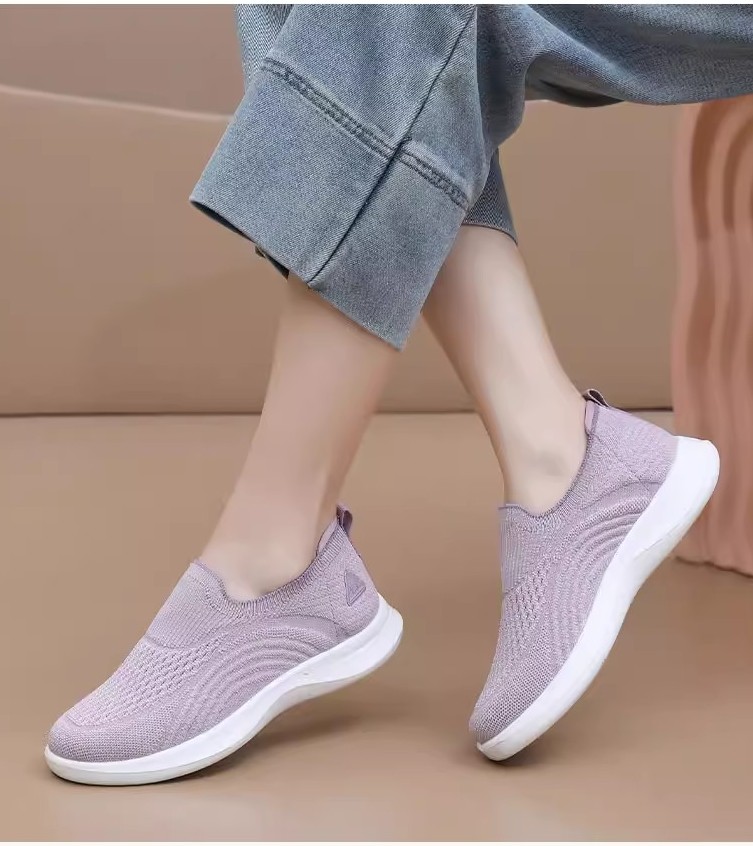
Why the second pair often works better
There’s a pattern in the bin that’s worth naming. Buyers who return one pair and order a second from the same brand usually keep the second.
The reason isn’t quality. It’s information. The first pair calibrates the buyer’s expectation against that brand’s last, and the second order uses the correction.
That’s an expensive way to learn, but it’s a learnable process, and you can shortcut it. Order two sizes from one retailer with free returns, try both at the end of the day, keep one. The cost is a return label. The saving is two weeks of a shoe that doesn’t fit.
There’s a second-order effect worth mentioning. When a buyer returns a pair and reorders, they often pick a different colorway, because the first choice was made on looks and the second on fit. That’s usually the right order of priorities, arrived at backwards.
There’s one more pattern worth noting, and it involves socks. Buyers who return for fit often tried the pair with thin socks and then wore them to work with thicker ones. A 2mm difference in sock thickness changes the internal volume by about half a size. If your first fitting happens in July with no-show socks and your working week happens in November with wool crews, the pair that felt right in the shop will feel tight in the office.
So the second order isn’t only correcting length. It’s correcting the conditions. Fit the pair the way you’ll actually wear it: same socks, same time of day, same amount of walking. That single adjustment accounts for more kept pairs than any size chart.
For retailers, this is why a generous return policy pays. For you, it means the size chart is a hypothesis and the fitting is the experiment. Treat it that way and the second pair stops being a correction and becomes the only pair you needed.
What to check on the product page before ordering
Six things, in this order. Most listings include four of them, and the missing two are usually the ones that matter.
Internal length or a size conversion table. If the listing only gives EU sizes, look for a millimetre figure. If neither exists, expect to use the return window.
Last width. Some brands label standard, wide, and narrow. A standard last on a wide foot is the single most common fit failure in women’s sneakers.
Sole stack height. Under 20mm is flat and unforgiving. 22 to 30mm is the usable middle. Over 32mm changes how you walk and how the shoe photographs.
Upper material and lining. Leather lining breathes and gives. Synthetic lining holds heat. A coated metallic panel needs the lining to do the work.
Weight per shoe. Under 300g feels light. Over 400g is noticeable by the end of a working day.
Removable insole. Worth more than most buyers realize, because it lets you fix the arch without changing the shoe.
One thing the listing never tells you is how the pair behaves after twenty wears. Black and silver sneakers women keep for two years usually share a build detail: the silver sits on a reinforced panel with a backing layer, so it holds shape instead of creasing into the toe. The cheap version bonds the metallic film straight onto the upper, and that film separates at the flex line within a season.
You can feel the difference through the panel. Press it with a thumb. A backed panel resists and springs back. A film-only panel wrinkles and stays wrinkled. That test takes five seconds and it’s more informative than any product description.
Two examples of how this plays out on real listings. A pair like these mesh sports sneakers in EU 34 to 38 at 55 dollars gives you a knit upper that forgives width, which is the opposite trade from a stiff metallic panel. And a leather-look pair such as these breathable walking shoes available in black and four other colors tells you more about fit in the listing than most fashion sneakers do, mostly because the sizing is honest.
Nothing on that list replaces trying the pair. It just narrows the field before you spend on return postage. In the trade, the buyers who get it right first time are the ones who read the measurements and ignored the styling photo.
For the wider range, the women’s shoes collection is organized by type rather than by trend, and the full shoes category covers the boots and heels side of the same wardrobe, which makes the comparison easier. If you only take one thing from the return-bin view, take this: the pair that fits is the pair you forget about, and no silver panel makes up for a pair of black and silver sneakers that press on your little toe by Thursday.
