

The bus is due in six minutes and the pavement outside your building has that grey sheen that means standing water. You’ve got two choices in the rack: the suede pair that will be ruined by the time you reach the corner, or the rubber ones that look like a school shoe from 1994.
Rubber sneakers exist for exactly that moment. They keep your feet dry, they wipe clean with a cloth, and they forgive you for walking through a puddle instead of around it. What they don’t do is everything else, and the marketing rarely mentions that part.
I’ve been through four pairs of rubber-soled sneakers in three years, two of which I gave away. Here’s what I’d check now if I were buying again, and how to tell a genuinely waterproof shoe from one that just has a rubber-looking strip around the bottom.
Three different things get called “rubber sneakers”
This is the first trap. Search the term and you’ll get three unrelated products sitting next to each other in the results, all called the same thing.
- Full rubber shell. The whole upper is moulded rubber, like a short wellington. Genuinely waterproof, genuinely sweaty, and heavy enough that you notice after a kilometre.
- Vulcanised canvas or leather. A fabric or leather upper bonded to a rubber outsole under heat. Water-resistant at the sole seam, not waterproof across the toe.
- Foam midsole with a rubber outsole. The most common type by far. The rubber is only the thin tread layer glued underneath, and it does nothing about rain coming through the upper.
If your actual problem is wet feet, only the first category solves it. The other two help with grip and with the state of your sole, which is a different job.
Read the product copy for the phrase “water-resistant” rather than “waterproof”. The first means it’ll survive a drizzle and soak through in a downpour. The second means a membrane, and a membrane in a sneaker usually costs more than the shoe looks like it should.
What vulcanising actually does to a sole
Vulcanisation is the process that turns sticky raw rubber into the springy stuff under your foot. Heat plus sulphur, and the rubber cross-links into something that holds its shape and bounces back. Without it, a rubber sole would go tacky in summer and crack in winter.
The reason it matters when you’re shopping is the seam. A vulcanised sole is fused to the upper rather than glued, so the join survives repeated flexing. Look closely at the sidewall: if you can see a fine lip of rubber overlapping the fabric, that’s vulcanised. If it’s a flat glued line with a visible shadow, it isn’t.
The raw material matters too. Natural rubber grips better on wet stone than the synthetic blends used on cheaper pairs, which is why proper rain shoes still use it. It also yellows with age, so a white rubber sole will go cream within about 18 months no matter what you do.
That yellowing is not dirt. Scrubbing harder won’t fix it, and bleaching the sole makes it worse.
The 30-minute puddle test, done before you commit
You can’t test waterproofing in a shop, but you can test the two things that predict it. Do both at home, in the first week, while the return window is still open.
First, fill a shallow tray with 10mm of water and stand the shoe in it for 30 minutes. Then press a dry tissue against the inside of the toe. Wet tissue means the upper is wicking, and the shoe is water-resistant at best.
Second, walk on wet tile for a minute. Most rubber soles are fine on dry pavement and genuinely sketchy on smooth wet tile, especially the flat-bottomed ones with 2mm of tread. If your commute includes a station concourse with polished floors, test this before you wear them out of the house.
Neither test is scientific. Both catch the pair that would have annoyed you for a year.
Why they smell, and the fix that actually works
Rubber doesn’t breathe. That’s the trade for keeping water out, and it means sweat has nowhere to go. Warm damp shoe plus a dark hallway equals bacteria, and bacteria is what smells, not the rubber itself.
Three things help, in order of effectiveness:
- Take the insoles out every single night. The insole holds most of the moisture, and a shoe dries twice as fast without it.
- Rotate. Two pairs worn on alternate days will each last longer than one pair worn daily, and neither will develop the smell.
- Stuff with newspaper overnight, then bin the paper in the morning. Old trick, still works, costs nothing.
What doesn’t help: baking soda sprinkled in and left for a week. It absorbs a bit of surface moisture and does nothing about the colony living in the lining. A wash with mild soap and thorough drying does more, though you need to dry rubber soles away from direct heat or they harden.
Cedar shoe trees are worth it if you wear the same pair daily. They’re not magic, but they pull moisture out overnight and they keep the shape of a soft upper.
Fit: rubber does not stretch, so size for the sock
Every other shoe in your rack will give a little. Rubber won’t. A rubber shell or a vulcanised toe cap stays exactly the width it was on day one, which is why so many people end up with a pair that hurts across the little toe.
Decide your sock first. Thin cotton in summer, wool in winter, and the difference between those two is roughly half a size. If you plan to wear them with thick socks from October, try them on with thick socks, not with the paper ones the shop gives you.
One measurement to take at home: stand on a piece of paper, mark the widest point across the ball of your foot, and measure it. If you’re at 95mm or more in an EU 38, look for a wide fit or a laced style with a soft vamp. A slip-on rubber sneaker in a standard width will pinch, and there’s no breaking in to look forward to.
Runners and walkers tend to size rubber sneakers the same as their trainers. Don’t. Trainers have padded collars and stretchy uppers that hide a tight fit for the first month.
What they’re genuinely good for
Wet commutes are where rubber sneakers earn their keep. Festivals and dog walks in November too. Anyone whose route involves grass and mud. Kids’ school runs. Trips where you’ll be walking through a city in unpredictable weather and don’t want to pack two pairs.
They’re also surprisingly good for people who work on their feet in damp conditions, like market stalls or garden centres, where a normal sneaker gives up by lunchtime.
Where they fall down is anything long. A full rubber shell after four hours feels like wearing a plastic bag, because functionally that’s what it is. If your day involves 12,000 steps, take a breathable pair and accept damp toes on the two wet days a month.
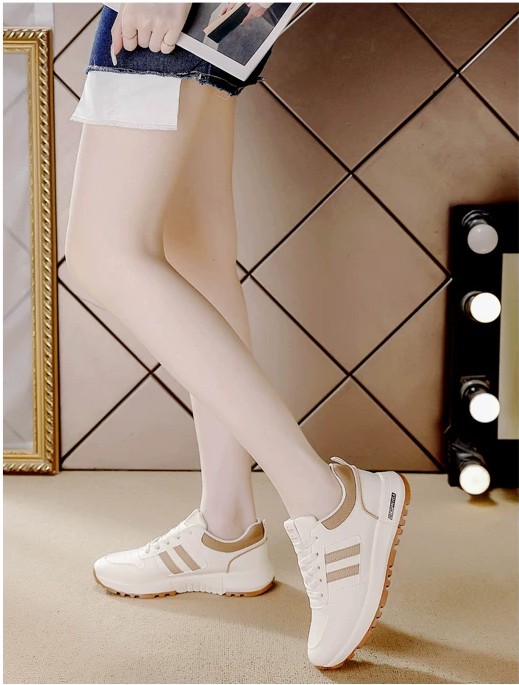
The ankle gap nobody mentions
Rubber keeps water out from below. It does nothing about the rain that runs down your leg and into the collar, which is the actual reason your socks get wet on a bad day.
This is why the low-cut rubber sneakers are the least practical version. A 60mm collar catches most of what runs down. A shoe that stops below the ankle bone funnels everything straight into your sock.
Trousers make a difference too. A straight or wide leg that covers the top of the shoe sheds water onto the floor. A cropped or tapered leg directs it straight at the opening. If you commute in rain regularly, that’s worth more thought than the tread pattern.
Short of a boot, the practical answer is a slightly higher collar and a pair of wool socks. Wool keeps warming you when wet, cotton doesn’t, and that single swap has saved more of my winter mornings than any shoe.
Tread depth beats tread pattern, mostly
Shopping advice on rubber soles usually obsesses over the pattern. Herringbone, chevron, honeycomb. In practice, depth matters more than shape, because water needs somewhere to go and a 2mm groove can’t move much of it.
Put your thumbnail into the groove at the heel. If your nail disappears to the quick, you’ve got 4mm or more, which is decent. If you can barely dent it, the sole is decorative.
The exception is smooth wet tile, where no tread pattern helps much and a softer rubber compound does. You can test softness by pressing the sole with a fingernail; if it leaves a faint mark, the compound is grippy but will wear fast. That’s the trade every sole designer makes, and there’s no version that grips well and lasts forever.
If you want a middle ground between rain-proof and wearable all day, a leather pair with a thick rubber outsole is the usual answer. Something like these leather sports sneakers for wet days keeps rain out for about 20 minutes of steady drizzle and stays comfortable past hour six.
Cleaning them without wrecking the finish
Rubber cleans easily and that’s half its appeal. A damp cloth with a drop of washing-up liquid takes mud off a rubber shell in thirty seconds. Don’t use a scouring pad on the sole, since it scrubs away the top layer and leaves a patch that collects dirt faster.
Fabric uppers on vulcanised pairs are the tricky bit. Cold water, a soft brush, and no detergent on coloured canvas, because detergent lifts dye. Then dry them stuffed with paper in a warm room, never on a radiator. Heat is what makes rubber go brittle and what shrinks a canvas upper by half a size.
White rubber soles will yellow, and the only honest fix is a sole paint pen, which lasts a few weeks. If a permanently crisp white sole matters to you, this isn’t the material for you.
For canvas versions, there’s a longer routine worth knowing. Our piece on what canvas sneakers survive in the washing machine covers which pairs come out intact and which come out shaped like a slipper.
When a rubber sole is the wrong call
If you have plantar fasciitis or a heel that aches on the first ten steps of the morning, a stiff rubber sole is not your friend. Rubber doesn’t absorb shock the way foam does, and blisters and sore heels are the usual result of wearing them for a full day of walking.
Same for anyone who stands on concrete for eight hours. The sole is built to keep water out, not to cushion. Adding an insole helps a bit, though it also pushes your heel up and can make the shoe rub at the collar.
If your priority is a light shoe with a low sole instead of a dry one, the trade runs the other way. That’s what a genuinely low sole does to the way you walk, and it’s a different purchase with different checks.
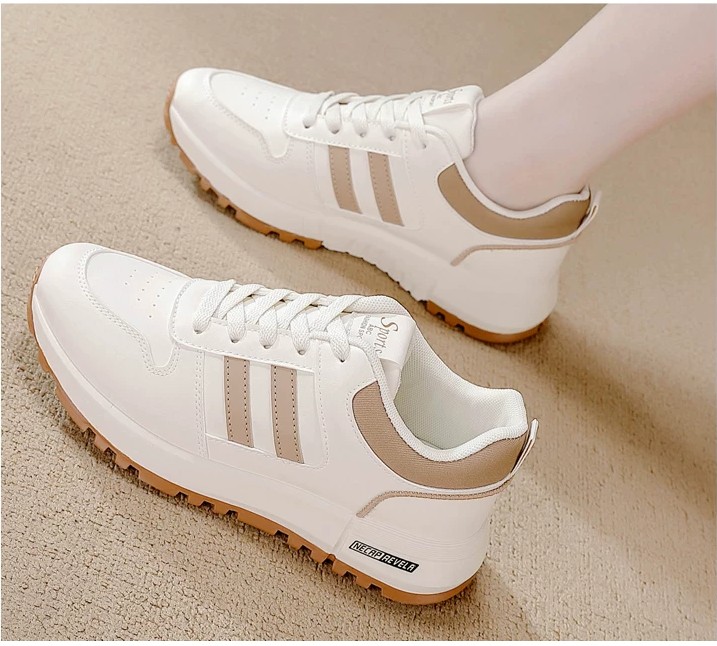
Where to look, and what to pay
Prices for rubber sneakers split cleanly. Under about $60 you’re usually getting a glued rubber outsole on an EVA midsole, which grips fine and isn’t waterproof. Between $60 and $120 you start to see vulcanised construction and better rubber. Above that, you’re paying for design or a membrane, and the membrane is the only part that changes how dry your feet stay.
Two categories worth browsing if you want to compare shapes: the sneakers category for the low, flat versions, and the flat-bottomed styles that sit closest to a plimsoll. These flat-bottomed board shoes with a vulcanised sole are the pair I’d start with if you want the look without the wellington feel.
And if you’d rather have mesh than rubber, because your feet run hot and dry, this mesh soft-soled sports sneaker will be comfortable from the first hour and useless in a downpour. Pick which problem you’d rather have.
For me it’s the wet pavement. I’d rather own one pair that handles rain and wear something else when it’s dry, than keep buying shoes that are only good in the weather I can predict.
