

It’s 7:38 on a Tuesday. You’ve got a train at 8:02, a desk you won’t leave until six, and one pair of shoes by the door that has to handle all of it. That’s the real brief for casual sneakers for women, and it’s a lot harder than the product photos make it look.
Most pairs fail in the same three places. The upper creases and cracks across the toe. The insole flattens by week six. The outsole starts peeling at the heel because the glue wasn’t meant for pavement. You don’t notice any of it in the shop. You notice it at 4pm, when your arch is aching and you’re standing in a queue.
So here’s what actually decides whether a pair lasts: the upper material, the stack height, and how the heel holds your foot. Everything else is decoration.
Start with your real week, not a mood board
Before you look at a single pair, count your steps. Your phone already did it. If your average is 4,000 a day, you can wear almost anything with a decent insole. If it’s 9,000, the shoe is load-bearing equipment and you should treat the spec sheet that way.
Then map the surfaces. Office carpet and polished concrete are gentle. Cobblestones, wet tile, and the loose gravel path between the car park and the school gate are not. A flat, hard rubber sole on cobbles will send a shock straight up through your heel, and after two weeks of it you’ll feel it before you get out of bed.
Weather matters more than most people admit. If you live somewhere with four months of rain, canvas is a losing bet unless you enjoy damp socks by 10am. Leather handles drizzle. Knit handles heat. Nothing handles a proper downpour, so don’t buy for that.
One more thing: check what you’ll wear them with. A slim, low-profile pair disappears under wide-leg trousers and looks tidy with a midi skirt. A chunky sole pulls the eye down and makes cropped hems look intentional. Buy the silhouette that matches the clothes already hanging in your wardrobe, then browse the women’s sneaker range with that shape in mind.
The upper decides how long they last
Three materials cover 95% of what you’ll find, and each one has a clear job. This is the part of the decision that decides whether your casual sneakers for women last two years or two seasons.
Full-grain leather is the workhorse. It scuffs, but it scuffs in a way you can buff out with a cloth and a bit of cream. A 1.2mm to 1.4mm hide will hold its shape for years. Thinner than 1mm and the toe box will collapse into a soft, sad pancake within a season. Leather also breathes better than coated synthetics, which is why it doesn’t turn into a swamp by lunchtime.
Canvas is cheap, light, and honest about being cheap. It’s fine for summer and terrible for wet winters. Expect the toe to wear through where your big toe pushes, usually around month eight if you walk a lot.
Engineered knit is the comfortable one on day one and the saggy one by month four. It hugs your foot without breaking in, which feels great until the collar stretches and your heel starts slipping sideways. If you have narrow feet, knit is generous in a way that becomes annoying.
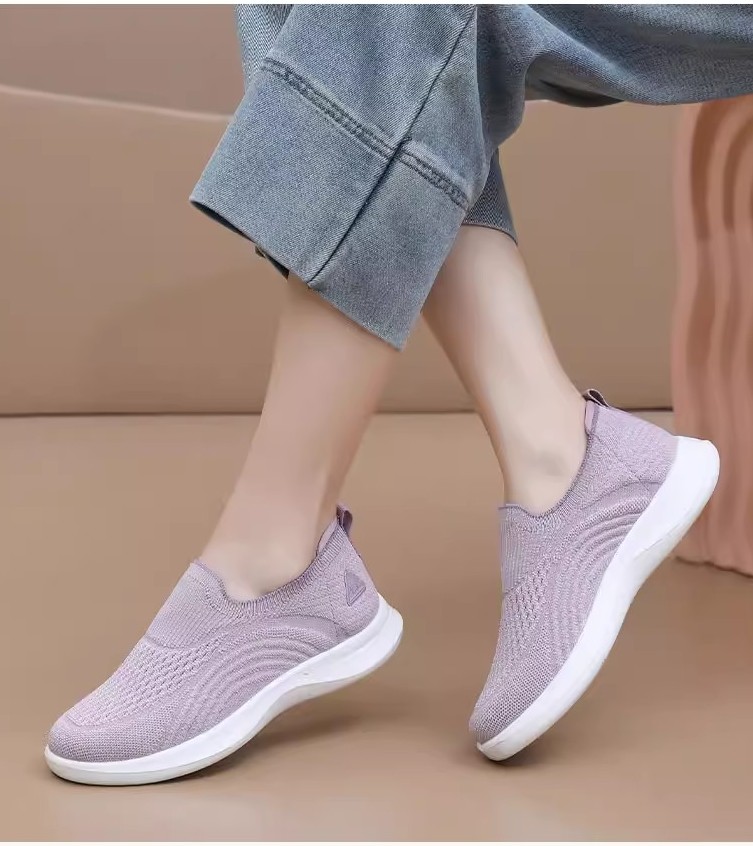
Mesh panels sit somewhere in between. A pair like these mesh soft-sole walking sneakers moves air through the upper, which is the difference between comfortable and clammy in July. Just don’t expect mesh to survive being scraped along a kerb.
Check the lining too. Textile lining dries fast. Leather lining moulds to your foot but takes a fortnight to stop rubbing. Cheap unlined pairs will leave dye on your socks the first three wears. That’s normal, and it does stop.
Stack height and drop: the two numbers worth writing down
Stack height is how much material sits under your heel. Drop is the difference between heel and toe. Both are printed on the box if you know where to look, and both change how the shoe feels after hour five.
A 10mm to 14mm stack with a 6mm to 8mm drop is the sweet spot for daily wear. It’s enough cushioning to take the edge off concrete without turning the shoe into a marshmallow you have to fight. Zero drop feels strange for the first week if you’re used to conventional shoes, and it loads your calves more than you’d expect.
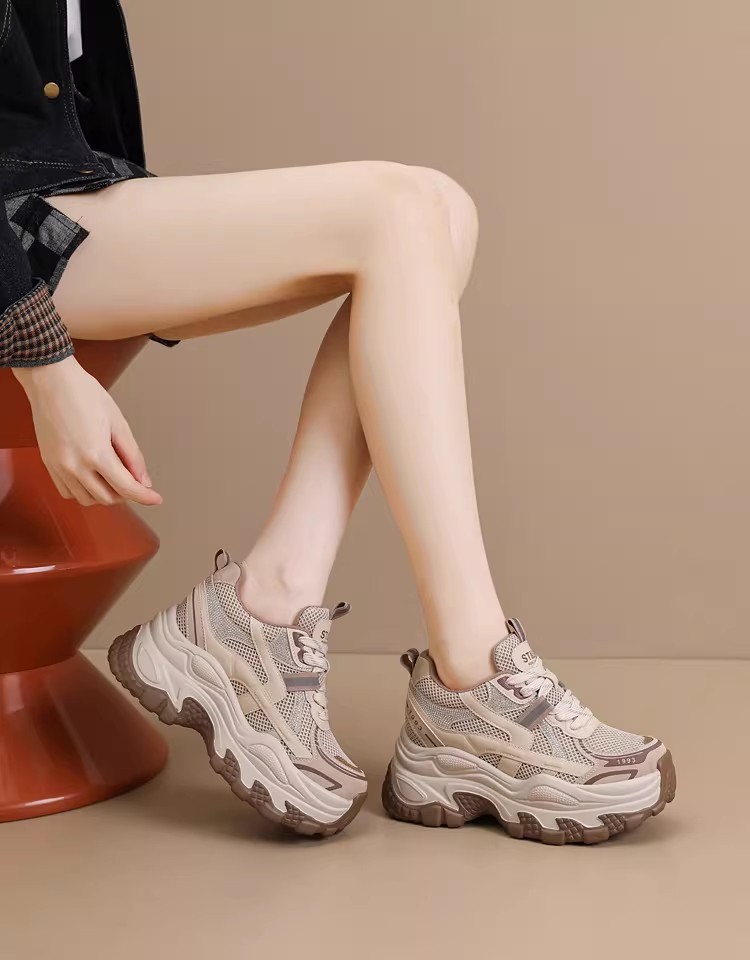
Under 8mm of stack, you’re basically walking on the pavement with a sock on. Over 35mm, the shoe gets tippy on uneven ground, and your ankle does extra work to compensate. If you want height without the wobble, a platform-style pair makes more sense than a max-cushion runner, because the platform is wide and stable rather than tall and squishy.
Midsole foam is where the money goes. EVA is the standard: light, cheap, and it compresses permanently after roughly 500km of walking. That’s about eight months at 8,000 steps a day. Foam with nitrogen or supercritical gas injected into it holds up longer, but you’ll pay double.
A quick test in the shop: press your thumb into the midsole under the heel. It should give maybe 3mm and spring back. If it stays dented, that pair has been on the shelf a long time and the foam is already tired.
Fit check in the first sixty seconds
Forget the size on the label for a moment. Sizing is inconsistent across brands by up to a full size, so treat it as a starting point and let your feet decide.
Here’s the order I check in, and it takes less than a minute:
- Toe room: a finger’s width, about 10mm, between your longest toe and the front. Less and you’ll lose toenails on descents.
- Heel lock: walk five steps. If your heel lifts more than 5mm, the shoe is either too long or too wide at the collar.
- Width at the ball: your foot should spread without the upper pressing on the joint. If you can see the outline of your toes through the material, it’s too tight.
- Arch contact: stand up. You should feel support, not a lump under the middle of your foot.
Try them on at the end of the day, not the morning. Feet swell by up to half a size over a workday, and a pair that fits at 9am will pinch by 5pm. Wear the socks you’ll actually use, too. Thin no-shows and thick crew socks change the fit more than you’d think. Half of the bad reviews on casual sneakers for women are really fit complaints wearing a durability costume.
If the pair is leather, expect 3mm to 5mm of stretch across the width in the first fortnight. If it’s knit, expect more. Buy snug but not tight, and never buy hoping a shoe will stretch lengthways. It won’t. There’s a longer walkthrough on getting the first-time fit right on leather sneakers if you want the detail.
Where cheap pairs actually fail
I’ve bought the £35 pair. Twice. Both times the failure came from the same place, and it wasn’t the upper.
It was the bond between upper and outsole. Cheap pairs use a thin cement layer that lets go at the heel flex point after about 200km. You’ll see a hairline gap, then a flap, then a shoe that lets water in through the side. A stitched or vulcanised sole takes longer to make and costs more, and it’s the single clearest signal of build quality you can check with your eyes.
Second failure point: the insole. A 3mm foam footbed with no structure underneath will pack down to nothing in six weeks. Pull it out in the shop. If it’s flimsy enough to fold in half without resistance, plan to replace it with a proper insert on day one.
Third: the heel counter, the stiff cup at the back. Squeeze it. If it collapses completely, your foot will roll inward and the shoe will lean. Some flex is fine, total collapse isn’t.
What I’d skip entirely: any pair with a glued-on decorative panel at the toe. It peels, it looks worse than the scuff it was hiding, and it can’t be repaired.
One caveat on the other side. Expensive doesn’t automatically mean durable. A £180 fashion pair with a 4mm sole and no shank will wear out faster than a £70 pair built like these thick-soled breathable board shoes. Look at construction, not the price tag.
Care that takes four minutes a week
You don’t need a kit. You need a brush, a cloth, and the discipline to do it before the mud dries.
Leather: wipe with a damp cloth, let it dry away from a radiator, then work in a pea-sized amount of cream with your finger. Once a fortnight is plenty. Skip the cream and the leather dries, cracks across the flex point, and stops being waterproof.
Canvas: cold water, a soft brush, a drop of washing-up liquid. Scrub the toe cap where the dirt collects. Never put canvas in the washing machine on a hot cycle. The glue softens and the sole starts to lift at the edges.
Knit: hand wash only, and don’t wring it. Roll it in a towel, then air dry stuffed with newspaper so it keeps its shape.
Suede: brush dry, never wet. A suede eraser handles most marks. Water stains need a full even soak rather than a spot fix, which sounds backwards and works.
Whatever the material, deal with the inside as well. Sprinkle bicarbonate of soda in, leave it overnight, tip it out. It kills the smell far better than spraying perfumed stuff into a shoe that’s already damp.
Rotate two pairs if you can. A shoe needs 24 hours to dry out properly, and wearing the same pair every day halves its life. That’s the cheapest durability upgrade available, and it costs nothing beyond a second pair. It’s also the reason people who own three pairs of casual sneakers for women often spend less per year than people who own one.
Three outfits that work, and one that doesn’t
Wide-leg trousers plus a low-profile sneaker is the easiest combination going. The hem should skim the top of the shoe, or break once. Any longer and you’re walking on fabric, which destroys the hem and looks sloppy within an hour.
Straight jeans and a slim pair is the second. Cuff them once if they’re long. A chunky sole under a slim jean makes your feet look like they belong to someone else, which is exactly why some people love it and most don’t.
Midi skirt plus canvas is the third, and it works better than it sounds. The trick is proportion: a full skirt wants a low, flat shoe, not a platform. If the skirt has volume, keep the shoe simple. Pair it with the plain casual walking shoes and it reads intentional rather than thrown together.
The one that doesn’t work: skinny jeans over a high-top. The jean bunches at the ankle, the collar digs into your shin, and by lunchtime you’ll have a red mark. If you want the high-top look, wear it with a cropped or tapered leg so the shoe has room. There’s more on that in this piece about gum soles and how they change a silhouette.
Colour is simpler than the styling guides suggest. One neutral pair covers 80% of your week. A second pair in a colour you love covers the days you want to look like you made an effort. Three or more and you’ll have a pair you never wear, usually because it only goes with one outfit.
Socks are the detail that gives it away. No-shows with a low shoe, and make sure they don’t slide down: the heel grip matters. With a mid-cut shoe, a thin crew sock in a colour that matches the shoe reads deliberate. White socks with black shoes is a choice, and it only works if the rest of the outfit is doing something to justify it.
What to buy first, second, and never
If you’re building from scratch, buy one plain leather pair in a mid-tone. It works with jeans, trousers, and most skirts, and it hides scuffs better than white or black. That single pair will do more for you than any trend-led shopping list of casual sneakers for women.
Second pair: something light for summer, canvas or mesh, in a colour you actually like. This is the pair you’ll throw on for the school run and the supermarket, so comfort beats style here.
Never buy: a pair that needs breaking in before it’s comfortable for a 20-minute walk, anything with a sole thinner than a credit card, or a white pair you plan to wear in British weather and keep clean. You won’t.
The pair by your door at 7:38 should be the boring one. It should be the pair you don’t have to think about, that still looks fine at 6pm when you’re standing on a train platform. Buy for that moment, and the rest sorts itself out.
