You’ve got the dress on, the taxi is two minutes away, and you’re standing in the hall pulling a lace tight around your ankle because the shoe felt loose when you tried it on at 10am.
That’s the moment lace up heels for women stop being romantic and start being a physics problem. Pull too little and your heel lifts with every step. Pull too much and you cut off the blood supply somewhere around the third song.
The good news: laces are the most adjustable part of any shoe. A pair that fits badly at 9am can fit well at 9pm if you know where to put the tension. A pair that’s tied wrong will hurt no matter how much you paid for it.
Here’s how to get the fit right, and which laced styles are worth the trouble.
The lace does the fitting, not the size on the box
Most closed shoes give you one adjustment: the buckle or the elastic panel. A lace-up heel gives you six or eight, depending on the eyelets, and that changes how the shoe behaves over a long day.
Think of the laces as a series of small straps. Each crossing pulls the upper against a different part of your foot. The tension near the toe controls the width across the ball. The tension at the top controls whether your heel stays down. If you tie the whole thing with one even pull, you’re tightening the toe when you only needed to tighten the ankle.
The mechanics are simple enough: the tie sits above the ankle joint, so it can hold the heel down without locking the joint itself. Anything that crosses the joint line stops you flexing properly, which is why some laced shoes make you walk like you’re on stilts.
That’s why the same pair can feel too tight in the morning and too loose by evening. Your foot changes shape through the day, and the laces need to change with it.
Practical version: tie the bottom two crossings snug, leave the middle ones slightly looser, and pull the top crossing firm. Then walk ten steps before you commit. If your toes go numb, loosen the middle. If your heel lifts, tighten the top.
Half a size matters less here than in a pump. A lace-up shoe with a little extra length can be pulled in at the instep. A shoe that’s too short cannot be fixed by any knot.
Where the ties cross changes the whole look
Lace-up heels come in three broad shapes, and they sit on the leg very differently.
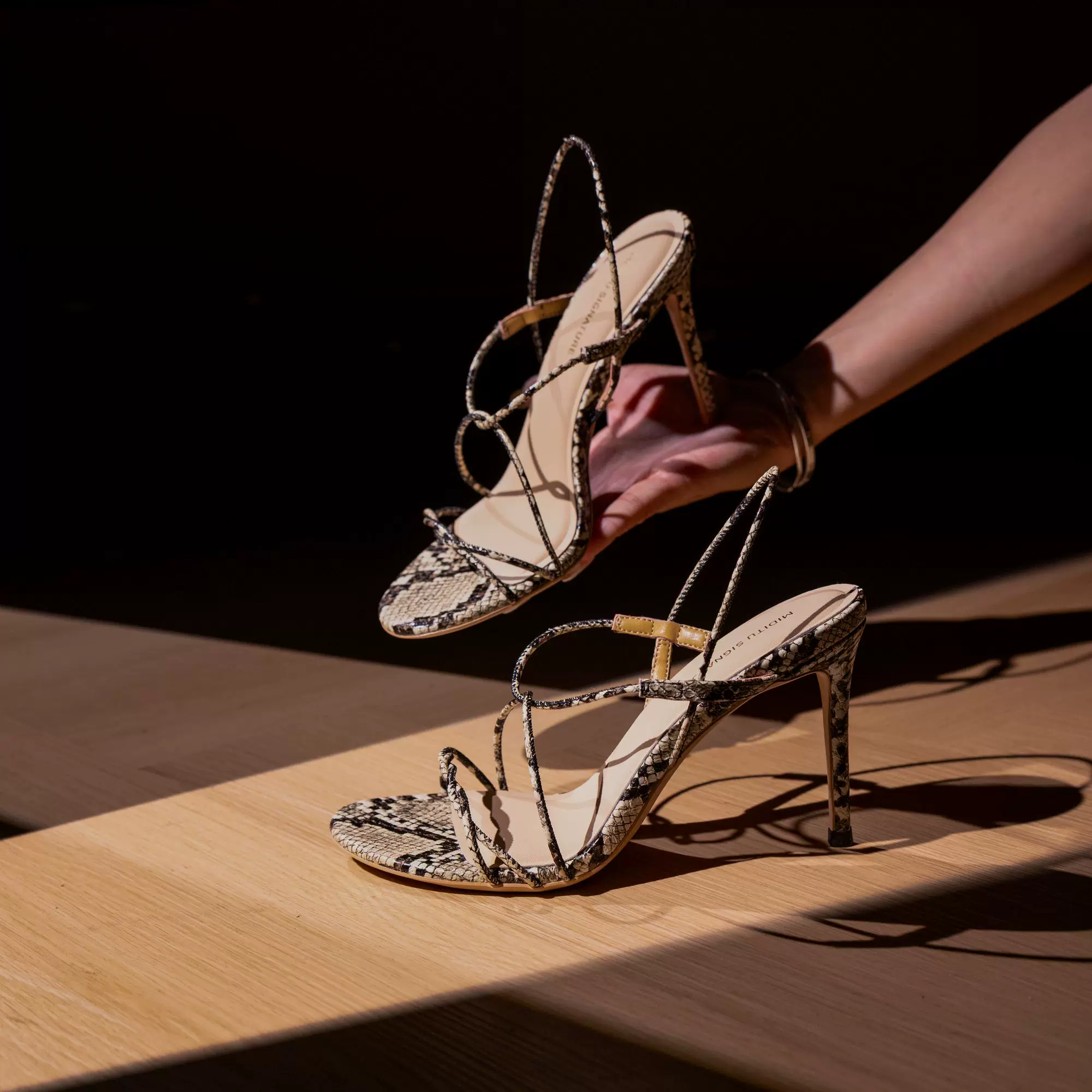
Ankle-tie sandals have thin laces that wrap once or twice above the ankle bone. They’re the most common version and the easiest to wear. The tie adds a horizontal line at the ankle, which makes the leg look shorter if the laces are thick. Thin round laces are kinder.
Calf-wrapping styles run up the lower leg, gladiator style. They look dramatic and they take time. If you’re wearing them to an event with a lot of standing, expect to retie them at least once, because the laces settle as your calf flexes.
Corset lacing runs up the front or back of a closed shoe, usually a bootie or a heeled boot. This is the most supportive option and the least forgiving if the shoe is the wrong shape. The lacing pulls the whole upper tight against your foot, so any pressure point gets amplified instead of hidden.
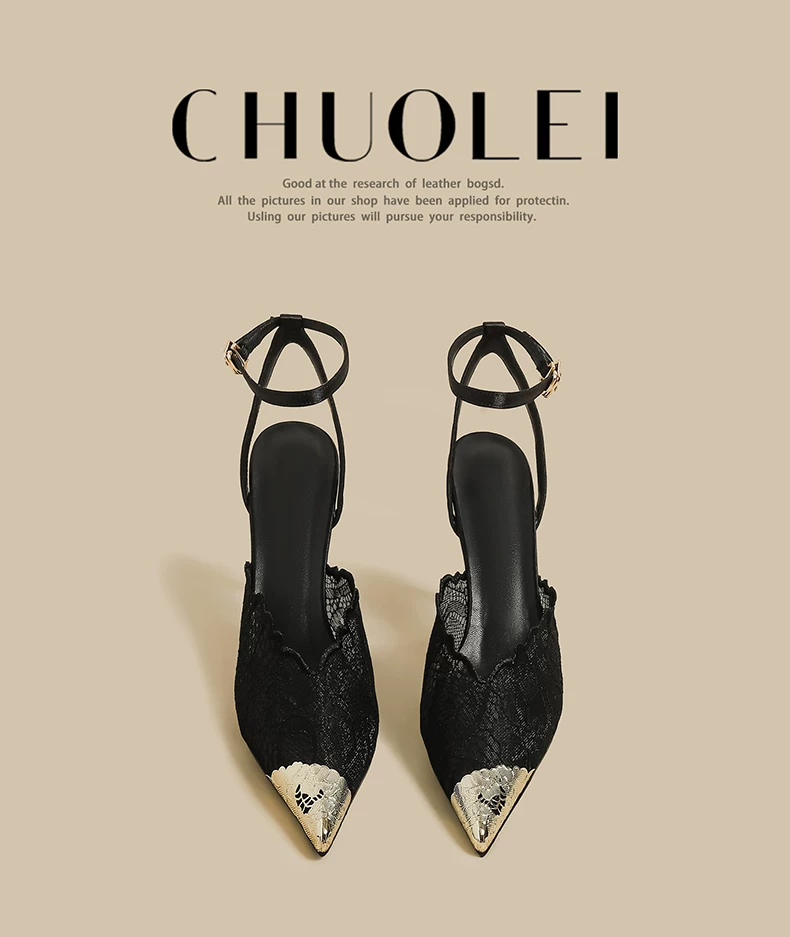
For a first pair, ankle ties are the safe choice. They give you most of the fit benefit with none of the dressing time. These heeled sandals with a covered toe are the kind of shape that works with ankle ties because the toe box holds the front of your foot steady while the laces handle the back.
Open sandal laces and closed lace-up heels are different shoes
Most lace up heels for women sit somewhere between the two, which is why the fitting advice has to cover both.
The phrase covers both, and they solve different problems.
An open lace-up sandal is about grip. The laces stop your foot sliding forward on the footbed when the sole gets warm. That matters more than people think: a smooth leather footbed plus a little sweat equals your toes jammed into the front edge by hour two. Laces prevent that slide.
A closed lace-up heel is about volume. It lets you wear a shoe that’s slightly too wide at the instep, or slightly too narrow across the ball, because you can pull different sections independently. If you have one foot wider than the other, which most people do, this is the style that hides it.
There’s a third category that gets missed: lace-up booties with a block heel. Those are the winter version of everything above, and they work because the lacing locks the ankle while the block keeps you upright on wet pavements. If you live somewhere with actual weather, this is the pair you’ll wear from October to March.
The trade-off is breathability. Closed lace-up heels in summer get warm, and the laces hold the heat in. Open sandals are cooler but show every bit of foot swelling by evening.
If you’re buying one pair to cover both work and weekends, a closed lace-up with a 70mm heel is the more useful purchase. If you’re buying for a summer wedding, go open and accept the retying.
Tying them so they stay tied
Laces come undone because a standard bow is a weak knot. The bow sits on top of a slippery satin ribbon and works itself loose with every step.
Two fixes that actually work. First, use a double-slipped knot: make the bow, then pass the loops through a second time before pulling. It looks slightly bulkier and holds for hours.
Second, tuck the ends. Long satin laces drag on the ground, catch in escalators, and get stepped on by other people. Wrap the extra length around the ankle once more, or tuck the ends under the last crossing. If the laces are still too long, cut them and seal the ends with a lighter, carefully.
Waxed cotton laces grip better than satin and stay tied longer. They also look less formal, so it depends on the shoe. Satin photographs better. Waxed survives a night out.
One more trick for slippery satin: rough the surface of the lace where it crosses with a fingernail. It sounds like nonsense and it gives the knot something to grip.
Carry a spare pair in your bag if the shoe came with them. Losing one lace at 10pm means walking home in one shoe, and no taxi driver will thank you for that.
What to wear with lace-up heels
The laces draw the eye to your ankle, so the hem of what you’re wearing matters more than usual.
Midi skirts and dresses work well when the hem sits below the tie, around mid-calf. Then the laces read as a detail rather than a interruption. A hem that stops right at the ankle bone competes with the knot, and the whole thing looks busy.
Wide-leg trousers are the unexpected winner. A cropped wide leg shows the shoe and the tie, and the volume on top balances the fussiness below. Skinny jeans with ankle ties look dated in a way that’s hard to explain, so skip that combination.
Shorts and mini skirts need a simpler lace. Thin, one wrap, no calf wrapping. The gladiator look needs fabric around it or it starts to look like a costume.
One outfit that surprises people: a plain white shirt, straight black trousers and lace-up heels. The laces do the decoration, so you don’t need jewellery. It’s the easiest way to wear a fussy shoe without looking like you tried.
Colour is easier than people expect. Black laces on a black shoe disappear, which is good for work. Contrast laces, like ivory on black, are a weekend choice. If you want the shoes to do the talking, keep everything else matte and let the laces be the only texture.
For a full-length dress, ankle ties disappear entirely under the hem, so the effort is wasted. Wear them with something short enough to show the work.
Watch the sock question in winter. Lace-up heels and thick socks don’t mix, because the laces pull the sock tight across the instep and cut off circulation. If it’s cold, wear a thin sock or a tights version with a reinforced heel, and loosen the bottom crossings to make room.
Nail colour is the detail people forget. An open lace-up sandal leaves your toes on display, so a chipped pedicure is more visible than it would be in a closed pump. Not a rule, just a thing you notice in photos later.
The parts nobody warns you about
Lace up heels for women have failure modes that don’t show up in the first five minutes.
- They mark your ankles. A tight tie leaves a red line that lasts about an hour after you take the shoes off. If you’re going straight from the event to somewhere with bare legs, loosen the top crossing by one notch before you arrive.
- They loosen as your feet swell. The opposite of what you’d expect. Warm feet compress the padding, the laces go slack, and the shoe starts to slip. Retie once, around the middle of the evening, and you’ll be fine.
- They catch on hems. Long laces and long dresses are a bad combination. The lace end hooks the hem when you sit down, and you stand up with your skirt attached to your shoe.
- They’re slow to put on. If you’re the kind of person who leaves the house in 90 seconds, a calf-wrapped pair will make you late every time. That’s not a small thing. It’s the reason most people wear their lace-up heels twice and then leave them in the cupboard.
And the honest one: laces can look cheap. Thin satin ribbon on a badly finished shoe reads like a costume accessory. Leather laces on a well-made sandal read like a decision. Look at the eyelets, not the laces, when you’re judging quality. Metal eyelets set into leather last. Stitched loops fray.
How to choose your first pair without wasting money
If you’re buying your first pair of lace up heels for women, start with a 70mm heel, thin round laces, metal eyelets, and a leather footbed. That combination handles most outfits and most feet. Try them on at the end of the day, walk on a hard floor for two minutes, and check that the top lace can be tightened without pressing on the ankle bone.
Then test the knot. Tie them, walk 20 steps, and see if the bow holds. If it slips immediately, the laces are too smooth and you’ll spend the whole evening retying them.
Before you pay, check the lace length against your ankle. Most pairs come with 90cm laces, which is enough for two wraps on an average ankle and not enough for a calf wrap. If you need longer, buy a pair of satin laces separately and swap them. It’s a five-minute fix that saves a whole evening of retying.
If you have narrow feet, lace-up styles are the best thing you can buy, because they let you pull the upper tight without crushing your toes. If you have wide feet, they work too, as long as the lacing panel sits over the instep rather than across the widest part of your foot.
Store them tied, not loose. Laces that sit in a heap develop a permanent kink at the crossing, and then they never lie flat again. Hang them by the heel or stuff the toes with paper so the upper keeps its shape.
And if you’re torn between laces and a clean pump, think about how you actually spend your evenings. Sitting at a table for four hours? The pump is easier. Standing, dancing, moving between rooms? The laces keep your foot where it belongs.
You can see more strappy shapes in the women’s shoes collection, or start with a thin-heel sandal with a tie if you want the look without the corset lacing. If you’d rather skip laces altogether, these silver block heels solve the same fit problem with a strap instead.