

I bought a pair of stability walking shoes in February, wore them for four days, and had the return label printed before the weekend. Not because they were bad shoes. Because they felt like walking in someone else’s boots.
My feet roll inward. Have done since I was a teenager, which I only worked out from the wear pattern on the inside edge of every pair I’ve owned. The outer heel goes first, then the inner sole under the big toe wears through while the outer edge still looks new. Nobody tells you that’s a diagnosis. It looks like careless walking.
So I did what most people do: searched for support, ordered something labelled as motion control, and discovered that the shoe built to stop my foot from rolling also stopped it from doing anything else. Here’s what I learned over six weeks, in the order it happened, including the part where I was wrong.
First, work out whether you actually overpronate
Stand in bare feet and look down at your arches. If you can see a clear gap under the middle of your foot, you probably don’t overpronate much. If the arch sits close to the floor and your ankle bone points inward, you probably do.
Better test: wet your feet and walk across a sheet of dark paper or a dry patio. The footprint tells you more than any online quiz.
- A narrow band between heel and forefoot means a high arch and likely underpronation, which needs cushioning rather than support.
- A medium band means a neutral foot. Most walking shoes are built for this.
- An almost full footprint, with the arch barely visible, means flat feet and usually overpronation. This is where stability shoes earn their keep.
Mine was the third. Nearly the whole sole printed, and the inner edge of the heel was wider than the outer. The mechanics behind pronation are worth ten minutes of reading if you’ve been told you “need support” without anyone explaining why.
One caveat before you self-diagnose. Some inward collapse comes from the foot, and some comes from the hip and ankle. If one knee points in when you squat, the shoe may be the wrong place to fix it. A physio will tell you in one session what a year of buying stability shoes won’t.
I’m not a podiatrist. I’m someone who spent £340 over three years buying the wrong thing, and the pattern only became obvious when I lined the old pairs up and looked at the wear.
The pair that nearly went back
The shoes arrived on a Tuesday. Navy, 12mm drop, a firm plastic heel counter and a midsole so stiff I could barely bend it with both hands. I put them on, walked to the kitchen, and knew within thirty seconds that something was off.
They were the right size. They were the right width. They just didn’t bend where my foot bends. Every step felt like walking on a plank with a hinge cut in the wrong place, and by the end of a 2km walk my calves were doing work they don’t normally do.
Two more wears and my inner ankle started aching in a new spot.
That’s the thing nobody warns you about with firmer stability shoes: they change your gait, and changing a gait you’ve had for twenty years hurts before it helps. Some of that is adaptation. Some of it is just the wrong shoe.
How to tell the difference in the first week:
- Adaptation feels like tired muscles in the calf and arch, and it fades by day five or six.
- Wrong shoe feels like a joint ache that gets sharper each wear, or a new hot spot on the inner ankle bone.
- Wrong size shows up as heel slip and a bruised toenail, which is a fitting problem, not a support problem.
Mine was the second one, plus a bit of the first. I kept the return label in my bag for another fortnight, which is the most honest version of this story.
What the shop said that I hadn’t thought about
I went back to the shop rather than posting the shoes back, mainly because I wanted to feel the alternatives side by side. The person fitting me did one thing I hadn’t: she watched me walk away from her and back, twice, once at normal pace and once slowly.
Then she said the sentence that reframed the whole search. “You don’t need the stiffest shoe. You need one that slows the roll down without blocking it.”
Her point was that full motion control is for a fairly narrow group: people with a significant structural collapse, often with a history of medial ankle trouble. For everyone else, a moderate stability shoe with a slightly firmer medial post and a decent heel counter does the job without the plank feeling.
She also asked about my weekly distance, which no online guide had. At 15km a week, the stiffest shoe on the wall was overkill. At 60km a week, it might have made more sense.
The useful questions, in case you’re standing in a shop this week:
- How far do you walk in a normal week, and how much of it is on pavement?
- Does your ankle roll, or does your whole leg turn in?
- Have you had a sprain in the last two years?
- Do you want to feel the ground, or do you want it softened?
Those four answers narrow the shelf to about six pairs. Everything else on the wall is noise.
Support and cushioning are not opposites, but they trade off
Here’s the part that took me longest to accept. A stability shoe isn’t automatically firmer everywhere. Good ones put a firmer section under the arch and inner heel and keep the forefoot soft. Cheap ones make the whole midsole hard, because it’s easier to manufacture one density than two.
You can test this in the shop by pressing your thumb into the midsole in three places: under the heel, under the arch, and under the ball of the foot. On a well-built stability walking shoe, the arch area resists and the forefoot gives. If all three feel identical, you’re buying a brick with a nice upper.
The other number that matters is heel-to-toe drop. Most walking shoes sit between 8mm and 12mm. A lower drop asks more of your calf and Achilles, which is fine if you’re used to it and miserable if you’re not. I went from a 12mm neutral shoe to a 10mm stability pair and that alone accounted for most of the calf soreness in week one.
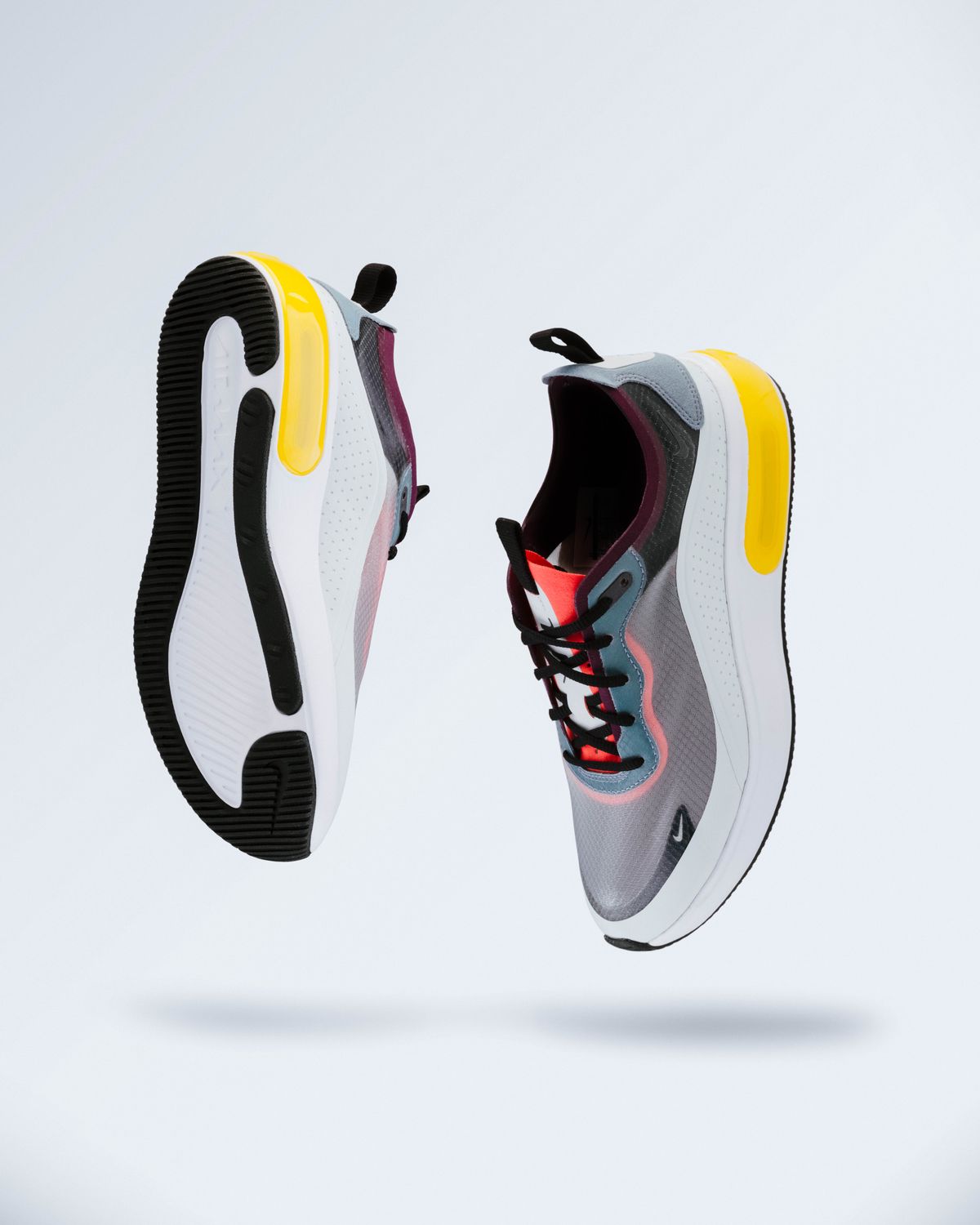
If you want the softer end of the range while keeping some guidance, the shock-absorbing lightweight pair is closer to that balance than the pair I first ordered. It gives up some medial firmness and gains a forefoot that actually flexes. The general principle is set out in any decent description of how running and walking shoes are built, and it applies here even though you’re not running.
What I would not do is add an off-the-shelf arch insert to a neutral shoe and call it stability. It changes the volume inside the shoe and pushes your heel up out of the counter, and in my case it made the rolling worse, not better. If you need an orthotic, get one made for your foot and buy a shoe with a removable insole.
What I’d buy differently next time
The first thing I’d change is the order I did things in. I bought, then researched. Three years of walking shoes for women with a rolling foot would have cost me less if I’d spent twenty minutes on the wear pattern of my old pairs first.
The second change is the budget. I paid for the stiffest shoe on the wall because I assumed support scales with price. It doesn’t. A £95 pair with a dual-density midsole will do more for a moderate overpronation than a £150 pair built for someone with a different problem.
Third, I’d buy two pairs instead of one, and not for the reason shops suggest. Alternating two pairs lets you compare a support shoe against a neutral one over the same month, on the same routes, with the same socks. You learn in four weeks what reviews can’t tell you. It sounds excessive. It’s cheaper than three years of guessing.
And the thing I’d stop doing entirely: reading lists that rank the best walking shoes for women over pronation without saying what the tester’s foot looked like. A recommendation means nothing without the foot it was made for.

The six-week diary, honestly
Week one was bad. I’m not going to pretend otherwise. Two short walks, sore calves, and a strong urge to put the old worn-out pair back on.
By week two I’d stopped thinking about my feet mid-walk, which is the real test. If you’re still aware of the shoe at kilometre three, something is wrong.
The first 5km walk without a hotspot came in week three. By then the upper had softened across the ball and the heel counter had moulded slightly.
Week four, I wore them for a full day in town: 9,000 steps, pavement, a bit of standing around. My feet were tired at the end, in the normal way, not the sharp way.
Six weeks in, I stopped comparing them to the old pair. That’s roughly 60km of walking, which is slower than the shop suggested and probably typical for anyone changing support level.
What I’d track if I did it again:
- The exact spot where any ache appears. Same spot every time means the shoe. Moving spot means adaptation.
- Distance per wear, written down. Memory is unreliable and “it’s getting better” is easy to imagine.
- Whether the wear pattern on the new sole is changing. If the inner edge is still wearing first at week six, the shoe isn’t doing much.
One thing I got wrong: I wore them for a 12km day in week three because they felt fine. They weren’t fine at hour four. Build up slower than you think you need to, especially if the new pair is firmer than the old one.
Who shouldn’t buy a stability walking shoe
Plenty of people search for support shoes because someone told them their feet roll in. Some of them don’t need it.
If your wear pattern is even, if you’ve never sprained an ankle, and if your knees and hips are happy, a neutral cushioned walking shoe is likely the better buy. Stability shoes add weight and reduce flexibility, and for a neutral foot that’s a cost with no benefit.
Also skip them if you mainly walk on uneven ground. Trails and cobbles want a flexible forefoot and a grippy sole far more than they want a medial post. And skip the stiffest category if you walk under 20km a week, because you’ll never get the break-in miles in before the shoe is out of fashion.
If you do need support, buy for the foot you have now, not the foot you had at 25. Mine has changed shape twice in a decade, mostly from wearing shoes that were too narrow for the first five years.
For a wider forefoot alongside the pronation problem, the casual walking pairs are built on a roomier last than the technical stability shoes, and the trade is a little less medial support for a lot less side pressure. That was the compromise I ended up living with, and my little toe stopped complaining for the first time in years.
If you want the wider-fit side of this in more detail, the notes on where the extra width goes cover the measurements. And if your arches are the flat kind rather than the rolling kind, the flat-feet notes deal with the overlap. The full walking shoes section is where I’d start if you want to compare lasts in person.
Four days in, I was ready to send them back. Six weeks in, I’d buy them again, but I’d buy the softer version of the same idea and I’d start with two short walks instead of a 6km “test”. The return window is there for exactly this. Use it before you’ve committed your feet to something they didn’t ask for.
