

A green shoe in a shop window looks like a decision. A green shoe in a hallway mirror at 7am looks like a mistake, and the gap between those two impressions is almost always the light rather than the colour.
Green has more usable variation than any other colour family, from a forest so dark it reads as black to a sage that reads as grey, and each shade behaves differently against skin, denim, and a camera flash. Buy green heels for women from a photograph and you’re guessing. Usually guessing wrong.
What follows is the order that matters: which shades exist, how light changes them, which wardrobe each one suits, and the three tests worth doing before you pay.
Green is the one colour where the swatch and the shoe disagree
Every colour shifts under different lighting, but green shifts further than most because the eye is unusually sensitive in that part of the spectrum. Two greens that look identical on a screen can look like separate colours on two feet in the same room.
The cause is physical. Green sits in the middle of the visible spectrum and reflects a broad band of wavelengths rather than a narrow one. Warm light pushes it toward yellow, cool light pushes it toward blue, and a phone camera then applies its own white balance on top. That’s why the shoe in the listing and the shoe in the box so rarely match.
If you’re shopping in person, the test is easy. Take the shoe to a window on an overcast day, which gives the closest thing to neutral light most homes and shops have. If the green looks slightly duller and less saturated than it did under the display lights, that’s the real colour.
If you’re shopping online, treat the photograph as a hint rather than a specification. Order from somewhere with easy returns and budget the return postage into the decision. A green that arrives looking different isn’t a faulty product, it’s a normal one.
One more thing that catches people out: green looks different against the shoe box. Cardboard and foam inserts are warm, so a cool green photographed inside the box picks up a yellow cast. If you’re sending a photo to a friend for a second opinion, take it out of the box and put it on a white surface first, or your second opinion is worthless.
This is the single biggest reason green heels for women get returned. The pair isn’t wrong, the expectation was set by a screen. Adjust for that and the colour becomes far less risky than its reputation suggests.
Emerald, forest, olive, sage: four families, four different jobs
Most green heels fall into four groups, and treating them as one colour is the reason so many pairs end up unworn.
- Emerald and jewel green. Saturated, slightly blue, high contrast. An evening colour that needs black, navy, or white to sit against. Photographs beautifully and demands attention in daylight.
- Forest and deep bottle green. Dark enough to behave like a neutral. This is the wearable one, the closest a green shoe gets to doing a black shoe’s job.
- Olive and khaki. Warm, muted, hardest to pair with cool colours. Excellent with cream, camel, and denim. Punishing next to grey.
- Sage and pale green. Soft and near-neutral. Reads almost grey in low light, which makes it the safest daytime choice and the least exciting one.
Of those four, forest green is the pair most people should buy first. It survives an office, works with dark denim, and looks intentional rather than costumed. Emerald is the second pair, bought for a specific event. Olive suits wardrobes that are already warm. Sage is for anyone who wants green without the commitment.
The common mistake runs the other way. Emerald tends to get bought first because it looks spectacular in a photograph, then sits in a box because it only works with two outfits. Saturation is a commitment in shoes more than in clothing, because the shoe is small and the eye goes straight to it.
If your wardrobe is mostly black, navy, and denim, buy forest. If it’s cream, camel, and brown, buy olive. That single decision does more than any other to determine whether the pair gets worn.
Width matters here too, because saturated greens show a well-fitted shape and a pinched one equally clearly. If you’ve had to size up in other heels, do the same here rather than hoping the leather gives. Green doesn’t hide a bad fit, it frames it.
The camera problem, and why phone photos turn green into something else
Automatic white balance is designed to make skin look right. Everything else is secondary, and green is usually the first casualty. A phone shooting a green shoe near a window will push it toward yellow or toward cyan depending on what else is in the frame.
This matters when buying online and it matters more when selling, which is why resale listings for green heels are so unreliable. A pair that photographs as deep bottle green is often a mid-tone teal in person. A pair that photographs as olive is often a flat brown-green.
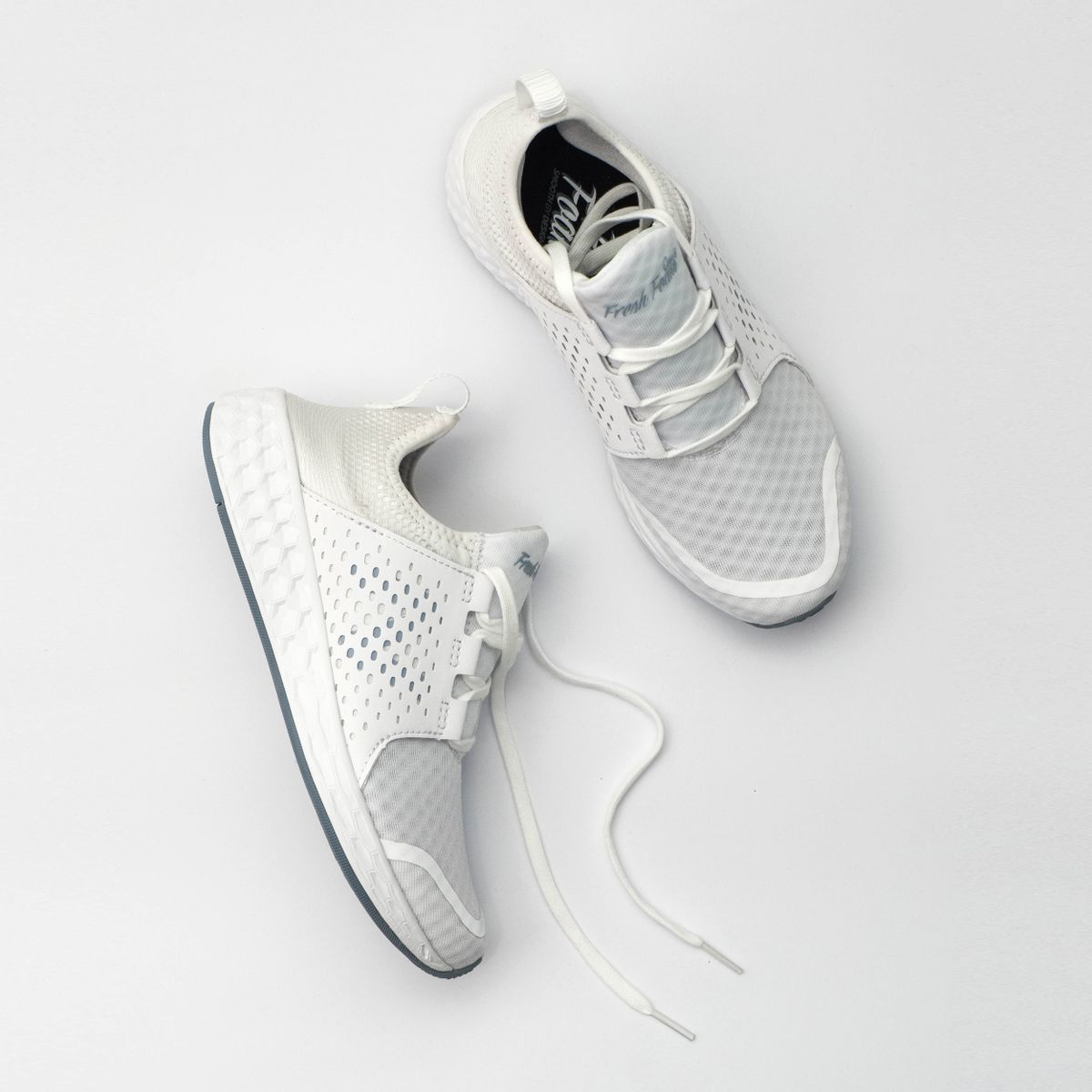
Two habits fix most of it. Ask for a photo taken outdoors in shade rather than indoors, because shade is the most neutral light available. Then ask for the shot next to something with a known colour, a white wall or a piece of black leather, so the shift becomes visible rather than invisible.
There’s a version of this test you can do yourself in a shop. Photograph the pair with the flash on. It’s brutal and it’s accurate. Greens that go flat or grey under flash are the ones that will disappoint in every group photo all evening.
The reverse is also true, and it’s worth knowing before you buy a pair for a wedding. Greens that photograph well often look louder in person than they did in the mirror. If you want to be the person in the photographs rather than the person whose shoes outshine the dress, go one shade darker than the photo suggests.
There’s a cheap way to check before an event. Take one photo with the flash, one in shade, and one under a warm bulb. If all three look like the same shoe, the colour is stable and you can stop worrying. If one of them goes yellow or blue, that’s the lighting in the room you’ll be standing in at 8pm.
Yellow-green and blue-green are not interchangeable, and your wardrobe decides
The most useful distinction in green footwear is temperature. Olive, khaki, and lime-leaning greens are warm. Emerald, teal, and bottle green are cool. Mix them with the wrong wardrobe and the outfit looks subtly wrong without anyone being able to say why.
Warm greens suit wardrobes built on cream, camel, tan, rust, and brown. They look at ease with linen, with wool in autumn tones, and with gold jewellery. Put a warm olive heel next to a cool grey trouser and the whole outfit looks slightly dirty.
Cool greens suit black, navy, white, charcoal, and denim. They work with silver, and they work with dark denim that has a blue cast rather than a warm one. Put a cool emerald next to camel and it reads as a clash even though both colours are individually fine.
A shortcut that costs nothing: photograph the three outfits the shoes are meant to go with, put the images side by side on a screen, and look at whether the proposed green belongs in that set. It takes two minutes and replaces a lot of guessing.
There’s one exception worth knowing. A neutral print, grey with white stripes or a navy check, will absorb almost any green because the pattern already contains a quiet colour. If your wardrobe is mostly prints rather than solids, you can be braver with the shade than this advice suggests.
Skin tone matters less than most guides suggest, because shoes aren’t next to the face. What matters is the leg. Warm greens merge with tanned or olive skin and create a clean line. Cool greens on warm skin produce a visible break at the ankle, which can look deliberate if the outfit is cool and accidental if it isn’t.
If you’re building a warm wardrobe, that’s the strongest argument for olive over emerald. Green heels for women in the olive family do something no other shoe colour does: they extend a camel coat down to the floor without matching it exactly, which is the effect most people are actually chasing when they buy brown or tan.
Leather holds a green better than suede, with one exception
Green fades. Ultraviolet light breaks down the dyes used for bright greens faster than it does for black and brown, and the result is a shoe that goes from emerald to a duller jade over a couple of summers. How quickly that happens depends on the material.
Pigmented or lightly grained leather holds green well, because the colour sits in a protective coat as well as in the fibre. Smooth calf in forest green can look unchanged after three careful years. Patent holds the shade almost indefinitely, though it scratches visibly and the scratches show white.
Suede cuts both ways. It takes dye deeply, so a suede green starts richer than a leather green of the same shade. It also fades faster at the edges and marks permanently when wet. A suede olive heel is a beautiful object that needs to be kept out of the rain entirely.
If the plan is weekly wear, buy leather. If it’s an evening shoe that comes out a few times a year, suede gives better depth and the wear patterns won’t matter. Either way, store green shoes away from a window. A pair left on a shelf in direct sun for a summer will show a fade line at the strap within two years, and no cream brings it back.
One detail worth checking on any bright green, and it’s the same one that matters on silver: look at the cut edge of a strap. If the core is white or pale, the colour is a coating and it will chip at the edges. If the core matches the surface, the leather is dyed through and it will fade slowly instead of peeling.
Care is straightforward once you know the material. Leather green gets a neutral cream and a soft cloth, nothing coloured, because a tinted polish will darken the shade permanently. Suede green gets a brush and a protector spray before the first wear, and you should keep the pair away from water entirely for the first week so the spray can cure.
Height decides the number of wears, and shade decides the outfits
A green heel at 50 to 60mm is a daytime shoe. It works with trousers, with midi skirts, and with the sort of outfit that would look flat in black. That’s the height that makes green useful rather than decorative.
At 70 to 80mm the shoe starts to read as occasion wear, and the number of suitable occasions in a year drops sharply. Most people already own enough evening shoes. Adding a green pair at this height only makes sense if the wardrobe genuinely lacks a colour accent for evenings.
Above 90mm a green heel is a statement and behaves like one. It photographs, it collects compliments, and it gets worn about four times a year. That’s fine if it’s bought knowingly and a bad first purchase if it isn’t.
Shape runs alongside height. A pointed toe in dark green elongates and looks sharper. An almond or rounded toe softens the colour and makes a saturated green feel more casual. The same emerald in a pointed court and an almond court are two different shoes, and you’ll wear the almond one more often.
Low block heels in green are the most underrated category here. Green heels for women at 50mm with a visible block read as a daytime shoe rather than a party shoe, and that’s what makes them worth owning. The block also stops a dark green looking heavy, which a slim heel at the same height tends to do.
If you’re choosing between two heights and can’t decide, take the lower one. Green is loud enough on its own. It doesn’t need a heel that limits where it can go.
Consider the floor you’ll be walking on, too. A green suede heel on a wet pavement is a bad afternoon. A green leather heel with a rubber-capped tip handles a British autumn without drama, and the cap is invisible from standing height, so you don’t lose anything visually by having it.
What green heels can’t do
Green isn’t versatile the way black or nude is, and pretending otherwise leads to regret. A pair of forest green courts will work with perhaps six outfits in an average wardrobe. A pair of black courts will work with thirty.
Green also doesn’t fix a busy wardrobe. Next to prints, next to other strong colours, and next to anything with a sheen it produces visual noise. The colour needs space around it. If the outfit is already doing three things, the green shoe makes it four.
And it’s unforgiving of a bad fit, because the colour draws attention to exactly where the shoe pinches. A black shoe hides an awkward vamp line. A green one puts a spotlight on it. Buy the fit first and the colour second, which is the opposite of how most people shop for a coloured shoe.
Honestly, most people need one green pair, and it should be the darkest and plainest available. The fun pair can come later, once the first has proved it gets worn.
That’s the honest limit. Green heels for women aren’t a capsule item and they’re not trying to be. They’re the pair that makes a wardrobe of black and navy stop feeling like a uniform, and that’s worth having once, not four times.
There’s also a practical ceiling that has nothing to do with taste. If your week is mostly walking, a saturated green court will show every scuff, and you’ll end up saving it for occasions that never arrive. Dark forest leather and a rubber-tipped heel are what make the pair survive an ordinary Tuesday, and if neither is on offer, you’re buying an ornament.
It’s also worth saying plainly: green heels are a poor gift unless you know the recipient’s wardrobe well. Colour is the one thing nobody can guess for somebody else, and a green pair chosen by a partner is the most common reason a perfectly good shoe never leaves the house.
Three tests before paying
The first is daylight. Take the shoe to the door. If the green loses its personality out there, that’s the shade at 9am on a Tuesday, and that’s the shade that gets worn most often.
The second is the outfit test done properly. Not “what could this go with” but “name three outfits that exist in my wardrobe right now”. If only one comes to mind, the pair is a purchase for a fantasy version of the week.
Third comes the scuff test. Rub a thumbnail lightly along the inner side of the heel, where the other shoe will hit. On good green leather the mark fades. On a coated green upper it leaves a pale line that no polish covers, because the colour is a layer rather than the material.
If all three pass, buy them. Green is one of the few colours that makes a plain outfit look chosen, and a dark forest pair manages it without shouting.
And if they fail, walk away without regret. There will be another pair next season, in a shade that was cut slightly cooler or slightly deeper, and it will be the one that actually gets worn.
For the shade range itself, the catalogue of green shades shows how far apart two greens can sit, and Pantone’s colour finder explains why an emerald and a jade read so differently side by side. For how those shades are worn rather than sold, Vogue’s seasonal coverage is the better reference.
If a dark green court is the target, our slim-heel pair in a deep cool tone shows how far a dark saturated colour can be pushed before it stops working with jeans, and the printed pointed style in the summer range takes the opposite approach, letting the pattern carry the colour. The rest of the women’s heels range is worth browsing for shape comparisons.
Our notes on how a camera treats bright suede cover the same problem from the other end, and they’re the reason to be suspicious of any listing where the green looks unusually vivid. The pair that suits a wardrobe is usually the one that photographs worst.
