

You leave at 8:05 into 12°C and a wind that goes straight through a coat, and by 10:30 you’re sitting under an air conditioner set to 24°C with your feet too warm and your toes slightly numb. That’s the ordinary Tuesday most comfortable work shoes for women office days have to survive, and it’s a harder brief than any single season.
Most office shoes fail at one end of that day, rarely at both. You can solve the temperature swing with socks and a desk drawer, and once you do, the shoe question gets a lot simpler. Here’s how to build the pair around the day rather than around the outfit.
12°C at 8am, 24°C by 10:30: the actual timeline
Walk the day hour by hour and the requirements change three times.
At 8am, the pavement is cold, possibly wet, and you’re walking fast. What you need is traction and a closed toe. A ballet flat with a 2mm sole will transmit every bit of cold through to the sole of your foot, and that cold stays with you until the office warms you up.
By 9am you’re standing on a train or waiting at a crossing, and the priority flips to stability. This is where a low block heel beats a flat: not for height, but because the heel keeps your weight forward and stops you rocking back onto your heels, which is what makes standing still on a platform ache.
Ten-thirty is when the priorities collide. You’re at a desk, feet under a chair, and the enemy becomes heat. Shoes with no lining and no ventilation turn into a sauna by lunchtime. Thin leather with a leather lining handles this best, because it absorbs and releases moisture instead of trapping it against the skin.
Four o’clock is where the pair proves itself or doesn’t. Your feet have spread by then. This is the single most overlooked fact in shoe buying: feet swell by around 4 to 6 percent over a working day, which on a 24cm foot is more than a centimetre of circumference. A pair fitted at 11am on a Saturday is a pair fitted at your feet’s smallest.
The walk home is the honest test. You’re tired, it’s dark, and the shoe that was fine on the way in will feel two sizes tighter. Now you know why.
There’s a fourth shift nobody plans for: stairs. If your commute includes two flights up from a platform, your shoe’s grip and your heel’s stability matter more than anything else on this list. A 60mm stiletto on a wooden stair with a metal nosing is a genuine hazard in the rain, and no amount of comfort in the toe box compensates.
What your feet do between 8 and 6, and why it changes the fit
Swelling is the reason evening shopping exists as advice, and it’s also the reason a pair can feel different on Tuesday than it did in the shop on Saturday morning. Foot pain that builds through the day often starts as a fit problem that only shows up in the afternoon, not as an injury.
Three things happen at once. The arch lowers slightly under load, which lengthens the foot by 2mm to 4mm. The tissue around the heel and ankle retains fluid, which fills the space inside the counter. And the toes spread, so the widest part of the foot gets wider right where the shoe is narrowest.
Practical consequence: a work shoe should feel slightly roomy at 9am. Not loose, just not snug. If it feels perfect in the morning, it’ll be tight by four. That’s the whole argument for buying in the late afternoon with a full day of walking behind you.
Second consequence, and it’s the one that saves money. If you’re between sizes, take the larger one and add a thin insole. You can fill space. You can’t create it.
Third: the shoe should be able to accommodate this expansion without the seams pressing. Check the seam position across the ball of the foot. A seam that crosses the widest point is a seam that will press at 4pm. A seam that sits behind the ball or in front of it won’t.
If you already own a pair that pinches late in the day, you can measure the problem instead of guessing. Stand on a piece of paper at 7pm and trace both feet, then do the same at 8am the next morning. The difference in width at the ball is your real allowance. Most people are surprised by it, and it explains a lot of shoes that were comfortable only in the shop.
That measurement changes how you shop. Take the evening width to the shop and put it against the shoe’s insole. If the shoe is narrower than your evening foot, it will pinch by mid-afternoon no matter how good the leather is.
The sock layer does more than the shoe
Here’s the swap that solves most of the 12°C problem without buying anything. Thin merino socks in the morning, off at the desk, shoes back on bare feet for the afternoon. Merino at 120 to 150 grams per square metre adds warmth without bulk, and unlike cotton it doesn’t hold moisture against the skin once you’re indoors.
Cotton is the wrong choice, and it’s the default choice. Cotton socks hold sweat, and damp cotton against a leather lining is what causes both the smell and the blister. If you’ve ever wondered why your feet are cold at 11am in a warm office, damp cotton is usually the answer.
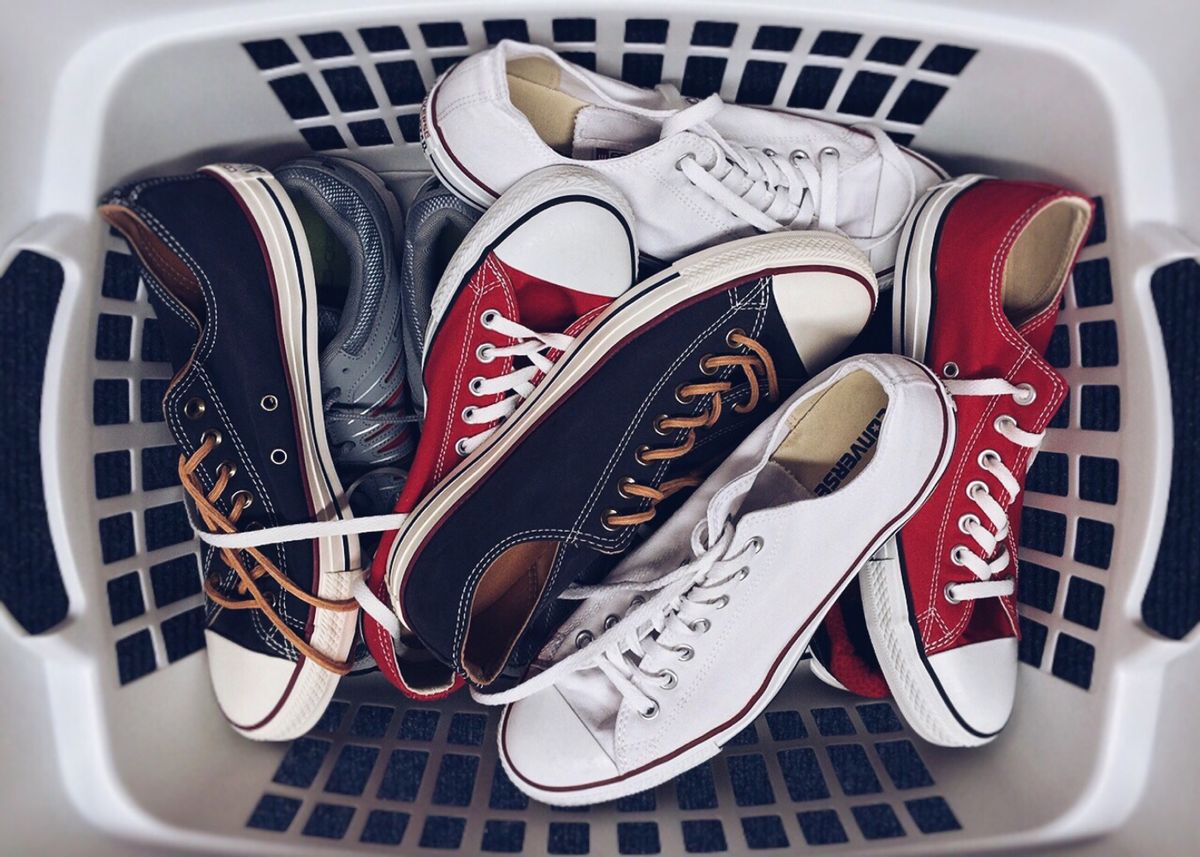
Two rules for the swap. Keep a spare pair of thin socks in your bag from October to March, because the walk home is colder than the walk in. And don’t swap to a thicker sock to solve a fit problem: a thicker sock inside a shoe that’s already tight at 4pm makes the afternoon worse, not better.
If your office is genuinely cold, the answer is a second pair of shoes under the desk, not thicker socks. Leave a pair of soft loafers or flat boots at work and change when you arrive. You’ll wear the commuter pair 40 minutes a day and the desk pair for eight hours, and both will last twice as long as one pair doing everything.
One more layer detail that makes a difference on a 12°C morning: the ankle. Trousers that stop above the ankle bone lose heat fast, and no shoe compensates for that. A boot cut or a hem that meets the shoe keeps the ankle covered, and that single change makes most comfortable work shoes for women feel warmer on the walk in than they actually are.
Wet mornings, tile floors, and the traction question
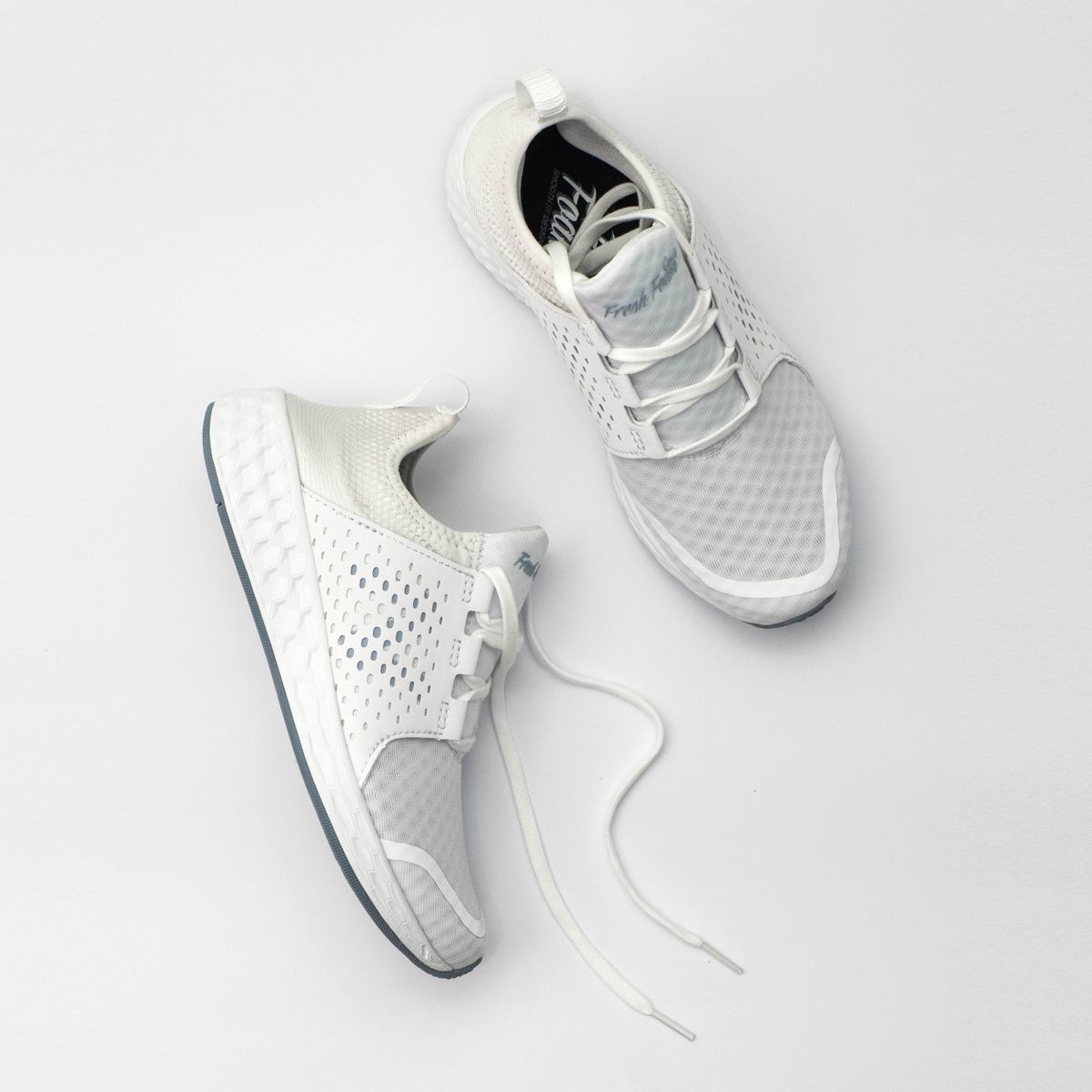
Comfortable work shoes for women often aren’t, in the one condition that matters most in autumn and spring: a wet pavement followed by a polished lobby floor.
Traction is a compound question. Smooth leather soles on wet stone are genuinely dangerous, and a 60mm heel with a 5mm tip on a tiled station concourse is a fall waiting for a hurry. Rubber with a shallow tread pattern handles both. Deep lugs are for hiking and look wrong in an office, so look for 2mm to 3mm of tread with a defined edge rather than a smooth sheet.
Test it in the shop if the floor allows. Press the sole against the tile and try to slide it sideways. A sole that grips has a slight drag to it. One that glides will glide on a wet day too.
There’s also a water question separate from grip. A leather shoe with a stitched welt will let water in through the stitching after about 20 minutes of walking in heavy rain. If you commute on foot in a wet city, a rubber or cemented sole with no stitching at the bottom edge keeps your feet dry, and looks identical from standing height.
Cold is the other half of wet. A wet leather shoe transmits cold about three times faster than a dry one, which is why wet feet feel freezing at 12°C when dry feet in the same temperature feel fine. If your morning involves a 15-minute walk and it’s raining, water resistance matters more than cushioning on that particular day.
Two pairs that handle the wet-morning end better than a fashion flat: the low block heel made for a daily commute and this thick-heel pair with a wider base. Neither will keep you dry in a downpour, and both will keep you upright on a wet platform.
What breaks first when a pair is worn this way
Five days a week, two walks a day, an office floor for eight hours. That’s about 300 wears a year, and it destroys shoes in a predictable order.
First the heel top-lift, usually between month six and month nine. It’s a $10 repair and most people miss it, then the heel block starts grinding and the fix becomes $60. Check the tip once a month with your thumb. When you can feel the plastic cap, book the cobbler.
Second the insole, at around 700 hours of wear. It compresses under the heel first, and you’ll notice because standing still starts to ache. A $15 leather insole inserted before that point extends the shoe by a year.
Third the lining at the heel counter, at around 18 months. Once it tears, the shoe is finished, because relining costs more than the pair. This is the one item that separates a $70 shoe from a $180 shoe: leather lining lasts twice as long as synthetic in exactly this spot.
If you want to slow that down, lace or strap tighter for the walk and looser at the desk. A shoe held firmly during the walk stops the heel moving inside the counter, and the counter wear is almost entirely friction from a loose fit. It takes ten seconds twice a day, and it’s the cheapest thing on this list.
Fourth, and only if you’ve done the first three, the sole itself. A resoled pair can run three to five years. Almost nobody gets that far, because the top-lift kills the shoe first.
The order is worth remembering because it inverts the usual advice. You don’t need a more expensive shoe to get three years out of a pair. You need two small repairs at the right time, costing about $25 total.
There’s a fifth item that isn’t a repair: the smell. Leather linings that never dry develop a smell by month eight, and it doesn’t come out with spray. The fix is rotation and a cedar shoe tree left in overnight, which pulls moisture out of the lining while the pair is off your feet. A $15 pair of trees solves a problem people usually solve by buying new shoes.
When one pair isn’t enough, and how to keep the second
Honest answer: one pair can cover a commuter day, but not a commuter day plus a long walk plus a wet week. If your day includes more than 6,000 steps outdoors, add a second pair and split the load.
The split that works is not two similar pairs. It’s one structured pair for the commute and one soft pair for the desk. The commuter pair takes the weather and the pavement, the desk pair takes the eight hours. Each gets half the wear, and the total outlay is usually less than replacing one pair twice.
If you want a single pair to do both, choose a 30mm to 40mm block heel in a dark colour, leather lined, with a rubber sole. Skip the pointed toe if you walk far. Skip the slingback if you take stairs. And skip anything with a decorative buckle where the strap meets the shoe, because that’s the part that fails first.
A reference point worth handling in person is this genuine leather pair with a shallow vamp. It’s a pointed shape, so it fails the long-walk test, but the counter and the lining are the two things to look at, and they show what a firm heel hold feels like before your foot spreads.
Then do one thing the shoe shops never mention: rotate. Two pairs worn on alternate days last about two and a half times as long as one pair worn daily, because leather needs 24 hours to dry out between wears. The pair you wore yesterday is still damp inside this morning, and damp leather breaks down faster than dry leather by a wide margin.
Rotation also solves the 12°C problem by accident. The pair that got wet on Monday has all of Tuesday to dry, and by Wednesday it’s ready for a cold morning again. Comfortable work shoes for women rarely fail because of one bad day. They fail because the same pair is worn five days straight in the rain and never dries out.
Comfortable work shoes for women are usually judged on the first hour, which is the one hour that tells you least. The first hour is a shop. The fourth hour is your actual foot, under load, warm, and half a size wider than it was at breakfast. Judge the pair at the end of the day and you’ll only need to buy it once.
If your feet blister on the first long day, treat it as a fit signal rather than a toughness test. Friction blisters on the heel come from movement inside the shoe, and movement means the counter isn’t holding you. A different size or a different last will fix it. A plaster won’t.
Start with the timeline instead of the shoe. Time your commute, count the hours at the desk, and note the temperature at each end. Then pick the pair that covers the middle of that day, not the ten minutes in front of the mirror.
Comfortable work shoes for women office days come down to two numbers in the end: how many steps you take outdoors, and how many hours you sit. Under 4,000 steps and a 40mm heel with a leather lining will do the whole day. Over 8,000 and you want the flat or the low wedge, plus a second pair at the desk for the afternoon. The office-appropriate heel range sorted by height is a reasonable place to work backwards from, and this piece on three decisions before you walk out the door covers the morning half of the problem.
Write the two numbers on your phone before you go shopping. Steps outdoors, hours seated. It’s a boring note, and it stops you buying the wrong shoe for a day you don’t actually have.
Before you buy anything, look at the pair you wore most last month. If the inside of the heel is worn through, you’ve already found the answer: your feet want a firmer counter, not a softer shoe.
