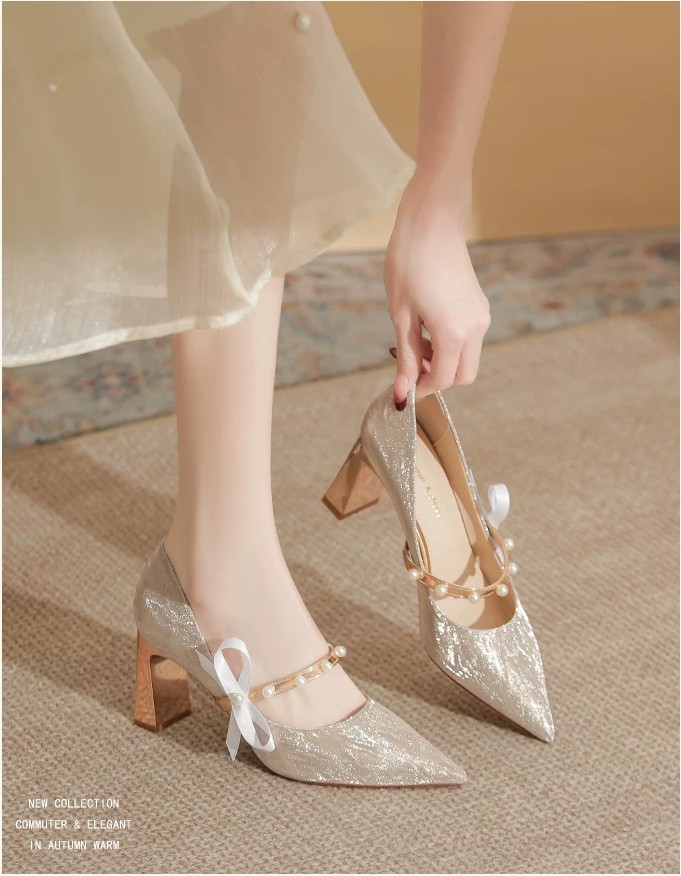
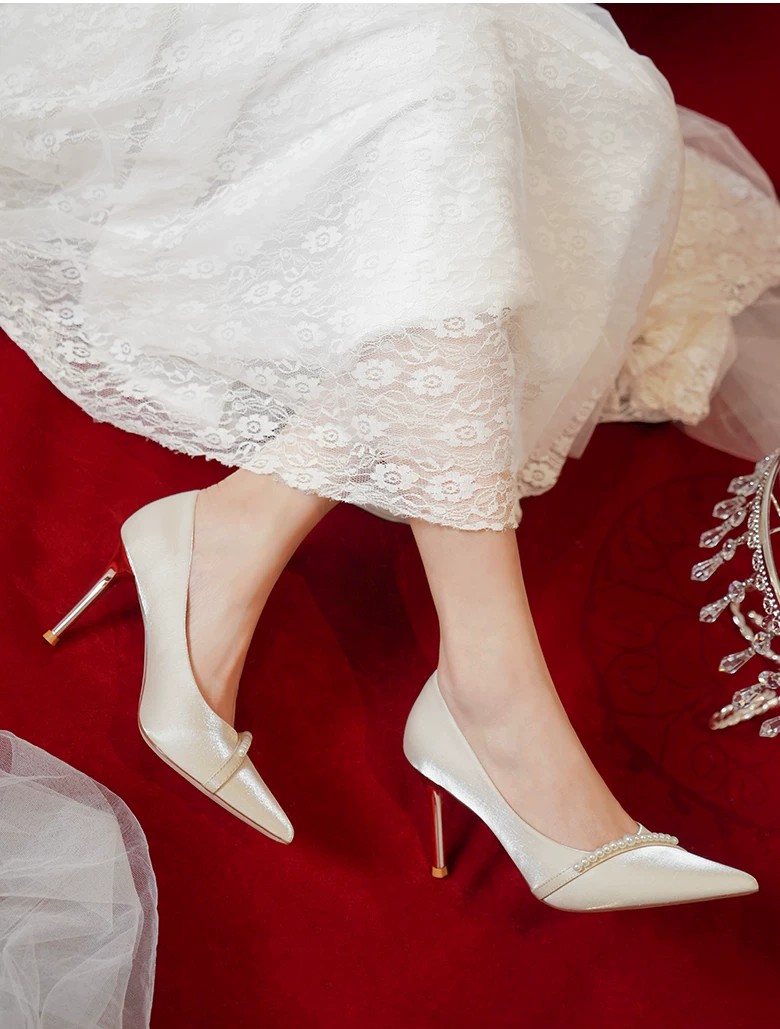
Last Tuesday I left the flat at 7:40 in 12°C and got home at 6:15 in 22°C, wearing the same pair of black and white women’s heels for both. It worked, but only because I’d learned the hard way the year before, on a day when the white toe caps ended up striped with road grit and the tights I’d chosen turned my legs into a different colour from my shoes.
That two-week stretch in spring and again in early autumn is the awkward one. Boots feel like a decision you have to commit to. Sandals look like you’re showing off. A two-tone pair sits in the gap, and it does the job better than most people expect, as long as you know which half of the shoe is doing the work.
Here’s what I’d check before you buy a pair, in the order that actually matters.
What a 12°C morning and a 22°C afternoon do to a shoe choice
Temperature swings don’t change your shoes. They change your feet. In the cold, the blood vessels in your toes constrict and your foot measures slightly narrower. By mid-afternoon, after four hours of walking and a warm office, the same foot can be half a size wider across the ball. If you buy a two-tone pair that fits perfectly at 8am in a cold hallway, there’s a decent chance it pinches by 4pm.
So the first thing I do now is try shoes on in the afternoon, after I’ve been on my feet. Not glamorous, but it’s the difference between a pair I wear forty times and a pair that lives in the box.
The other thing the weather decides is which surface you’re standing on. Dry pavement in the morning, damp pavement by the evening. A covered toe in patent leather slides on wet stone. A suede toe cap absorbs water and darkens. Neither is a dealbreaker. Both change how I walk for the last twenty minutes of the day.
A quick way to think about it:
- Morning, 10-14°C: closed toe, and you can still get away with a thin sock.
- Lunchtime, 18-20°C: the sock has to go, so the shoe has to hold your heel without it.
- Evening, 20-22°C: your feet have expanded, the pavement might be damp, and you want a heel with a footprint bigger than a five-pence coin.
If a pair fails any of those three, it’s a summer shoe pretending to be a transitional one.
The two-tone line sits high or low, and that’s the whole decision
Black and white women’s heels are not one style. They’re a family, and the family splits on where the colour boundary runs. Low line, meaning the white starts at the toe and stops before the vamp: that’s the spectator look, and it came out of the 1920s and 30s when two-tone shoes were the default for anyone who wanted to look expensive in daylight, as the history of spectator shoes shows.
High line, meaning the white covers most of the upper and only the heel and trims stay dark: that reads more modern, and it’s far less forgiving. Every scuff lands on the white.
The middle option, and the one I keep coming back to, is a black body with a white heel counter or a white slingback strap. It gives you the two-tone effect at ankle height, where people actually look when you’re standing, and it keeps the part of the shoe that hits pavement and kerbs in the colour that hides damage.
Then there’s the vamp depth. A low-cut vamp shows more foot, which is cooler by 2pm and colder at 8am. If you run cold, go for a higher vamp and let the two-tone do the visual work instead of the exposure.
Heel height matters less than people think for this specific choice, but the shape of the heel matters a lot. Heel height shifts load toward the ball of the foot, and the narrower the heel tip, the more you feel every paving slab joint. In a transitional fortnight, when you might walk a kilometre you didn’t plan on, a 60-70mm heel with a tip wider than your thumb is the sensible ceiling.
Width and the white toe box: what happens after 6,000 steps
White shows every crease. That’s the trade you make. On a black toe box, the leather folds at the flex point and nobody sees it. On white, you get a soft grey line across the top of the toes within a month, and there’s nothing you can do about it except avoid the fold in the first place.
Which means width is not a comfort detail here. It’s a cosmetic one. If your foot presses against the sides of the toe box, the leather bulges, and the bulge catches dirt. A pair that’s 3-4mm wider across the ball will stay looking new roughly twice as long as a pair that fits tight.
How I check, in the shop, without asking anyone:
- Stand up. If your little toe is pushing a visible bump in the upper, it’s too narrow.
- Press your thumb on the leather above your big toe. It should give about 5mm, not zero.
- Walk ten steps. Look at the crease line. If it’s already deep, the leather is soft and the white will go grey fast.
- Check the inside edge of the heel counter with a finger. Rough stitching there means a blister by day three.
Closed toes also trap heat. By 22°C, a leather-lined closed toe is roughly 3-4°C warmer inside than a peep toe, which is either exactly what you want at 8am or exactly what you don’t want at 3pm. My compromise is a closed toe with a perforated panel or a woven upper. The white woven leather heels I tried in September breathe noticeably better than a solid calf pair, and the weave hides creasing, which is the real win with anything white.
There’s a line of reasoning I used to believe and now don’t: that black and white women’s heels are a statement pair, so buy the boldest version. Wrong, for daily wear. The bold version is the one with the white running the full length of the upper, and it’s also the one that looks tired first. The quieter cut, black body plus a small white panel, gives you the same outfit lift and about three times the usable life.
Wide feet change the maths again. If your foot is wider than a D width, a two-tone shoe with a seam running along the outside edge of the toe box will split at that seam, because that’s where the pressure goes. Look for a toe box with no seam over the widest part of your foot, or a woven and perforated upper that can flex without a fold line.
Hosiery, bare ankles, and the 4pm gap
This is where most transitional outfits fall apart, and it has nothing to do with the shoe. It’s the 4mm gap between the top of the shoe and the hem of your trousers, and whether there’s a sock in it.
At 12°C you want a sock. At 22°C a sock looks like a mistake. The trick is a sock thin enough that the shoe doesn’t notice: 15-denier nylon or a fine cotton liner that stops below the ankle bone. Anything thicker changes the fit and pushes your heel out of the counter, and then you’re clenching your toes all day to keep the shoe on, which is the single most common cause of “these heels hurt” that isn’t actually about the heel.
Tights are a separate problem with two-tone shoes. A black tight against a white toe makes the white look brighter and the black look flatter. A nude tight makes both look slightly dirty. If you’re going to wear tights with black and white women’s heels, go sheer black at 15-20 denier and keep the rest of the outfit dark. It reads intentional instead of accidental.
Bare ankles with a two-tone shoe need one thing: a hem that stops above the ankle bone. A cropped trouser at 26-28 inches of inseam, or a midi skirt that hits mid-calf. Anything that grazes the top of the shoe visually shortens the leg and makes the white section look like a stripe painted on.
If you’d rather skip the colour matching entirely, a pair like these black satin heels with a low-cut vamp does the evening half of the day on its own, and the white half never becomes your problem.
I learned that one at a wedding, in a rented pair, with a hem I couldn’t change. Not a disaster. Just a photo I don’t love.
Four outfits that work at both temperatures
These are the combinations I actually rotate through in the two awkward weeks, and they all survive a 10-degree swing without a change of clothes.
- Cropped straight-leg jeans, fine knit, white toe caps. The crop keeps the ankle visible when it warms up. Swap the knit for a T-shirt at lunch and nothing else changes.
- Dark midi skirt, opaque tights, black body with white heel. Tights come off at 4pm if you’re brave, and the shoe still works either way because the black is doing the visual work.
- Wide-leg trousers in wool crepe, spectator pumps, no sock. The wide hem hides the ankle gap entirely, which is the cheat code for this whole two-week problem.
- Anything with a peep toe instead of a closed toe. The cooler toe changes the whole day, though it also changes the fit, and the toe opening decides more about fit than the size does.
- Slip dress plus a trench, strappy two-tone sandals. The trench handles the morning. The sandal handles the afternoon. This one only works if your office is warm, so check that first.
Notice that none of these depend on the shoe being the interesting part of the outfit. That’s deliberate. A two-tone pair is loud enough on its own. Pair it with a print and you get a costume.
Sizing: the number on the box is nearly meaningless
I own black and white women’s heels in three different marked sizes that all fit the same foot. One is a 38, one is a 39, one is a 7.5. This isn’t a scandal. Last shapes differ, and a pointed last runs about 5mm shorter than a round one at the same nominal size.
What you want is a length measurement, not a size. Ask the seller for the internal length in millimetres, or measure a pair you already own: heel to toe inside the shoe, along the insole. Then add 8-10mm for toe clearance. That number travels across brands; the size on the box doesn’t.
Three specific traps with two-tone shoes:
- The white toe cap is often the tightest part. It’s the reinforced section, so it doesn’t stretch. If it’s tight in the shop, it stays tight.
- Slingbacks run short. The strap pulls the foot back into the heel, so the toe box can feel smaller than the same size in a pump.
- Patent doesn’t give. Smooth leather relaxes about 2mm over a month. Patent relaxes almost nothing, so buy patent on the looser side.
Half sizes are worth chasing. Going up a full size to get width usually means your heel slips, and a slipping heel in a two-tone shoe is visible from across a room. If the shop only has full sizes, a thin leather insole at the ball takes up the extra length without changing how the shoe looks.
Also check the heel pitch, meaning how far forward the heel sits under the arch. Two pairs can both say 70mm and feel completely different: one puts your weight over the ball of the foot, the other keeps it further back. Standing in both for thirty seconds tells you more than any spec sheet. If the second pair makes your toes grip, that’s the pair you’ll resent by 5pm.
The version I’d skip
Pointed white toe caps on a stiletto, worn in a city with wet winters. I’ve done it. The white tip is the first thing to go: scuffed at the point within a week, grey along the edge within a month, and impossible to touch up because any polish you use on the point shows against the white.
Same for anything with a white sole edge. That thin line of white rubber or leather around the platform looks sharp in photos and absorbs every bit of street dirt. If you want two-tone without the maintenance, keep the white above the sole line.
One more I’d think twice about: very pale cream as the “white” half. Cream photographs beautifully and then ages into something closer to butter. If you’re buying online and can’t see the shade under daylight, ask for a photo outdoors. Most sellers will send one.
And a note on price, because it comes up: the expensive pairs are not automatically the ones that stay clean. A €300 pair and a €90 pair both get scuffed at the toe. What you’re paying for at the top end is a leather that takes polish and a sole that can be replaced. That’s worth something. It’s not worth four times the price if you’ll wear them twenty times a year.
Storage, cleaning, and keeping the white half white
Two habits do most of the work. First, wipe the white sections with a barely damp cloth the same day you wear them, before the dust settles into the grain. Second, keep the shoes out of direct light, because white leather and white patent both yellow under UV, and a windowsill will do it in one summer.
For the black half, treat it like any other black leather: cream polish, buff, done. Don’t use the same cloth. Black polish on a white toe is the classic own goal, and it doesn’t come out.
For the white half, a pH-neutral leather cleaner on a soft cloth, working in small circles, then let it dry away from heat. Never on a radiator. Heat sets the stain and shrinks the leather around the toe box, and a shrunken toe box is unwearable.
Patent is a different job entirely. It doesn’t take polish, it takes a damp cloth and, occasionally, a tiny amount of petroleum jelly on a scuff. The article on keeping patent leather from going dull covers that in more detail, and the rules are the same whether the patent is black or white.
Store them with the heel resting on the floor, not the toe, and stuff the toe with unbleached tissue. Newspaper ink transfers. So does the dye from a dark shoe bag, which is why I keep two-tone pairs in cotton dust bags and not the plastic ones they ship in. Plastic traps moisture, moisture grows mould, mould on white leather is permanent.
If the white section has gone slightly yellow and cleaning hasn’t touched it, the cause is usually oxidation rather than dirt, and no cleaner fixes that. What helps is prevention: keep them out of sunlight, and don’t store them in a warm cupboard above a radiator. Two winters of that and the white goes the colour of weak tea. Mine did, on a pair I otherwise looked after properly.
One repair worth paying for: new heel tips. They cost very little and they’re the difference between a shoe that stands straight and one that starts to lean, and a leaning heel makes the whole two-tone line look crooked when you walk.
For the days when the pavement is genuinely bad, a block heel that doesn’t fight the pavement is a better answer than any amount of care and attention on a stiletto.
If you’re choosing between two pairs and one has a slightly higher white section, take the lower one. You’ll wear it more, and it’ll look newer for longer. If you want to see how the rest of the shape options behave before you commit, spend twenty minutes in the heels category and compare vamps side by side rather than guessing from a single product photo.
One last thing, and it’s the one I wish someone had told me. The pair you keep reaching for in these two weeks is rarely the prettiest pair you own. It’s the one whose heel tip hasn’t worn down, whose white section still looks white, and whose toe box doesn’t press on your little toe at 4pm. Buy for that, and the outfit takes care of itself.