

There’s a pair of black and white heels in every vintage shop, and most people walk past them because they look like something a 1930s dancer would wear. Then someone at work turns up in a two-tone slingback with straight-leg trousers and it suddenly makes sense.
Two-tone shoes are the most misunderstood category in womenswear. Done badly, they look like costume. Done well, they’re the sharpest thing in your wardrobe and they work with about four outfits you already own.
Here’s the difference between the two, and how to tell which pair you’re looking at.
Why black and white reads as vintage, and why that’s not a bad thing
The two-tone shoe has a specific history. In the 1920s and 1930s, a spectator shoe (also called a co-respondent shoe in Britain) paired a pale body with a contrasting toe cap and heel. It was originally menswear, worn with light flannel trousers, and it crossed into women’s wardrobes through golf and tennis before landing in ordinary shops.
That history is why a black and white heel looks “period” even to people who couldn’t date it. The shape carries the reference.
You can lean into it or step away from it. Lean in with a lower heel, a rounded toe and a matte finish, and the pair reads as a proper vintage revival. Step away with a slim 90mm heel, a pointed toe and patent leather, and the same colours read modern. Same palette, completely different message.
The four black and white patterns you’ll actually find
Shops use the phrase loosely, so it’s worth knowing which one is in the photo.
Spectator, or cap-toe. White body, black toe cap and black heel. The most classic version and the easiest to wear, because the black at the toe grounds the shoe and the white in the middle does the leg-lengthening work.
Slingback with contrast. Black body, white back strap, or the reverse. These read more modern than a spectator because the contrast isn’t symmetrical. They also show more skin, which changes the proportion entirely.
Two-tone sandal. Black straps on a white sole, or white straps with a black heel. Summer-only, and the version most likely to look cheap if the white is a bright optical white rather than a soft cream.
Printed or patterned. Polka dots, gingham, or a black-and-white print on a plain shape. These are the least versatile. One wear and everyone remembers them.
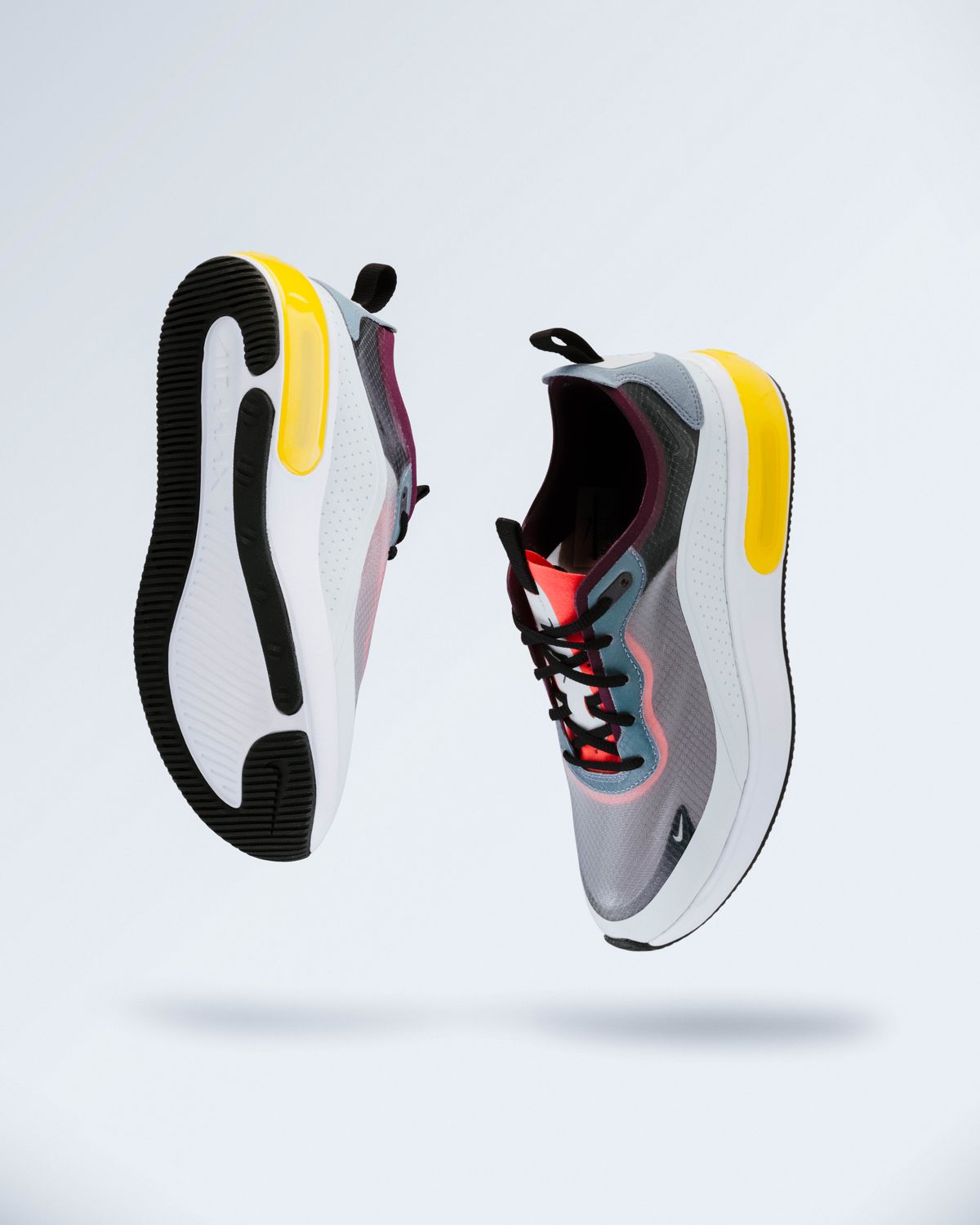
If you only buy one pair of ladies black and white heels, buy the cap-toe. It’s the version that works in an office, at a lunch, and with jeans on a Saturday.
Where the white sits decides how tall you look
Colour blocking at the foot is not neutral. A white shoe against bare legs extends the leg line because there’s no hard edge at the ankle. A black shoe cuts it. That’s why nude heels make legs look longer and black ankle boots don’t.
Two-tone shoes do both at once, and the split point matters. If the white section runs from the toe to the instep and the black starts at the heel, your leg reads longer from the front and shorter from behind. If the black is at the toe and the white at the heel, the opposite happens.
Practical rule: put the darker colour where you want the eye to stop. A black toe cap draws attention down to the front of the shoe, which is flattering with a midi skirt. A black heel counter draws the eye to the back of the ankle, which is better with cropped trousers.
Then there’s the ankle strap question. A black strap across a pale ankle creates a hard horizontal line and visibly shortens the leg. If you’re under about 5’4″, skip the contrast ankle strap and choose a slingback or a pump instead. This isn’t a rule about your body; it’s a rule about where horizontal lines land.
The office version that doesn’t get a comment from HR
Two-tone shoes are more office-friendly than most people assume, as long as the contrast is soft and the heel is sensible. Black and cream is safer than black and white. A cream that’s closer to ivory reads as a neutral rather than a statement.
The pair that passes: cap-toe, 50 to 60mm block heel, matte leather, almond toe. Wear it with grey trousers or a navy suit and it looks deliberate without being loud.
The pair that doesn’t: a 100mm stiletto in optical white with a black ankle strap. It’s a great shoe. It’s just not an office shoe, and you’ll know it the moment you walk into a meeting.
There’s a link back to silhouette names here that helps. The vocabulary in this guide to pump, slingback and Mary Jane styles tells you what you’re ordering before the photo loads.
What to wear them with, in order of how well it works
Two-tone heels are easier to style than they look, but they do have preferences.
- Straight-leg trousers in black or navy. The best pairing by a distance. The shoe reads as a continuation of the trouser.
- A little black dress. Obvious and reliable. The white in the shoe stops the outfit going flat.
- Raw denim, turned up once. Casual, slightly retro, works with a cap-toe and a 50mm heel.
- Cream or ivory tailoring. Very good in summer, and it needs a soft white shoe rather than an optical one.
- Red or bright prints. Skip. Two-tone shoes are already doing a colour job.
One warning about tights. Black opaque tights with a white shoe is a hard look and it rarely works; the white becomes a bright block at the end of a dark leg. If you’re wearing tights, choose a shoe where black dominates and white is a trim.
Keeping the white half white
White leather is the reason people avoid these shoes, and it’s a fair concern. White picks up scuffs, dye from denim, and grey marks from car footwells. It also yellows if it’s stored badly.
The good news: smooth white leather is one of the easiest materials to clean. A damp cloth with a drop of mild soap lifts most marks, and a melamine sponge handles the rubber sole edge. Do it the same day. Marks that sit for a week become part of the finish.
Suede is a different story. White suede is beautiful for about three wears and then it’s a project. If you want the two-tone look with less maintenance, choose smooth leather for the pale section and keep suede for the dark part.
Storage matters too. White leather oxidises when it’s exposed to light and air, so keep the pair in a dust bag rather than on an open shelf. And don’t store them touching anything dark; transfer goes both ways.
On the dye question, leather and lining that sits against your skin all day should carry a certification for skin-safe dyes. If the white lining leaves a grey mark on your heel after an hour, that’s not a care problem. It’s a manufacturing one.
Fit notes for two-tone styles specifically
Two-tone shoes have one fit quirk worth knowing: the toe cap is often a separate piece of leather stitched onto the vamp, which makes it slightly less flexible than a single-piece toe. If you have a wide forefoot, that seam can press across your toes for the first few wears.
Try them at the end of the day, when your feet are at their widest, and walk on a hard floor rather than carpet. If the cap presses at all in the shop, it will press more after an hour.
Also check the heel counter. A contrast heel piece is usually a separate panel, and on cheaper pairs it’s glued rather than stitched. Run your thumb along the inside seam; if you can feel a ridge, the pair will rub your heel raw before the end of the day.
Half sizes matter here more than in plain shoes. If you’re between sizes, size up in a pointed cap-toe and stay true to size in an almond or round toe.
A cheap fix for a slightly loose pair: a self-adhesive leather insole adds about 2mm and stops your heel lifting in a slingback. It also keeps the white lining cleaner, which is a small bonus on a pale shoe.
The wedding-guest problem: two-tone at a formal event
Weddings are where people most often consider a two-tone pair, and where the wrong version goes wrong fastest. A white-dominant shoe at a wedding reads as an attempt to compete with the bride, even when nobody would say it out loud. A black-dominant shoe reads as a funeral.
The balance that works is roughly 60/40 with black leading. Black body, cream cap, black heel. The white becomes a detail rather than the point of the shoe, which keeps the pair on the right side of the dress code.
Heel height matters more than colour here. If any part of the day involves grass, gravel or a terrace, choose a block heel of 60 to 70mm. A slim heel in a reception tent is a known disaster; it goes straight through the floor and stays there. A cap-toe block heel looks formal enough for a church and stable enough for a lawn.
There’s also a photography reason to go two-tone for weddings. White shoes blow out under flash and turn into bright blobs in group photos. Black shoes disappear against a dark floor. A two-tone pair reads clearly in almost any light, which is more useful than it sounds when you’re standing in the third row.
One thing to skip: contrast ankle straps with a short dress. The horizontal line at the ankle plus a hem above the knee cuts the leg into three sections, and it photographs badly from the side. A slingback gives you the same two-tone effect with a cleaner line.
Two-tone in autumn and winter, without the tights problem
Most two-tone shoes are sold as summer shoes and then abandoned in October. They don’t have to be.
The tights problem is real, though. Black opaque tights plus a white shoe puts a bright block at the end of a dark leg, and it looks like an error even when the outfit is otherwise good. Two fixes work. Choose a pair where black covers at least two thirds of the shoe. Or switch to a cream or charcoal tight instead of black, which softens the contrast to something deliberate.
Weather is the other issue. Smooth leather handles rain far better than suede, and a white leather shoe that gets wet will dry with a watermark if you leave it by a radiator. Stuff it with newspaper, let it dry at room temperature, then clean the whole shoe rather than just the wet patch, so the finish stays even.
For slush and salt, treat the pair before the first wear. A water-repellent spray on leather and a protective spray on suede both help, though neither makes a pale shoe suitable for a February commute. If you want the look through winter, black-dominant with a patent trim is the practical version, and the material notes in this piece on how suede survives rain and road salt explain why.
One last seasonal note: white leather yellows in storage, and it yellows faster in a cold, damp wardrobe than in a warm dry one. Keep the pair in a breathable bag, not a sealed plastic box.
The women’s shoe range has both directions covered if you’d rather split the look: these white heels with slim heels pair with everything a two-tone would, and a black satin pump covers the evenings where contrast feels like too much.
Two-tone isn’t a trend you have to commit to. One cap-toe pair, worn with trousers you already own, is enough to find out whether the look suits you. If it does, you’ll wonder why you walked past them for so long.
