

Airport security, 6:15am, shoes off, shoes on, and the person behind you is already sighing. That’s the moment slip-on leather sneakers earn their place. No laces to retie, no bending over with a coffee in one hand, and they still look like a proper shoe instead of a house slipper.
But laceless is a fit problem disguised as a convenience feature. Without laces you’ve lost your only adjustment, so everything depends on the elastic, the lining, and how the heel was cut. Get those three right and the pair lasts four years. Get them wrong and you’ll be walking out of them by the second week.
So before you buy, do the heel test. It’s thirty seconds and it filters out most of the bad ones.
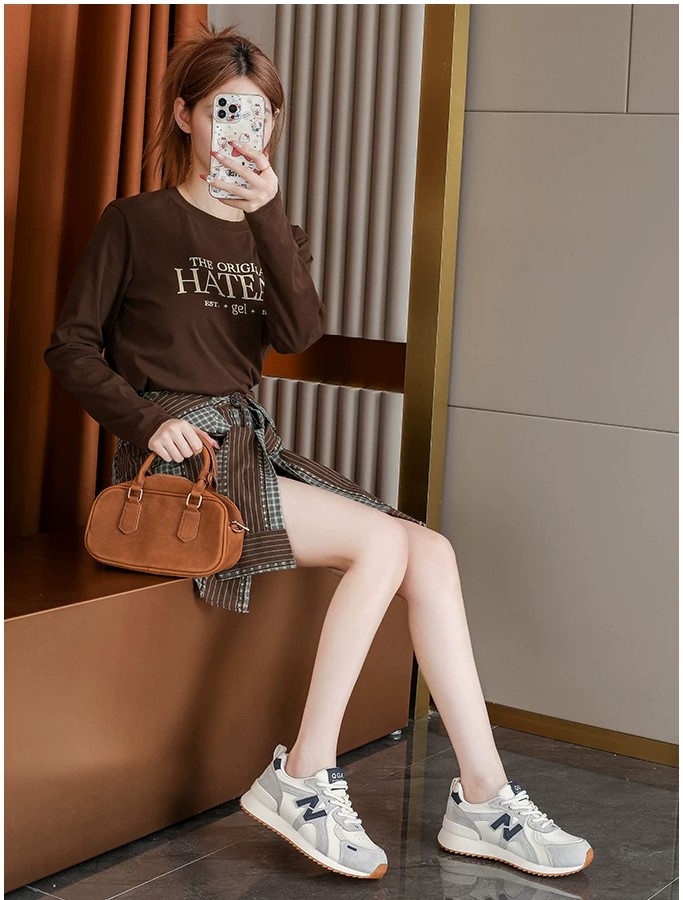
The heel test that decides everything
Put the shoe on without socks, then walk five steps on a hard floor. If your heel lifts more than a centimetre, the shoe is either too long or the collar is too soft. Neither problem improves with wear. Leather may soften, but it doesn’t grow inward.
Then press the back of the shoe with your thumb, right at the top edge. A good slip-on has a firm heel counter that springs back. A cheap one folds flat and stays folded. That floppy counter is why so many laceless pairs get worn as slippers and never leave the house.
Third check: the elastic gusset. It should be under the upper panel, not stitched on top, and it should feel tight rather than loose. Gussets stretch out over time, so a pair that already feels easy in the shop will be genuinely loose within a year. If it feels snug but not painful, that’s the right one.
The test takes less time than reading this paragraph. It’s just that almost nobody does it, because the shoe feels fine when you’re sitting down.
Why leather matters more here than on a laced shoe
On a laced pair, the answer is different, and it explains a lot about slip-on leather sneakers. On a laced sneaker, the laces do the holding. On a slip-on, the leather does. That flips the material question completely. You need a leather with enough structure to hold its shape and enough suppleness to let your foot in without a fight.
Full-grain and top-grain leathers do both. They’re cut from the outer layer of the hide, so the fibres are dense and the surface is the real thing. Corrected-grain leather has been sanded and stamped, which makes it uniform and cheaper, and also stiffer in the places you need flex.
Bonded leather is the one to avoid. It’s shredded scraps glued together and coated, and it cracks at the flex point within a season. That cracking looks like a crease at first and then turns into a split.
The lining is the other half of the story. An unlined leather slip-on will stretch where your foot pushes and lose its shape. A lined pair holds. If the shop can’t tell you what the lining is, that’s usually an answer in itself.
One useful reference if you want the technical side: leather tanning explains why chrome-tanned hides are softer and more uniform than vegetable-tanned ones, which is why most sneaker leather feels the way it does.
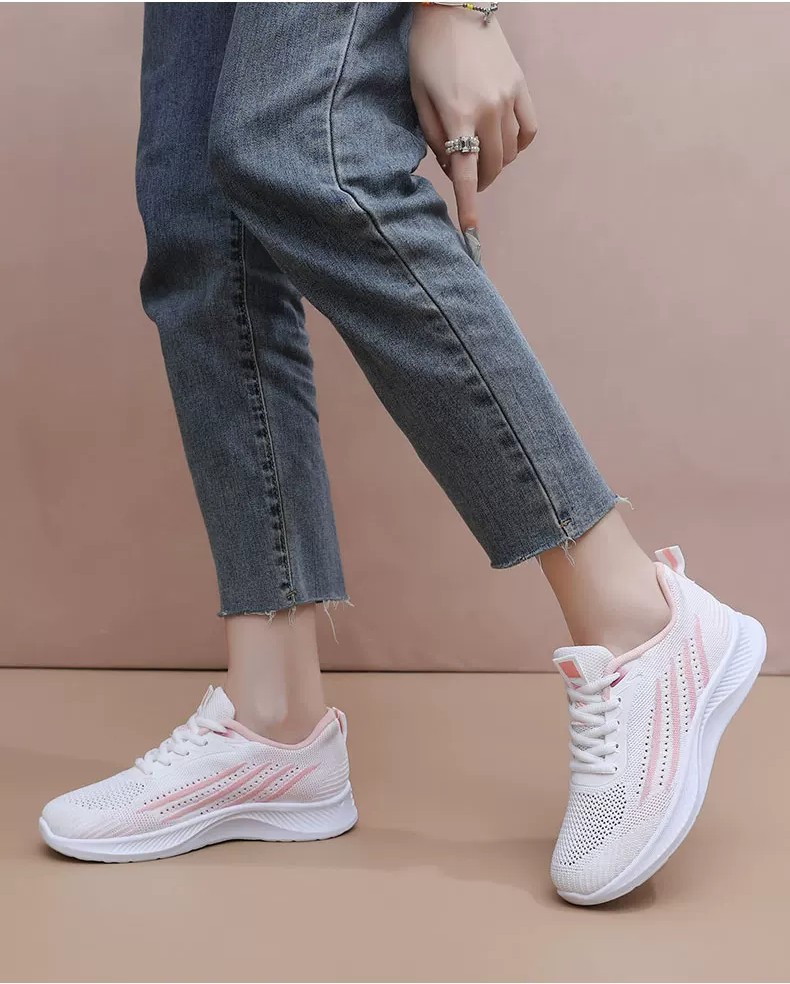
Socks change the fit, so decide before you buy
A slip-on worn bare fits differently from one worn with a no-show sock, and the difference is roughly half a size. Try the pair on with the socks you’ll actually wear. This sounds obvious and it’s the single most common reason people end up with a pair that only works in summer.
Bare feet give you the best grip and the closest fit, but leather against skin gets sweaty and the lining wears faster. A thin no-show sock with a silicone heel strip is the practical middle. Anything thicker and you’ll be pushing the shoe off with your other foot by lunchtime.
If you wear orthotics, go up half a size and check that the insole doesn’t lift the heel out of the counter. Laceless shoes have no way to compensate for a raised heel, which is exactly where an insert causes trouble.
Tights are the awkward case. Nylon against a leather lining is slippery, and a slip-on that fits perfectly bare will slide at the heel over tights. If you’re planning to wear them with hosiery, test that way in the shop or accept that they’re a bare-foot shoe.
The office question: are they smart enough?
A clean pair of slip-on leather sneakers in black or dark brown is the closest thing to a formal sneaker that still walks like a trainer. Pair it with tailored trousers and no visible sock and most offices won’t look twice. Pair it with shorts and it’s a boat shoe, which is a different conversation.
Where it fails is anything with a very thin sole. A flat, thin-soled leather slip-on reads as a house shoe at a distance, and the effect is worse in pale colours. Look for a sole with a bit of depth and a defined edge.
Colour narrows the options. Black, dark brown, and a mid grey cover most workplaces. White leather slip-ons are a summer shoe and they show every scuff on the toe, which is the first place a laceless shoe gets marked because you’re pushing your foot in every morning.
If your office is genuinely casual, these soft leather sports shoes with a padded collar sit in that gap nicely. They hold their shape better than a canvas slip-on and they don’t look like gym kit.
Breaking them in without wrecking the shape
Slip-on leather sneakers break in fast, and that’s the problem. The leather moulds to your foot within a week, so any pressure point becomes a permanent crease. Wear them for an hour a day at first, not a full day.
If the top edge digs into your instep, don’t force it. That’s a sign the last is too shallow for your foot, and no amount of stretching fixes a shape mismatch. Return them while you still can.
For tightness across the top of the foot, a shoe stretcher with a spot stretcher works better than spray. Leave it in for 24 hours, then wear them for a short walk. Repeat once. Leather remembers.
Skip the hairdryer trick. Heat softens leather in a way that also collapses the structure, and a laceless shoe with a collapsed structure has nothing left to hold your foot.
How long a laceless pair actually lasts
Realistic numbers, based on wearing one pair four days a week. The sole lasts two to three years. The upper lasts longer than that if you condition it. The elastic gusset is the part that fails first, usually somewhere between twelve and twenty months, and once it goes slack the shoe is finished.
That’s the honest lifespan of slip-on leather sneakers. They’re not a decade shoe, and anyone telling you otherwise is selling something.
You can stretch it. Rotating two pairs doubles the calendar life because both the leather and the elastic get recovery time. Keeping them out of a hot car protects the glue. Conditioning twice a year keeps the flex points from cracking. None of that is difficult, it’s just easy to skip.
What you can’t fix is lateral wear. Laceless shoes get pushed sideways every time you slide your foot in, so the counter and the gusset take a load a laced shoe never sees. That’s why the heel area always looks older than the rest of the shoe.
If you walk a lot, expect the sole to go first and the elastic to go second. If you drive a lot, the opposite. Driving works the heel and the instep in a way walking doesn’t, and a laceless shoe has no way to hold your foot steady against the pedal.
If you’d rather trade leather for something you can rinse under a tap, these breathable mesh walking shoes follow the same two-year curve for less money. They just don’t hold their shape as well.
One number worth tracking: note the date you bought them. Most people are surprised by how much longer a pair lasts when they stop wearing it on wet days. Water is what kills the glue at the toe, and the toe is where a laceless shoe gets pushed hardest.
For a rough budget, plan on replacing them every two years if they’re your main pair. Cheaper ones fail faster on the gusset, which is the one part a cobbler can’t easily replace without rebuilding half the shoe.
Care, and the one product you actually need
Leather slip-ons need less cleaning than you’d think. A horsehair brush to lift dust, a damp cloth for marks, and a conditioner every couple of months is the whole routine. Over-cleaning strips the oils and makes the leather dry and cracked.
Conditioner matters more on a laceless shoe because the leather flexes at the same two points every time you put them on. Those points dry out first. A small amount worked in with a cloth, left overnight, keeps them supple.
For scuffs, a matching cream polish does more than any home remedy. Don’t use acetone, don’t use a magic eraser, and don’t put them in a washing machine. Leather and hot water don’t negotiate.
Store them with a shoe tree or rolled newspaper. A laceless shoe with a soft upper will collapse in a cupboard and develop a fold across the vamp that never comes out.
And if the elastic gusset starts to feel loose after a year or two, that’s normal. There’s no fix short of a cobbler, and a cobbler will charge more than the shoe is worth in most cases. It’s the hidden expiry date on every laceless design.
What I’d skip, honestly
Very cheap slip-on leather sneakers with a glued sole. The sole separates at the toe first, usually within six months, and the repair costs more than the shoe.
Slip-ons with a decorative buckle or a metal bar across the instep. They look sharp and they dig in when you walk, because there’s no lacing to redistribute the pressure.
Pale suede versions, unless you live somewhere dry. Suede slip-ons are beautiful for about three weeks and then the toe goes dark from being pushed into the shoe every morning.
And anything that already feels loose in the shop. You’re not buying a shoe that will break in. You’re buying one that will stretch. Those are different things, and only one of them ends well.
Three pairs of shoes, one pair of hands
Here’s the argument for owning a laceless pair even if you like laces. Travel. A slip-on gets you through security, off a plane, and into a hotel room without a single bend, and it packs flat because there’s no hardware to squash.
They’re also the right shoe for a long day of standing where you’re in and out of buildings. The lack of laces means no pressure ridge across the top of the foot, which is exactly where a tightly laced sneaker starts to ache after four hours.
What they’re not good for is anything requiring lateral support. Tennis, hiking, a run for a train on a wet platform. Without laces there’s nothing locking your foot sideways, and the shoe will roll if you push it.
If you want the comfort without giving up the hold, laced pairs with a soft leather upper are the compromise, and there’s a decent guide to judging a slip-on fit in 40 seconds that covers the suede version of this problem. For the laced side of the same question, the piece on getting leather sneaker fit right the first time is the one to read.
And if you want to know why leather behaves differently depending on how it’s finished, the basics of leather are a five-minute read that will make you a much harder customer to sell to.
One last thing. Buy the pair that feels slightly tight in the shop, not the pair that feels perfect. Leather gives. Elastic doesn’t. That single sentence will save you a pair of shoes you end up wearing only indoors.
