

Leopard Print Heels: Day to Night Without Looking Costumey
The first pair of leopard heels I bought cost £35 and smelled like a swimming pool. I wore them to a Saturday brunch, felt self-conscious for the first twenty minutes, and then forgot about them entirely because three separate people asked where they were from. They lasted 14 months before the print started peeling at the toe crease.
That’s the honest version of owning leopard print. It’s less of a statement piece than the styling blogs claim, and more of a shoe that quietly fixes a boring outfit. Here’s how I actually wear mine.
Daytime is where most people get it wrong
The mistake is treating leopard as evening wear. It’s the reverse. A black heel at 11am looks like you came from somewhere. A leopard heel at 11am looks like you chose it on purpose, which is a completely different message and a much better one.
Build the outfit around two colours and let the shoe be the third. Straight-leg denim in a mid blue with a plain white tee. Or a stone-coloured knit over black trousers. That’s it. The print does the work, and you don’t need to add anything else loud.
Two colours, then the shoe. That’s the whole system.
- Mid-blue straight-leg denim, white tee, leopard heel.
- Black trousers, grey knit, leopard heel.
- Black slip dress, black tights, leopard heel.
Skirt length matters more than people admit. A leopard heel under a midi skirt is quietly great, because the print only appears in the last 8cm of the outfit. Under a mini, the shoe competes with your legs for attention and it gets busy fast. I’d keep the minis for plain black heels.
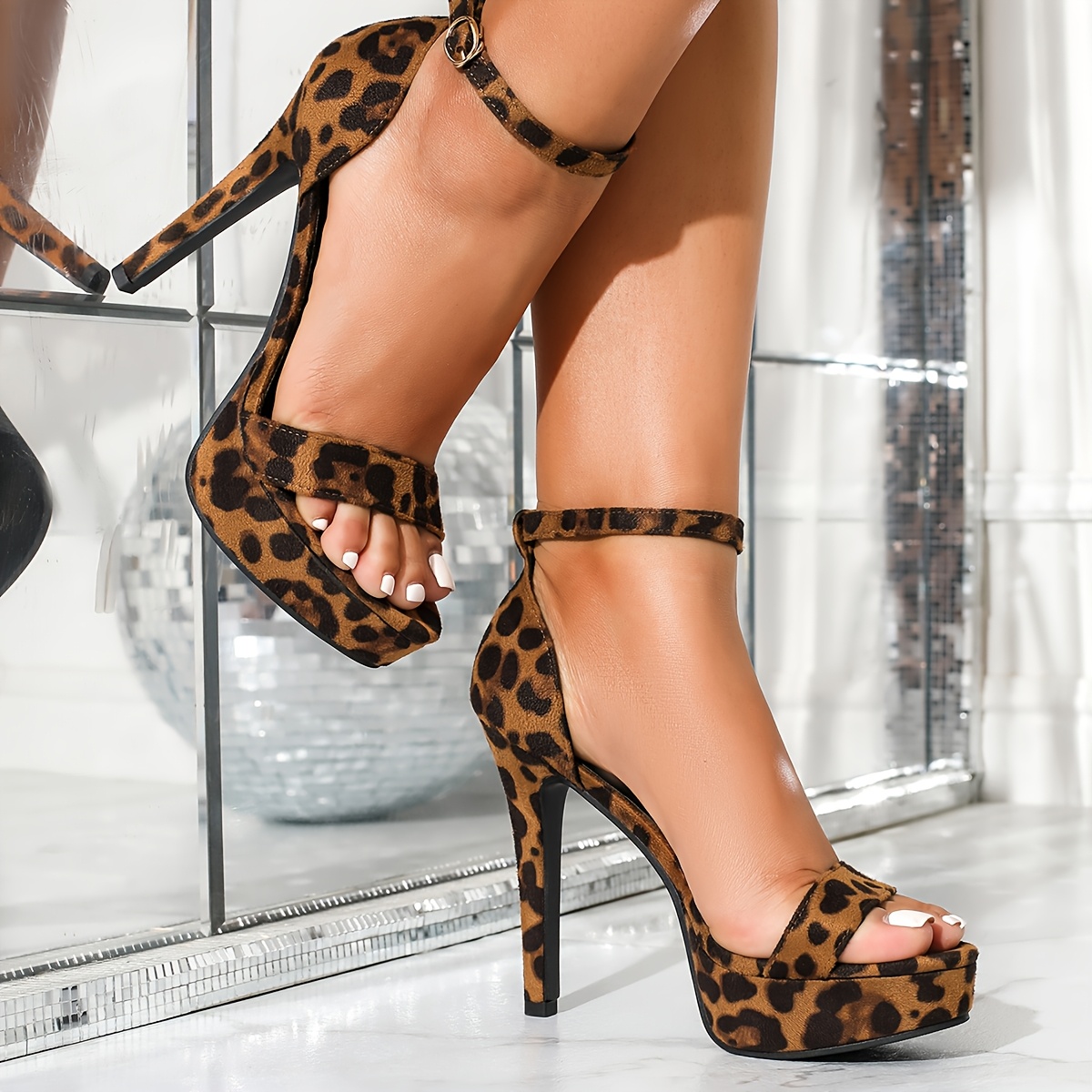
Block heels for daylight, always
You’ll walk more than you think. Brunch turns into a market, the market turns into a 20-minute walk to the bus. A 90mm stiletto leopard sandal is a beautiful object and a terrible decision for a Saturday, and I say that as someone who made it twice.
A 60mm block heel or a kitten heel keeps the look and lets you keep your dignity on cobblestones. Mine are block, and I’ve done 7,000 steps in them without thinking about my feet until the very end of the day.
Two faults nobody mentions. First, the print fades unevenly. Sunlight and the toe crease go first, so by month 18 your shoes look like two different pairs from different eras. Second, cheap PU versions smell. Not faintly. Like a new shower curtain, for about three weeks, and no amount of airing on the balcony fixes it.
Neither is a dealbreaker. Both are reasons to buy one decent pair instead of three cheap ones, and to keep them off the windowsill where the sun gets them.

Night: amplify or shut up
At night the shoe has competition. Sequins, silk, a dress that already says something before you’ve opened your mouth. Two ways to handle it, and both work.
Same shoe. Different rules.
Go all black, head to ankle. Black dress, black tights if it’s cold, leopard heel. The print pops because there’s nothing arguing with it. This is the safest thing you can do and it looks expensive, which is a rare combination.
Or double the print, badly on purpose. Leopard heel, leopard belt, and nothing else patterned. The trick is scale: a small print on the shoe with a larger print on the belt, never the same size twice. Two prints at different scales read as deliberate. Two at the same scale read as a matching set from 2004.

Honestly, most people should pick the first option. The all-black version works at a bar, a dinner, a gig, and a friend’s birthday where you don’t know the dress code. The doubled version works once, in photos, and then you spend the evening in the bathroom adjusting a belt.
One more night thing: skip the ankle strap if you’re wearing tights. The strap slides down the nylon all evening and you end up walking with a locked knee to keep it in place. A slingback or a plain pump avoids the whole problem.
Buying a pair that lasts
Look at the spots before you look at anything else. Good leopard print has spots of different sizes, some solid, some open rings with a dark edge. Uniform repeating spots mean a printed synthetic, and it will look flat under indoor light no matter what the product photo shows.
Then the material. Leather and suede hold the print in the surface and age with it. PU sits on top and peels, usually at the flex point behind the toes, usually about a year in.
Fit is the part people skip. Leopard print doesn’t hide a bad fit the way black does. A gap at the heel is visible, and it also means your foot slides forward and your toes hit the front by hour three. Try them on at the end of the day, walk 20 paces on a hard floor, and check whether your heel lifts by more than a few millimetres.
Price, for what it’s worth: I’ve had a £35 pair last 14 months and a £120 pair last five years. That’s not a rule, it’s just what happened. What matters more is the insole and whether the heel is attached properly, and you can check both in a shop in about 30 seconds.
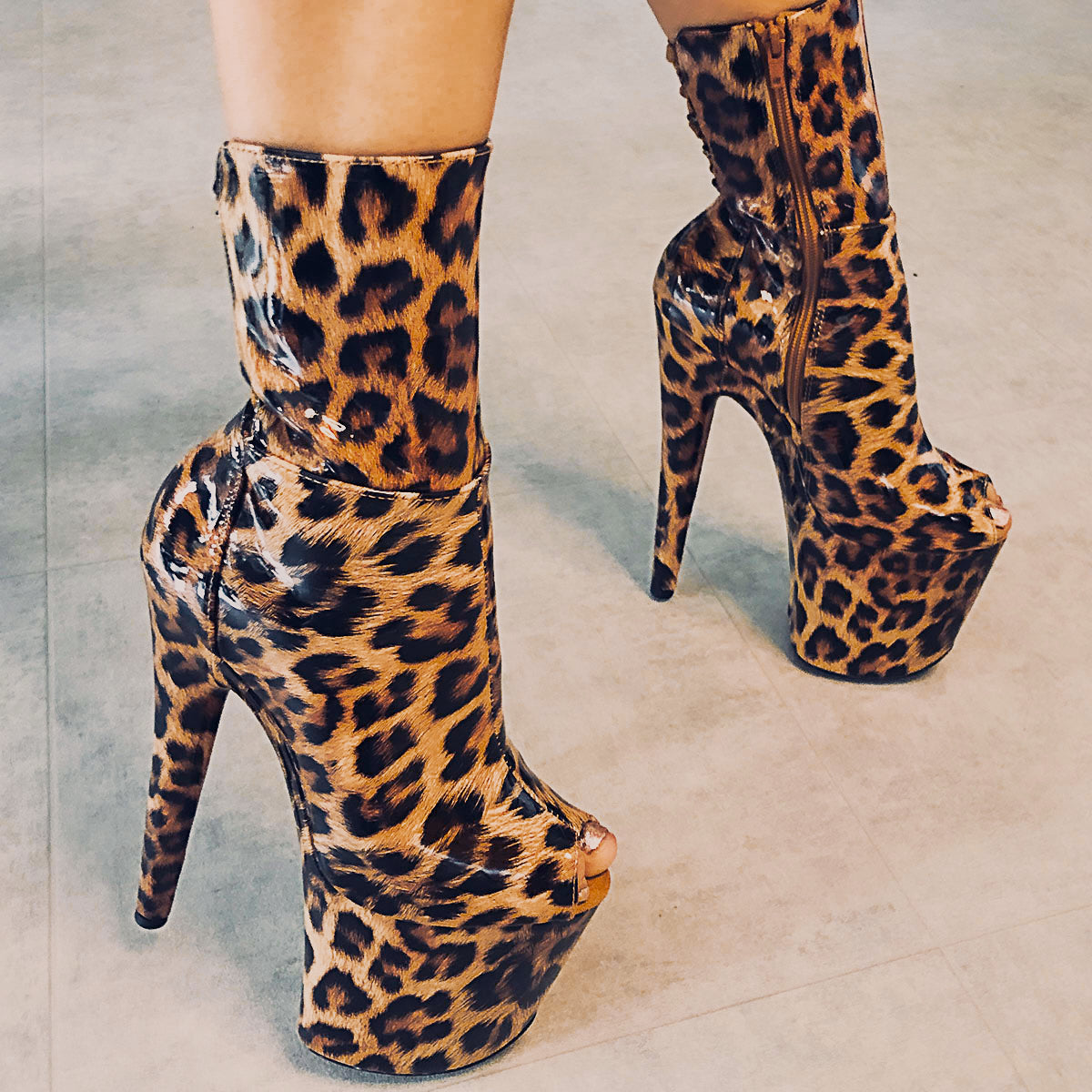
Where they stop working
Work, mostly. If your office has a dress code and your manager wears navy, leopard heels are not the move, however good the outfit underneath. Save them for client days when you’re confident, or the days nobody senior is in.
They also don’t work with florals in the same outfit. I’ve seen it pulled off once, by someone who clearly knew what she was doing, and it wasn’t me.
The other thing is storage. If your shoes live in a pile by the door, the print picks up scuffs on the heel and the toe. A £6 shoe bag is the cheapest way to double their life, and yes, that’s the least glamorous advice in this piece.
Buy one pair. Wear them with denim until you stop thinking about them. Then wear them at night and notice that nobody is looking at your shoes as much as you assumed they’d be.
