

Effortless Elegance: Styling Clear Heels for Every Occasion
In the ever-evolving lexicon of fashion, few items possess the transformative power of a well-chosen shoe. They can ground an outfit or elevate it to new heights, both literally and figuratively. Among the pantheon of iconic footwear, one style has steadily ascended from a niche trend to a wardrobe staple: the clear high heel shoes. More than just a passing fancy, these shoes represent a confluence of design innovation, psychological perception, and versatile aesthetics. They are not merely footwear; they are a statement of modern elegance that challenges traditional notions of form and visibility. This exploration delves into the multifaceted world of clear heels, dissecting their appeal, their scientific and cultural underpinnings, and their unparalleled ability to adapt to the myriad scenes of contemporary life.
The Illusion of Effortlessness: Deconstructing the Clear Heel Phenomenon
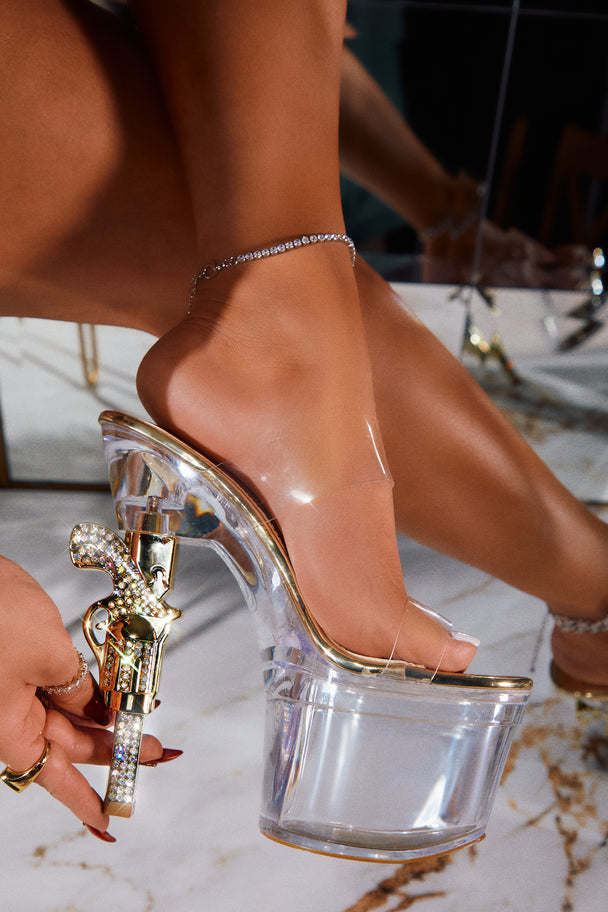
The allure of clear high heel shoes begins with a fundamental principle of visual perception: the concept of negative space. In art and design, negative space refers to the area around and between the subject. By constructing a heel from transparent materials—typically PVC, acrylic, or polyurethane—designers effectively turn the shoe’s structure into a frame for the foot. This creates an illusion of lightness and continuity between the body and the ground. From a cognitive psychology standpoint, as discussed in resources like the Stanford Encyclopedia of Philosophy’s entries on perception, the human brain is wired to complete patterns and seek cohesion. A clear heel minimizes visual interruption, allowing the line of the leg to extend seamlessly, which is often interpreted by viewers as grace and elongation. This isn’t just a stylistic trick; it’s a calculated application of Gestalt principles, where the whole (a longer-looking leg) is perceived as greater than the sum of its parts. Furthermore, the transparency evokes a sense of modernity and daring. It recalls the minimalist architecture of figures like Ludwig Mies van der Rohe, who championed “less is more,” and applies it to the human form. The shoe makes a bold claim: the focus is on you, your outfit, and your confidence, not on the ornamentation of the shoe itself. It’s a democratization of elegance, stripping away opacity to highlight the wearer.
Material Science and Comfort: Beyond the Sheer Aesthetic
To dismiss clear high heel shoes as purely aesthetic would be to ignore the significant advancements in polymer science that make them viable. Early transparent plastics were often rigid, prone to yellowing, and uncomfortable. Modern iterations, however, benefit from material engineering. Thermoplastic polyurethane (TPU), for instance, offers a blend of flexibility, durability, and clarity. This scientific progress, documented in materials science literature from institutions like MIT, translates directly to wearability. A well-constructed clear heel can now offer surprising resilience and a degree of give that accommods the foot’s movement. The objective here is to marry form with function. The “invisible” platform or sole must also provide adequate support and traction—a challenge engineers have met through textured undersides and ergonomic footbed designs. When evaluating a pair, one must consider the quality of the polymer. Higher-grade materials resist clouding and scratching, maintaining their pristine, “effortless” look over time. This intersection of design and material innovation is crucial. As noted by industrial designers like Dieter Rams, good design is as little design as possible, but it must be thorough down to the last detail. The clear heel embodies this: its simplicity is the result of complex, deliberate engineering to ensure it is not just beautiful, but also a practical instrument of style.
A Versatile Canvas: Styling for the Spectrum of Occasions
The true genius of the clear high heel shoes lies in their chameleonic nature. They possess a neutral yet definitive character that allows them to converse with virtually any ensemble. Let’s navigate through the key scenarios of modern life.
The Professional Sphere: Boardroom to After-Work Drinks
In a corporate environment, the goal is often to project competence, polish, and a touch of personal style without overwhelming the professional message. A classic black pump, while safe, can sometimes feel like a uniform. Enter the clear heel. Paired with a tailored sheath dress or a sharp pantsuit, it introduces a contemporary edge. It respects the formality of the setting while subtly signaling fashion-forward thinking. The transparency avoids the color-matching dilemmas of traditional shoes, making it a versatile anchor for monochrome or patterned outfits. As fashion journalist Vanessa Friedman of The New York Times has often highlighted, modern power dressing is about intelligent details, not just broad strokes. A clear heel is precisely that—an intelligent detail. It elongates the silhouette, adding a confident stature, and can seamlessly transition to a networking event or dinner. The key is opting for a classic pump or slingback silhouette in a moderate heel height, prioritizing sleek lines over decorative elements.

Social Galas and Evening Affairs
For events where glamour is the currency, clear heels become a strategic tool. They possess a inherent red-carpet quality, famously embraced by celebrities from Jennifer Lawrence to Rihanna. The reason is twofold. First, they complement elaborate eveningwear—be it a sequined gown, a sleek slip dress, or a dramatic tulle skirt—without competing for attention. They act as a supporting player that enhances the main attraction. Second, they contribute to a ethereal, almost Cinderella-like aesthetic. As film costume designer Sandy Powell, known for her work on “The Favourite” and “Shakespeare in Love,” might suggest, shoes are foundational to a character’s physicality and perception. A clear heel can create a floating, graceful movement, making the wearer appear poised and light-footed. Ankle straps or embellished clear heels (with rhinestones or metallic accents) can add a layer of drama for black-tie events, proving that transparency can be just as opulent as opacity when designed with intention.
Casual and Creative Daytime Explorations
The adaptability of clear heels shines brightly in casual contexts. The notion that they are exclusively for formal wear is a misconception. Pairing a clear block heel or mule with high-waisted jeans and a simple white tee instantly elevates a basic outfit. It adds a dose of curated, “off-duty model” cool. With a midi skirt or a summer dress, they maintain a breezy, feminine feel without the heaviness of a leather sandal. This versatility speaks to a broader trend in fashion towards trans-seasonal, context-fluid pieces. As style platforms like Who What Wear often advocate, investment in pieces that work across multiple settings is the cornerstone of a smart wardrobe. A clear heel is a prime example, moving from a weekend brunch to a gallery opening with only a change of top and accessories. It democratizes high fashion, making an elegant silhouette accessible to everyday moments.
Cultural Footprints and Authoritative Voices
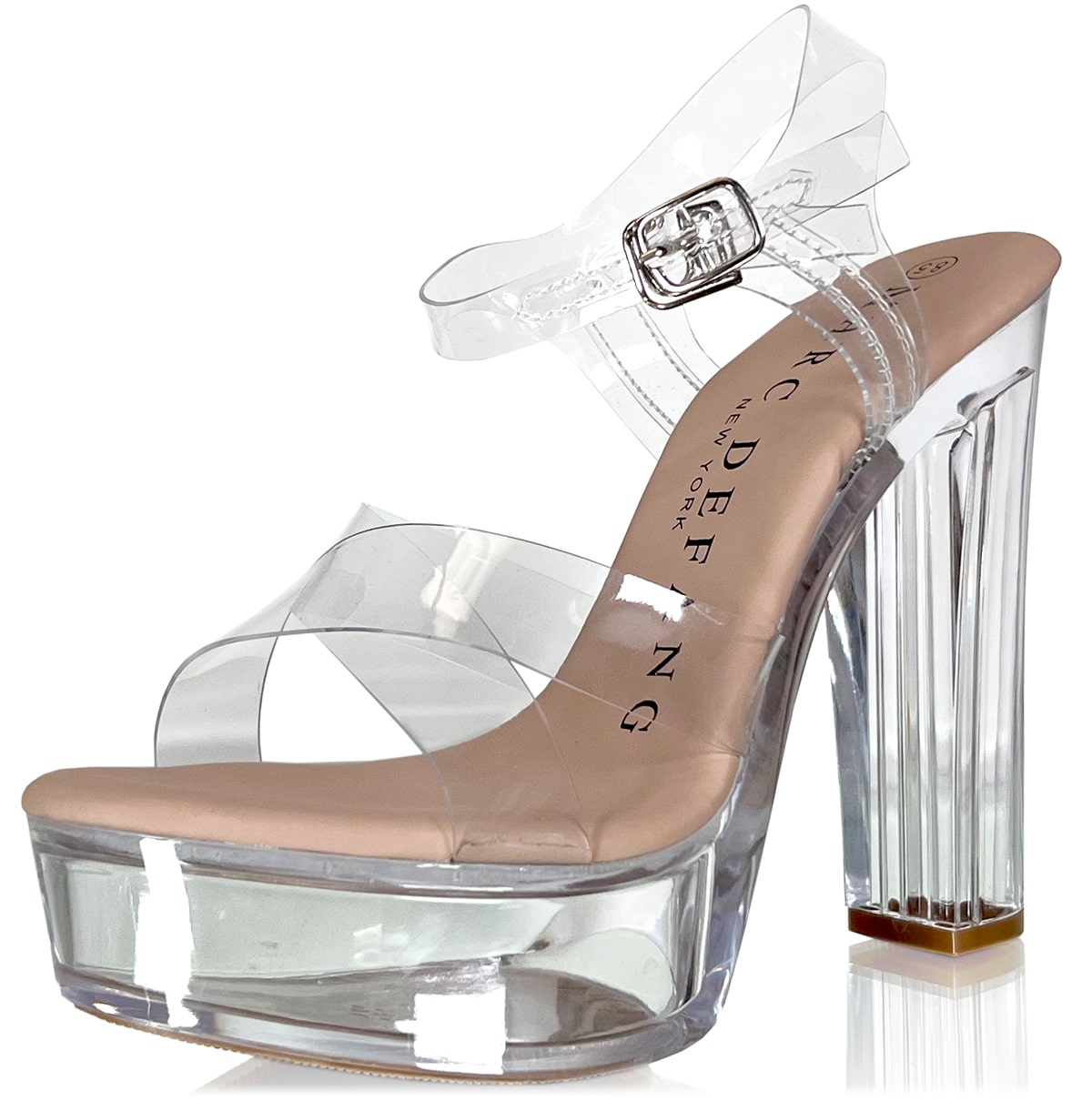
The rise of clear heels is not happening in a vacuum. It is echoed in cultural commentary and by influential figures. On platforms like YouTube, fashion analysts such as Alexa Chung have pointed out their unique ability to “make any outfit look considered.” On Twitter, style critics often note how they “defy seasonal trends,” becoming a perennial favorite. Literature from fashion institutes like Central Saint Martins discusses transparency as a recurring motif in 21st-century design, symbolizing openness and a break from tradition. Even in cinema, characters meant to embody sleek, modern ambition are often costumed with clear or metallic accents, a visual shorthand for a forward-thinking persona. Furthermore, entries on platforms like Baidu Baike and Wikipedia detail the technological evolution of transparent materials in apparel, providing an objective backbone to the trend’s feasibility. These perspectives collectively validate the clear heel not as a fad, but as a meaningful design evolution with roots in both art and science.
Curating Your Pair: A Guide to Informed Acquisition
Embracing this trend requires mindful selection. The market offers a vast array, from budget-friendly options to designer masterpieces. Here, professional knowledge intersects with value. First, assess the construction. Look for reinforced toes and heels, flexible yet firm platforms, and smooth, finished edges to prevent discomfort. The clarity should be consistent, without bubbles or distortions. Second, consider the silhouette. A pointed-toe clear pump is a timeless classic, while a square-toe or slingback offers a contemporary twist. Heel height and thickness (stiletto vs. block) will dramatically alter the shoe’s vibe and comfort level. Finally, let’s talk value. Investing in a well-made pair from a reputable brand often yields better comfort, durability, and optical clarity over time. However, the wonderful accessibility of fashion today means there are excellent quality options at various price points. Savvy shoppers can find stunning clear high heel shoes that don’t compromise on style or basic comfort, especially during seasonal sales or through direct-to-consumer brands that offer competitive pricing by bypassing traditional retail markups. The goal is to find the intersection where quality material and thoughtful design meet a responsible price, bringing both professional insight and accessible elegance to your closet.

The journey through the world of clear heels reveals an accessory of remarkable intelligence and adaptability. They are a testament to how modern fashion can be both minimalist and expressive, scientific and artistic, grounded and aspirational. They extend a line, complete a silhouette, and make a quiet yet confident statement. From the boardroom to the bar, the gallery to the garden party, clear high heel shoes offer a singular solution: effortless elegance, precisely defined for the wearer, by the wearer. They are not about hiding the foot but framing it, not about following a rule but about drawing a new, transparent line in the sand of style.
