

You leave the flat at 7:40 in a jacket, and by 1pm you’re carrying it. That’s the two-week stretch in spring and again in autumn when the morning is 12°C and the afternoon is 22°C, and it’s the worst possible weather for deciding what goes on your feet. A boot is too much by noon. A sandal is optimistic at 8am. White slingback heels for women sit in that gap better than almost anything else in the cupboard, and they do it for reasons that have nothing to do with how they look.
Here’s the short version before the details. A slingback covers the front of your foot and leaves the back open, which means the part that gets cold on a 12°C morning is covered and the part that swells by mid-afternoon is not. That single structural fact is why the style works in a transitional month and why it fails in July, when the strap is the only thing holding a hot, slightly swollen foot into a shoe.
What follows is a full walk through one real day, from the 7:40 decision to the 9pm walk home, plus the two things about white leather that decide whether you still like the pair in week three. If you’ve bought white heels before and watched them go grey in a fortnight, the third section is the one you want.
White slingback heels for women are the least fussy version of a heel you can own in that weather. They’re also the least forgiving about fit.
Start with the 12°C morning, not the outfit
At 12°C your feet are cold enough that the skin is tight and the veins are down. A shoe that fits perfectly at 3pm will feel roomy at 8am, and a slingback’s whole grip depends on the fit at the back. This is the single most common reason people say their slingbacks “slipped all morning and then were fine”.
In practice that means buying for the afternoon, not the morning. Try the pair on late in the day, after you’ve been walking. Anything you buy at 9am will be a half-size too generous by the time your feet spread.
This trips up more people than heel height does. You can size around a heel. You can’t size around a strap that was measured against a cold foot.
The counter-argument is real, though. Buy too tight and the 12°C morning is fine but the 22°C afternoon pinches across the toes, and you’ll be the person doing that subtle shuffle under the desk. There’s no perfect answer here, only a bias. Bias toward the afternoon fit and accept a slightly loose morning.
Two pairs of thin socks in the shop is a decent cheat. If the shoe fits over two thin socks in the morning, it’ll fit over one bare foot in the afternoon.
One fix that costs nothing: a heel grip pad, the thin suede kind, not the silicone blob. Put it in on cold mornings and take it out when the weather turns. Two pads, one pair of shoes, four months of use.
What a slingback actually holds onto
Nothing at the back. That’s the whole point and the whole risk. A slingback holds your foot with the vamp across the instep and the strap behind the heel, and the strap is doing a job that a closed heel counter normally does with structure. So the strap needs to sit in the dip under your ankle bone, low enough to hook, high enough not to cut.
If the strap crosses the bone, no amount of tightening helps. You’ll get a red mark and the heel will still lift. Look for a strap that’s angled slightly downward toward the heel rather than horizontal, because that angle is what keeps it seated when you walk.
Then there’s the elastic question. Most slingbacks have a small elastic insert, either at the buckle end or hidden in the strap. It’s the part that fails first. Bend it in the shop. If it feels like a rubber band that’s already tired, expect it to go slack within a season, at which point white slingback heels for women become impossible to walk in because the strap no longer grips anything.
Width matters more here than in a pump. A slingback on a wide foot pushes the instep sideways, the vamp stretches, and the strap gets pulled forward off the heel. You’ll feel it as the strap creeping up your ankle through the day. Try a pair a half size up before you give up on the style; sometimes the extra length is what keeps the strap in place.
The white problem: which shade survives daylight
White isn’t one colour and this is where most buyers get caught. Optical white is blue-based and reads bright under shop lighting, then looks almost grey outdoors against skin. Cream has a yellow base and goes warm in sunlight. Bone sits between them and is the shade most people actually want, though nobody asks for it by name.
Take the shoe to a window before you decide. Shop lighting is warm and flattering and it lies about white more than about any other colour. Daylight, ideally north-facing, tells you what you’re buying.
If a pair looks slightly yellow by the window and slightly cold under the shop light, it’s bone. Buy it.
Then the wear question. White leather shows every scuff, and the scuff you get in week one is on the heel counter, exactly where a car door or a stair riser catches it. The finish matters more than the shade here. Slightly grained leather hides marks that smooth calf does not, and a matte finish hides them better than patent, which reflects the scuff from three metres away.
Care is straightforward if you start early. Wipe with a damp cloth the same day, not the same week. Use a leather cleaner formulated for pigmented finishes rather than a general-purpose one, and skip the whitening toothpaste trick you’ll find online, because it dulls the finish over time. The tanning and finish standards behind the leather are worth checking if a listing makes claims: OEKO-TEX certification covers what’s actually in the material rather than what the copy says.
One thing to accept: white slingbacks will look worn before black ones do, and that’s fine. A pair that’s slightly off-white at the toe after a season has been used properly.
Your ankle at 22°C, and why the strap loosens by noon
Feet swell. Not dramatically, but enough to matter: on a warm day the difference between 8am and 4pm can be most of a half size in volume, and the ankle isn’t immune. A strap that sat in the right spot at breakfast can be sitting 3mm higher by mid-afternoon, which is exactly the margin between held and slipping. The biomechanics behind that shift are well covered in the general literature on heeled footwear and how it changes the way you walk, and the swelling part is ordinary fluid movement rather than anything unusual.
You can’t stop it. You can plan for it. Buckle at the second-tightest hole in the morning so you have somewhere to go later. If you’re already on the last hole at 8am, the strap is too long for you and the shoe will never be secure.
There’s a second effect that’s less obvious. Warm skin is slightly damp, and a leather strap on damp skin slides. That’s why suede-lined straps hold better than smooth leather ones in summer, and why some slingbacks have a small silicone strip inside the heel strap. It’s not a gimmick.
If your feet swell a lot, the honest answer is that a slingback is a morning shoe in high summer. Wear it to the office, change at lunch. Plenty of people do exactly that and keep a pair of flats under the desk, which is a better plan than buying a size up and living with a shoe that’s too long.
The two-week window, and what to wear under the strap
This is the part nobody writes about. In a 12°C to 22°C month, the answer to “what goes on your legs” changes twice a day, and the slingback has to survive all of it.
Bare ankle with a cropped trouser is the easy version and the one that works at both temperatures. The strap is visible, the hem sits above it, and nothing rubs.
Tights are the harder version. A 40-denier opaque tight under a slingback strap will slide, because the strap has nothing to grip. If you want tights in the morning, go sheer rather than opaque, or accept that the strap will need the tightest hole.
Ankle socks with a slingback are a real look and a real risk. The sock has to be thin enough that the strap compresses it rather than sitting on top of it, which means a 20-denier or a silk-blend, not a cotton trainer sock. Get it wrong and you’ll have a sock line across your heel by 11am.
The packing-down problem finishes the window. Once the afternoons pass 24°C consistently, the slingback moves to evening duty, and by then the strap has usually stretched a little. That’s the moment to check the elastic. A cobbler can replace a stretched elastic insert for less than a new pair of insoles, and it buys you another season.
Hem length and the 4cm gap that makes or breaks it
The strap creates a horizontal line at your ankle, and every hem you pair it with either works with that line or fights it. The rule that holds up in practice: leave at least 4cm of bare leg between the hem and the top of the strap, or cover the strap completely with a hem that reaches the floor.
Anything in between is the dead zone. A hem that lands right on the strap makes the ankle look thicker than it is, and the outfit reads unresolved even if nobody can say why.
Cropped wide-leg trousers are the easiest pairing, because the hem sits well clear and the volume balances the slim strap. Midi skirts work if the hem is above the ankle bone. Full-length trousers only work if they break over the instep, which means you need the front of the shoe to be long enough to show. A pointed toe gives you 2cm more usable length than a round one, which is why pointed slingbacks photograph better with trousers.
For a longer treatment of this specific problem, including how a white pair behaves against different hems, the piece on where the hem has to land with black and white heels covers the same ground with more examples.
Breaking them in without wrecking the heel
Slingbacks need less breaking in than closed shoes, because there’s no heel counter to soften. What does need breaking in is the vamp across your instep, and that’s where the discomfort usually comes from in week one.
Wear them for two hours at a time indoors for the first three wears. Not around the house in socks, actual walking on a hard floor. The vamp softens from body heat and flex, and two hours is short enough that a hot spot doesn’t become a blister.
Skip the hairdryer trick. Heating leather to force it to stretch damages the finish and shortens the life of the shoe, and the moulding you get is temporary anyway. If the vamp is genuinely too tight, take the pair to a cobbler and have it stretched properly on a last. It costs a small amount and it’s permanent.
For the heel, the practical step is a replacement cap before you need one. The top piece on a slim heel wears down to the nail in about 40 wears of street walking, and once it’s through, the heel itself starts to grind. Ask for a pair of caps when you buy. It’s the cheapest maintenance in shoewearing and almost nobody does it.
Which white slingbacks are worth the money
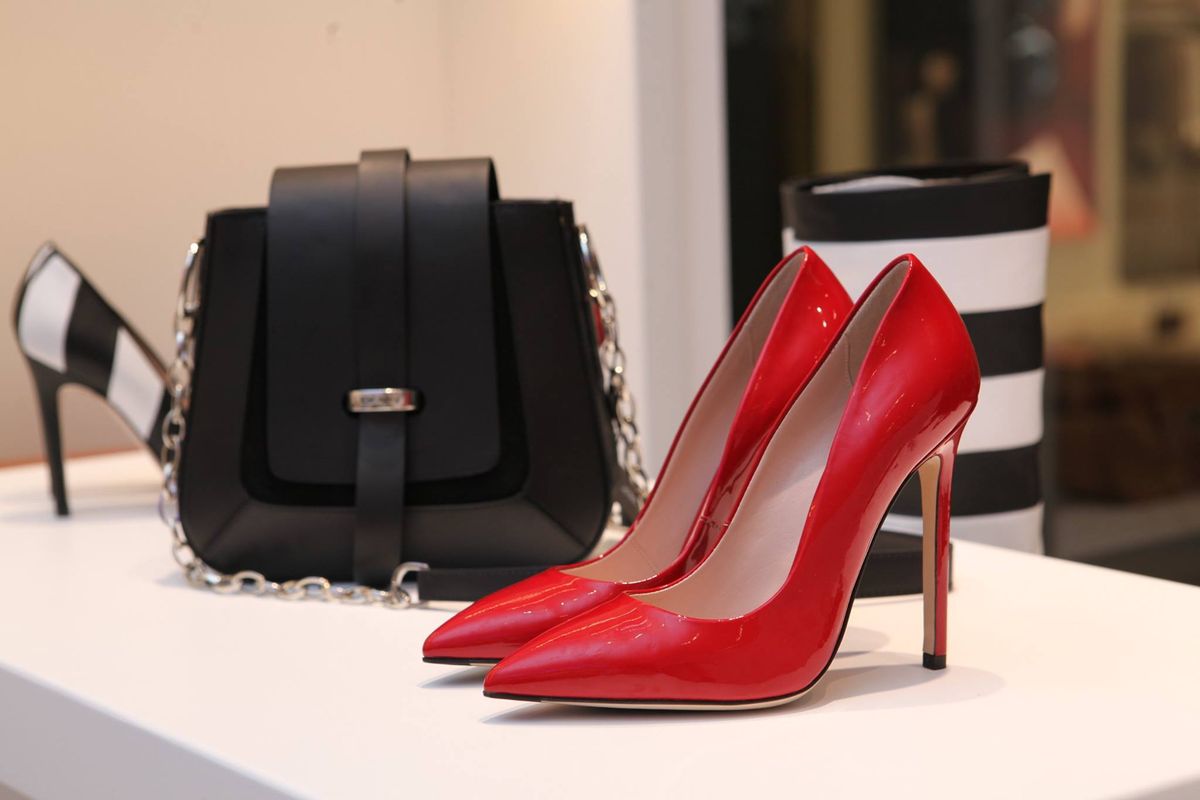
Three things separate a pair that lasts from a pair that doesn’t, and none of them are the brand name. Strap construction first: a strap stitched to the upper is stronger than one glued, and you can usually see the stitching line inside. Second, the insole. A leather insole darkens and moulds to your foot; a synthetic one stays slick and your foot slides forward into the toe. Third, the heel attachment. Rock the shoe side to side on a table. Any movement at the heel block means it will loosen.
Where the money genuinely goes is the leather and the last. A pair built on a properly shaped last holds the instep without pressure, which is the difference between a shoe you wear for four hours and one you wear for nine. Cheaper pairs are usually built on a flat last with the vamp pulled tight, and that’s what causes the pressure line across the top of your foot. The same logic explains why so much of the price gap between a decent pair of white slingback heels for women and a cheap one shows up in month four rather than on day one.
If you want a starting point, the woven white leather heels show the grained finish that hides scuffs best. The white slim-heel pair with a pointed toe is the one that works under full-length trousers. And if the white feels like too much maintenance after reading this, the black satin version of the same shape gets you the slingback fit with a fraction of the cleaning. More shapes sit under all women’s shoes.
When not to buy a slingback at all
If you have a very narrow heel, the strap will not hold no matter what you do, and you’ll spend the season hitching it up. That’s not a fit problem you can solve with pads. A pump with a proper heel counter is the answer, even if the look is less interesting.
Walking more than 6,000 steps a day makes a slingback the wrong tool, full stop. The strap abrades the Achilles over distance, and thin heels on pavement are miserable after 3km. Nobody needs to pretend otherwise, and a pair of white slingback heels for women bought for a 12km sightseeing day will end up in a bag by noon.
And if you’re buying white specifically for a wedding where you’ll be on grass, skip it. White leather plus damp grass equals a stained toe box within twenty minutes, and no amount of post-event cleaning brings it back fully. Wear the white slingbacks to the rehearsal dinner instead, on pavement, where they belong.
The 7:40 decision, made once
Here’s the practical summary for a transitional month. Buy the pair in the afternoon so the fit is honest. Take the shoe to a window to check the white. Buckle at second-tightest and expect to loosen it by lunch. Keep 4cm between hem and strap. Replace the heel caps before they need it, and put the strap’s elastic on your list of things to check every spring.
Do that and the 12°C morning stops being a decision. You put on the same pair you wore yesterday, because you already know they’ll still be right at 22°C. That’s the whole value of a shoe that covers the front of your foot and leaves the back open: it buys you one less thing to think about in a month that’s full of small ones.
